Ancient Roman Glass Necklace: Troubleshooting Authenticity and Care
Discover how to authenticate, clean, and troubleshoot common issues with your ancient Roman glass necklace, from crizzling to setting repairs.

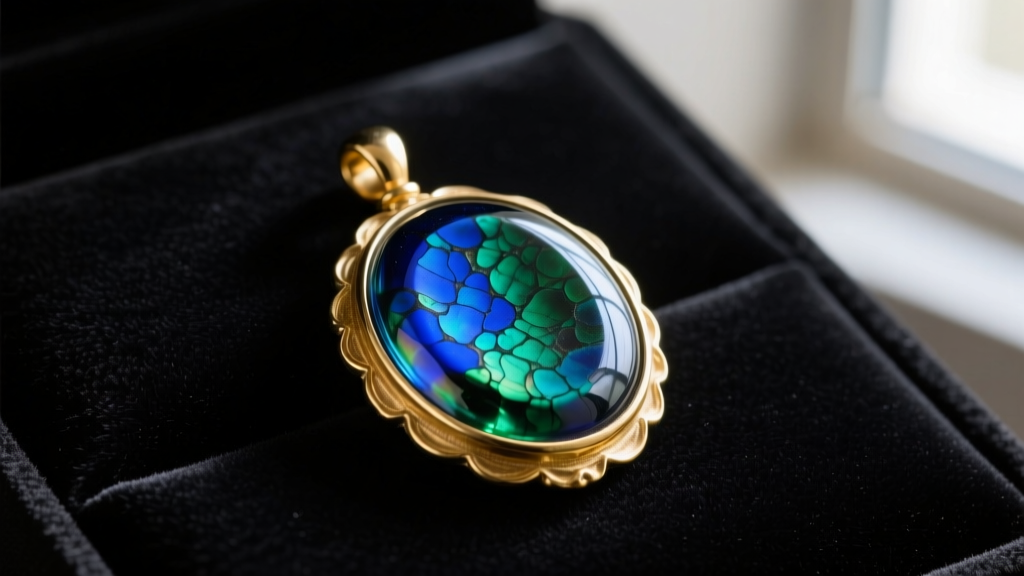
Owning an ancient Roman glass necklace is like wearing a fragment of history. Excavated primarily from the Eastern Mediterranean, these 2,000-year-old artifacts have transformed from humble sand and natron mixtures into iridescent masterpieces through centuries of mineral leaching. However, this unique geological aging process creates profound gemological vulnerabilities. As we navigate the jewelry market in 2026, the proliferation of high-quality replicas and improper restoration techniques has made troubleshooting and authenticating these pieces more critical than ever.
This comprehensive diagnostic guide addresses the most common problems collectors and wearers face with ancient Roman glass jewelry, providing actionable, museum-grade solutions for preservation, setting repairs, and authenticity verification.
Problem 1: Suspected Inauthenticity or Altered Patina
The most frequent issue buyers face is determining whether the iridescent crust on their pendant is a result of 2,000 years of subterranean weathering or a modern laboratory acid bath. Authentic Roman glass was manufactured using a silica sand and natron (sodium carbonate) flux. Over millennia, moisture in the soil leaches the alkali from the glass surface, leaving behind microscopic layers of silica that refract light, creating the signature mother-of-pearl iridescence.
Diagnostic Markers of Authenticity
If your ancient Roman glass necklace looks suspiciously uniform, you may be dealing with a modern replica. Here is how to troubleshoot the visual and tactile evidence:
| Feature | Authentic Ancient Glass | Modern Replica / Acid-Treated |
|---|---|---|
| Patina Texture | Flaky, micaceous, or layered; can feel slightly chalky. | Smooth, uniformly glossy, or artificially pitted. |
| Bubbles (Seeds) | Asymmetrical, varied sizes, often elongated from ancient blowing techniques. | Perfectly spherical, uniform, or entirely absent. |
| Color Consistency | Uneven; deep blues/greens with distinct weathering crusts on one side. | Homogenous color throughout; iridescence covers all edges evenly. |
| Edge Wear | Micro-chipping and natural abrasion from soil movement. | Sharp, machine-tumbled, or artificially sandblasted edges. |
For definitive verification, the Corning Museum of Glass recommends avoiding any destructive scratch tests, as the weathered crust on authentic glass is incredibly fragile and can flake off entirely if agitated.
Problem 2: The Glass is Developing a White, Crusty Powder
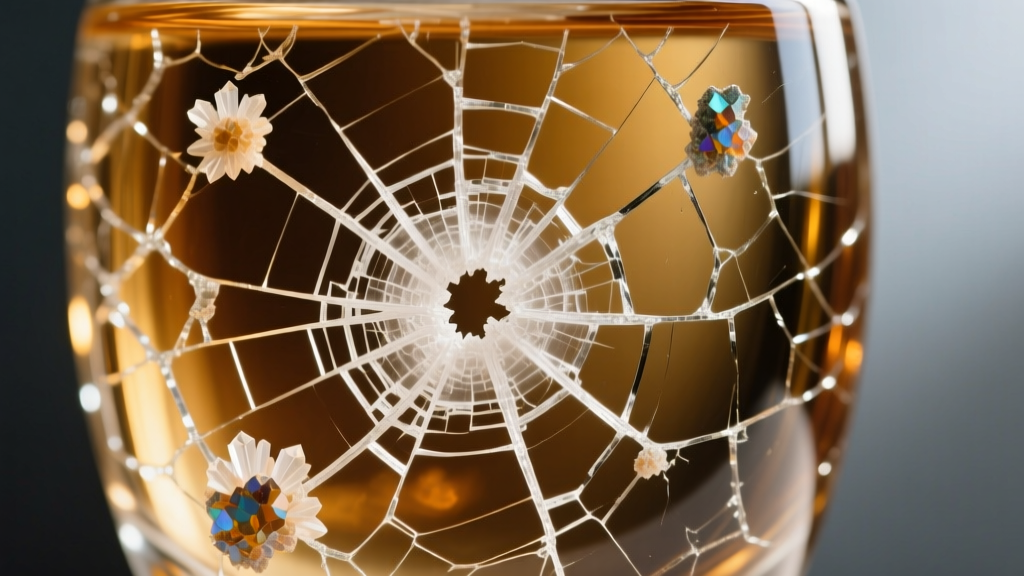
If you notice a fine, white, powdery residue forming on the surface of your Roman glass pendant, or a network of microscopic cracks catching the light, your necklace is suffering from glass disease, also known as crizzling or weeping glass. This is a severe chemical instability caused by an excess of alkali flux in the original ancient mixture, which reacts with ambient humidity.
Troubleshooting and Halting Crizzling
Crizzling is irreversible, but it can be stabilized. The primary culprit is fluctuating or improper relative humidity (RH).
- The Danger Zone: When RH drops below 35%, the glass desiccates and shrinks, causing the microscopic cracks to widen and the surface to spall (flake off). When RH exceeds 55%, excess moisture causes the alkali to leach out, creating a caustic, soapy liquid that etches the glass.
- The 2026 Conservation Standard: According to guidelines from the Getty Conservation Institute, archaeological glass must be stored and displayed in a strictly controlled environment of 40% to 45% RH.
- Actionable Fix: Never store your necklace in a bathroom or a sealed plastic bag with silica gel packets (which can over-desiccate the stone). Store it in a lined wooden jewelry box in a climate-controlled room. If the glass is actively weeping, consult a professional antiquities conservator for localized consolidation with Paraloid B-72 resin.
Problem 3: Chain Snapping and Setting Failures
A common structural failure with an ancient Roman glass necklace is the chain breaking or the glass popping out of its setting. Roman glass shards are surprisingly dense and often irregularly shaped, weighing anywhere from 8 to 25 grams. Standard jewelry chains and settings are rarely engineered for this specific weight distribution and fragility.
Why Prong Settings Fail
If your pendant is held in place by prongs, it is at immediate risk. Metal expands and contracts with body heat and ambient temperature changes. Because ancient glass is highly stressed and lacks the crystalline structure of modern gemstones, the mechanical pressure of metal prongs will eventually cause stress fractures, splitting the artifact in half.
Expert Rule of Thumb: Authentic ancient glass must only ever be set in a bezel setting with a soft backing. A jeweler should bed the glass on a layer of archival-quality felt or 24k gold foil to absorb shock and distribute pressure evenly across the uneven back of the shard.
Upgrading the Chain Gauge
If your chain keeps kinking or snapping at the clasp, the wire gauge is too thin for the pendant's center of gravity. Discard delicate snake chains or thin 22-gauge (0.6mm) cables.
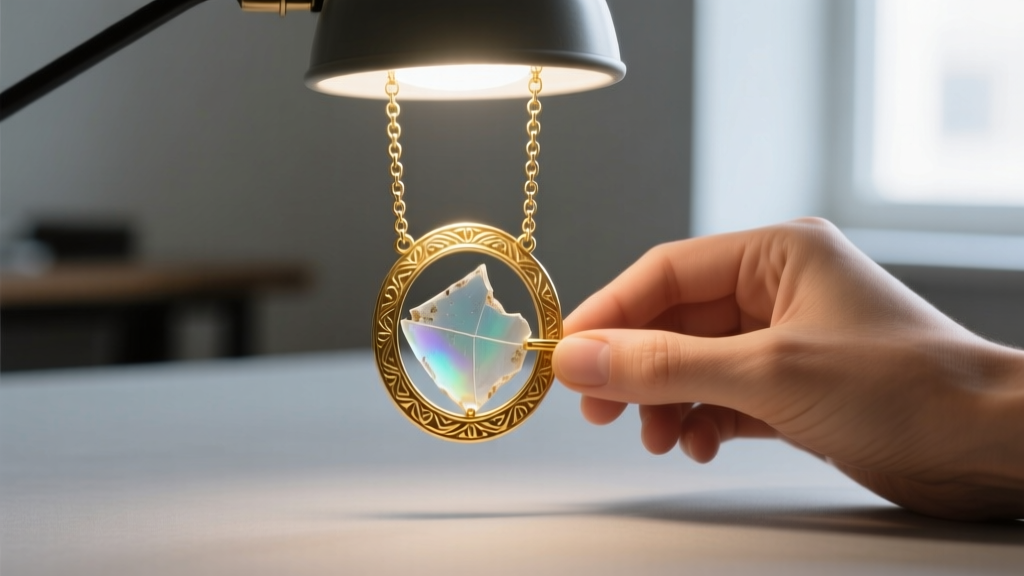
- Optimal Chain Choice: Upgrade to a 16-gauge (1.3mm) or 14-gauge (1.6mm) cable or rolo chain. These interlocking round links resist kinking and can easily support a 25-gram glass shard.
- Clasp Reinforcement: Ensure the jump ring connecting the bezel to the chain is soldered closed. An unsoldered jump ring will inevitably pull apart under the pendulum-like swing of a heavy glass shard.
Problem 4: Accidental Damage During Cleaning
The most tragic troubleshooting scenarios involve owners who attempt to clean their Roman glass using standard jewelry cleaning methods, only to strip away the iridescent patina entirely. The iridescence is not a surface coating; it is the physical, weathered structure of the glass itself.
What to Avoid at All Costs
- Ultrasonic Cleaners: The high-frequency vibrations will shatter the microscopic layers of the weathering crust, turning a vibrant blue/green pendant into a dull, opaque piece of brown glass.
- Chemical Dips & Ammonia: Commercial silver dips and ammonia-based cleaners will chemically react with the leached alkali, causing immediate, irreversible clouding.
- Steam Cleaners: Thermal shock from rapid temperature changes will cause the ancient glass to fracture along its internal fault lines.
The Safe Cleaning Protocol
To remove skin oils and environmental dust, use a clean, dry, soft sable-hair makeup brush to gently sweep the surface. If the glass is heavily soiled and structurally sound (no crizzling), you may lightly dampen a cotton swab with distilled water and gently roll it over the non-patina areas, immediately drying it with a microfiber cloth. Never scrub.
Sourcing, Legalities, and Valuation in 2026
When troubleshooting the provenance of a newly acquired ancient Roman glass necklace, documentation is your best defense against the illicit antiquities trade. The vast majority of authentic Roman glass on the market originates from Israel and the surrounding Levant.
Reputable dealers must provide an export permit issued by the Israel Antiquities Authority (IAA) or proof of provenance predating the 1970 UNESCO convention. According to the British Museum Collection archives, undocumented archaeological glass is not only ethically problematic but often seized at international borders.
Current Market Valuation Metrics
Understanding the fair market value helps troubleshoot potential scams. If a dealer is offering a gold-set Roman glass pendant for under $150, the glass is almost certainly modern slag or acid-etched costume jewelry.
- Loose Authentic Shards (Ungemmed): $40 – $150, depending on color rarity (cobalt blue and vibrant emerald command premiums over pale green).
- Sterling Silver Bezel Settings: $180 – $350.
- 14k/18k Gold Custom Bezels: $450 – $1,200+.
- Museum-Quality Intact Vessels (Rarely worn): $3,000 – $15,000+.
By treating your ancient Roman glass necklace not merely as jewelry, but as an archaeological artifact requiring specialized conservation, you ensure that this remarkable survivor of the ancient world remains intact for generations to come. Always prioritize structural integrity over aesthetic brilliance, and consult a professional antiquities jeweler before attempting any setting modifications.