The Rock Holder Necklace: 2026 Raw Crystal Trends & Styling
Discover 2026 rock holder necklace trends. Learn how to style raw crystals, choose durable metal cages, and master layering techniques.

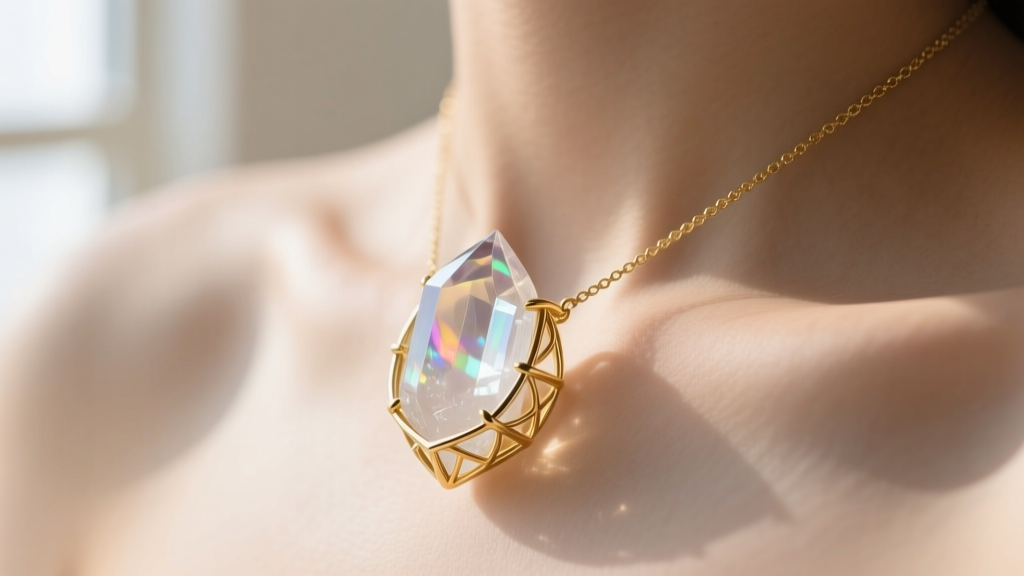
The rock holder necklace has undergone a radical metamorphosis. Once relegated to the bohemian and festival-fashion niches of the 2010s, the raw crystal pendant has evolved into a cornerstone of 2026's architectural minimalism and "raw earth" luxury aesthetics. Today's collectors and style enthusiasts are no longer satisfied with flimsy wire wraps or mass-produced alloy cages. The modern rock holder necklace demands structural integrity, metallurgical excellence, and a deep respect for the unpolished geometry of the earth's minerals.
In this comprehensive trend analysis, we deconstruct the anatomy of the contemporary rock holder necklace, examine the metallurgy required to safely cradle high-density raw stones, and provide a definitive framework for layering these striking pieces in 2026.
The Anatomy of a Modern Rock Holder Necklace
Securing an uncut, asymmetrical gemstone requires specialized jewelry engineering. Unlike faceted stones that fit neatly into calibrated bezels or prong settings, raw rocks present irregular topographies. In 2026, three primary holder architectures dominate the high-end and artisan markets.
1. The Cast Metal Cage (The Architectural Cradle)
Cast cages utilize 3D-printed wax models to create precise, multi-pronged titanium or 14k gold enclosures. The best 2026 designs feature "floating" tension arms that grip the stone's natural ridges without relying on adhesive. For heavy stones like raw pyrite or galena, a minimum of six contact points is required to distribute the gravitational load and prevent the stone from slipping through the cage's base.
2. The Threaded Tension Bezel
Designed primarily for raw geode slices or flat dendritic agates, the threaded tension bezel uses a micro-screw mechanism to clamp down on the stone's perimeter. This allows the wearer to swap out different rock slices within a single, high-quality metal frame, offering modularity that appeals to the sustainable fashion movement.
3. The Artisan Wire-Wrap (Elevated)
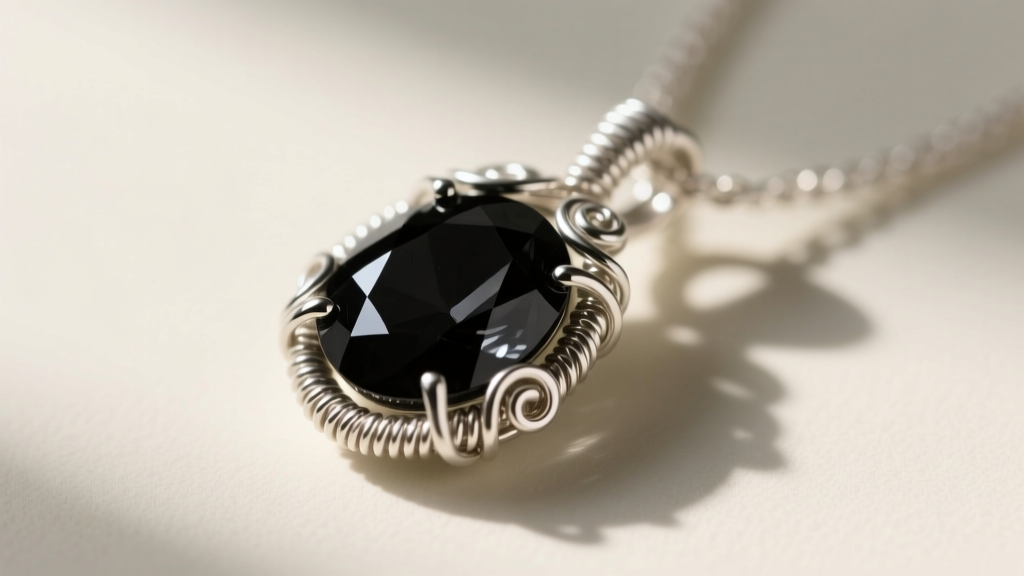
While traditional wire-wrapping often suffers from structural fatigue, the 2026 iteration utilizes work-hardened Argentium silver or 14k gold-filled wire in 18-gauge to 20-gauge thicknesses. The focus has shifted from chaotic, dense weaving to structural "exoskeletons" that highlight the stone's natural inclusions rather than obscuring them.
Metallurgy and Failure Modes: What to Avoid
A rock holder necklace is only as reliable as its weakest metallurgical link. Raw stones are notoriously heavy and possess jagged edges that can saw through soft metals over time. Understanding material grades is critical for both designers and consumers.
- PVD-Coated 316L Stainless Steel: The undisputed champion for heavy, abrasive raw stones. The Physical Vapor Deposition (PVD) coating ensures the gold or rose-gold finish will not wear off against the friction of a rough crystal surface, while the 316L core provides immense tensile strength.
- 14k Gold-Filled (1/20 14k):strong> Excellent for medium-weight stones like raw amethyst or rose quartz. However, if the raw stone has sharp, microscopic silica edges, it can eventually wear through the gold layer down to the brass core if the cage design allows the stone to shift.
- Sterling Silver (925):strong> Beautiful but prone to work-hardening and snapping if used in thin wire-wrap designs. We highly recommend Argentium silver (935 or 960), which contains germanium for superior tarnish resistance and structural memory.
Expert Troubleshooting: If your wire-wrapped rock holder necklace feels loose after a month of wear, the wire has likely experienced "creep" (gradual deformation under mechanical stress). Do not simply squeeze the wire tighter, as this accelerates metal fatigue. Instead, have a jeweler apply a micro-drop of UV-curing jewelry resin at the primary load-bearing contact points.
2026 Trend Forecast: Dominating Stones and Pairings
The market has shifted away from ubiquitous polished amethyst geodes toward rare, hyper-local, and visually striking raw minerals. Below is a data matrix outlining the top trending raw stones for rock holder necklaces in 2026, their physical properties, and recommended setting metals.
| Raw Stone Type | Mohs Hardness | Density/Weight | Recommended Holder Metal | Avg. Retail Price (2026) |
|---|---|---|---|---|
| Herkimer Diamond (Raw Quartz) | 7.0 | Medium | 14k Solid Gold Cage | $280 - $450 |
| Rough Opal (Ethiopian) | 5.5 - 6.5 | Light | Tension Bezel (No prongs) | $150 - $320 |
| Raw Black Tourmaline | 7.0 - 7.5 | Heavy | PVD Black Stainless Steel | $85 - $140 |
| Unpolished Labradorite | 6.0 - 6.5 | Medium-Heavy | 18g Argentium Silver Wrap | $110 - $200 |
| Raw Pyrite (Fool's Gold) | 6.0 - 6.5 | Very Heavy | Cast Titanium Cradle | $190 - $350 |
Styling Framework: The Rule of Thirds for Raw Crystals
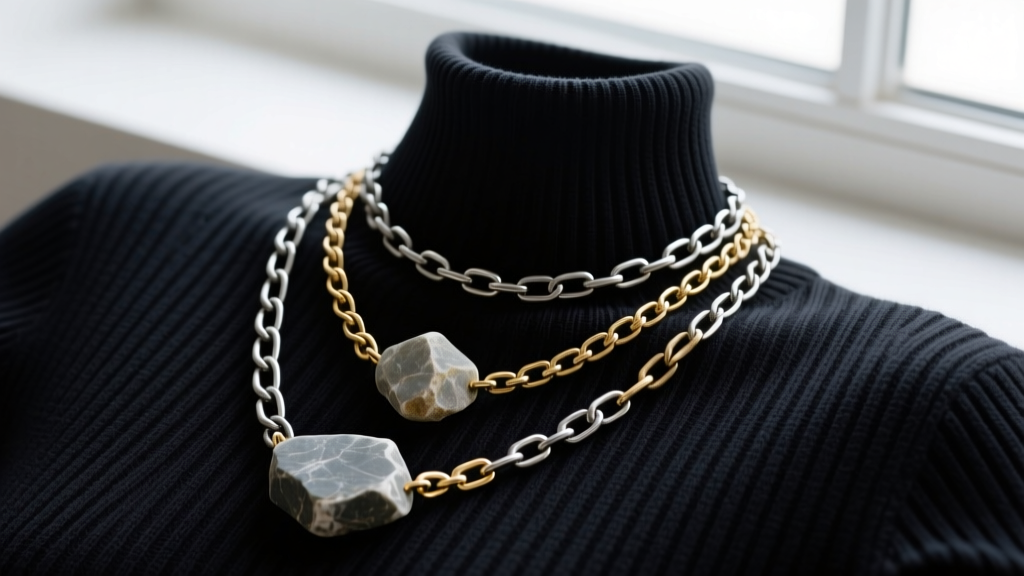
Layering a rock holder necklace requires a different approach than layering delicate chains. Raw crystals possess visual weight, irregular silhouettes, and organic textures that can easily overwhelm a neckline if not balanced correctly. In 2026, stylists rely on the "Rule of Thirds" spacing technique to achieve a curated, intentional look.
Tier 1: The 16-Inch Choker (The Anchor)
Start with a lightweight, minimalist piece. A 16-inch chain holding a small, 10mm raw Herkimer diamond in a delicate gold cage sits perfectly on the collarbone. This tier provides a metallic highlight near the face without competing with the heavier pieces below.
Tier 2: The 20-Inch Princess (The Focal Point)
This is where your primary rock holder necklace lives. A 20-inch length allows a medium-sized raw stone (like a 25mm rough emerald or tourmaline) to rest just above the neckline of a crew-neck sweater or the V-line of a wrap dress. The chain should be substantial—such as a 2.5mm Cuban link or a 3mm rope chain—to visually support the mass of the raw crystal.
Tier 3: The 24-Inch Opera (The Grounding Element)
For the lowest tier, opt for a raw stone slice (like a dendritic agate or a polished-edge geode slice) held in a tension bezel. The flat profile of a slice prevents the necklace from swinging awkwardly against the torso, while the 24-inch length elongates the silhouette, drawing the eye downward and balancing the visual weight of the upper tiers.
Ethical Sourcing and the 2026 Transparency Mandate
As the demand for raw, uncut gemstones surges, so does the scrutiny regarding their origins. The modern consumer of a rock holder necklace is highly attuned to the environmental and human impact of mineral extraction. Unlike faceted diamonds, which are heavily regulated by frameworks like the Kimberley Process, raw semi-precious stones often fall into regulatory gray areas.
Leading jewelry houses in 2026 are adopting "mine-to-necklace" blockchain tracking, allowing buyers to scan a QR code on the pendant's packaging to view the exact quarry, the artisan who performed the initial rough-cut stabilization, and the carbon offset metrics of the shipping process. When shopping for a raw crystal holder, prioritize brands that are certified members of the Responsible Jewellery Council (RJC) or those that explicitly partner with cooperative, small-scale mining initiatives in regions like Minas Gerais, Brazil, or the highlands of Madagascar.
Final Thoughts on the Raw Aesthetic
The rock holder necklace is no longer a passing trend; it is a permanent fixture in the lexicon of modern jewelry design. It represents a philosophical shift away from the pursuit of flawless, machine-cut perfection, embracing instead the chaotic, unyielding beauty of the natural world. By investing in superior metallurgy, understanding the structural demands of raw minerals, and mastering the art of intentional layering, you can transform a simple stone into a profound sartorial statement that will endure long past 2026.


