Nail Necklace Styling: A Beginner's Guide to Hardware Jewelry
Discover how to choose, style, and care for a nail necklace. Our beginner's guide covers materials, chain pairings, and outfit matching for hardware jewelry.

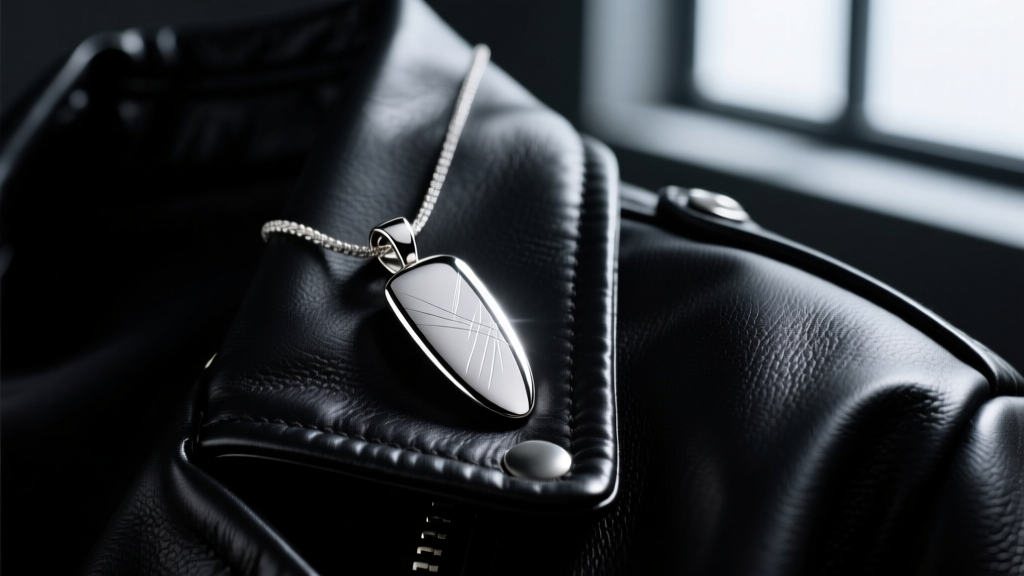
The intersection of industrial utility and high fashion has birthed some of the most compelling jewelry trends of the decade, and few accessories capture this ethos quite like the nail necklace. Once relegated to the realm of DIY punk aesthetics and upcycled grunge, the hardware pendant has evolved into a versatile staple that bridges the gap between streetwear, avant-garde fashion, and minimalist everyday styling. Whether you are looking at a literal carpentry nail suspended on a leather cord or a meticulously cast 14k gold replica from a luxury jeweler, understanding how to wear this piece is crucial for pulling off the look with intention rather than looking like you just left a construction site.
If you are new to hardware-inspired jewelry, the sheer variety of metals, chain weights, and pendant proportions can be overwhelming. This comprehensive beginner's guide will break down the anatomy of a nail necklace, helping you select the right materials, pair the correct chain gauge, and style the pendant for any occasion.
What Exactly is a Nail Necklace?
At its core, a nail necklace features a pendant modeled after a standard wire nail or masonry nail. However, the execution generally falls into two distinct categories:
1. The Literal Hardware Nail
This is the authentic, upcycled route. It involves taking an actual carpentry nail—often salvaged, vintage, or brand new from a hardware store—and attaching a jump ring or wire wrap to the nail head. This style is deeply rooted in 1970s punk culture, 1990s grunge, and modern upcycled fashion. It is raw, imperfect, and carries a genuine utilitarian weight.
2. The Cast Jewelry Nail
This is the fine jewelry interpretation. Jewelers create molds of hardware nails and cast them in precious metals like sterling silver, 14k gold, or platinum. Brands like Tiffany & Co. (with their iconic HardWear collection) and countless independent artisans on platforms like Etsy have elevated the nail silhouette into a polished, luxury accessory. The edges are smoothed, the proportions are often slightly exaggerated for visual impact, and the finish is flawless.
Material Matters: Avoiding Rust and Skin Irritation
When dealing with hardware-inspired jewelry, metallurgy is your most important consideration. The metal you choose dictates the longevity of the piece and how your skin reacts to it. According to Blue Nile's metal education guide, understanding metal alloys is essential for avoiding contact dermatitis and premature tarnishing.
The Problem with Raw Hardware
Standard carpentry nails are typically made from low-carbon steel. If left untreated, low-carbon steel will oxidize (rust) rapidly when exposed to the moisture and natural oils of your skin. Furthermore, many modern nails are galvanized—coated in a layer of zinc to prevent rust during construction. While zinc prevents rust, prolonged contact with skin pH can cause irritation and leave a dull, chalky residue on your chest.
The Solutions: Upgrades and Alternatives
- Clear Polyurethane Coating: If you are committed to wearing a literal, galvanized steel nail, you must seal it. Applying two coats of a jewelry-safe clear polyurethane or epoxy resin will encapsulate the zinc and prevent rust. You will need to reapply this every few months as it wears down from friction.
- 316L Surgical Stainless Steel: For a literal hardware look without the maintenance, seek out artisans who machine nail pendants from 316L stainless steel. This marine-grade alloy is highly resistant to tarnish, rust, and hypoallergenic, making it the gold standard for industrial body jewelry and heavy pendants.
- Sterling Silver and Gold Casts: If you want the nail silhouette but prefer traditional fine jewelry, opt for solid 925 sterling silver or 14k gold casts. These require standard precious metal care but will never rust or irritate sensitive skin.
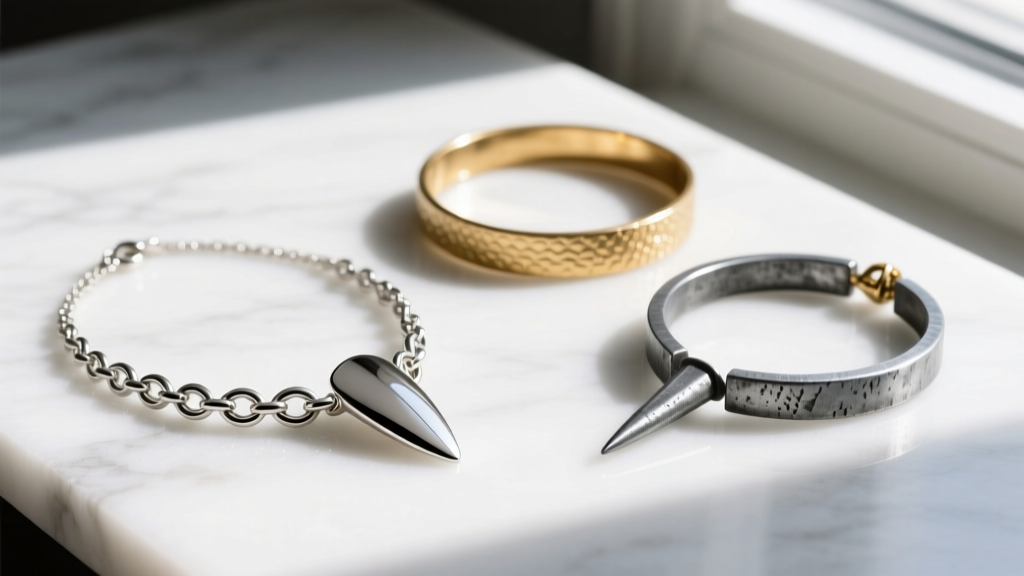
The Anatomy of a Hardware Pendant: Sizing by the 'Penny' System
One of the most common mistakes beginners make is choosing a nail pendant that is disproportionately long for their frame. In the hardware world, nail lengths are measured by the 'penny' system (denoted by a 'd'). Understanding this system is crucial for visualizing how the pendant will hang on your chest.
| Nail Size (Penny) | Physical Length | Best Chain Gauge | Style Vibe |
|---|---|---|---|
| 4d | 1.5 inches | 1.5mm - 2.5mm | Subtle, minimalist, easy to layer |
| 6d | 2.0 inches | 2.5mm - 3.5mm | Everyday grunge, versatile statement |
| 8d | 2.5 inches | 3.5mm - 4.5mm | Bold industrial, standalone piece |
| 10d | 3.0 inches | 4.5mm - 6.0mm | Avant-garde, heavy streetwear |
| 16d | 3.5 inches | Not recommended | Too long; swings awkwardly and catches on clothing |
For most beginners, the 6d (2-inch) or 8d (2.5-inch) nail offers the perfect balance. It provides enough visual weight to be recognized as a hardware piece without looking like you are wielding a weapon.
Chain Pairings: Matching the Hardware Aesthetic
A heavy nail pendant will instantly snap a delicate 1mm cable chain. Conversely, threading a tiny 4d nail onto a massive 8mm Cuban link chain will look unbalanced and cause the pendant to slide around invisibly. The chain must complement the industrial nature of the nail.
Top Chain Styles for Nail Pendants
- Curb Chains: The flat, interlocking links of a curb chain mimic the utilitarian feel of hardware. A 3mm to 4mm stainless steel curb chain is the quintessential pairing for a 6d or 8d nail pendant.
- Figaro Chains: With their pattern of three short links followed by one long link, Figaro chains add a touch of vintage flair to the brutalist nail silhouette, softening the industrial edge just enough for smart-casual wear.
- Rope Chains: If you are wearing a precious metal cast nail (like a solid gold 8d pendant), a rope chain adds a luxurious, textured contrast to the smooth, straight lines of the nail.
- Leather Cords: For a raw, bohemian, or 90s grunge look, a 2mm black or brown leather cord with a sterling silver end cap is an excellent, lightweight alternative to metal chains.
Length and Proportion: Getting the Drop Right
Because nail pendants are elongated and vertical, the length of your chain dictates where the nail will rest on your body. A standard 16-inch choker length is almost never appropriate for a nail necklace; the pendant will stick straight out horizontally or rest awkwardly against the collarbone.
The Sweet Spot: 20 to 24 Inches
A 20-inch chain allows a 2-inch nail pendant to rest right at the top of the sternum, creating a flattering vertical line that elongates the neck. A 22-inch or 24-inch chain drops the nail lower, towards the mid-chest, which is ideal for layering over t-shirts or hoodies in a streetwear context. If you are wearing a deep V-neck, a 24-inch chain with an 8d nail pendant will perfectly follow the geometry of the neckline.

Styling Your Nail Necklace for Everyday Wear
The versatility of the nail necklace lies in its ability to adapt to various aesthetics. Here is how to integrate it into your wardrobe:
The Minimalist Uniform
Pair a polished sterling silver 6d nail pendant on a 2mm box chain with a crisp white crewneck t-shirt and a tailored blazer. The sharp, linear geometry of the nail contrasts beautifully with the soft cotton and structured wool, adding an unexpected edge to a classic uniform.
Streetwear and Layering
Hardware jewelry thrives in layered environments. Combine a 22-inch stainless steel curb chain with an 8d nail pendant alongside a shorter, 18-inch chain featuring a small padlock or a geometric dog tag. Stick to a single metal tone (all silver or all gold) to keep the layering intentional and cohesive rather than chaotic.
Gender-Neutral Appeal
The nail necklace is inherently gender-neutral. Its roots in workwear and punk culture mean it bypasses traditional jewelry gender norms. It looks equally striking on a masculine chest layered over a vintage band tee as it does on a feminine collarbone peeking out from beneath a silk slip dress.
Care and Maintenance for Hardware Jewelry
Proper maintenance ensures your nail necklace retains its edge without degrading. The Gemological Institute of America (GIA) jewelry care guidelines emphasize that different metals require vastly different cleaning protocols.
- For Sterling Silver and Gold Casts: Use a standard jewelry polishing cloth to remove oils and restore shine. Avoid harsh chemical dips, which can strip the polished finish and leave the metal looking dull and gray.
- For Stainless Steel: Wash with warm water and a mild dish soap, then dry thoroughly with a microfiber cloth. Stainless steel is incredibly resilient and requires very little maintenance.
- For Sealed Raw Hardware: Never submerge a coated, literal carpentry nail in water. Wipe it gently with a dry, soft cloth. If the clear coat begins to peel or scratch, lightly sand the affected area with fine-grit sandpaper and reapply your polyurethane sealant.
By understanding the nuances of metal grades, penny sizing, and chain geometry, you can confidently wear a nail necklace that feels like a deliberate fashion statement rather than an afterthought. Embrace the industrial aesthetic, respect the materials, and let the hardware do the talking.


