Glass vs. Resin Necklace Bubble Pendants: Material Guide
Compare glass and resin necklace bubble pendants. Explore refractive indices, durability, UV yellowing, and bail hardware failure modes.

The Anatomy of a Necklace Bubble: Glass vs. Resin
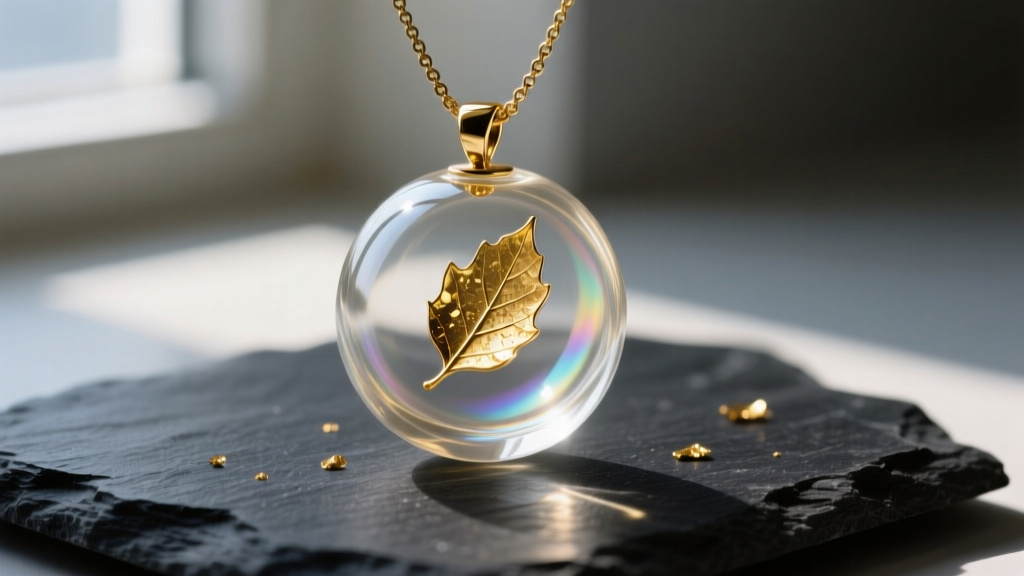
The spherical orb pendant—commonly referred to in the industry as a necklace bubble—has remained a staple in contemporary jewelry design due to its unique ability to capture, refract, and magnify light. Whether housing suspended gold leaf, dried botanicals, or opalescent swirls, the bubble silhouette acts as a wearable magnifying glass. However, as we navigate the jewelry market in 2026, consumers and collectors alike are increasingly scrutinizing the material science behind these orbs. The two dominant materials used to craft a necklace bubble are artisan glass (borosilicate and Murano soda-lime) and synthetic polymers (epoxy and UV resins). While they may look identical in a dimly lit display case, their optical properties, structural integrity, and aging processes are vastly different. Understanding these material properties is critical for selecting a piece that will maintain its clarity and structural soundness over decades of wear.
Borosilicate & Murano Glass: The Heavyweight Contenders
Glass has been the traditional medium for spherical pendants for centuries. Artisans typically rely on two distinct formulations: borosilicate glass and soda-lime glass (often associated with Murano techniques). Borosilicate glass, renowned for its low coefficient of thermal expansion, is highly resistant to thermal shock. This means a borosilicate necklace bubble can transition from a cold winter exterior to a warm, body-heated neckline without developing internal stress fractures. According to the Corning Museum of Glass, borosilicate's durability makes it the premier choice for intricate, thick-walled orb pendants that require extensive lampworking.
Optical Clarity and Refractive Index
The visual appeal of a glass necklace bubble relies heavily on its refractive index (RI). Borosilicate glass typically boasts an RI of 1.47, while traditional Murano soda-lime glass sits slightly higher at 1.52. This higher RI allows soda-lime glass to bend light more aggressively, creating the brilliant, sparkling 'fire' seen in high-end Italian pendants. However, soda-lime glass is more susceptible to thermal shock. If a thick Murano bubble pendant is not properly annealed in a kiln to relieve internal stresses, it can spontaneously crack months after creation due to latent tension.
Epoxy & UV Resin: The Lightweight Alternative
On the other end of the spectrum are synthetic resins, which have surged in popularity for crafting the modern necklace bubble. Epoxy resins and UV-cured resins allow jewelers to encapsulate organic materials—like fresh flowers or delicate insect wings—without the destructive heat of a glass kiln. Epoxy resin cures through a chemical reaction between a resin and a hardener, while UV resin polymerizes instantly under ultraviolet light. While resins offer unparalleled design versatility and a featherlight wear experience, they introduce significant long-term material vulnerabilities that buyers must consider.
The Yellowing Factor & UV Stabilizers
The most critical failure mode of a resin necklace bubble is photo-oxidation, commonly known as yellowing. When exposed to ambient UV light, the polymer chains in standard epoxy resin begin to degrade, resulting in a murky, amber tint that destroys the pendant's optical clarity. In 2026, premium resin jewelers combat this by incorporating HALS (Hindered Amine Light Stabilizers) and UVAs (Ultraviolet Absorbers) into their formulations. Data from Smooth-On polymer labs indicates that while HALS can delay yellowing by several years, no resin is entirely immune to UV degradation over a multi-decade lifespan. If optical permanence is your priority, glass remains the undisputed champion.
Comparative Data: Glass vs. Resin Bubble Pendants
To make an informed purchasing decision, it is essential to compare the empirical data governing these materials. The table below outlines the critical physical and optical properties of the two primary necklace bubble materials.
| Property | Borosilicate Glass | Murano Soda-Lime Glass | Jewelry-Grade Epoxy Resin |
|---|---|---|---|
| Density (Weight) | ~2.23 g/cm³ (Heavy) | ~2.50 g/cm³ (Very Heavy) | ~1.15 g/cm³ (Lightweight) |
| Mohs Hardness | 6.0 - 6.5 | 5.5 - 6.0 | 2.0 - 3.0 |
| Refractive Index (RI) | 1.47 | 1.52 | 1.55 (Degrades over time) |
| Scratch Resistance | Excellent (Requires diamond to scratch) | Good (Resists everyday metals) | Poor (Scratched by dust and fabrics) |
| Impact Resistance | Moderate (Shatters on hard surfaces) | Low (Chips and shatters easily) | High (Bounces and absorbs shock) |
| Average Artisan Price | $45 - $120 | $60 - $180 | $25 - $75 |
Hardware & Bail Integration: Where Pendants Fail
A necklace bubble is only as secure as its bail—the hardware connecting the orb to the chain. The material of the bubble dictates the bail integration method, which directly impacts the pendant's lifespan. Because glass cannot be drilled easily without diamond-tipped core bits and water cooling, artisan glass bubbles typically utilize wire-wrapping techniques or kiln-fused glass loops. Wire-wrapping a 20mm glass sphere with 20-gauge dead-soft sterling silver provides exceptional tensile strength, ensuring the pendant will not detach even if the chain snags.
The Resin Screw-Eye Vulnerability
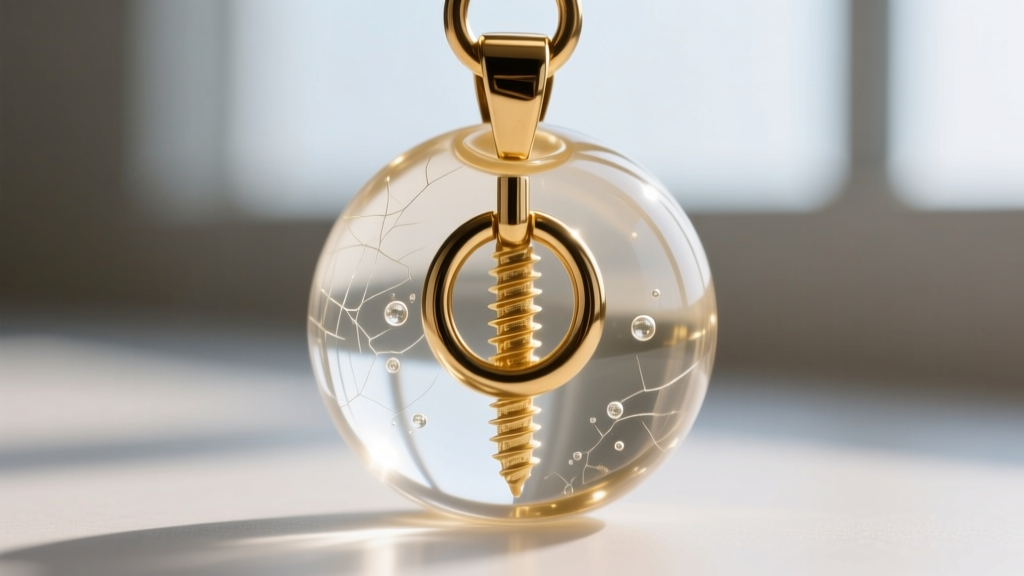
Conversely, resin necklace bubbles often rely on metal screw-eye pins glued into a pre-drilled pilot hole at the top of the orb. This is a notorious structural weak point. Over time, the natural oils from the skin, combined with the mechanical stress of the chain pulling at an angle, can degrade the cyanoacrylate or epoxy adhesive bonding the screw-eye to the resin. Furthermore, because resin has a Mohs hardness of only 2.5, the threads of the screw-eye can easily strip the soft interior walls of the pilot hole. If you are purchasing a resin bubble pendant, inspect the bail closely: opt for pieces where the wire passes entirely through the resin orb via a drilled channel, rather than relying solely on a glued screw-eye.
Styling & Neckline Pairings for Spherical Pendants
The physical weight and dimensions of your necklace bubble should dictate how you style it. A 30mm solid Murano glass bubble can easily weigh upwards of 35 grams. This substantial mass requires a robust chain, such as a 2.5mm wheat or rope chain, and sits best against a high, structured neckline like a turtleneck or a heavy silk blouse, which provides physical support and prevents the heavy orb from swinging uncomfortably against the collarbone.
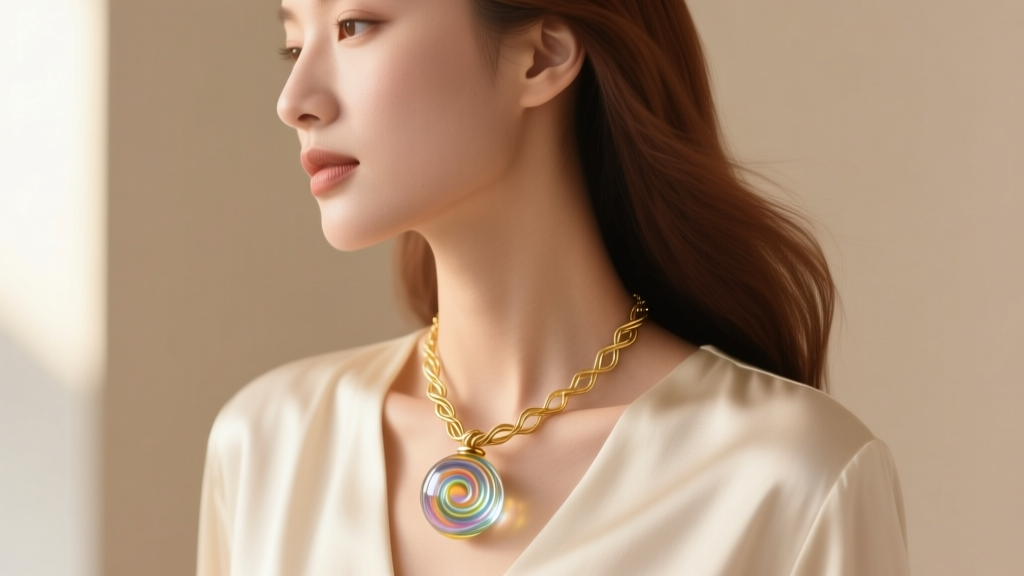
Alternatively, a 40mm hollow-core or resin bubble pendant weighs less than 10 grams. This lightweight profile allows for delicate 18-inch cable chains and pairs beautifully with deep V-necks or scoop necks, where the orb can rest flush against the skin without dragging the fabric downward. When layering, treat the glass bubble as your focal 'anchor' piece, keeping it at a 20-inch drop, while flanking it with lighter, matte-finished metallic chains at 16 and 18 inches to create depth without overwhelming the collarbone area.
Final Verdict: Which Material Suits Your Wardrobe?
Choosing the right necklace bubble ultimately depends on your priorities regarding longevity, weight, and design complexity. If you demand heirloom-quality optical clarity, absolute UV resistance, and a premium, substantial feel against the skin, a borosilicate or Murano glass bubble is the superior investment. Glass will look exactly the same in fifty years as it does today. However, if you prefer large, dramatic statement pieces that do not strain the neck, or if you are captivated by pendants featuring perfectly preserved botanical inclusions, a high-grade, UV-stabilized epoxy resin bubble is the ideal choice. By understanding the material science behind the shine, you can confidently select a spherical pendant that aligns with both your aesthetic vision and your practical lifestyle needs.


