How to Clean Your Sterling Silver Necklace with Blue Topaz
Learn expert methods to clean and maintain your sterling silver necklace with blue topaz. Prevent tarnish and protect the gemstone safely.


The Metallurgical and Gemological Realities of Your Jewelry
Owning a sterling silver necklace with blue topaz offers a brilliant contrast between the cool, icy hues of the gemstone and the warm, reflective luster of precious metal. However, this specific material pairing requires a highly nuanced approach to maintenance. To properly care for this piece, you must first understand the inherent vulnerabilities of both materials.
Sterling silver, universally stamped as 925, is an alloy consisting of 92.5% pure silver and 7.5% copper. While pure silver is highly resistant to oxidation, the copper additive is a magnet for hydrogen sulfide in the atmosphere, resulting in the black silver sulfide layer we recognize as tarnish. Blue topaz, on the other hand, is an aluminum silicate fluoride mineral. While it boasts an impressive 8 on the Mohs hardness scale—making it highly resistant to surface scratching—it possesses perfect basal cleavage. This means that a sharp impact or intense vibrational stress can cause the stone to split or fracture cleanly along its internal crystal planes.
Because of these distinct properties, the cleaning methods you use must simultaneously strip copper oxidation from the silver without introducing harsh chemicals or physical shocks that could compromise the topaz. According to the Gemological Institute of America (GIA), topaz requires gentle care to avoid damaging its crystalline structure, especially if the stone has been treated to achieve its vivid Swiss or London blue coloration.
The Safe Cleaning Protocol for Silver and Topaz
When your sterling silver necklace with blue topaz loses its luster, avoid the temptation to use aggressive commercial silver dips. Instead, follow this meticulous, gem-safe washing routine.
Materials Required
- Phosphate-free, pH-neutral liquid dish soap (e.g., original Dawn)
- Distilled or filtered lukewarm water (avoid hard tap water, which leaves mineral deposits)
- An extra-soft baby toothbrush or a dedicated, clean makeup brush
- Untreated, lint-free microfiber or 100% cotton flannel cloth
- A wooden or plastic drying rack (never metal, to prevent galvanic reactions)
Step-by-Step Washing Process
- Prepare the Bath: Mix three drops of pH-neutral soap into a bowl of lukewarm distilled water. Ensure the water is not hot, as extreme thermal shock can cause internal stress fractures in treated topaz.
- Soak Briefly: Submerge the necklace for no more than three to five minutes. This loosens sebum, cosmetic residue, and environmental dust trapped beneath the gemstone's setting.
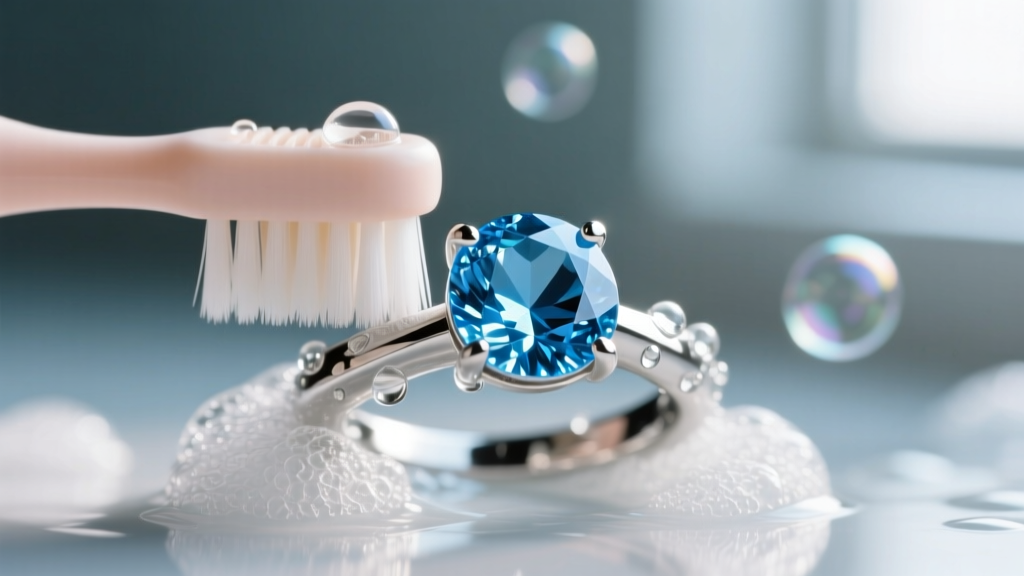
- Agitate Gently: Using the extra-soft baby toothbrush, lightly sweep the bristles over the silver chain and the back of the topaz setting. Do not scrub the topaz stone itself with any pressure; let the soapy water do the work.
- Rinse Thoroughly: Swish the necklace in a second bowl of clean, lukewarm distilled water to remove all soap residue. Soap film will dry as a cloudy layer over the topaz, dulling its brilliance.
- Dry Completely: Pat the silver dry with your microfiber cloth. Use a wooden toothpick or a blast of compressed air to remove trapped moisture from the prongs holding the topaz. Moisture trapped under the setting accelerates localized copper oxidation.
Chemical Exposures and Ultrasonic Dangers
The jewelry market is flooded with quick-fix cleaning solutions, but many of these are actively destructive to a sterling silver necklace with blue topaz. Liquid silver dips, which rely on thiourea-based chemicals to instantly strip tarnish, are particularly dangerous. These acids can etch the surface of the topaz, degrade the polish, and leave a porous, matte finish on the silver that actually accelerates future tarnishing.
Furthermore, ultrasonic cleaners are a common casualty point for topaz jewelry. The high-frequency sound waves create microscopic cavitation bubbles in the cleaning solution. When these bubbles collapse against the gemstone, the resulting shockwaves can easily exploit the topaz's perfect cleavage planes, leading to catastrophic internal fracturing.
Chemical Exposure Matrix
| Household Substance | Effect on 925 Sterling Silver | Effect on Blue Topaz | Verdict |
|---|---|---|---|
| Chlorine (Pools/Bleach) | Causes irreversible pitting and severe structural weakening | Can dull the polish and damage surface treatments | Strictly Avoid |
| Ammonia (Glass Cleaners) | Accelerates copper oxidation and darkens tarnish | Generally safe, but unnecessary risk | Avoid |
| Hairspray & Perfumes | Creates a sticky film that traps sulfur compounds | Leaves a cloudy film, reducing light return | Apply Before Wearing |
| Mild Dish Soap | Safe, removes oils and dirt | Safe, restores optical clarity | Highly Recommended |
Polishing Tarnish Without Damaging the Gemstone
When washing is no longer sufficient to remove dark silver sulfide, mechanical polishing is required. The safest method for a sterling silver necklace with blue topaz is using a high-quality, treated silver polishing cloth, such as a Sunshine Cloth. These cloths are impregnated with micro-abrasives and anti-tarnish agents that lift oxidation from the silver without the need for liquids.
When polishing, fold the cloth and carefully work the silver chain and the bezel or prongs of the setting. Avoid dragging the cloth aggressively across the topaz gemstone. While topaz is harder than silver, the micro-abrasives in the cloth can accumulate in the crevices of the stone's facets, creating a hazy appearance over time. For intricate filigree work around the topaz setting, use a chemically treated silver polishing foam applied with a cotton swab, ensuring you wipe away all residue immediately.
Long-Term Storage and Tarnish Mitigation
Prevention is vastly superior to remediation when managing sterling silver. Tarnish is a surface reaction that requires moisture and sulfur to occur. By controlling the micro-environment where your necklace is stored, you can reduce the need for polishing from once a month to once a year.
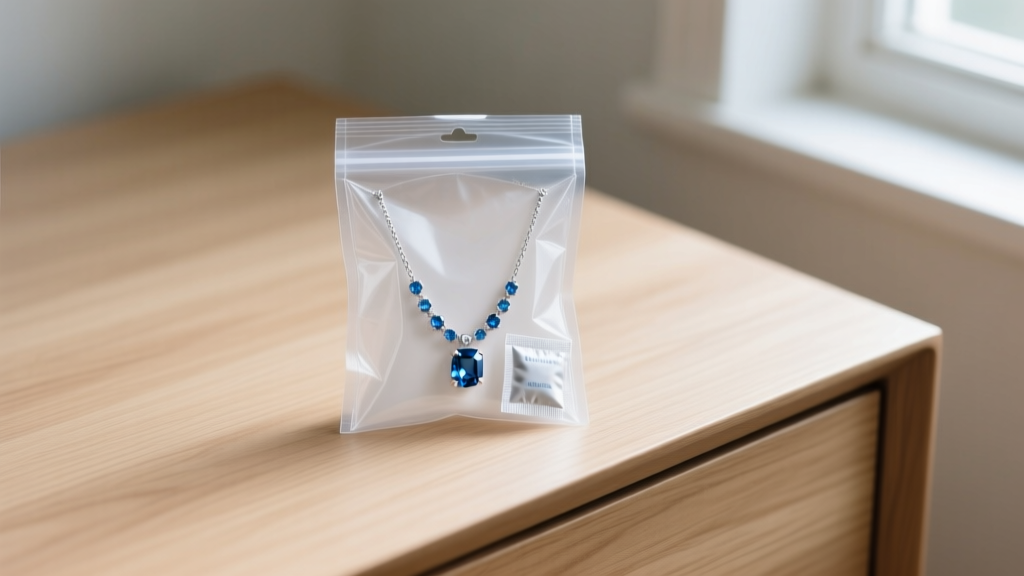
According to guidelines supported by the Jewelers of America, optimal storage involves creating an airtight, low-humidity environment. Store your necklace in a ziplock polyethylene bag, squeezing out as much air as possible before sealing. Inside the bag, include two critical components:
- 3M Anti-Tarnish Strips: These strips contain proprietary resins that absorb sulfur compounds and moisture from the air, sacrificing themselves to protect the copper in your sterling silver.
- Silica Gel Packets: By maintaining a relative humidity below 40%, silica gel drastically slows the chemical reaction rate of copper oxidation.
Never store your sterling silver necklace with blue topaz in a cardboard box or wrapped in newspaper. Cardboard and newsprint contain sulfur compounds and acidic lignins that will actively accelerate tarnishing and potentially degrade the metal alloy over decades.
Prong Integrity and Professional Servicing
Because pure silver is exceptionally soft (2.5 to 3 on the Mohs scale), the prongs securing your 8-Mohs blue topaz are highly susceptible to mechanical wear. Every time the necklace catches on a sweater or is pulled slightly, the silver prongs stretch and thin.
Perform a tactile inspection every six months. Run a piece of silk fabric or a cotton ball over the topaz setting; if it snags, a prong is lifted or broken. The GIA Silver Care Guide notes that silver settings require more frequent professional maintenance than gold or platinum due to this malleability. Take the necklace to a certified bench jeweler annually to have the prongs burnished, tightened, and re-tipped if necessary. This minor maintenance fee is a fraction of the cost of replacing a lost or chipped blue topaz gemstone.


