Necklace in Chinese: Terminology, Jade Grades & Silk Knots
Explore the necklace in Chinese terminology, including jadeite grading matrices, silk knotting tensile strengths, and longevity lock metallurgy.

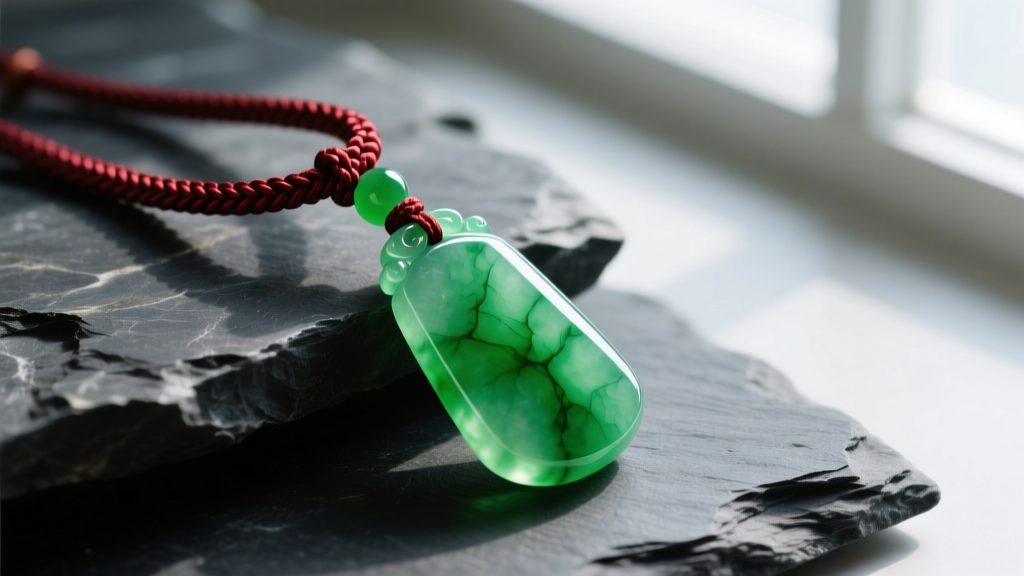
When international collectors and gemologists search for a necklace in Chinese, they are often looking for more than a simple linguistic translation. They are seeking entry into one of the world's oldest and most technically complex jewelry traditions. Chinese necklace craftsmanship is not merely about stringing beads; it is an intersection of precise mineralogy, ancient metallurgical techniques, and structural textile engineering. As of 2026, the global market for Chinese heritage jewelry continues to expand, making a technical understanding of these pieces essential for serious collectors, appraisers, and designers.
This deep dive explores the exact terminology, the gemological grading matrices of Chinese jade, the tensile mechanics of traditional silk knotting, and the structural metallurgy of longevity locks. We will bypass generic style advice and focus on the actionable, technical data you need to authenticate and understand these masterworks.
Linguistic Breakdown: How to Say Necklace in Chinese
To navigate the Chinese jewelry market or communicate with master artisans, you must understand that the English word 'necklace' fractures into several highly specific terms in Mandarin, depending on the structural components of the piece. A chain is not a pendant, and a collar is not a lariat. Below is the definitive technical lexicon.
| Hanzi (Characters) | Pinyin | Literal Translation | Technical Jewelry Application |
|---|---|---|---|
| 项链 | Xiàngliàn | Neck Chain | The general term for a necklace; specifically refers to the chain or cord component. |
| 吊坠 | Diàozhuì | Hanging Ornament | The pendant or drop. Used for jade cabochons, gold motifs, or diamond solitaires. |
| 项圈 | Xiàngquān | Neck Ring | A rigid choker or collar, often crafted from solid gold or heavily structured alloy. |
| 长命锁 | Chángmìngsuǒ | Longevity Lock | A traditional pendant given to infants, designed to 'lock' the soul and ensure survival. |
The Technical Grading of Chinese Jade Pendants (Diàozhuì)
The most iconic diàozhuì (pendant) in Chinese culture is carved from jade. However, 'jade' is a generic Western term that encompasses two distinct mineral species: Jadeite (Feicui / 翡翠) and Nephrite (Hetian Yu / 和田玉). Understanding the gemological divergence between these two is critical for valuation.
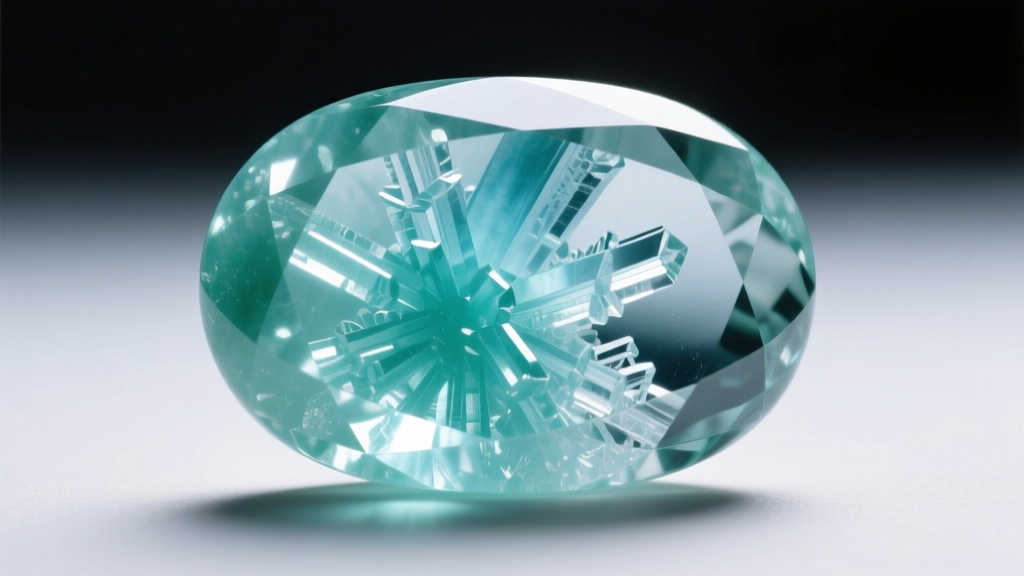
According to the Gemological Institute of America (GIA), jadeite is a pyroxene-group mineral with a refractive index (RI) of approximately 1.66 and a specific gravity (SG) of 3.33. Nephrite, an amphibole-group mineral, possesses a lower RI of 1.62 and an SG of 2.95. In the Chinese market, jadeite commands a massive premium, particularly the 'Imperial Green' and 'Glassy' (Icy) varieties.
The ABC Treatment Matrix
When sourcing a jadeite necklace in Chinese markets, you must verify the treatment grade. The National Gemological Training Centre of China (NGTC) strictly enforces the following classification matrix, which directly impacts the structural integrity and market value of the pendant.
| Grade | Treatment Process | Structural Impact | Market Value Retention |
|---|---|---|---|
| Type A | Untreated. Only traditional plum-wax polishing. | Crystal lattice remains fully intact; high durability. | 100% (Investment Grade) |
| Type B | Acid-bleached to remove brown/yellow impurities, then polymer-impregnated. | Acid destroys the interlocking crystal matrix; polymer prevents immediate crumbling but degrades under UV/heat. | < 10% of Type A |
| Type C | Chemically dyed to imitate Imperial Green. | Dye concentrates in micro-fractures; color fades rapidly under sunlight. | Negligible (Costume Grade) |
Silk Knotting Mechanics and Cordage Engineering
A heavy jade diàozhuì requires a suspension system capable of bearing dynamic loads without snapping. Traditional Chinese necklace cordage relies on Zhongguo Jie (Chinese knotting). While historically crafted from pure silk, modern master artisans have shifted toward advanced synthetic fibers for critical load-bearing knots.
Material Tensile Strength Comparison
- Traditional Mulberry Silk: Beautiful luster and excellent drape, but highly susceptible to hydrolysis. Wet silk loses up to 20% of its tensile strength and degrades rapidly when exposed to human sebum and acidic sweat (pH 4.5 - 5.5).
- Braided Polyamide (Nylon 6,6): The modern industry standard for high-value jade. A 1.5mm braided nylon cord boasts a tensile strength exceeding 80 MPa. It is impervious to sweat and can be heat-fused at the terminals to prevent fraying.
- Waxed Cotton: Offers a matte, organic aesthetic but suffers from severe abrasion against the sharp edges of drilled jade bails. Not recommended for pendants exceeding 50 grams.
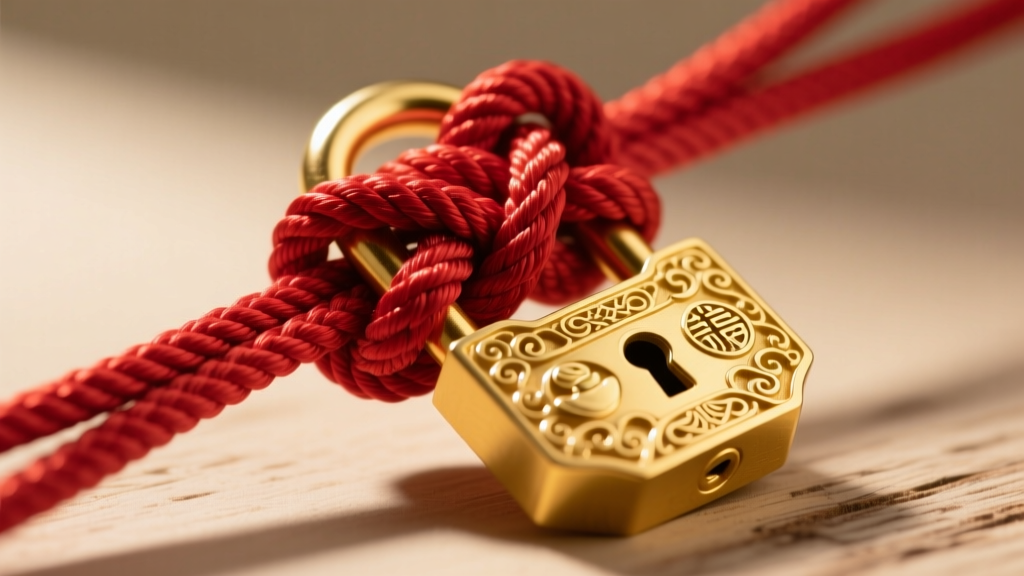
The most critical structural element in a Chinese pendant necklace is the sliding friction knot (often a variation of the Pan Chang or double coin knot adapted for adjustability). This knot must generate enough radial compression on the primary cord to hold the weight of a 100g jade bangle or solid gold lock, yet allow the wearer to adjust the drop length from choker (40cm) to matinee (60cm). Artisans achieve this by incorporating micro-braided 'stopper' beads fused directly into the nylon core.
Metallurgy of the Chángmìngsuǒ (Longevity Lock)
The Chángmìngsuǒ is a deeply symbolic pendant, traditionally gifted to newborns to 'lock' their life force. From a metallurgical perspective, crafting these locks presents unique challenges regarding gold purity and structural rigidity.
"The longevity lock is not merely jewelry; it is an amulet of survival. The repoussé work must be flawlessly executed so that the hollow interior remains lightweight enough for an infant's cervical spine, yet rigid enough to resist crushing."
Pure 24K gold (99.9% Au) is too soft for the intricate clasps and structural borders of a longevity lock, possessing a Vickers hardness (HV) of only ~25. To solve this, master goldsmiths utilize repoussé and chasing techniques on 22K gold sheets (91.6% Au, alloyed with 4.2% Copper and 4.2% Silver). This specific alloy matrix increases the Vickers hardness to approximately 120 HV, allowing the artisan to hammer high-relief motifs (such as dragons or peonies) from the reverse side without tearing the metal. The hollow, domed structure creates an exceptional strength-to-weight ratio, ensuring the pendant remains under 15 grams despite its voluminous appearance.
Authentication Framework: Spectroscopic Analysis
As synthetic and treated jade flooding the market becomes increasingly sophisticated, visual inspection is no longer sufficient to authenticate a Type-A jadeite necklace. In 2026, professional appraisal relies heavily on Fourier Transform Infrared (FTIR) Spectroscopy.
When evaluating a potential purchase, request the FTIR spectral graph. Here is what you must look for:
- Type A (Natural): The spectrum will show a clean baseline in the 2800 to 3100 cm⁻¹ region, indicating the absence of organic polymers.
- Type B (Polymer-Impregnated): You will observe sharp, distinct absorption bands around 2870 cm⁻¹ and 2960 cm⁻¹. These represent the C-H (carbon-hydrogen) stretching vibrations of the epoxy resins used to fill the acid-etched voids.
- Mineral Identification: To distinguish between jadeite and nephrite without destructive testing, look for the characteristic sharp absorption peak at 1040 cm⁻¹ (jadeite) versus the broader, flatter absorption curve between 900 and 1100 cm⁻¹ (nephrite). For precise mineralogical data, refer to the Mindat mineral database for Jadeite and Nephrite.
Final Considerations for the Collector
Understanding the necklace in Chinese requires moving beyond superficial aesthetics. Whether you are evaluating the specific gravity of a Hetian Yu pendant, calculating the tensile load of a braided nylon friction knot, or analyzing the FTIR spectrum of a jadeite cabochon, technical due diligence is your only safeguard. By mastering the terminology, the material science, and the engineering principles outlined above, you transition from a casual buyer to an informed custodian of one of the world's most profound jewelry traditions.


