2026 Moroccan Necklace Gift Guide: Styles for Every Occasion
Discover the perfect Moroccan necklace for any occasion. Our 2026 gift guide covers authentic Berber silver, Khamsa pendants, and styling tips.

Why a Moroccan Necklace Makes a Meaningful Gift
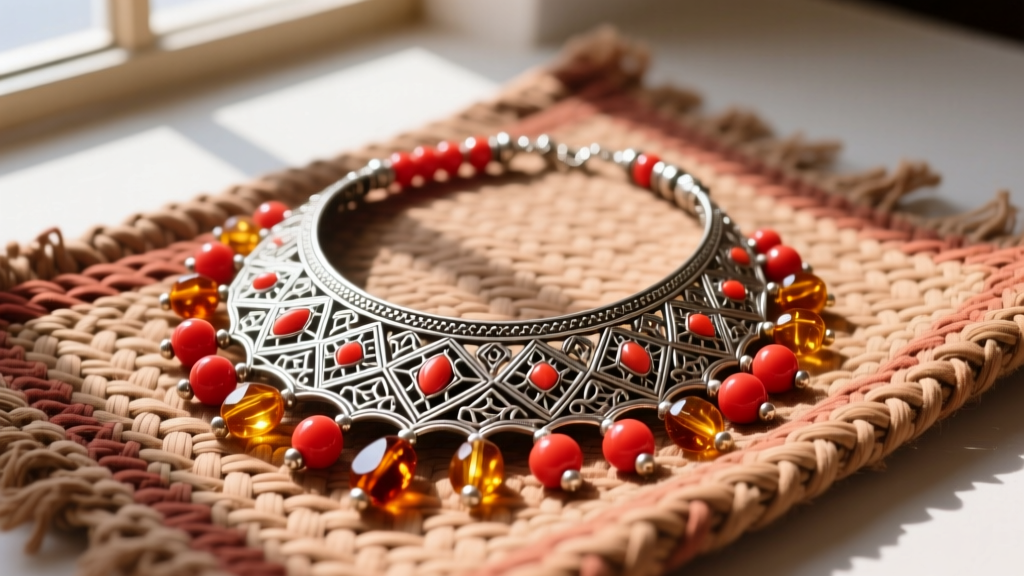
Gifting jewelry is an inherently intimate act, but presenting a Moroccan necklace elevates the gesture from a simple accessory exchange to the sharing of profound cultural heritage. In 2026, as global consumers increasingly seek out artisan-crafted, historically rich pieces over mass-produced fast fashion, North African jewelry has seen a massive resurgence. According to The Metropolitan Museum of Art's archives on Berber jewelry, these pieces were traditionally not merely decorative; they served as wearable bank accounts for women, talismans for protection, and indicators of tribal identity and marital status.
When you gift a Moroccan necklace, you are gifting a piece of Amazigh (Berber) history. The intricate geometric engravings, the bold use of semi-precious stones, and the heavy, satisfying weight of artisanal silver make these necklaces unforgettable presents. Whether you are shopping for a milestone anniversary, a graduation trip send-off, or a fashion-forward birthday, understanding the nuances of Moroccan metallurgy and symbolism is crucial for selecting the right piece.
Decoding Authentic Moroccan Jewelry Materials
To give a gift that lasts a lifetime, you must understand the materials. The market is currently flooded with cheap, zinc-alloy "Moroccan-style" trinkets. Authentic pieces hail primarily from the southern silversmithing hub of Tiznit and the Amazigh villages of the Atlas Mountains.
Silver Purity: 800 vs. 925
While Western jewelry standards dictate 925 Sterling Silver (92.5% pure silver), traditional Moroccan silversmiths often utilize 800-grade silver (80% silver, 20% copper). Why? The higher copper content provides the necessary structural integrity for the heavy casting, intricate filigree, and deep champlevé engraving techniques used in Berber designs. If a modern artisan piece is stamped 925, it is likely crafted specifically for the international export market, which is perfectly fine, but do not dismiss an 800-grade piece as "fake"—it is often more historically authentic and highly durable.
Mina (Enamel) and Gemstones
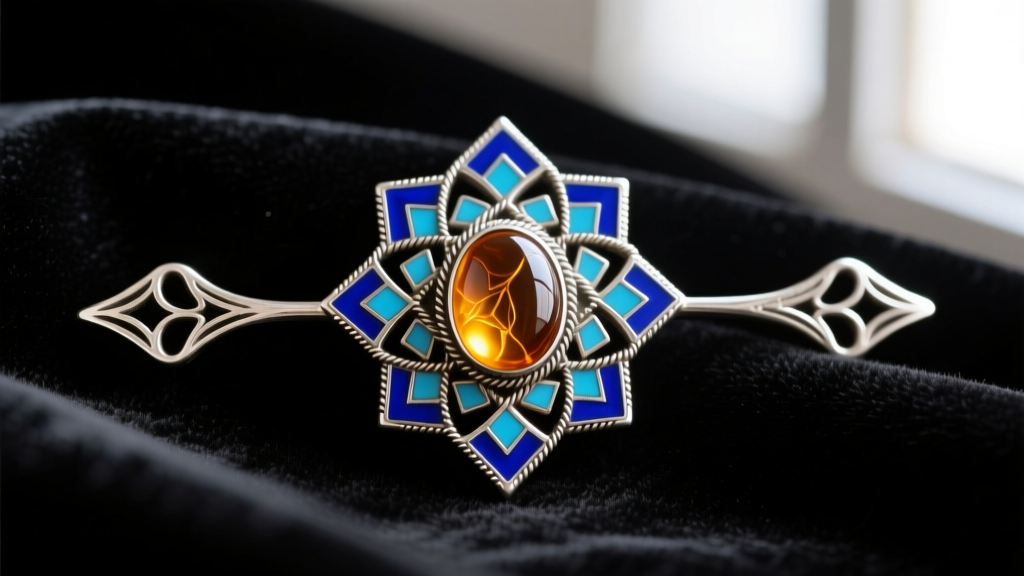
The vibrant splashes of color in Moroccan pendants are achieved through Mina, a cloisonné or champlevé enamel technique. Authentic artisans use crushed glass fused to silver at high temperatures, resulting in a glass-like, fade-resistant finish in striking cobalt blues, emerald greens, and saffron yellows. For gemstones, look for genuine Mediterranean red coral, Baltic or Copal amber, and Lapis Lazuli. Beware of dyed howlite masquerading as turquoise or plastic resins sold as amber.
Matching the Moroccan Necklace to the Occasion
Selecting the correct style based on the recipient's milestone ensures your gift resonates on a personal level. Use the framework below to match the necklace style to the gifting occasion.
| Occasion | Recommended Style | Key Material & Motif | Estimated Budget (2026) |
|---|---|---|---|
| Wedding / Major Anniversary | Heavy Berber Fibula (Tazerzit) | 800 Silver, Coral, Geometric Enamel | $250 - $600+ |
| Graduation / Study Abroad | Delicate Khamsa Pendant | 925 Silver, Lapis Lazuli, Eye Motif | $60 - $150 |
| Birthday / Everyday Luxury | Maria Theresa Coin Choker | Silver-plated Brass, 1780 Trade Coins | $80 - $200 |
| Mother's Day / Matriarch Gift | Multi-Strand Amber & Silver Bead | Carved Amber, Silver Cylindrical Beads | $180 - $400 |
Top 3 Moroccan Necklace Styles to Gift in 2026
1. The Khamsa (Hand of Fatima) for Protection & Travel
The Khamsa is arguably the most recognized symbol in North African jewelry. Translating to "five" in Arabic, it represents the five fingers of the hand and is universally worn to ward off the evil eye and bring health, happiness, and good fortune. For a graduate embarking on a gap year or a friend moving to a new city, a silver Khamsa pendant featuring a central lapis lazuli cabochon is a deeply protective and stylish talisman. Look for pieces where the fingers are symmetrical and the thumb and pinky are slightly curved outward—a hallmark of traditional Moroccan casting.
2. The Berber Fibula (Tazerzit) for Anniversaries & Heritage
Originally, the fibula was a functional, heavy silver brooch used by Amazigh women to pin their woven cloaks (the haik or djellaba) at the shoulders, often connected by a decorative chain. Today, these oversized, triangular, or diamond-shaped pendants are worn as bold statement necklaces on heavy silver chains. The triangle represents the female principle and the tent, while the diamond represents the eye. Gifting a vintage or newly hand-cast Tazerzit is a profound gesture for a major anniversary, symbolizing strength, family, and enduring love.
3. Coin & Medallion Chokers for Fashion-Forward Birthdays
Moroccan coin jewelry frequently features replicas of the Maria Theresa Thaler, an Austrian silver coin from 1780 that became the standard trade currency across North Africa and the Middle East for centuries. Artisans solder silver loops to the edges of these coins, stringing them into dense, overlapping chokers or long, swinging sautoirs. This style is perfect for the fashion-conscious recipient who loves bohemian layering, festival wear, or adding an edge to a simple white linen dress.
Expert Gifting Tip: When gifting heavy traditional pieces like the Fibula, include a jewelry box with a reinforced silk interior. The weight of 800-grade silver can easily crush standard cardboard packaging during transit.
Sizing, Layering, and Presentation Tips
Moroccan necklaces do not always adhere to Western standard chain lengths. Traditional chest pieces are designed to sit low, often between 20 to 24 inches, allowing them to rest over heavy winter garments or traditional caftans. If you are gifting a choker-style coin necklace, ensure it measures at least 15 inches to prevent the heavy metal from feeling restrictive against the collarbone.
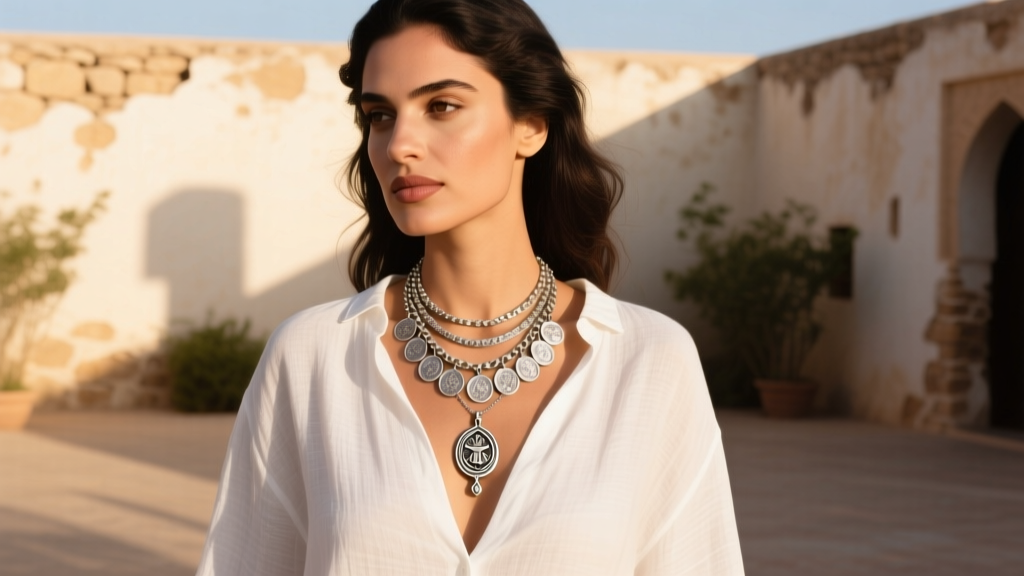
How to Advise the Recipient on Layering: Moroccan silver is bold. It pairs best with contrasting textures rather than competing metalwork. Suggest they layer a 24-inch Berber enamel pendant over a chunky cream knit sweater in the winter, or wear a 16-inch coin choker alone against a deep V-neck or off-the-shoulder linen top in the summer. Avoid mixing Moroccan silver with delicate, minimalist gold chains, as the visual weight and metal tones will clash.
Where to Source Authentic Pieces
To ensure your gift supports genuine artisans rather than overseas factory replicas, source your jewelry carefully. Platforms like NOVICA's Artisan Marketplace partner directly with Moroccan silversmiths, providing detailed bios of the creators and guaranteeing material authenticity. When shopping on broader marketplaces like Etsy, filter by "Shop Location: Morocco" and look for sellers who provide close-up macro photography of the silver hallmarks, the soldering joints on coin loops, and the natural inclusions in amber or coral stones. A true artisan piece will have slight, beautiful imperfections in the engraving—a testament to the human hand behind the gift.


