How to Style and Layer Your Favorite Cross Necklace Perfectly
Learn how to choose, style, and layer a cross necklace for any neckline. Expert tips on chain lengths, metals, and pendant proportions.


The cross necklace has transcended its traditional religious roots to become one of the most versatile, enduring staples in modern jewelry wardrobes. Whether you are wearing a minimalist, micro-pave diamond cross for a subtle sparkle or a heavy, oxidized sterling silver piece for an edgy streetwear look, the way you style and layer this iconic pendant dictates its overall impact. However, many enthusiasts struggle with proportional balance, chain selection, and neckline matching. This comprehensive, step-by-step guide will teach you how to select the right metal grades, match chain widths to pendant bails, and execute a flawless layered stack that avoids tangling while maximizing visual appeal.
Decoding Cross Necklace Proportions and Chain Lengths
The foundation of styling any pendant lies in understanding how chain length interacts with your anatomy and your clothing. A cross necklace is uniquely top-heavy, meaning the vertical drop of the pendant will visually elongate your torso. If the chain is too short, the cross will sit awkwardly above the collarbone; if it is too long, it may get lost in the fabric of your shirt or swing excessively during movement.
For most adults, the universal standard for a single cross pendant is an 18-inch chain, which allows the pendant to rest perfectly in the sternal notch (the hollow at the base of the neck). However, adjusting this length based on your neckline is crucial for a polished look. Below is a strategic framework for pairing chain lengths with common necklines.
| Chain Length | Pendant Resting Point | Ideal Neckline Pairing | Styling Effect |
|---|---|---|---|
| 16 Inches (Choker) | Base of the throat | Scoop neck, off-the-shoulder | Edgy, modern, draws attention to the jawline |
| 18 Inches (Princess) | Collarbone / Sternal notch | Crew neck, V-neck, button-down | Classic, versatile, universally flattering |
| 20-22 Inches (Matinee) | Upper chest | Turtleneck, high-collar blouses | Elongating, formal, creates a layered base |
| 24+ Inches (Opera) | Mid-chest / Solar plexus | Deep V-neck, streetwear tees | Bold, statement-making, casual streetwear |
Material Matters: Choosing the Right Metal Grade and Chain Style
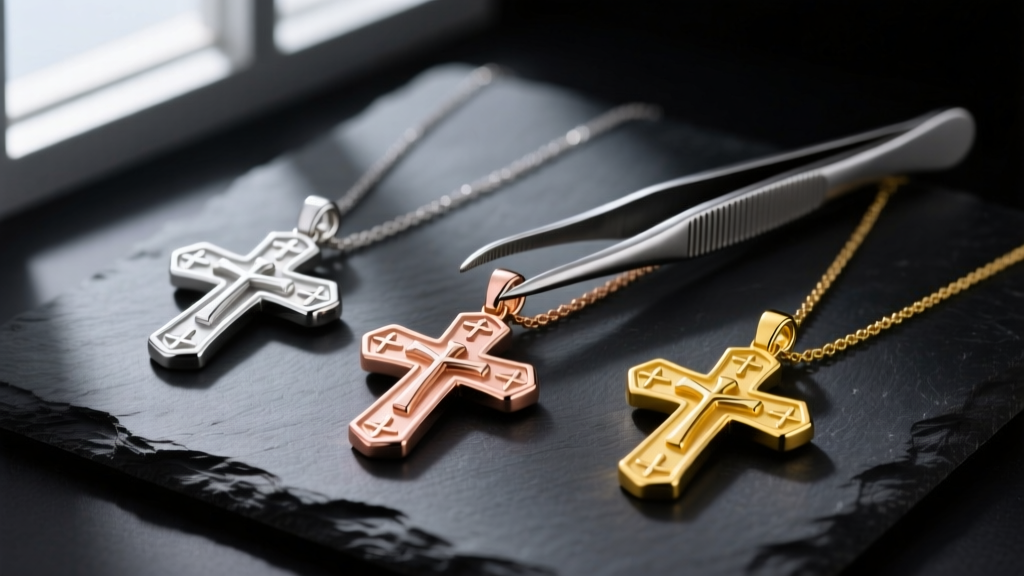
When investing in a cross necklace, the metallurgical composition of both the pendant and the chain will determine its longevity, skin compatibility, and maintenance requirements. According to the Gemological Institute of America (GIA), understanding gold alloys is essential for balancing color with durability.
Gold Alloys: 14k vs. 18k
While 18k gold (75% pure gold) offers a richer, deeper yellow hue, it is inherently softer. If your cross pendant features intricate filigree or is worn daily on a thin chain, 14k gold (58.3% pure gold) is the superior choice. The higher alloy content in 14k gold provides the tensile strength necessary to prevent the chain links from stretching or the pendant bail from warping under the stress of daily wear. For individuals with active lifestyles, 14k gold significantly reduces the risk of micro-abrasions and chain breakage.
Sterling Silver and Rhodium Plating
Sterling silver (92.5% silver, 7.5% copper) is a popular, budget-friendly option for cross necklaces, but the copper content makes it highly susceptible to oxidation and tarnishing. To combat this, high-end silver crosses are often plated with rhodium—a platinum-group metal that provides a bright, white-metal finish and a barrier against sulfur in the air. When purchasing a silver cross, verify the rhodium plating thickness; a flash plate (less than 0.1 microns) will wear off in months, whereas a heavy plate (1.0 to 2.0 microns) can last for years before requiring re-plating.
Matching the Chain Style to the Pendant Bail
The bail (the loop connecting the cross to the chain) dictates which chain styles are viable. A standard cable chain (1.0mm to 1.5mm) will easily slide through most delicate cross bails. However, if you prefer a box chain or a rope chain for added durability, you must measure the bail's inner diameter. A 2.5mm box chain requires a bail with at least a 3.5mm inner clearance. Forcing a thick chain through a tight bail will cause severe friction, eventually wearing down the metal loop and resulting in a lost pendant.
Step-by-Step Guide to Layering a Cross Necklace
Layering transforms a solitary cross necklace into a curated, dimensional stack. The most common mistake beginners make is clustering pendants at the exact same length, resulting in a tangled, chaotic mess. To achieve a professional, editorial look, you must adhere to the "2-inch drop rule," ensuring each subsequent chain is at least two inches longer than the one above it.
The 3-Piece Layering Formula
- Step 1: The Anchor (14-16 inches). Begin with a lightweight, minimalist chain without a pendant, or a very small geometric charm. A 1.2mm cable chain or a delicate paperclip link sits flush against the collarbone, establishing the top boundary of your stack and drawing the eye upward.
- Step 2: The Focal Point (18 inches). This is where your primary cross necklace resides. Choose a pendant with moderate visual weight—such as a solid 14k gold Latin cross or a mother-of-pearl inlay cross. This piece should command attention without overpowering the other layers.
- Step 3: The Elongator (20-24 inches). Finish the stack with a heavier, textured chain (like a 3mm curb or Figaro chain) or a larger, secondary pendant like a coin medallion or a gemstone drop. This bottom layer frames the cross necklace and creates a V-shape that visually slims and elongates the neckline.

Maintenance, Cleaning, and Tangle Prevention
Because cross necklaces often feature intricate corners and, in many cases, pave diamond settings, they require specific maintenance protocols to retain their brilliance. According to Jewelers of America, proper cleaning techniques vary drastically based on the materials involved.
For plain metal crosses (solid gold, platinum, or un-gemstoned silver), an ultrasonic cleaner is highly effective at vibrating away trapped sebum and lotion from the crevices of the design. However, never place a pave diamond cross or a cross featuring porous gemstones (like turquoise, opal, or emerald) into an ultrasonic machine. The high-frequency vibrations can easily shake loose the tiny prongs holding the micro-diamonds, leading to catastrophic stone loss.
Expert Troubleshooting Tip: If your layered cross necklace stack constantly tangles, the culprit is usually static friction between similar chain weaves. Mix your chain textures—pair a smooth box chain with a textured rope chain. The differing surface geometries prevent the links from interlocking and knotting together during wear and storage.
For daily cleaning of pave diamond crosses, use a soft-bristled baby toothbrush dipped in a solution of warm water and a few drops of mild, phosphate-free dish soap. Gently brush the back of the cross (the pavilion side of the stones) where dead skin cells and cosmetics accumulate, blocking light return and making the diamonds appear cloudy. Rinse thoroughly and dry with a lint-free microfiber cloth.
Final Thoughts on Personalizing Your Style
Mastering the art of the cross necklace is about balancing heritage with contemporary aesthetics. By paying close attention to the metallurgical properties of your chosen piece, respecting the physical limitations of the pendant bail, and applying structural layering formulas, you can elevate this timeless symbol into a deeply personal fashion statement. Whether you opt for a heavy, vintage-inspired silver piece layered over a black turtleneck, or a micro-diamond cross resting delicately on a silk camisole, the right technical approach ensures your jewelry not only looks exceptional but endures for a lifetime.


