How to Choose and Style Your Signature True Beauty Necklace
Learn how to choose, size, and style a true beauty necklace. This step-by-step guide covers metal alloys, chain gauges, and gemstone refractive indices.

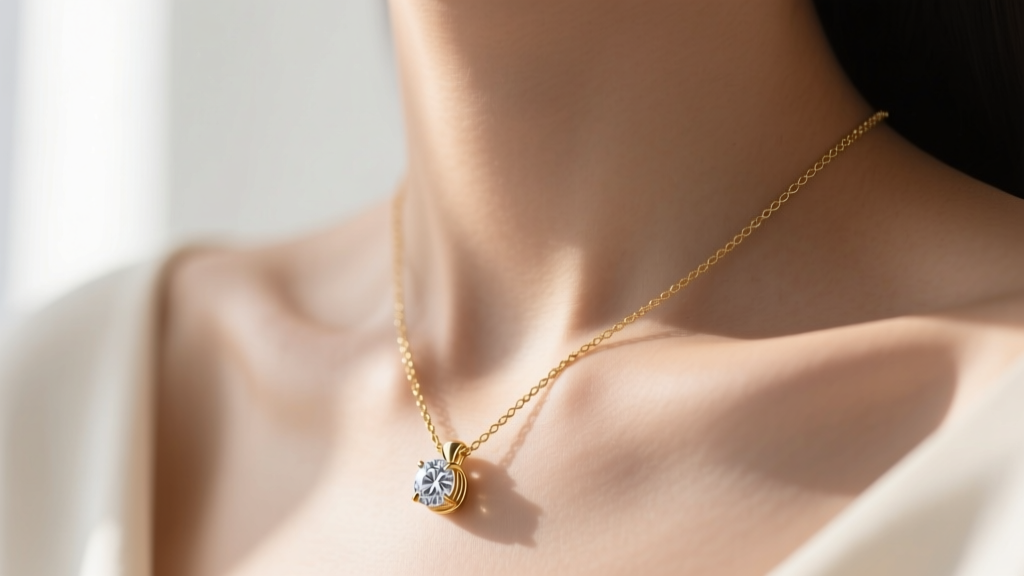
The concept of the 'true beauty necklace' has evolved from a fleeting social media trend into a permanent staple of fine jewelry curation. Unlike statement pieces that overwhelm, a true beauty necklace is a bespoke, perfectly proportioned signature pendant designed to illuminate the face, complement your unique anatomical features, and act as a subtle yet powerful focal point. Crafting this look requires more than just picking a pretty charm; it demands a precise understanding of chain gauges, metal alloys, and optical gemology.
In this comprehensive step-by-step guide, we will walk you through the exact specifications needed to curate, size, and style a true beauty necklace that enhances your natural aesthetic in 2026 and beyond.
Step 1: Map Your Neck Anatomy and Proportions
The foundation of a flawless true beauty necklace lies in the relationship between your neck's circumference, the length of the chain, and the drop of the pendant. A chain that is too thick or a pendant that is too heavy will drag the neckline down, defeating the illuminating purpose of the piece. According to ergonomic jewelry design standards, the pendant should rest precisely in the 'light catch zone'—the hollow of the throat or the upper sternum, depending on your neckline.
| Neck Shape / Profile | Ideal Chain Length | Optimal Chain Gauge | Pendant Drop Size |
|---|---|---|---|
| Swan (Long & Slender) | 15 to 16 inches | 0.8mm - 1.0mm | 6mm - 9mm |
| Athletic (Muscular & Thick) | 17 to 18 inches | 1.1mm - 1.4mm | 8mm - 12mm |
| Petite (Short & Delicate) | 14 to 15 inches | 0.6mm - 0.8mm | 4mm - 6mm |
For the quintessential true beauty aesthetic, the 16-inch length (resting exactly on the collarbone) paired with a 0.8mm cable chain remains the industry gold standard for balancing visibility with delicate elegance.
Step 2: Match Metal Alloys to Your Exact Skin Undertone
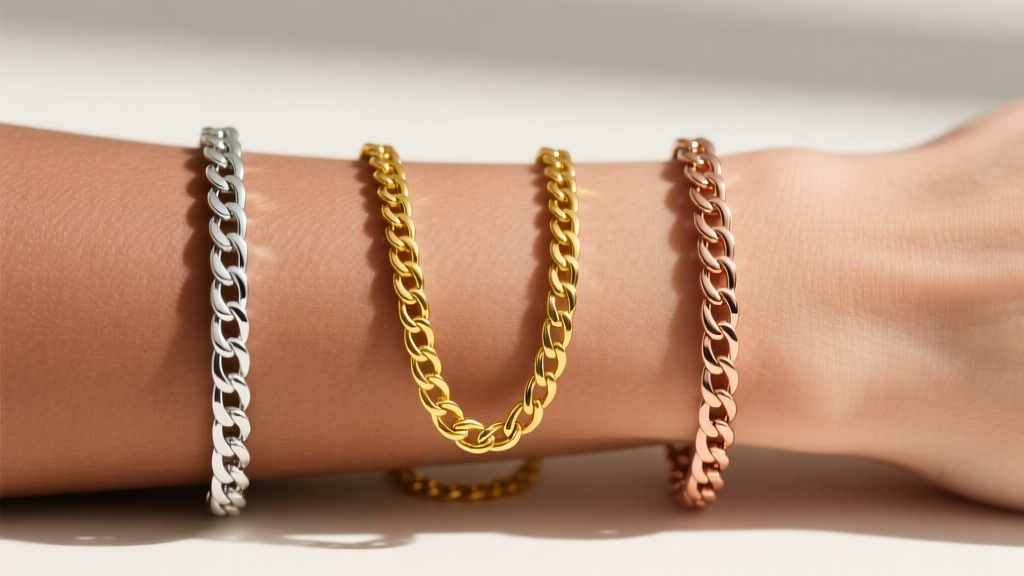
A true beauty necklace must look like an extension of your skin, not an artificial addition. This requires matching the metallurgical composition of your chain to your skin's undertone. The Jewelers of America notes that the alloy mix in karat gold drastically alters its reflective temperature.
The Undertone Testing Protocol
Before purchasing, perform the foil test. Wash your face, wait 15 minutes for any redness to subside, and hold a piece of silver foil and then gold foil near your jawline in natural daylight. If silver brightens your complexion, you have cool undertones. If gold adds a healthy glow, you have warm undertones.
- Cool Undertones: Opt for 14k or 18k White Gold. Ensure it is rhodium-plated to a thickness of at least 0.75 microns to prevent the underlying yellowish alloy from showing through and clashing with your skin.
- Warm Undertones: Choose 18k Yellow Gold. The 75% pure gold content provides a rich, buttery reflectance that harmonizes with melanin-rich or golden-peach skin tones. Avoid 14k yellow gold, as its higher copper/zinc content can sometimes look brassy against warm skin.
- Neutral Undertones: 14k Rose Gold is your ideal match. The specific copper-to-silver ratio in high-quality 14k rose gold (typically 58.3% gold, 20% copper, 2.4% silver) provides a universally flattering, soft pinkish hue that bridges both warm and cool spectrums.
Step 3: Select the Focal Pendant via Refractive Index
The 'beauty' in a true beauty necklace comes from the light return of the central gemstone. Because the pendant sits near the face, it acts as a natural reflector board. You must select a stone with a high Refractive Index (RI) to maximize brilliance. The Gemological Institute of America (GIA) provides extensive data on how different minerals interact with light.
- Diamond (RI 2.42): The benchmark for brilliance. A bezel-set, round brilliant-cut diamond (minimum G color, VS2 clarity) will scatter white light and spectral fire directly upward toward the jawline.
- Moissanite (RI 2.65): Offers even more fire (dispersion) than diamond. Ideal for those who want a highly noticeable, rainbow-like scintillation in direct sunlight.
- White Sapphire (RI 1.77): A subtler, more muted option. It provides a glassy, elegant luster rather than aggressive sparkle, perfect for conservative professional environments.
For a true beauty necklace, avoid opaque or cabochon stones like turquoise or opal as the primary focal point, as they absorb light rather than reflecting it back onto the face.
Step 4: Master the Clasp and Chain Mechanics
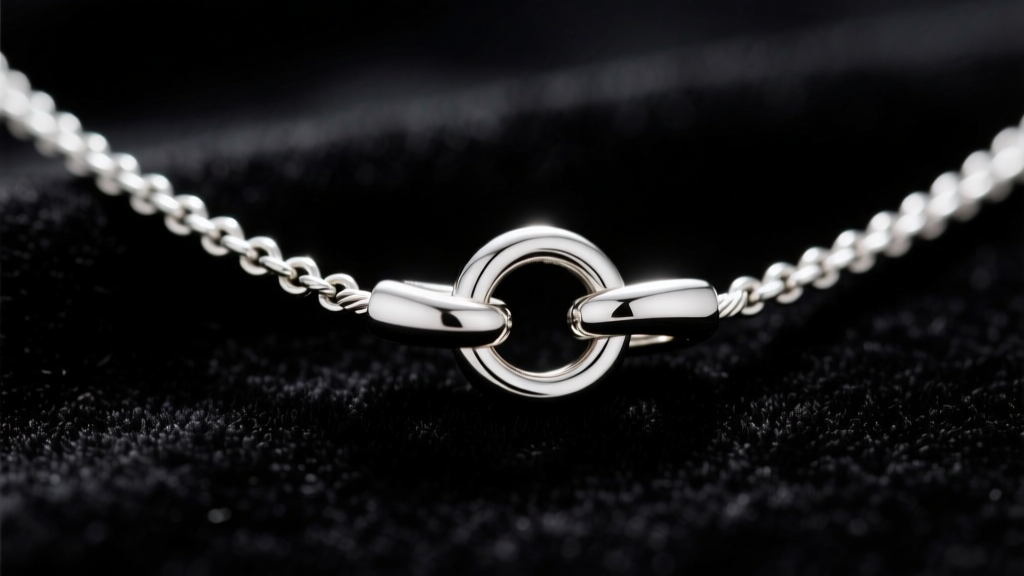
The structural integrity of a delicate necklace is entirely dependent on its hardware. A true beauty necklace typically utilizes a fine cable or box chain ranging from 0.6mm to 1.0mm in thickness. At these gauges, the clasp is the most common point of failure.
Avoid spring ring clasps entirely. The internal tension spring in a standard 4mm or 5mm spring ring degrades quickly, leading to accidental unclasping and lost pendants. Instead, mandate a lobster clasp (minimum 5mm length) or a magnetic neodymium clasp for ease of use. Furthermore, inspect the jump ring (the small circle connecting the clasp to the chain). It must be soldered shut. An unsoldered jump ring will eventually warp under the micro-tensions of daily wear, creating a gap that allows the chain to slip through.
Step 5: The Layering Formula for Everyday Wear
While a true beauty necklace is stunning on its own, modern styling often involves strategic layering. To prevent the delicate 0.8mm chain from tangling with heavier pieces, follow the strict 2-Inch Rule.
- Base Layer (14-15 inches): A micro-pave diamond choker or a simple 1.2mm herringbone chain that sits flush against the skin.
- The True Beauty Layer (16-17 inches): Your signature pendant necklace. The 2-inch gap ensures the pendant swings freely without catching on the base layer's links.
- Anchor Layer (19-20 inches): A heavier, textured chain (like a 2.5mm paperclip or Figaro chain) without a pendant, which frames the V-shape of the neckline and grounds the delicate upper layers.
Troubleshooting Common Wear Issues
Pro-Tip: The Pendant Flip
If your true beauty pendant constantly flips upside down, the issue is bail friction. The bail (the loop holding the pendant) is likely too wide for the chain, allowing the pendant to slide through and invert. Have a jeweler install a 'hidden bail' or a soldered jump ring that restricts lateral movement, keeping the gemstone perfectly face-forward at all times.
Curating the perfect true beauty necklace is an exercise in precision. By meticulously matching your chain gauge to your neck anatomy, aligning metal alloys with your skin's undertone, and prioritizing high-RI gemstones, you create more than just an accessory. You engineer a permanent, illuminating frame for your face that embodies timeless elegance and modern sophistication.


