How to Style and Tie a Wrap Around Necklace: A Beginner's Guide
Learn how to style, tie, and secure a wrap around necklace. Our beginner's guide covers lariat knots, chain lengths, and neckline pairings.


There is an undeniable elegance to a wrap around necklace. Unlike standard clasped chains that sit statically on your collarbone, a wrap necklace—often taking the form of a lariat, Y-necklace, or continuous rope—invites interaction. It moves with you, drapes dynamically, and allows for endless customization. However, for beginners, the lack of a traditional clasp or the sheer length of the chain can feel intimidating. How do you keep it from slipping? How do you prevent it from tangling?
This beginner-friendly explainer breaks down the exact mechanics of styling, tying, and maintaining a wrap around necklace, transforming it from a confusing string of metal into your most versatile wardrobe staple.
The Anatomy of a Wrap Around Necklace
Before you start knotting, it is crucial to understand the two primary structures of wrap necklaces:
- The Lariat (Y-Style): This features a main chain that drops down into a secondary tail, often threaded through a decorative O-ring, a fixed jump ring, or simply tied in a loose knot. It has two distinct ends.
- The Continuous Rope (Endless Loop): This is an exceptionally long chain (typically 48 to 60+ inches) that either has no clasp at all or features a clasp that is meant to be hidden. It is designed to be looped multiple times around the neck.
The standard length for a double-wrap rope is 48 inches, while a 60-inch or 72-inch chain allows for a triple-wrap choker effect or a dramatic, waist-grazing lariat drop. According to Blue Nile's comprehensive chain guide, the gauge (thickness) of the chain heavily dictates how it drapes. For wrap styles, a gauge between 1.5mm and 3.0mm offers the perfect balance of fluid drape and structural integrity.
Material Science: Choosing the Right Chain Weave
Not all chains are created equal when it comes to wrapping. The metallurgical structure of the chain links will determine whether your necklace drapes beautifully or suffers permanent damage. This is the most common failure point for beginners.
Weaves That Excel at Wrapping
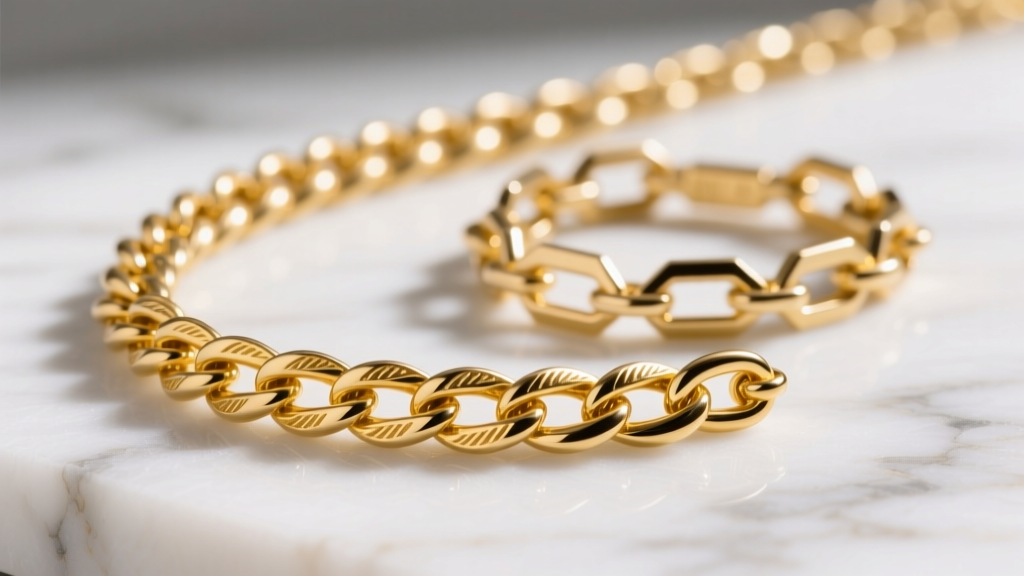
You need chains with multidirectional flexibility. Box chains (interlocking square links) and wheat chains (braided, teardrop-shaped links) are exceptional for wrap around necklaces. They can be twisted, knotted, and looped without losing their structural memory. Cable chains are also a safe, classic choice, provided the links are soldered to prevent pulling apart under the tension of a knot.
Weaves to Avoid (The Kink Hazards)
Never tightly wrap a snake chain or a herringbone chain. These weaves are designed to lay flat against the skin and possess almost zero lateral flexibility. If you tie a snake chain into a knot or wrap it tightly into a double loop, the metal links will crease. Once a herringbone chain kinks, the damage is permanent and cannot be repaired by a jeweler.
4 Foolproof Ways to Tie and Drape Your Necklace
Mastering the wrap around necklace comes down to understanding tension and gravity. Here are four distinct styling techniques, ranging from casual to formal.
1. The Classic Lariat Drop
Best for: V-necks and wrap dresses.
How-to: Drape the chain evenly around the back of your neck. Bring both ends to the front. If your lariat has an O-ring slide, thread the tail through it and let it hang. If it is a raw chain, cross the left side over the right, pull the end through the newly formed loop, and gently tighten it at your sternum. Leave the tail hanging at least 6 inches below the knot for an elongating visual effect.
2. The Double-Loop Choker
Best for: Crew necks, off-the-shoulder tops, and high-neck blouses.
How-to: Take your 48-inch or 60-inch continuous rope and fold it exactly in half. Place the folded loop behind your neck and bring the two loose ends to the front. Wrap the two ends around the back of your neck a second time, then tie them in a simple square knot at the front, hiding the knot beneath the initial draped loop. This creates a layered, multi-strand choker effect from a single piece of jewelry.
3. The Asymmetric Side Knot
Best for: One-shoulder gowns and asymmetrical necklines.
How-to: Drape the necklace so that one side hangs 8 inches longer than the other. Bring both ends to your non-dominant shoulder. Tie a loose, single overhand knot near your collarbone. Allow the longer tail to cascade down your shoulder and chest. This breaks up the symmetry of an outfit and draws the eye upward toward the face.
4. The Belted Cinch (Body Jewelry)
Best for: Flowing maxi dresses, tunics, and bohemian silhouettes.
How-to: Instead of wrapping the chain around your neck, drape it down your torso like a lanyard. Take the two ends and wrap them around your waist, securing them by tucking them into the sides of a leather belt or tying them in a small bow at the small of your back. This transforms a standard necklace into a striking body chain.

The Neckline Pairing Matrix
Pairing your wrap technique with the correct garment neckline is essential for a polished look. Use this quick-reference matrix to guide your daily styling decisions.
| Neckline Type | Recommended Wrap Style | Chain Length & Gauge | Styling Rationale |
|---|---|---|---|
| Deep V-Neck | Classic Lariat Drop | 48" to 60" / 1.5mm - 2.0mm | Mimics and elongates the V-shape of the garment, drawing the eye downward. |
| Crew Neck | Double-Loop Choker | 48" / 2.5mm - 3.0mm | Sits above the fabric line, adding texture without competing with the collar. |
| Strapless / Sweetheart | Asymmetric Side Knot | 60" / 1.5mm | Fills the negative space on the chest and shoulders elegantly. |
| Turtleneck | Long Single Loop (Mafia) | 60"+ / 2.0mm+ | Provides a stark, vertical contrast to the horizontal bulk of the sweater. |
Troubleshooting: Tangles, Slipping, and Kinks
Even the most beautifully crafted wrap around necklace can become a nuisance if it constantly slips down your torso or tangles in your jewelry box. Here are professional, real-world fixes for the most common complaints.
Problem: The Lariat Knot Keeps Slipping and Choking You
The Fix: Metal-on-metal friction is notoriously low, especially with polished gold or sterling silver. If your lariat slides through the O-ring and tightens around your throat, you need to introduce a friction barrier. You can purchase tiny silicone lariat stoppers (often sold as earring backs or specialized jewelry findings) and thread the chain through them. Alternatively, a classic jeweler's hack is to apply a single, tiny drop of clear nail polish to the inside of the metal O-ring. Let it dry completely. The hardened polish creates a rubberized grip that holds the chain in place without damaging the metal.
Problem: The Continuous Rope Tangles Instantly
The Fix: Long, fine chains act like magnets for each other. Never throw a 60-inch wrap necklace into a drawer. If you are traveling, thread one end of the chain through a plastic drinking straw before clasping it or tying it off. The rigid straw prevents the chain from folding in on itself and forming microscopic knots. For home storage, always hang wrap necklaces on a multi-tiered jewelry tree or a padded hanger, ensuring the bottom weight of the chain pulls it taut.
Problem: The Knot Looks Bulky and Unrefined
The Fix: If you are tying a thick 3.0mm box chain, a standard overhand knot will look like a bulky lump of metal. Instead of tying the chain to itself, use a decorative slide clasp or a leather cord wrap to bind the two strands together. You can also use a small, decorative silk ribbon to tie the two metal ends together, introducing a mixed-media element that looks intentional and high-fashion. For more advanced layering and knotting techniques, Kay Jewelers' educational resources offer excellent visual references for managing heavier chain weaves.
Final Thoughts on Mastering the Wrap
A wrap around necklace is less of a static accessory and more of an interactive styling tool. By understanding the structural limitations of your chain weave, utilizing the correct knotting techniques for your neckline, and employing clever friction hacks to keep your lariats in place, you unlock a level of sartorial versatility that standard necklaces simply cannot match. Start with a mid-weight 48-inch box chain, practice the double-loop choker, and watch how it instantly elevates your everyday wardrobe.