How to Style and Layer a Yellow Bead Necklace: A Step-by-Step Guide
Learn how to style, layer, and care for a yellow bead necklace. Our step-by-step guide covers material grades, lengths, and neckline pairings.


The Resurgence of the Yellow Bead Necklace
As we navigate the 2026 jewelry landscape, the shift toward 'dopamine dressing' has firmly cemented the yellow bead necklace as a staple in modern wardrobes. Moving away from the minimalist, ultra-fine chains that dominated the previous decade, today's aesthetic embraces organic textures, vibrant hues, and tactile materials. Whether crafted from ancient Baltic amber, faceted citrine, or polished yellow jade, a yellow bead necklace introduces an immediate focal point of warmth and vitality to any ensemble. However, styling these pieces requires a strategic approach to proportion, material hardness, and layering mechanics. This comprehensive, step-by-step guide will teach you how to expertly style, layer, and maintain your yellow bead necklaces for maximum visual impact and longevity.
Step 1: Identify Your Bead Material and Grade
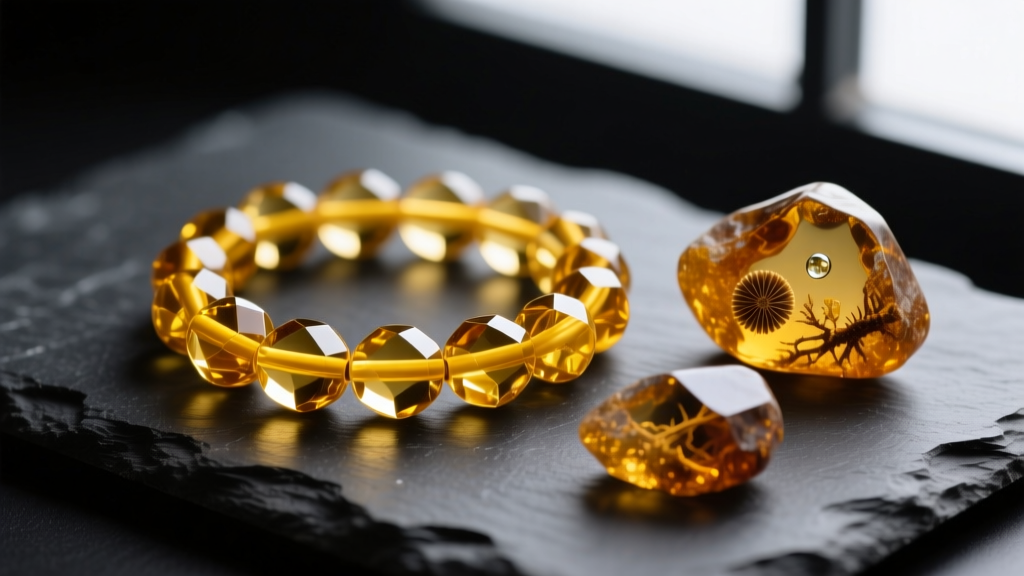
Before attempting to layer or clean your necklace, you must identify the exact material. The term 'yellow bead' encompasses a wide spectrum of gemological and organic materials, each with distinct physical properties, Mohs hardness ratings, and price points. Understanding these specifics is crucial for both styling and long-term care.
| Material | Mohs Hardness | Key Characteristics | Avg. Price Range (18-inch) |
|---|---|---|---|
| Baltic Amber | 2.0 - 2.5 | Organic resin, lightweight, may contain prehistoric inclusions. Highly susceptible to chemicals. | $45 - $150 |
| Natural Citrine | 7.0 | Quartz variety, excellent clarity, often features subtle color zoning. Durable for daily wear. | $120 - $400 |
| Yellow Jade (Jadeite) | 6.5 - 7.0 | Dense pyroxene mineral, high translucency in premium grades. Extremely tough, resists chipping. | $200 - $800+ |
| Yellow Jade (Nephrite) | 6.0 - 6.5 | Amphibole mineral, more opaque, buttery luster. Highly durable but slightly softer than jadeite. | $60 - $250 |
| Artisan Glass/Resin | 5.5 (Glass) | Uniform color, heavier than amber, highly customizable. Ideal for bold, oversized statement beads. | $25 - $85 |
According to the Gemological Institute of America (GIA), organic gems like amber require vastly different handling than crystalline structures like citrine. Always verify your material before proceeding to the layering stage, as the weight of the beads will dictate the necessary clasp and stringing wire gauge.
Step 2: Select the Ideal Length for Your Proportions
The visual weight of a yellow bead necklace is heavily dependent on its length and the diameter of the beads. A standard 16-inch choker with 10mm beads will look drastically different than a 24-inch opera-length strand with 4mm beads. Use this anatomical guide to select your base length:
- 14 to 15 inches (Collar): Sits tightly against the base of the neck. Best for 4mm to 6mm beads. Ideal for open-collar shirts and off-the-shoulder tops.
- 16 to 18 inches (Princess): Falls precisely at or just below the clavicle notch. The most versatile length, accommodating 6mm to 10mm beads. Perfect for everyday wear and V-necklines.
- 20 to 24 inches (Matinee/Opera): Rests on the upper chest to sternum. Excellent for layering over turtlenecks or pairing with deep scoop necks. Beads larger than 12mm work best here to prevent the strand from looking like a tangled mess.
Step 3: Master the 3-Point Layering Framework
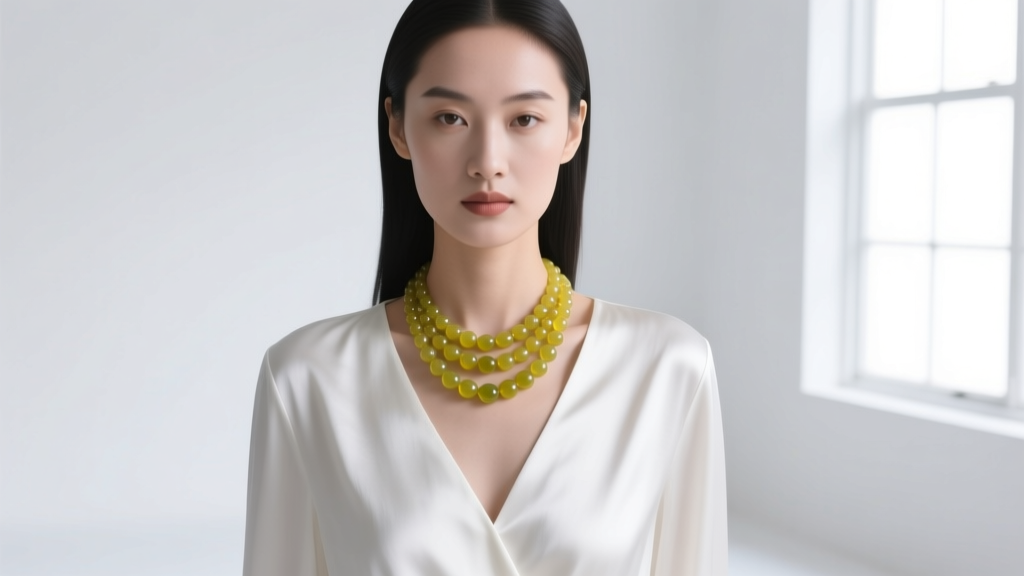
Layering a yellow bead necklace with metallic chains is a hallmark of contemporary styling. To avoid a cluttered, haphazard look, utilize the 'Anchor-Texture-Statement' framework. This method ensures distinct visual separation between strands.
1. The Anchor (14-16 inches)
Start with a delicate, high-tensile metallic chain. A 14k or 18k yellow gold cable chain (1.2mm to 1.5mm width) provides a luminous baseline without competing with the beads. Ensure it sits at least two inches above the bead necklace to prevent friction.
2. The Texture (18-20 inches)
This is your primary yellow bead necklace. The organic texture of the beads contrasts beautifully with the metallic anchor. If your beads are highly polished (like jade or glass), introduce a secondary chain with a hammered or paperclip link to add matte textural variance.
3. The Statement (22-26 inches)
Finish the stack with a long, heavy element. This could be a thick, oxidized sterling silver rope chain or a secondary strand of larger, matte-finished yellow amber beads. The goal is to draw the eye vertically, elongating the torso.
Pro Tip: When layering, always use a necklace detangler clasp at the nape of the neck. This hardware keeps your anchor, texture, and statement strands perfectly spaced and prevents the beads from scratching your metallic chains throughout the day.
Step 4: Match Your Necklace to the Neckline
The interaction between your bead diameter and your garment's neckline dictates the success of your outfit. Here is the definitive pairing guide for 2026:
- The V-Neck: Pair with an 18-inch princess length. The beads should trace the line of the V without crossing into the exposed skin. Use 6mm to 8mm beads for a refined, tailored look.
- The Crew Neck: Opt for a 14-inch collar or a 22-inch matinee. Avoid 18-inch lengths, as the beads will clash with the fabric's hem. A collar of tightly strung 4mm yellow citrine beads adds a sophisticated pop of color above a simple white tee.
- The Boatneck (Bateau): This wide, horizontal neckline demands vertical disruption. Wear a 24-inch opera-length yellow bead necklace to break the horizontal line and elongate the neck.
- The Button-Down Shirt: Leave the top two buttons undone and layer a 16-inch amber bead strand with a 20-inch gold lariat. The organic warmth of the amber softens the rigid structure of the collared shirt.
Step 5: Implement Material-Specific Care Protocols
A yellow bead necklace is an investment that requires meticulous maintenance. The most common failure mode for bead necklaces is the degradation of the stringing material (usually silk thread or nylon-coated stainless steel wire) and the chemical etching of the beads themselves.
For organic materials like Baltic Amber, never use ultrasonic cleaners, steamers, or alcohol-based perfumes. Amber is highly porous and can develop a cloudy, crazed surface when exposed to ethanol or acetone. Clean amber beads using only a soft, lint-free microfiber cloth slightly dampened with lukewarm water.
For crystalline materials like Citrine, while the stone itself is durable enough for ultrasonic cleaning, the stringing wire or silk knots are not. Prolonged submersion weakens the tensile strength of the thread. Instead, use a soft-bristled baby toothbrush dipped in a mild, phosphate-free dish soap solution to gently scrub the crevices between the beads, rinsing quickly under a low-pressure tap and patting dry immediately.
Finally, store your yellow bead necklaces flat in a climate-controlled environment. Hanging heavy bead strands (especially those over 50 grams) for prolonged periods will cause the stringing wire to stretch and the silk knots to fray, leading to catastrophic strand failure. By following these precise protocols, your yellow bead necklace will retain its structural integrity and vibrant luster for decades.


