How to Unknot a Necklace: Expert Guide to Tangle-Free Layering
Master how to unknot a necklace with our expert guide. Discover the physics of chain tangling, professional untying tools, and 2026 layering prevention tips.

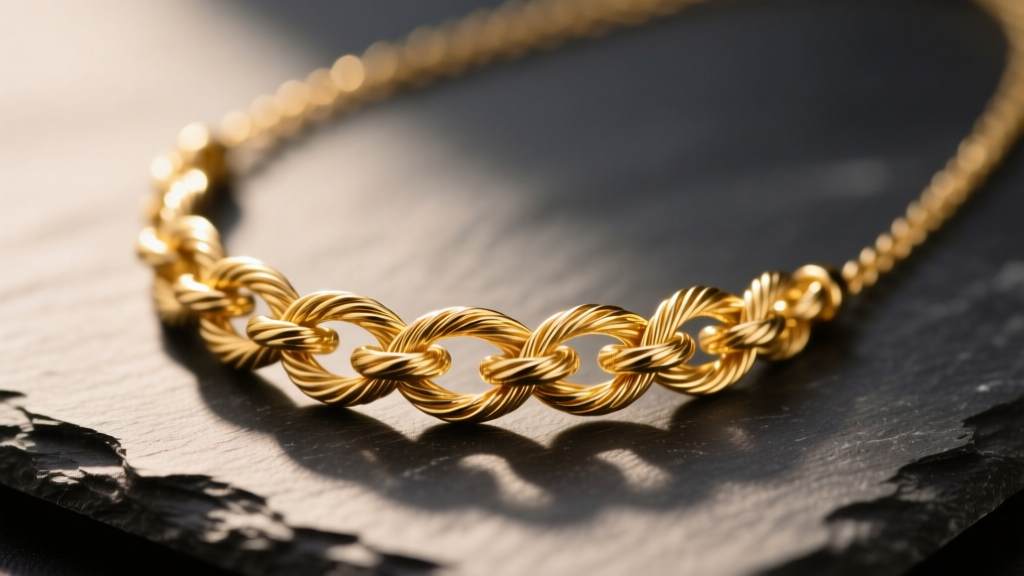
The 'curated cluster' necklace trend has completely dominated the 2026 style landscape. From high-fashion runways to everyday street style, stacking four, five, or even six delicate chains of varying lengths and textures is the definitive look of the year. However, this maximalist approach to neckline styling comes with a frustrating mechanical side effect: severe tangling. If you have ever spent twenty minutes aggressively pulling at a fused ball of gold and silver links, you understand the panic. Learning how to unknot a necklace properly is no longer just a niche skill for jewelers; it is an essential maintenance requirement for the modern jewelry collector.
Untangling fine jewelry requires an understanding of metallurgy, link geometry, and friction. Yanking at a knot work-hardens the metal, leading to micro-fractures and eventual chain snap. In this comprehensive guide, we break down the physics of why modern chains tangle, the professional-grade tools required to safely separate them, and the architectural rules for building a tangle-free layered stack.
The 2026 Layering Paradox: Why Trend-Forward Chains Tangle
This year's dominant necklace trends heavily feature micro-chains—specifically 0.8mm to 1.2mm widths—and mixed-metal textures. While visually stunning, these design choices create a perfect storm for knotting. Micro-cable chains possess tiny, tightly welded oval links that easily slip through the gaps of neighboring chains. When combined with the high-friction surface of a snake chain or the sharp edges of a herringbone link, the result is a mechanical lock that tightens with every movement of the wearer's body.
Furthermore, the 2026 trend of mixing oxidized sterling silver with high-polish 18k gold introduces varying surface friction coefficients. The matte, porous texture of oxidized silver acts like microscopic velcro against the slick surface of polished gold, causing the chains to bind together rather than glide past one another. Understanding this friction is the first step in learning how to unknot a necklace without causing structural damage to the links.
The Physics of the Knot: Link Geometry and Friction
Not all chains tangle equally. The propensity for a necklace to knot is directly tied to its link geometry and flexibility. According to Rio Grande's jewelry manufacturing guides, the structural flexibility of a chain dictates how it behaves under the kinetic energy of daily wear.
| Chain Type | Standard Gauge | Flexibility | Tangle Risk |
|---|---|---|---|
| Micro-Cable | 0.8mm - 1.2mm | High (Multi-axis) | Extreme |
| Snake Chain | 1.0mm - 2.0mm | Medium (Uni-axis) | High |
| Rolo Chain | 1.5mm - 3.0mm | Low (Rigid links) | Low |
| Box Chain | 1.2mm - 2.5mm | Medium (Hinged) | Medium |
| Herringbone | 2.0mm - 5.0mm | Low (Flat lay) | Low (but kinks easily) |
As the table illustrates, the highly flexible micro-cable and snake chains are the primary culprits in multi-layer tangles. Their ability to bend on multiple axes allows them to weave through one another, creating complex slipknots that tighten under the weight of attached pendants.
How to Unknot a Necklace: The Professional Jeweler’s Method
Forget the popular internet hacks involving baby oil, dish soap, or aggressively shaking the chain. These methods degrade the finish of your jewelry and fail to address the mechanical core of the knot. To safely untangle fine chains, you must reduce friction and isolate the central tension point using precision tools.
Step 1: Isolate, Flatten, and Lubricate
Place the tangled mass on a flat, non-porous surface, such as a glass or acrylic tray. Never attempt to unknot a necklace while holding it in the air; gravity will pull the pendants downward, tightening the slipknots. Once flattened, apply a dry lubricant. While many suggest talcum powder, professional jewelers prefer finely milled dry graphite powder or a specialized PTFE (Teflon) dry spray. These reduce the metal-on-metal friction coefficient to near zero without leaving a greasy residue that requires ultrasonic cleaning afterward. Use a soft makeup brush to gently dust the powder directly into the center of the knot.
Step 2: The Micro-Pry Technique
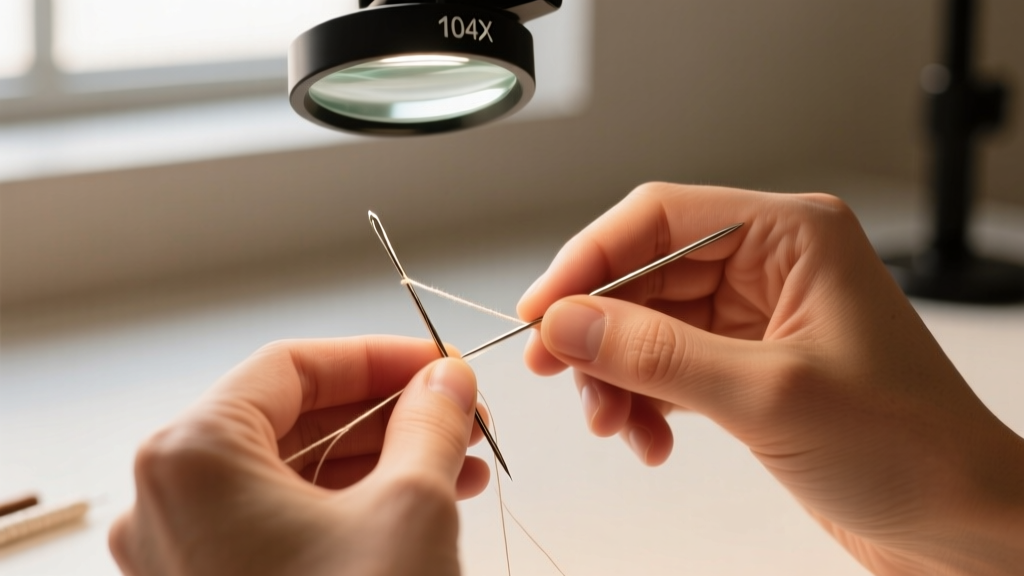
Do not use your fingernails or standard sewing pins, which are often too thick (1.0mm+) and will wedge the links tighter. Instead, use a Size 10 or Size 12 beading needle, which has a diameter of roughly 0.46mm to 0.38mm. Under the magnification of a 10x jeweler's loupe, insert the needle into the exact center of the tightest knot. Gently wiggle the needle to create a micro-gap, then use a second needle to hook the outermost link and pull it away from the center. Work from the outside in, loosening the perimeter links before attacking the dense core.
Step 3: Tension Release
Once the central knot is loosened enough to see light through the links, lay the chain flat and gently pull the two ends of the necklace in opposite directions. The residual graphite will allow the links to slide past one another, completely releasing the tension.
Material Matters: Metal Grades and Knot Severity
The metal composition of your necklace drastically affects how a knot behaves. Pure 24k gold is incredibly soft; if a 24k chain knots, the links will easily deform and stretch under pressure, making it easier to unknot but highly susceptible to permanent warping. Conversely, 14k and 18k gold alloys, mixed with copper and zinc, possess higher tensile strength and 'metal memory.' They resist deforming, meaning the knot will hold its shape stubbornly, but the links will snap back to their original roundness once freed.
Sterling silver (925) presents a unique challenge. It is prone to work-hardening. If you aggressively bend a knotted sterling silver snake chain, the repeated flexing will cause the interlocking metal plates to become brittle and snap. As noted in Jewelers Mutual care resources, treating silver with extreme gentleness during the untying process is paramount to prevent irreversible structural fatigue.
Preventative Architecture: Designing a Tangle-Free Stack
The ultimate solution to the tangling epidemic is preventative styling. By applying structural rules to your 2026 layering strategy, you can eliminate 90% of mechanical knotting before it begins.
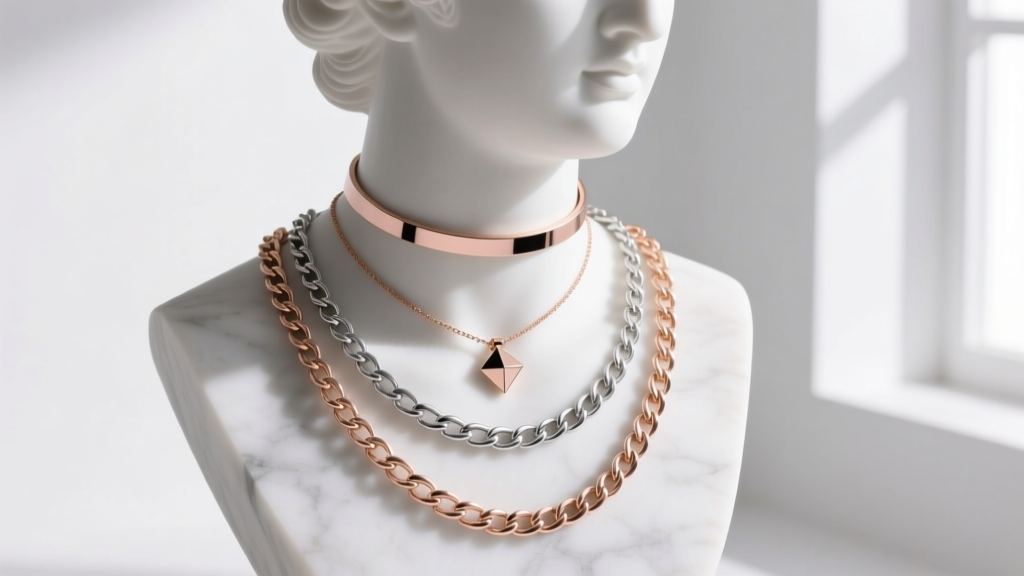
- The 2-Inch Differential Rule: Never stack chains that are less than 2 inches apart in length. A 16-inch choker paired with an 18-inch pendant chain provides enough physical separation to prevent the pendants from interlocking and acting as a fulcrum for the chains to wrap around.
- Texture Contrast: Avoid stacking two identical micro-cable chains. If your base layer is a 1.0mm cable chain, your secondary layer should be a rigid 2.0mm rolo or box chain. The larger, rigid links physically cannot pass through the smaller links of the base chain.
- Clasp Upgrades: The traditional lobster clasp is a primary tangling hazard; its lever and jump ring easily catch on neighboring chains. Upgrade your layered pieces to neodymium magnetic clasps or sleek fold-over box clasps, which present a smooth, snag-free profile against the skin and other jewelry.
- Anti-Tangle Tubes: For chains that must be worn closely together, utilize transparent silicone anti-tangle tubes at the nape of the neck. These small, 2-inch sleeves hold the chains parallel to one another in the high-friction zone at the back of the neck, preventing the initial twist that leads to frontal knotting.
'A beautifully layered necklace stack should look effortless, not engineered. But achieving that effortlessness requires a deep understanding of how different metals and link structures interact in motion.' — Master Jeweler & Trend Forecaster
Mastering how to unknot a necklace is a vital skill for preserving your investment in fine jewelry. By respecting the physics of link geometry, utilizing precision micro-tools, and applying architectural spacing to your daily stacks, you can fully embrace the bold, multi-layered trends of 2026 without the frustration of the morning tangle.


