Identify Any Flower Necklace Name: Botanical ID Guide
Struggling to identify a vintage or modern botanical piece? Learn how to determine any flower necklace name, era, and proper care techniques.

Whether you have inherited a Victorian heirloom, found a unique piece at an estate sale, or are trying to catalog a modern botanical design, determining the exact flower necklace name can be surprisingly difficult. Floral motifs are the most ubiquitous theme in jewelry history, yet the stylization of petals, the evolution of metalwork, and the loss of original documentation often leave collectors and wearers guessing. Misidentifying a botanical pendant doesn't just affect its historical appreciation; it can lead to improper cleaning methods that destroy delicate enamel or porous gemstones.
In this comprehensive troubleshooting guide, we will decode the visual clues, historical terminology, and material markers necessary to accurately identify your botanical jewelry, pair it with the correct chain gauge, and preserve its structural integrity for decades to come.
The Botanical Identification Problem
The primary challenge in establishing a precise flower necklace name lies in the artistic liberties taken by jewelers across different eras. A stylized Art Nouveau orchid may look entirely different from a geometric Art Deco lotus. Furthermore, the Victorian era's obsession with Floriography (the language of flowers) meant that jewelers frequently combined multiple botanical elements into a single pendant to convey complex sentimental messages.
'Floriography transformed jewelry into wearable poetry. A pendant featuring a combination of ivy, forget-me-nots, and acorns was not merely decorative; it was a coded message of fidelity, remembrance, and enduring strength.'
When appraising or insuring a piece, generic terms like 'floral pendant' are insufficient. Appraisers require specific nomenclature—such as giardinetti, en tremblant, or specific species identification—to accurately assess market value. In the 2026 vintage jewelry market, correctly identified historical floral pieces command a 30% to 50% premium over unidentified counterparts.
Decoding Historical Flower Necklace Names
To troubleshoot your identification process, you must first understand the specialized terminology used by antique jewelry historians. Here are the most common historical categories you will encounter:
Giardinetti (Little Gardens)
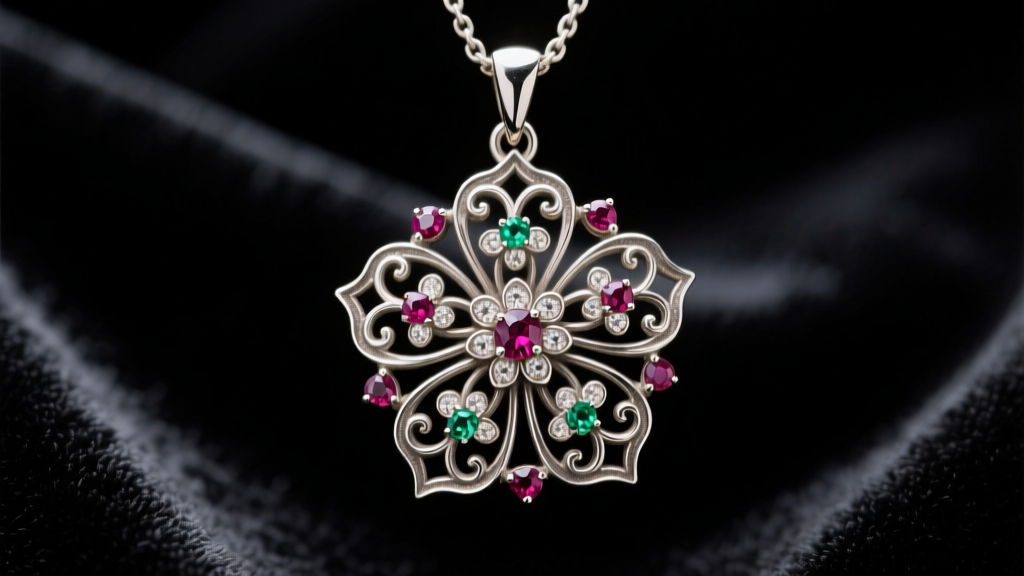
Originating in Italy in the mid-18th century, giardinetti jewelry features intricate floral bouquets or single blooms constructed entirely from tiny, calibrated faceted gemstones. If your pendant features a cluster of minuscule rubies, emeralds, and diamonds set in silver collets to form a flower, you are likely looking at a giardinetti piece. These are highly prized, with authentic 1700s examples frequently pricing between $4,000 and $15,000, depending on gemstone quality and condition.
Forget-Me-Not Mourning Jewelry
The forget-me-not is easily identified by its distinct five-petal structure. In Victorian mourning and sentimental jewelry, this flower was almost exclusively rendered using cabochon turquoise or vibrant blue plique-à-jour enamel, often surrounding a central seed pearl. If your pendant features five rounded blue elements, the flower necklace name you are looking for is a Forget-Me-Not motif.
Lily of the Valley
Popularized during the Art Nouveau period (1890–1915), this design features delicate, bell-shaped flowers dangling from arching stems. Jewelers frequently used small, half-drilled seed pearls or white enamel to mimic the bells, set in 14k or 18k yellow gold. Identifying this specific flower necklace name is crucial, as the delicate wirework stems are prone to snapping if paired with a chain that is too heavy.
Visual Troubleshooting: Petal Counts and Metal Clues
When the historical style isn't immediately obvious, you must rely on botanical morphology and metal hallmarks. Use the troubleshooting matrix below to narrow down your flower necklace name based on visual characteristics.
| Petal Count / Shape | Common Flower Name | Era & Material Clues | Estimated Market Value (2026) |
|---|---|---|---|
| 5 Rounded Petals | Forget-Me-Not / Wild Rose | Victorian; Turquoise, Blue Enamel, Seed Pearls | $400 - $1,200 |
| 6 Pointed Petals | Lily / Fleur-de-Lis | Art Deco; Onyx, Rock Crystal, Platinum | $800 - $2,500 |
| 8+ Thin Petals | Daisy / Chrysanthemum | Edwardian; Diamonds, Silver-topped Gold | $1,500 - $3,500 |
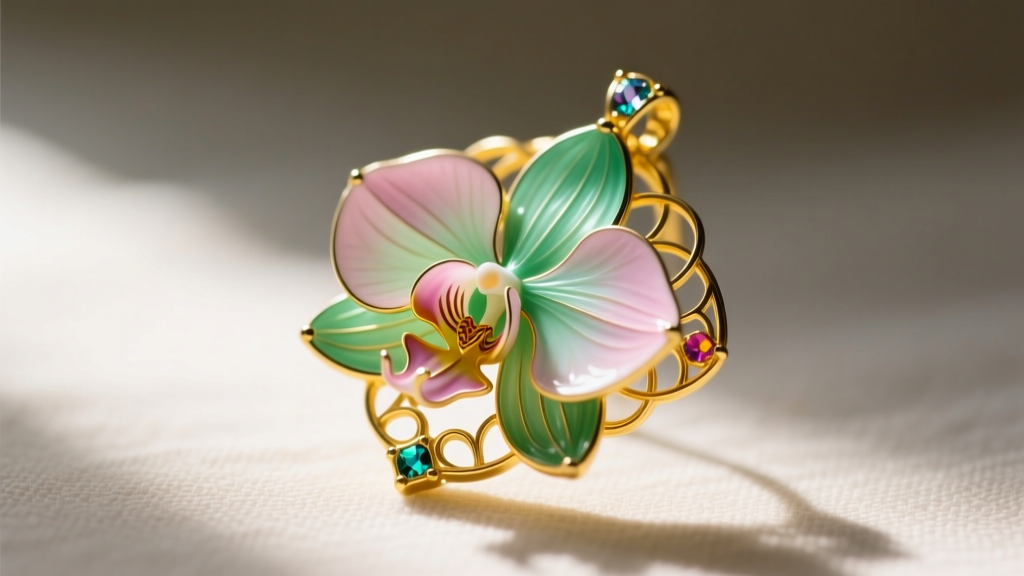
| Complex / Asymmetrical | Orchid / Iris | Art Nouveau; Plique-à-jour Enamel, Opals | $2,500 - $10,000+ |
Chain Pairing Troubleshooting: Once identified, you must match the pendant to the correct chain. Heavy Edwardian diamond daisies (often 10g+) require a sturdy 1.5mm to 2.0mm wheat or rope chain to prevent clasp failure. Conversely, fragile Art Nouveau orchids should be suspended on a 0.8mm to 1.0mm cable chain to avoid visual overpowering and stress on the bail.
Material-Specific Care for Botanical Pendants
Misidentifying the materials used in your floral pendant is the leading cause of irreversible damage during home cleaning. The intricate crevices of flower petals trap skin oils, cosmetics, and environmental dust, prompting owners to use aggressive cleaning methods.
The Plique-à-Jour Warning
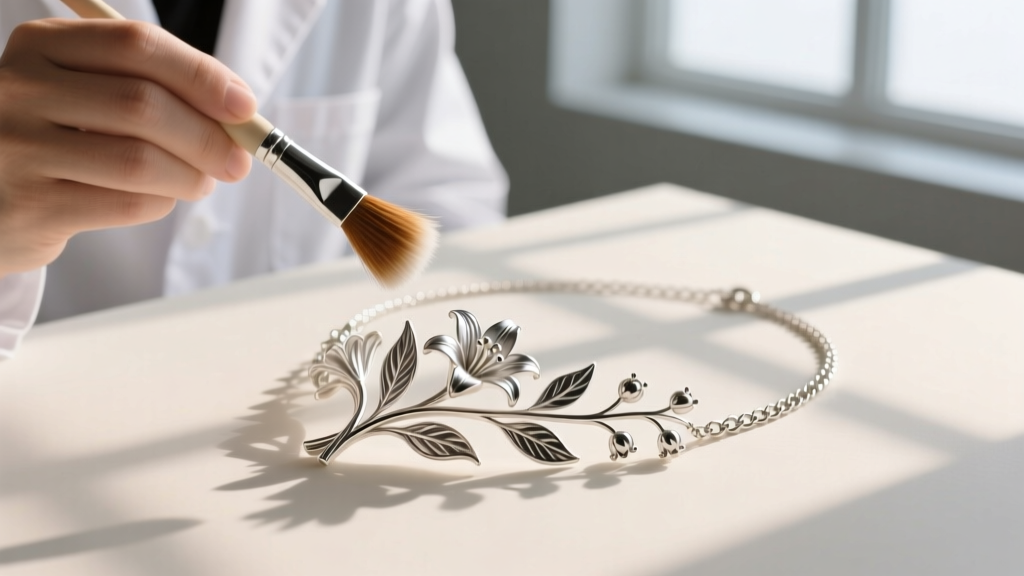
If your flower petals resemble stained glass (translucent enamel with no metal backing), this is plique-à-jour. Never use ultrasonic cleaners or steamers on plique-à-jour. The high-frequency vibrations will shatter the glass-like enamel instantly. According to the GIA Gem Care Guide, porous materials and delicate enamels should only be cleaned with a soft, untreated horsehair brush and a mild solution of distilled water and pH-neutral soap.
Silver Tarnish in Floral Crevices
For sterling silver floral pendants, tarnish naturally accumulates in the deep grooves of repoussé petals. While some collectors prefer to leave this patina to highlight the three-dimensional relief, those seeking a polished look should avoid liquid silver dips. These harsh chemicals can strip the oxidation intentionally applied by the original jeweler to create depth. Instead, use a specialized silver polishing cloth wrapped around a wooden toothpick to gently navigate the petal crevices.
Sourcing and Authenticating Vintage Floral Pieces
When shopping for a specific historical flower necklace name, authentication is paramount. The reproduction market is flooded with modern cast copies of Victorian and Art Nouveau designs. To troubleshoot potential fakes, examine the following:
- The Bail Construction: Antique pendants typically feature a soldered, seamless bail or a hinged bail with a visible rivet. Modern reproductions often feature cast-in-place bails that look thick and lack precise finishing.
- Gemstone Setting: Authentic 18th and 19th-century floral pieces will feature foil-backed stones set in closed-back silver collets to enhance brilliance. If the stones are open-backed and prong-set in a piece claiming to be from the 1700s, it is likely a later reproduction.
- Maker's Marks: Consult resources like the Antique Jewelry University to cross-reference hallmarks. French pieces will feature the eagle's head (18k gold) or boar's head (silver), while British pieces will display assay office symbols and date letters.
By meticulously analyzing the petal structure, metalwork techniques, and historical context, you can confidently uncover the true flower necklace name of any botanical piece. This knowledge not only enriches your personal connection to the jewelry but ensures you apply the precise care and styling required to preserve these wearable gardens for future generations. For further historical context on botanical motifs, the Victoria and Albert Museum Jewelry Collection offers an exceptional digital archive of authenticated floral masterworks.


