Ancient Egyptian Necklace Materials: Gold, Lapis & Faience
Discover the material properties of the ancient Egyptian necklace. Compare gold, lapis lazuli, carnelian, turquoise, and faience in our expert guide.

The Metallurgy of the Pharaohs: Gold and Electrum
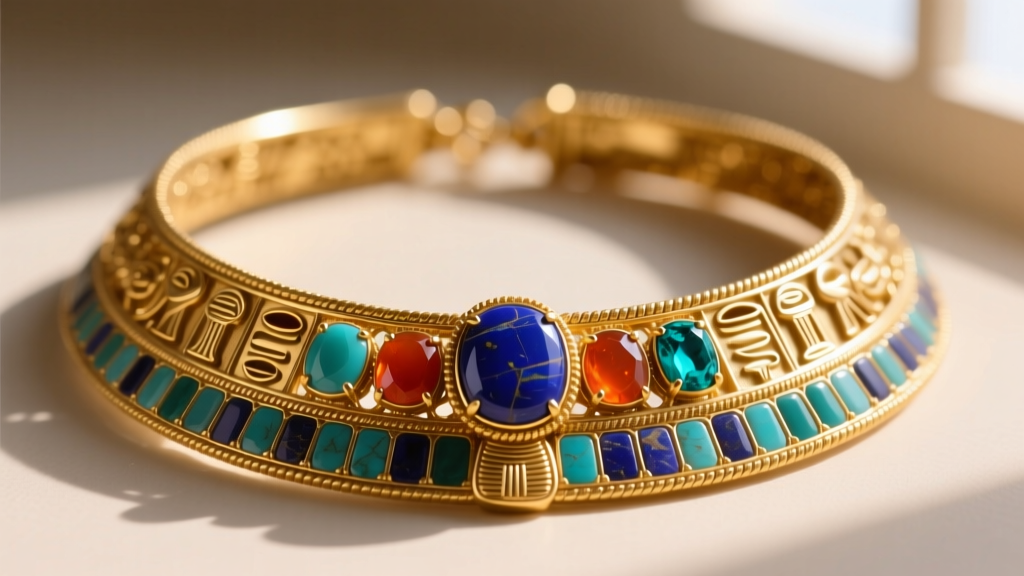
When studying the material composition of an authentic ancient Egyptian necklace, one must first understand the metallurgical landscape of the Nile Valley. Unlike modern jewelry, which frequently utilizes 14k or 18k gold alloys for structural durability, ancient Egyptian goldsmiths primarily worked with high-purity gold, typically ranging from 22k to 24k. This resulted in a metal with a distinct, rich yellow hue but a relatively low Vickers hardness (HV 25-45), making it highly malleable for intricate repoussé and granulation techniques. On the Mohs scale, pure gold sits at a mere 2.5 to 3, meaning historical pieces were highly susceptible to scratching and deformation.
Beyond pure gold, the Egyptians heavily utilized electrum, a naturally occurring and artificially produced alloy of gold and silver. According to metallurgical analyses of artifacts housed at The Metropolitan Museum of Art, Egyptian electrum typically contained between 70% and 80% gold, with the remainder being silver and trace copper. The addition of silver increased the alloy's hardness to approximately HV 60-80, providing better structural integrity for necklace clasps, wirework, and the delicate beads used in broad collars (wesekh). Electrum also possessed a slightly paler, greenish-yellow luminescence that the Egyptians associated with the flesh of the gods and the physical manifestation of sunlight.
The Sacred Triad: Lapis Lazuli, Carnelian, and Turquoise
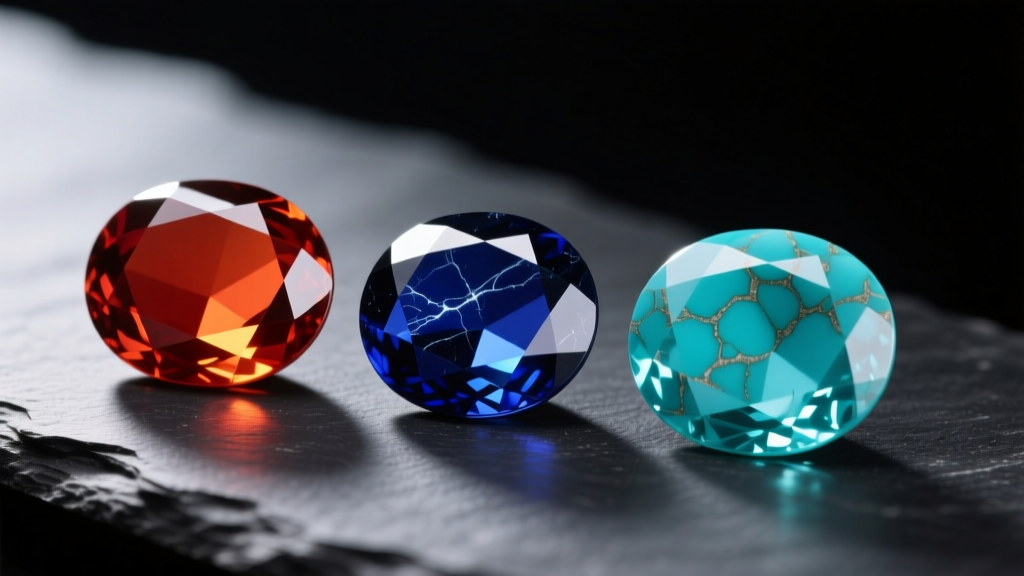
The most iconic ancient Egyptian necklace designs, particularly the elaborate pectorals and broad collars found in royal tombs, rely on a striking chromatic triad: the deep blue of lapis lazuli, the vibrant red of carnelian, and the pale green-to-blue of turquoise. These materials were not chosen merely for their aesthetic contrast; they held profound theological significance tied directly to their physical properties and geographical origins.
Lapis Lazuli: The Stone of the Heavens
True lapis lazuli is a complex metamorphic rock composed primarily of lazurite, calcite, and pyrite. The Egyptians sourced their lapis from the remote Sar-e-Sang mines in the Badakhshan province of modern-day Afghanistan, a trade route spanning thousands of miles. Gemologically, lapis lazuli has a Mohs hardness of 5 to 5.5 and a specific gravity of 2.4 to 2.9. Its porous nature and sensitivity to acidic substances mean that ancient pieces often show significant surface degradation if exposed to the acidic oils of human skin over millennia. Today, when evaluating high-end replica necklaces, buyers must be wary of dyed howlite or sodalite, which lack the characteristic metallic pyrite inclusions and exhibit a higher specific gravity.
Carnelian: The Blood of Isis
Carnelian, a reddish-orange variety of chalcedony (microcrystalline quartz), was prized for its translucency and durability. With a Mohs hardness of 6.5 to 7 and a specific gravity of 2.6, carnelian was ideal for carving into amulets, scarabs, and drop beads. The red coloration is caused by iron oxide (hematite) impurities. Historically, the Egyptians heat-treated carnelian to enhance its red hue and drive out brownish tones—a practice that is still standard in the modern gem trade. Because it is a cryptocrystalline quartz, carnelian is exceptionally tough and resists chipping, making it one of the most well-preserved materials found in excavated ancient Egyptian necklace assemblages.
Turquoise: The Joy of the Sinai
Mined extensively in the Sinai Peninsula at sites like Serabit el-Khadim, turquoise is a hydrous phosphate of copper and aluminum. It registers a Mohs hardness of 5 to 6, but its defining vulnerability is its porosity. Untreated, ancient turquoise is highly susceptible to dehydration and chemical alteration, which is why many archaeological specimens have faded to a chalky green or white. Modern turquoise used in Egyptian-style jewelry is almost universally stabilized with epoxy or acrylic resins to prevent color shifting and structural crumbling. When sourcing turquoise for a custom necklace, the Gemological Institute of America (GIA) recommends requesting disclosure of any stabilization treatments, as untreated, high-grade Persian or Sinai turquoise commands a massive premium and requires meticulous care.
Faience: The First Synthetic Gemstone
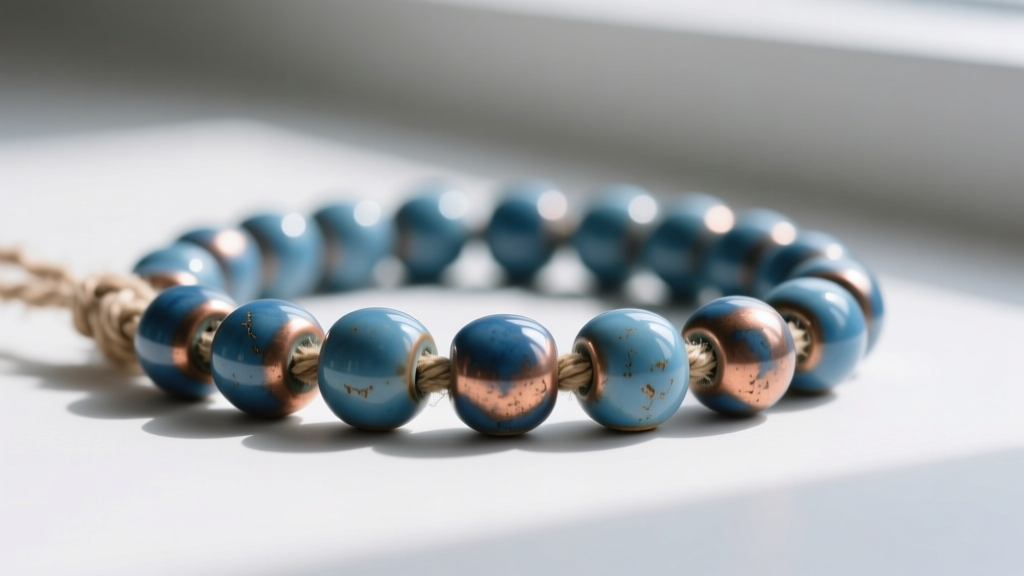
No discussion of the ancient Egyptian necklace is complete without faience, the world's first synthetic gemstone. Faience is not a clay-based ceramic but rather a sintered quartz ceramic. It consists of a core of crushed quartz or sand, coated with an alkaline glaze typically colored by copper oxides to produce brilliant shades of turquoise and deep blue. The manufacturing process involved three main glazing techniques: efflorescence, cementation, and direct application.
From a material science perspective, Egyptian faience is incredibly brittle, with a Mohs hardness ranging from 5 to 6 but very low fracture toughness. The glossy, glassy surface is essentially a layer of vitrified silica. While it mimics the visual properties of turquoise and lapis lazuli, faience was symbolic of rebirth and the sparkling inundation of the Nile. Today, authentic ancient faience beads are highly collectible, but modern artisans recreate the material using traditional slip-casting and kiln-firing methods to produce historically accurate replicas for museum-grade jewelry.
Material Comparison Chart: Authentic vs. Replica
For collectors and jewelry designers aiming to recreate or restore an ancient Egyptian necklace, understanding the exact physical properties of these materials is critical for both historical accuracy and structural engineering. The table below outlines the gemological data necessary for material selection.
| Material | Mohs Hardness | Specific Gravity | Primary Vulnerability | Modern Market Availability |
|---|---|---|---|---|
| 22k Gold | 2.5 - 3.0 | 15.2 - 15.9 | Scratching, bending | High (Specialty Bullion) |
| Electrum | 3.0 - 3.5 | 14.0 - 15.0 | Tarnishing (if high silver) | Low (Custom Alloying) |
| Lapis Lazuli | 5.0 - 5.5 | 2.4 - 2.9 | Acid sensitivity, chipping | High (Afghan/Chilean) |
| Carnelian | 6.5 - 7.0 | 2.60 - 2.64 | Thermal shock | High (Indian/Brazilian) |
| Turquoise | 5.0 - 6.0 | 2.6 - 2.8 | Porosity, dehydration | Medium (Mostly Stabilized) |
| Faience | 5.0 - 6.0 | 2.2 - 2.4 | Extreme brittleness | Low (Artisan Kiln-fired) |
Stringing Materials: Linen vs. Modern Synthetics
The structural integrity of an ancient Egyptian necklace relied heavily on the stringing material. The Egyptians utilized spun flax, commonly known as linen, to thread their beads. Linen possesses high tensile strength when dry but degrades rapidly in humid or wet environments. In modern conservation and high-end replication, jewelers face a choice between historical accuracy and longevity. While hand-spun linen is used for museum-grade restorations, contemporary wearers should opt for high-denier silk threads (such as size F or G Griffin silk) or synthetic alternatives like braided nylon or polyethylene cords (e.g., WildFire bead thread). These modern materials offer superior abrasion resistance against the sharp edges of drilled quartz and lapis beads, preventing catastrophic strand failure.
Sourcing and Verifying Modern Egyptian-Style Jewelry
The market for Egyptian revival jewelry is saturated with mass-produced imitations. To ensure you are acquiring a piece with genuine material properties, rigorous verification is required. According to curatorial guidelines from The British Museum, the provenance and material composition of historical artifacts are paramount. When buying modern replicas marketed as "authentic materials," demand gemological certification for the lapis lazuli and turquoise.
Beware of "reconstituted" turquoise, which is essentially turquoise dust mixed with epoxy and dyed, or "Gilson" turquoise, a synthetic lab-grown alternative that lacks the natural matrix veining of mined stones. For gold components, verify the karat stamp; many commercial revival pieces use 14k gold or gold-plated brass, which fundamentally alters the weight, drape, and historical accuracy of the necklace. A true 22k gold wesekh collar will have a substantial, heavy drape that lighter alloys cannot replicate.
Care and Preservation of Porous Egyptian Stones
Maintaining an ancient Egyptian necklace, or a high-fidelity modern replica, requires strict adherence to gemological care protocols. The porous nature of lapis lazuli, turquoise, and faience means that these materials will absorb skin oils, lotions, and perfumes, leading to permanent discoloration and structural weakening.
Expert Conservation Tip: Never use ultrasonic cleaners, steam cleaners, or chemical jewelry dips on any necklace containing lapis lazuli, turquoise, or faience. The high-frequency vibrations can shatter the brittle faience glaze, while the harsh chemicals will strip the natural waxes from turquoise and dissolve the calcite matrix in lapis lazuli. Always clean these pieces with a soft, dry microfiber cloth and store them in a climate-controlled environment away from direct UV light to prevent thermal dehydration.
By understanding the precise material properties, historical mining origins, and gemological vulnerabilities of these ancient stones and metals, collectors and designers can properly appreciate, preserve, and recreate the enduring legacy of the ancient Egyptian necklace.


