Expert Guide to Buying a Black and Red Beads Necklace
Discover what to look for when buying a black and red beads necklace. Learn about gemstone grading, stringing durability, and clasp hardware in our guide.

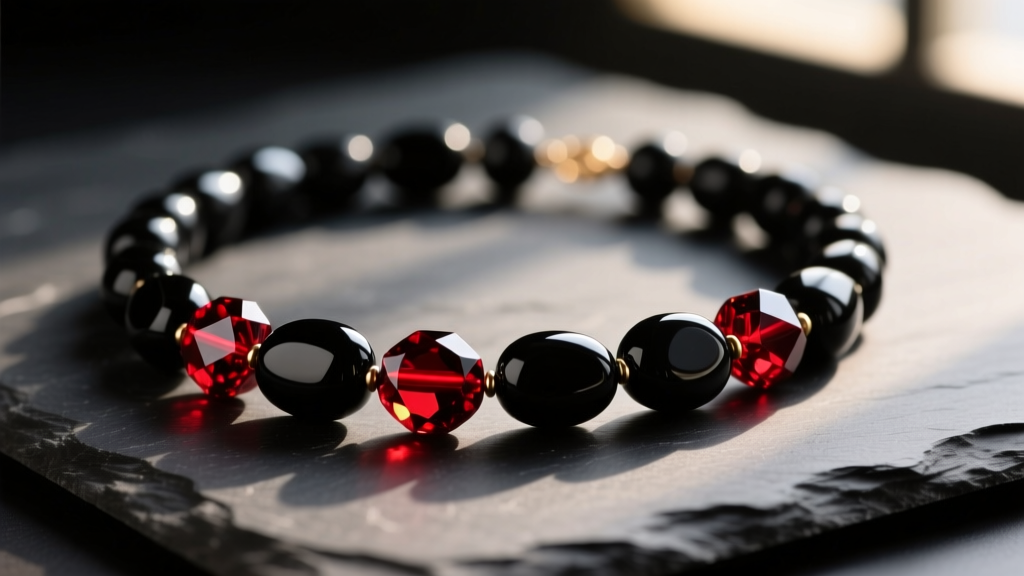
The high-contrast aesthetic of a black and red beads necklace remains a cornerstone of bold jewelry styling. Whether you are drawn to the deep, light-absorbing qualities of black onyx paired with the fiery translucence of carnelian, or the rugged texture of lava rock contrasted with polished red agate, this dual-tone combination commands attention. However, the beaded jewelry market is saturated with synthetic imitations, poorly drilled stones, and degrading stringing materials. As a buyer in 2026, understanding the gemological and structural realities of these pieces is essential to making a worthwhile investment.
Gemstone Material Breakdown: What You Are Actually Buying
When shopping for a black and red beads necklace, the first step is identifying the actual mineral composition. Retailers frequently use trade names that obscure the true nature of the beads. Understanding these distinctions will help you evaluate pricing and durability.
The Black Beads: Onyx, Tourmaline, and Obsidian
The most common black bead on the market is sold as 'black onyx.' According to the Gemological Institute of America (GIA), nearly all black onyx is actually gray chalcedony (a type of quartz) that has been treated with a sugar and sulfuric acid solution to carbonize and turn black. This is an accepted, stable industry practice, but it means you are buying dyed agate, not naturally black stone. For a Mohs hardness of 7, it is highly durable for daily wear.
If you want naturally black, untreated stones, look for black tourmaline (schorl). Tourmaline features a Mohs hardness of 7 to 7.5 but is heavily included, meaning it can chip if the beads knock against each other. Obsidian is another natural option, but at a Mohs hardness of 5 to 5.5, it is essentially volcanic glass and is prone to conchoidal fracturing if dropped.
The Red Beads: Carnelian, Garnet, and Glass Imitations
Red beads are most frequently carved from carnelian or red agate. Carnelian gets its red-orange hue from iron oxide impurities and is often heat-treated to deepen the color. When examining red beads, hold them up to a strong light source. Genuine carnelian will show a cloudy, fibrous translucency. If you see perfectly clear red with swirling striations or tiny spherical air bubbles, you are looking at molded glass or resin.
For higher-end necklaces, pyrope or almandine garnet beads are used. Garnet is significantly denser (specific gravity of 3.7 to 4.3 compared to carnelian's 2.6) and possesses a Mohs hardness of 7.5. A genuine garnet bead necklace will feel noticeably heavier in the hand than a carnelian or glass equivalent of the exact same millimeter size.
Structural Integrity: Stringing and Drilling Standards
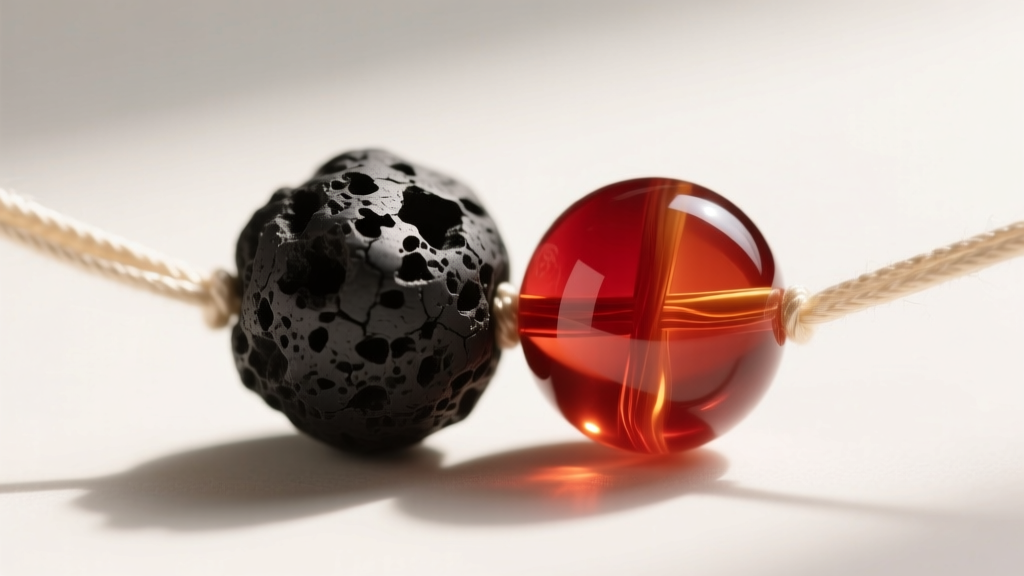
The most common point of failure in any beaded necklace is the stringing material. A beautiful black and red beads necklace is worthless if the cord snaps, scattering gemstones across the floor. The weight of the stones dictates the required tensile strength of the core.
| Stringing Material | Best For | Tensile Strength | Lifespan |
|---|---|---|---|
| 49-Strand Micro-Wire | Heavy stone beads (8mm+), Garnet, Onyx | Up to 20 lbs | 10+ Years |
| Silk Thread (Size F) | Pearls, lightweight stones, knotted designs | Low (requires knotting) | 2-4 Years (degrades with moisture) |
| Elastic Cord (0.8mm) | Slip-on bracelets, lightweight 4mm-6mm beads | Low (stretches out) | 6-12 Months |
| Nylon-Coated Steel (7-strand) | Budget stone necklaces, rigid drape | Medium (prone to kinking) | 3-5 Years |
For a high-quality black and red beads necklace featuring 6mm to 10mm stone beads, 49-strand nylon-coated stainless steel wire (such as the Soft Flex brand) in a 0.018-inch diameter is the professional standard. It provides the flexibility of silk with the break-resistance of steel. Avoid necklaces strung on elastic or stiff 7-strand wire, which will eventually kink and snap under the weight of dense stones like garnet.
Pro-Tip: Inspect the drill holes of the beads. High-quality lapidary work features smooth, polished drill holes. Rough, jagged drill holes act like microscopic saw blades, slowly fraying and cutting through nylon and silk stringing materials over time.
Clasp Hardware and Findings
The clasp is the mechanical anchor of your necklace. When evaluating a black and red beads necklace, check the metal composition and the connection points.
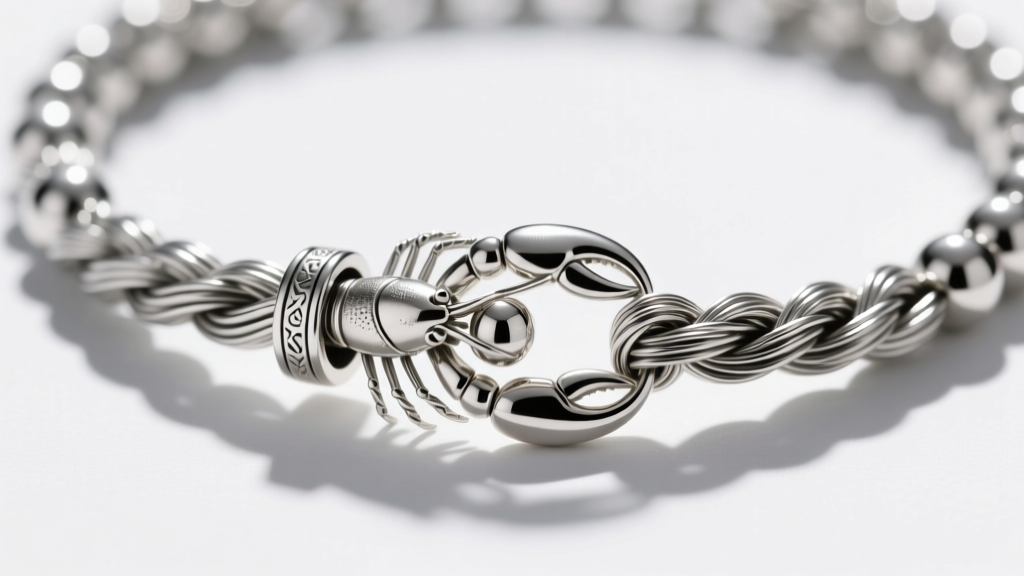
- The Clasp Type: A cast sterling silver or gold-filled lobster clasp is the most secure option for heavy stone beads. While neodymium magnetic clasps have surged in popularity for accessibility, a strong tug can separate weak magnets, resulting in lost jewelry.
- The Jump Ring: Ensure the jump ring connecting the clasp to the wire is soldered (welded shut). An open, unsoldered jump ring will eventually pull apart under the pendulum-like swinging motion of a heavy beaded necklace.
- Crimp Beads vs. Crimp Tubes: The wire should be secured using sterling silver or gold-filled tube crimps, crushed with micro-crimping pliers to fold the metal smoothly over the wire. Avoid cheap base-metal round crimp beads, which contain nickel and can cause contact dermatitis while failing to grip the wire securely.
Pricing Tiers and Authenticity Markers
Understanding the market pricing for a black and red beads necklace helps you identify synthetic fakes and overpriced costume jewelry. Use this framework to evaluate listings:
Tier 1: $15 - $35 (Costume & Commercial Grade)
At this price point, the black beads are likely dyed glass or low-grade agate, and the red beads are almost certainly molded glass or dyed howlite. The necklace will be strung on elastic or thin 7-strand wire with base-metal alloy clasps. Expect uniform perfection in bead shape, which is a dead giveaway of machine-molded glass rather than natural stone.
Tier 2: $50 - $120 (Gemstone & Artisan Grade)
This is the sweet spot for genuine semi-precious stones. You should expect dyed black onyx or natural black tourmaline paired with genuine heat-treated carnelian. The necklace should be strung on 49-strand micro-wire, finished with sterling silver or gold-filled tube crimps, and feature French wire (bullion) at the ends to protect the wire from fraying against the clasp.
Tier 3: $200+ (Fine & Rare Grade)
Necklaces in this tier feature premium, untreated stones. Think naturally black tourmaline with high-clarity, untreated pyrope garnet. The beads will be precisely calibrated (e.g., exactly 8.5mm each), hand-knotted on heavy silk or strung on aerospace-grade wire, and finished with 14k solid gold findings.
Care and Maintenance for Dual-Tone Beads
Maintaining a black and red beads necklace requires understanding the porosity of the specific stones used. Black onyx (dyed agate) is non-porous and can be safely cleaned with warm water and a drop of mild dish soap. However, if your necklace features black lava rock, you must avoid oils and lotions, as the highly porous volcanic stone will absorb them and develop a permanent, greasy patina.
Never use ultrasonic cleaners on any beaded necklace. The high-frequency vibrations will shatter the internal crystalline structure of included stones like tourmaline and garnet, and will rapidly degrade the nylon coating on the stringing wire. Always store your necklace flat or hanging; coiling it tightly in a small box will force the wire into a permanent memory loop, ruining the drape of the piece.


