Evil Eye Cross Necklace Trends 2026: Styling & Symbolism
Discover 2026 evil eye cross necklace trends. Learn how to style, layer, and choose durable materials for this powerful protective jewelry staple.

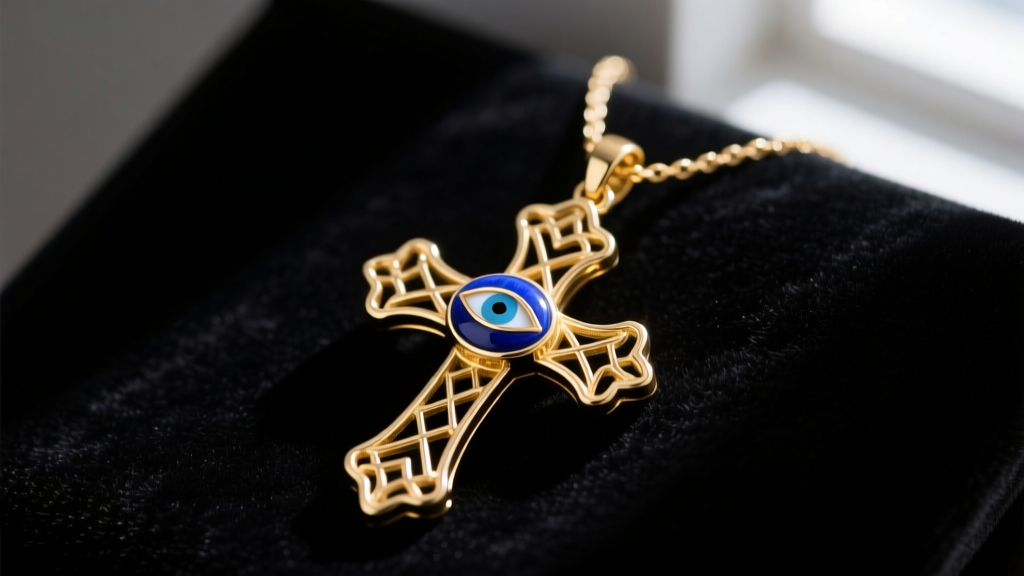
The Convergence of Protection: Why the Evil Eye Cross is Dominating 2026
In the landscape of contemporary jewelry, the demand for talismanic stacking has evolved from a niche aesthetic into a dominant market force. As we move through 2026, the evil eye cross necklace has emerged as a definitive staple for consumers seeking both spiritual resonance and sartorial edge. This unique pendant design merges the ancient Mediterranean and Middle Eastern Nazar (the protective evil eye amulet) with the universal Christian symbol of the cross. The result is a powerful, cross-cultural artifact that speaks to the modern wearer's desire for layered meaning and multi-faceted protection.
Unlike the minimalist, barely-there pendants of the early 2020s, the 2026 iteration of the evil eye cross necklace embraces bold geometry, mixed-metal hardware, and high-contrast gemstone inlays. Jewelry historians and trend forecasters note that this fusion reflects a broader cultural shift toward syncretism—blending distinct spiritual traditions into a singular, personalized armor. Whether crafted in heavy 14k solid gold or accessible PVD-coated stainless steel, this pendant is no longer just a trend; it is a permanent fixture in the modern jewelry wardrobe.
Anatomy of an Evil Eye Cross Pendant: Enamel vs. Gemstone
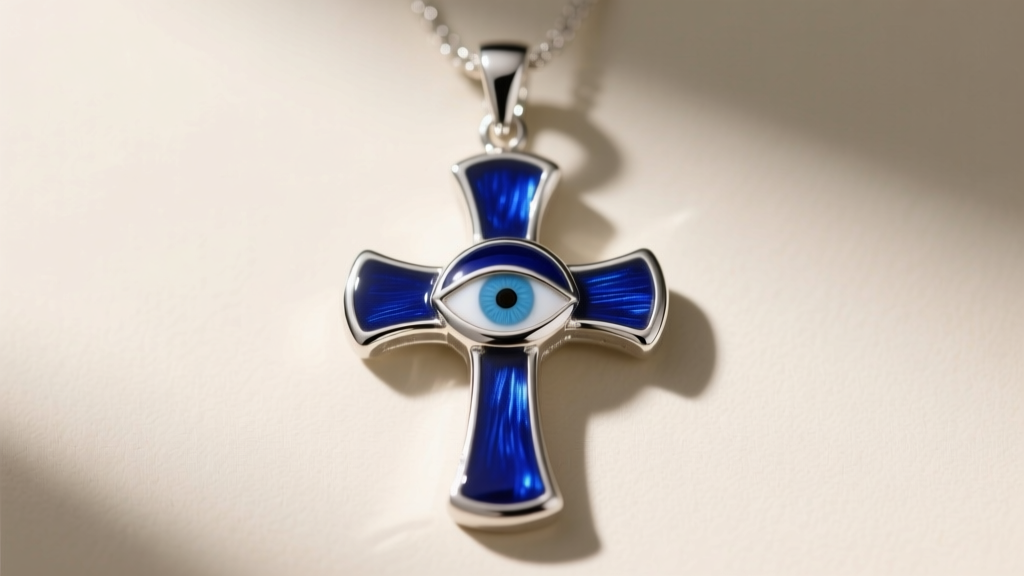
When evaluating an evil eye cross necklace, the focal point is inevitably the 'eye' itself, typically positioned at the intersection of the cross's vertical and horizontal bars. The material used to render this eye dictates the piece's price point, durability, and visual weight. There are three primary categories you will encounter in the 2026 market:
1. Vitreous (Kiln-Fired) Enamel
Vitreous enamel is created by fusing powdered glass to a metal substrate at temperatures exceeding 1,400°F. The resulting finish is incredibly hard, scratch-resistant, and possesses a luminous, glass-like depth. High-end artisan jewelers favor vitreous enamel for evil eye crosses because it will not yellow or degrade over time, making it an heirloom-grade choice.
2. Cold Enamel (Epoxy Resin)
Cold enamel is essentially a two-part epoxy resin poured into the metal recesses and cured at room temperature. While it offers vibrant, opaque colors (especially striking in cobalt and turquoise blues), it is significantly softer than vitreous enamel. Cold enamel is prone to micro-scratching and can yellow when exposed to prolonged UV light or harsh cosmetics.
3. Gemstone Cabochons
For a more luxurious, textured approach, many jewelers are replacing enamel entirely with precision-cut gemstone cabochons. According to gemological experts at the Gemological Institute of America (GIA), opaque stones like lapis lazuli and turquoise are traditionally favored for their historical ties to protective amulets. However, in 2026, we are seeing a surge in synthetic sapphire and lab-grown spinel cabochons, which offer superior hardness (9 on the Mohs scale) and brilliant color saturation without the porosity issues of natural turquoise.
Material Grades & Durability: What to Look For
The chain and pendant base metal are just as critical as the eye itself. An evil eye cross necklace is often worn daily, meaning it is subjected to sweat, friction, and environmental pollutants. Understanding metal grades and plating standards is essential to avoid buyer's remorse. The Blue Nile educational guide on gold jewelry emphasizes the importance of verifying gold vermeil standards, which require a sterling silver base and a minimum gold thickness of 2.5 microns.
| Material Grade | Base Metal | Coating / Finish | Price Range (2026) | Durability & Lifespan |
|---|---|---|---|---|
| Solid 14k Gold | 14k Gold Alloy | None (Solid throughout) | $450 - $1,200+ | Lifetime; can be polished and repaired indefinitely. |
| Heavy Gold Vermeil | 925 Sterling Silver | 2.5+ microns of 14k/18k Gold | $120 - $300 | 2-5 years of daily wear before requiring re-plating. |
| PVD Gold Plated | 316L Stainless Steel | Physical Vapor Deposition (TiN) | $60 - $150 | Highly water-resistant; color lasts 5+ years without flaking. |
| Flash Plated | Brass or Zinc Alloy | < 0.5 microns of Gold | $20 - $50 | 3-6 months; highly susceptible to tarnish and skin discoloration. |
Pro Tip: If you are investing in a vermeil evil eye cross necklace, always ask the retailer for the exact micron thickness. Anything below 2.0 microns is considered standard gold plating, not vermeil, and will wear through to the silver base within months of daily friction.
Styling & Layering Frameworks for the Evil Eye Cross
The evil eye cross necklace is inherently top-heavy due to its intricate central motif. To prevent the pendant from looking lost or overwhelming the neckline, it must be integrated into a deliberate layering strategy. In 2026, the 'three-point talisman stack' is the industry standard for styling these pieces.
The Three-Point Layering Rule
- Point 1 (The Anchor - 16 to 18 inches): Start with a lightweight, minimalist chain. A 1.2mm 14k gold cable chain or a delicate snake chain sits close to the collarbone, providing a subtle metallic frame without competing with the main pendant.
- Point 2 (The Bridge - 20 inches): Introduce texture with a medium-weight rolo or figaro chain. This layer bridges the gap between the collarbone and the sternum. Adding a small, unembellished gold bead or a tiny 3mm diamond solitaire to this chain adds necessary visual balance.
- Point 3 (The Focal - 22 to 24 inches): This is where your evil eye cross necklace resides. Hanging at the sternum allows the cross to lay flat against the chest, ensuring the eye is fully visible and the chain does not pull uncomfortably on the back of the neck.

Neckline Pairings
The structural success of an evil eye cross necklace depends heavily on the garment beneath it. For V-neck and scoop necklines, a 20-inch chain perfectly mirrors the angle of the fabric, creating a harmonious geometric flow. For turtlenecks and high crew necks, opt for a longer 24-inch chain with a heavier pendant; the dark fabric of the sweater provides a high-contrast canvas that makes the gold and blue enamel pop dramatically. Avoid wearing these intricate pendants with busy, patterned blouses or ruffled collars, as the visual noise will completely obscure the pendant's detailed craftsmanship.
Common Failure Modes & Maintenance Protocols
Even the finest evil eye cross necklace will fail prematurely if subjected to improper care. Based on bench jeweler repair data, here are the most common failure modes associated with this specific pendant style, along with actionable troubleshooting protocols.
1. Jump Ring Soldering Failure
Because evil eye crosses are often cast as solid, multi-dimensional pieces, they can be heavier than standard flat pendants. This extra weight puts immense lateral stress on the jump ring connecting the pendant to the chain. If the jump ring is merely 'snapped' shut rather than soldered, it will eventually pull open, dropping the pendant. Solution: Upon purchasing, inspect the jump ring for a solder seam. If absent, take it to a local bench jeweler to have the jump ring laser-soldered shut for less than $20.
2. Enamel Chipping and Lapis Lazuli Fractures
If your pendant features cold enamel or a natural lapis lazuli cabochon, it is highly vulnerable to impact damage. Dropping the necklace on a marble bathroom counter or letting it swing into a glass mirror will easily chip the blue center. Furthermore, natural lapis lazuli is a porous, relatively soft stone (Mohs 5-6). Solution: Never use ultrasonic jewelry cleaners or steam cleaners on an evil eye cross featuring natural stones or enamel. The high-frequency vibrations will shatter the stone's internal matrix or cause the enamel to delaminate from the metal base. Clean only with a soft microfiber cloth and mild, phosphate-free dish soap.
3. Chain Tangling in Layered Stacks
When layering an evil eye cross with other chains, tangling is inevitable, especially with snake or box chains. Solution: Mix chain weaves to reduce friction-locking. Pairing a smooth snake chain with a textured rolo chain allows them to slide past one another rather than interlocking. Additionally, always store your layered stacks hanging vertically or laid completely flat in a felt-lined box, never balled together in a drawer.


