How to Choose a Vintage Jerusalem Cross Necklace by Material
Compare metals for your vintage Jerusalem cross necklace. Learn about sterling silver, brass, and gold properties, patina care, and chain pairings.

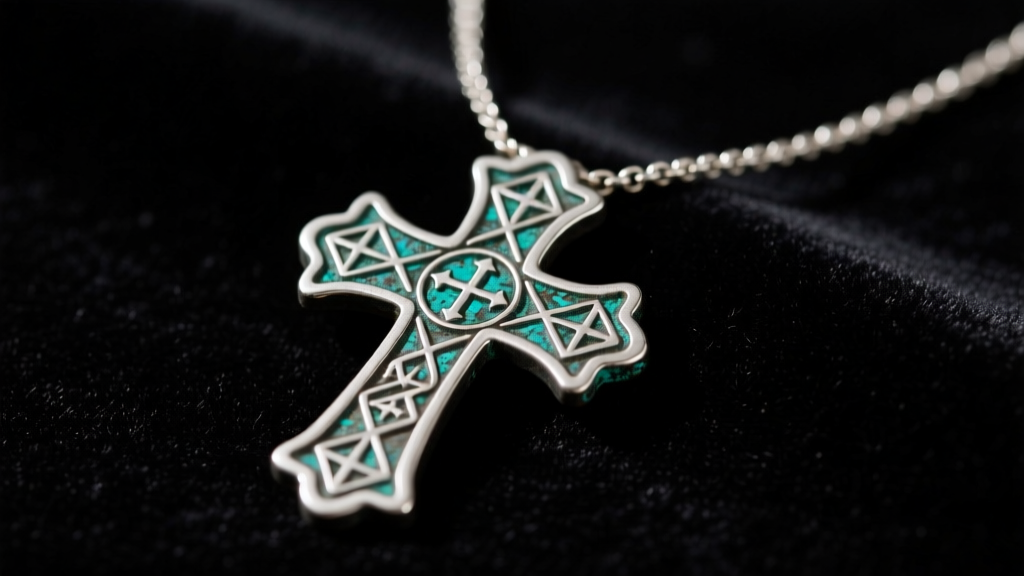
The Jerusalem cross, historically known as the Crusader's cross, is a powerful heraldic symbol comprising one large central cross potent surrounded by four smaller Greek crosses. For collectors and enthusiasts of religious antiquities, finding an authentic vintage Jerusalem cross necklace is a pursuit that blends historical reverence with metallurgical appreciation. However, the market is flooded with modern reproductions artificially aged to mimic decades of wear. As of 2026, with the rise of accessible XRF (X-ray fluorescence) testing, collectors are more equipped than ever to scrutinize the exact material composition of these historic pendants.
Choosing the right vintage Jerusalem cross necklace requires looking past the surface-level aesthetics and understanding the fundamental properties of the metals used. The material dictates not only the pendant's monetary value but also its structural integrity, how it reacts to human skin chemistry, and the specific preservation methods required to maintain its antique charm.
The Legacy and Weight of the Jerusalem Cross
Originating in the 11th century and heavily associated with the Crusader States, the five crosses are widely interpreted to represent the five wounds of Christ or the five patriarchal sees of the early Christian church. When translated into vintage jewelry, particularly pieces sourced from mid-20th-century Middle Eastern souks or European ecclesiastical estates, the pendants are rarely lightweight. A genuine vintage piece typically carries substantial physical weight, often ranging from 12 to 35 grams. This mass is a critical factor when evaluating the material, as softer metals will exhibit distinct wear patterns around the bail (the loop connecting the pendant to the chain), while harder alloys will retain sharp, crisp casting lines despite decades of friction.
Material Breakdown: What Your Vintage Cross is Really Made Of
The allure of a vintage Jerusalem cross necklace lies heavily in its patina—the natural oxidation and wear that tells the story of its age. Different metals age in vastly different ways. According to the Gemological Institute of America (GIA), understanding the base alloy is the first step in authenticating and preserving antique jewelry.
Oxidized Sterling Silver (The Collector's Standard)
Sterling silver (.925) is the most prevalent and sought-after material for vintage religious pendants. Composed of 92.5% pure silver and 7.5% copper, it is the copper content that drives the tarnishing process. When exposed to sulfur compounds in the air and trace acids in human sweat, the copper reacts to form silver sulfide, creating the deep, blackened crevices that highlight the intricate engraving of the Jerusalem cross. A genuine vintage silver piece will exhibit a layered patina; the high-relief areas will be polished bright from decades of friction against clothing, while the recessed areas remain dark. Beware of modern pieces treated with chemical 'antiquing' solutions, which often result in a flat, uniform grey-black finish that lacks the nuanced warmth of naturally aged copper-silver alloys.
Brass and Bronze (The Pilgrim's Choice)
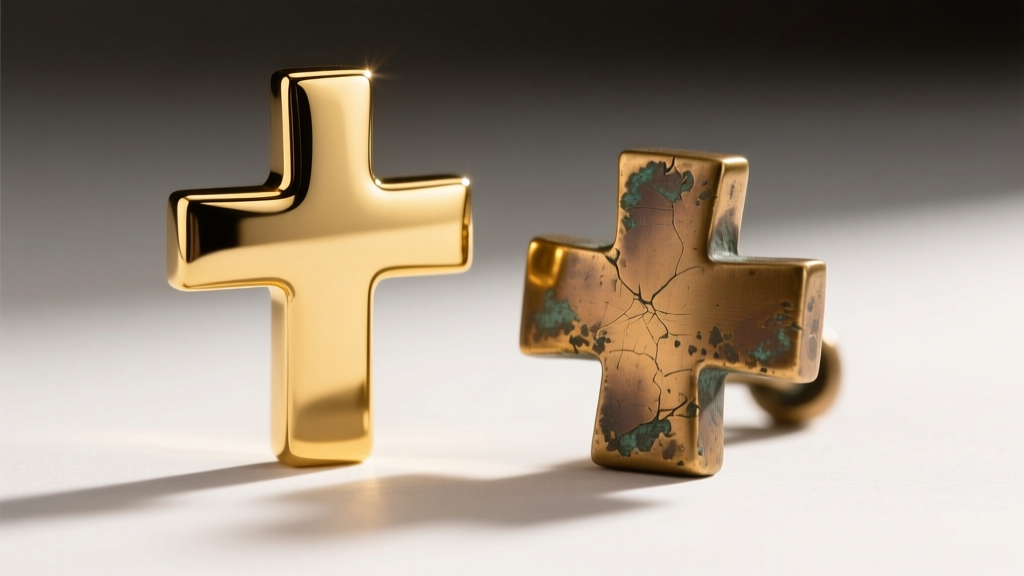
Many vintage crosses sourced from pilgrimage sites in the mid-1900s were cast in brass (copper and zinc) or bronze (copper and tin). These base metals are incredibly durable but highly reactive. Over time, they develop a verdigris patina—a greenish-blue crust of copper carbonate. While some collectors prize this organic, earthy look, it can be problematic for daily wear. The acidic pH of human skin can cause 'dezincification' in lower-quality vintage brass, leaving the surface porous and brittle. If you are purchasing a vintage bronze Jerusalem cross necklace, inspect the bail for micro-fractures, as the constant stress of a heavy chain can cause fatigued, oxidized bronze to snap unexpectedly.
Karat Gold (The Heirloom Tier)
Vintage gold Jerusalem crosses, particularly those originating from the Levant in the 1950s and 60s, are frequently crafted in 18k (75% gold) or even 21k (87.5% gold). While highly resistant to tarnish and corrosion, high-karat gold is notably soft. A vintage 21k gold cross will often show significant deformation around the edges and severe thinning at the bail hole. When evaluating these pieces, the value lies in the gold weight and historical provenance rather than pristine condition. Conversely, 14k gold vintage pieces (more common in Western European estates) offer superior structural rigidity and will retain sharper geometric lines on the cross potent.
Pewter and White Metal Alloys (The Budget Trap)
Pewter was widely used for mass-produced religious souvenirs in the early-to-mid 20th century. While it possesses a beautiful, dull grey luster that mimics oxidized silver, vintage pewter carries a hidden risk: lead. Prior to the 1970s, lead was commonly added to pewter to improve castability and weight. When sourcing a vintage pewter Jerusalem cross necklace, it is imperative to verify that it is lead-free (often stamped 'Britannia Metal' or 'Lead-Free'). If unverified, it should be worn strictly over clothing to prevent transdermal lead exposure.
Comparative Data: Durability, Patina, and Value
To make an informed acquisition, collectors must weigh the practical realities of each metal. The table below synthesizes the core properties of the most common materials used in vintage Jerusalem cross pendants.
| Material | Composition | Tarnish / Corrosion Risk | Average Vintage Price Range | Maintenance Level |
|---|---|---|---|---|
| Sterling Silver (.925) | 92.5% Ag, 7.5% Cu | Moderate (Silver Sulfide) | $80 - $350 | Low (Occasional polishing) |
| Bronze | ~88% Cu, ~12% Sn | High (Verdigris / Copper Carbonate) | $40 - $150 | Moderate (Requires sealing) |
| 18k Gold | 75% Au, 25% Alloy | Very Low | $600 - $2,500+ | Very Low |
| Pewter (Modern) | ~90% Sn, Sb, Cu | Low (Surface dulling) | $20 - $60 | Low |
Chain Pairing: Matching Gauge and Metallurgy
A frequent failure point in vintage jewelry is the mismatch between a heavy, historic pendant and a modern, inadequate chain. A genuine vintage Jerusalem cross necklace often weighs between 15 and 30 grams. Suspending this weight on a delicate 1.0mm cable chain is a recipe for catastrophic failure.
- Gauge Requirements: For pendants exceeding 15 grams, you must use a chain with a minimum wire gauge of 2.2mm to 3.0mm. This ensures the tensile strength of the chain exceeds the kinetic shock of the pendant swinging against the chest.
- Link Style: Avoid standard curb or cable chains, which can pull and snag. Opt for a Rope chain or a Box chain. Rope chains offer multi-directional flexibility and high tensile strength, while box chains provide a rigid, geometric aesthetic that complements the straight lines of the Jerusalem cross.
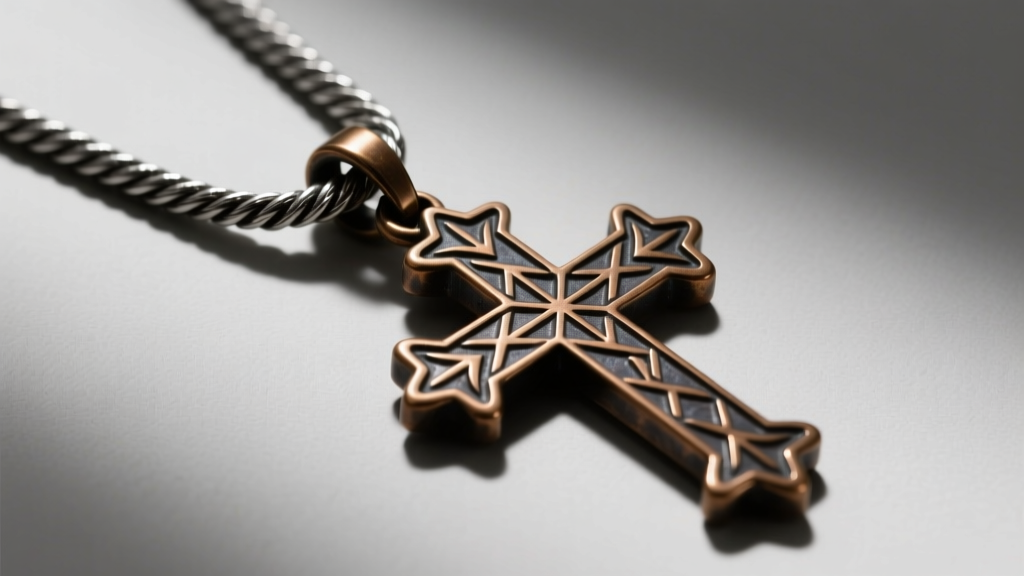
- Galvanic Corrosion: Metallurgy matters when pairing chains and pendants. If you pair a solid sterling silver chain with a brass or bronze pendant, the introduction of sweat (an electrolyte) will create a galvanic cell. The more reactive metal (the brass pendant) will corrode at an accelerated rate where it touches the silver bail. Always match your chain metal to your pendant metal, or use an inert barrier like a small leather loop or a platinum-plated jump ring to separate dissimilar metals.
Preservation: Cleaning Without Destroying the Patina
The most common mistake novice collectors make is aggressively polishing a vintage Jerusalem cross necklace, stripping away decades of natural oxidation and reducing its historical and monetary value. The Victoria and Albert Museum (V&A) Conservation Department strongly advises against the use of liquid chemical dips (which often contain thiourea) on antique silver and base metals. These dips strip all oxidation, leaving the metal looking flat, white, and unnaturally bright.
Instead, adopt a targeted conservation approach:
- Dry Cleaning First: Use a soft-bristled makeup brush or a microfiber cloth to remove surface dust and skin oils. Often, this is enough to restore the metal's natural luster without touching the patina.
- Targeted Polishing: If the high-relief areas are too dull, use a treated polishing cloth (impregnated with micro-abrasives like calcium carbonate) and gently rub only the raised surfaces of the crosses. Avoid pressing into the crevices.
- Stabilizing Bronze and Brass: If your vintage bronze cross is actively flaking or producing a powdery green verdigris, it is suffering from 'bronze disease' (a cyclic reaction involving chlorides). This requires professional conservation, typically involving a benzotriazole (BTA) bath to chelate the copper ions and halt the corrosion, followed by a micro-crystalline wax sealant.
Final Verdict for Collectors
Acquiring a vintage Jerusalem cross necklace is an exercise in historical stewardship. If your priority is daily wearability and a classic, evolving patina, oxidized sterling silver remains the undisputed champion, offering the best balance of durability, value, and aesthetic depth. For those seeking an investment-grade heirloom, high-karat gold pieces from the mid-century Levant offer unparalleled prestige, provided you accept the soft wear inherent to the metal. Conversely, brass and bronze offer an earthy, tactile connection to the past, demanding a more rigorous maintenance routine to prevent structural degradation. By understanding the metallurgical realities of these materials, you ensure that your chosen cross remains a resilient symbol of faith and history for generations to come.


