Dainty Beaded Necklace Value Guide: 2026 Pricing & Materials
Discover the true value of a dainty beaded necklace in 2026. Compare materials, stringing hardware, and pricing tiers to make smart jewelry investments.

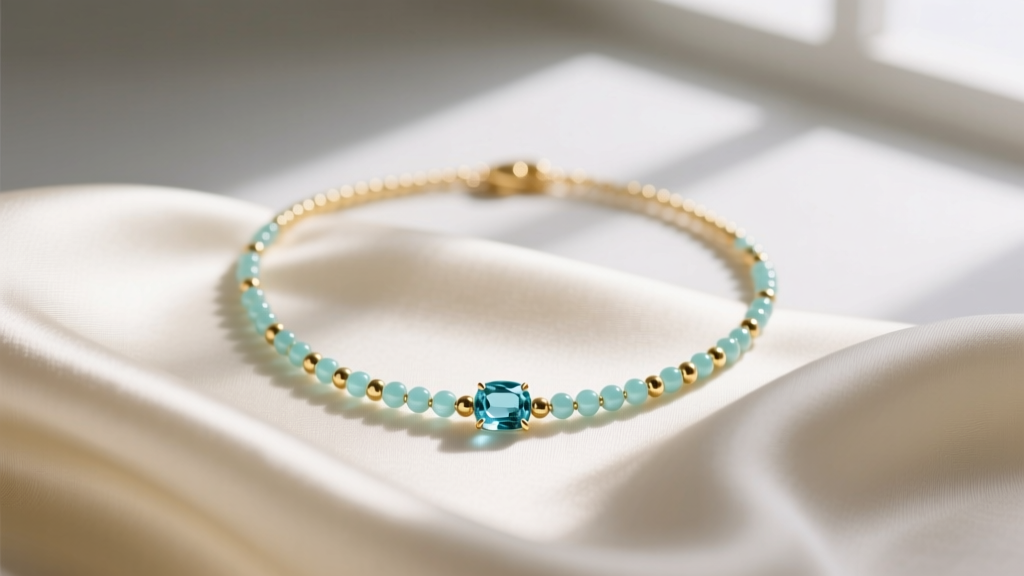
The dainty beaded necklace has firmly cemented its place in the 2026 jewelry landscape, transitioning from a fleeting Y2K revival trend into a staple of modern "quiet luxury" layering. However, as the market floods with micro-bead designs ranging from $15 to $500, consumers are left navigating a minefield of deceptive marketing and inflated brand markups. When evaluating a delicate strand of 2mm to 4mm beads, the true value lies not just in the aesthetic, but in the metallurgy of the hardware, the tensile strength of the stringing material, and the verifiable grading of the beads themselves.
This comprehensive value assessment breaks down exactly what you should be paying for a dainty beaded necklace this year, exposing the hidden failure points of cheap manufacturing and providing a concrete framework for cost-per-wear analysis.
The Anatomy of Value: What Are You Actually Paying For?
When you purchase a dainty beaded necklace, your capital is distributed across three primary components: the beads, the stringing medium, and the clasp hardware. Budget brands often allocate 90% of their cost to the beads while using substandard hardware, resulting in a necklace that looks beautiful on day one but snaps or tarnishes within a month.
Bead Material Grading
The term "crystal" is frequently abused in the dainty jewelry space. Genuine Swarovski or Preciosa crystals possess precise optical refraction and are often treated with a silane coating to resist UV yellowing and skin oils. In contrast, mass-market glass beads lack this coating, leading to a cloudy, "dead" appearance after prolonged contact with the acidic pH of human skin. For semi-precious stones like moonstone, aquamarine, or garnet, value is dictated by the Mohs hardness scale and clarity. A high-value dainty necklace will use AAA-grade stones with minimal matrix inclusions, whereas budget tiers use B-grade stones with visible fractures that easily chip when the delicate 2mm beads knock against one another.
2026 Material & Pricing Matrix
To accurately assess whether a dainty beaded necklace is priced fairly, you must cross-reference the bead material with the expected retail bracket. The table below outlines the fair market value for a standard 16-inch dainty strand in 2026, excluding artificial designer markups.
| Material Category | Specific Bead Type (2mm-4mm) | Fair Retail Price (16") | Durability & Value Rating |
|---|---|---|---|
| Premium Crystal | Preciosa / Swarovski Bicone | $45 - $85 | High (Excellent refraction, coated) |
| Semi-Precious (Hard) | Garnet, Black Onyx, Quartz | $60 - $120 | Very High (Mohs 7+, chip-resistant) |
| Semi-Precious (Soft) | Moonstone, Opalite, Turquoise | $50 - $95 | Medium (Mohs 5-6, requires care) |
| Freshwater Pearl | AA-Grade Micro Rice (3mm) | $75 - $140 | High (Organic, high luster) |
| Standard Glass | Czech Fire-Polished Glass | $20 - $40 | Low-Medium (Prone to clouding) |
Hardware & Stringing: The Hidden Value Indicators
The most critical point of failure on any dainty beaded necklace is the stringing material and the clasp assembly. Because the beads are so small (often under 3mm), the drill holes are microscopic, requiring ultra-thin yet incredibly strong stringing wire.
The Stringing Medium: Wire vs. Thread
High-value dainty necklaces are strung on 49-strand nylon-coated stainless steel wire (such as Beadalon or Soft Flex) in a 0.010-inch or 0.012-inch gauge. This specific gauge provides the necessary drape to lay flat against the collarbone without kinking, while the 49-strand braided steel core offers a tensile strength capable of withstanding daily snags. Budget necklaces, conversely, are often strung on cheap monofilament nylon or basic cotton thread. These materials degrade rapidly when exposed to lotions, perfumes, and sweat, leading to catastrophic snapping.
Clasp Metallurgy and FTC Standards
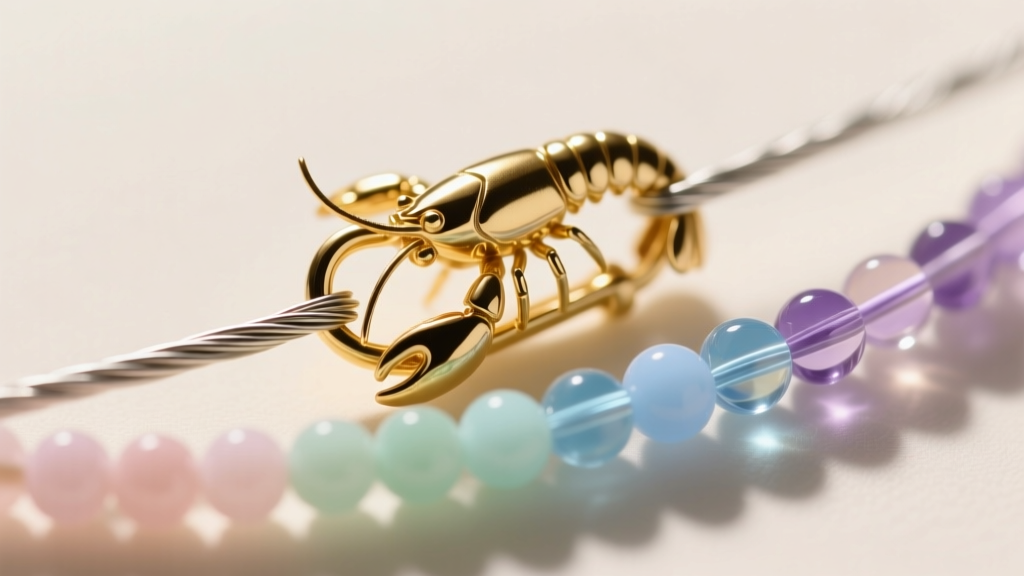
According to the Federal Trade Commission Jewelry Guides, the terminology surrounding gold plating is strictly regulated, yet frequently ignored by fast-fashion brands. A true value investment requires a 14k gold-filled lobster clasp (minimum 5mm in size). Gold-filled hardware features a thick mechanical bond of 14k gold comprising at least 1/20th of the total metal weight, ensuring it will not flake or expose the brass core beneath. Spring-ring clasps commonly found on sub-$30 necklaces are usually gold-plated over base metal; the internal steel springs rust when exposed to humidity, and the thin gold layer rubs off within weeks of wear.
Red Flags: Overpriced "Dainty" Necklaces
When shopping for a dainty beaded necklace, be highly skeptical of the following market anomalies:
- The "Designer" Glass Markup: Brands charging upwards of $150 for a simple strand of 3mm Czech glass beads. You are paying entirely for the logo stamp on the brass tag, not the material integrity.
- Missing Crimp Covers: High-end stringing requires metal crimp beads to secure the wire to the clasp. Value-oriented jewelers use sterling silver or gold-filled crimp covers to hide the crushed metal, creating a seamless, professional finish. Exposed, jagged crimps are a hallmark of mass-produced, low-tier manufacturing.
- Vague Gemstone Descriptions: If a listing advertises "blue crystal" or "healing moonstone" without specifying the origin, treatment, or grade, it is likely dyed howlite or synthetic glass. Always refer to the Gemological Institute of America (GIA) databases to verify the natural color profiles of semi-precious stones before purchasing.
How to Evaluate Cost-Per-Wear for Beaded Jewelry
To determine the true budget value of a dainty beaded necklace, abandon the initial price tag and calculate the Cost-Per-Wear (CPW). A $25 fast-fashion necklace strung on weak nylon that breaks after 10 wears yields a CPW of $2.50 per wear, alongside the frustration of lost beads. Conversely, a $95 necklace featuring AAA-grade aquamarine on 49-strand steel wire with a 14k gold-filled lobster clasp, worn 3 times a week for two years (312 wears), results in a CPW of just $0.30 per wear.
Expert Tip: To maximize the lifespan of soft semi-precious dainty beads (like turquoise or opalite), always unclasp the necklace using the lobster claw rather than pulling the wire through the jump ring. Friction against the jump ring is the primary cause of micro-abrasions on 0.012-inch wire.
Final Verdict: Investing in Micro-Beads
The dainty beaded necklace is a masterclass in subtle elegance, but its delicate nature demands rigorous manufacturing standards. In 2026, true value is found in the intersection of verifiable gemstone grading, 49-strand stainless steel stringing, and FTC-compliant gold-filled hardware. By scrutinizing these structural elements rather than succumbing to brand hype, you can build a layered necklace wardrobe that remains intact, untarnished, and financially sound for years to come.


