16 Pearl Necklace Value Guide: Pricing & Quality in 2026
Discover the true value of a 16 pearl necklace in 2026. We break down pricing tiers, pearl grading, and budget tips for Akoya and Freshwater strands.

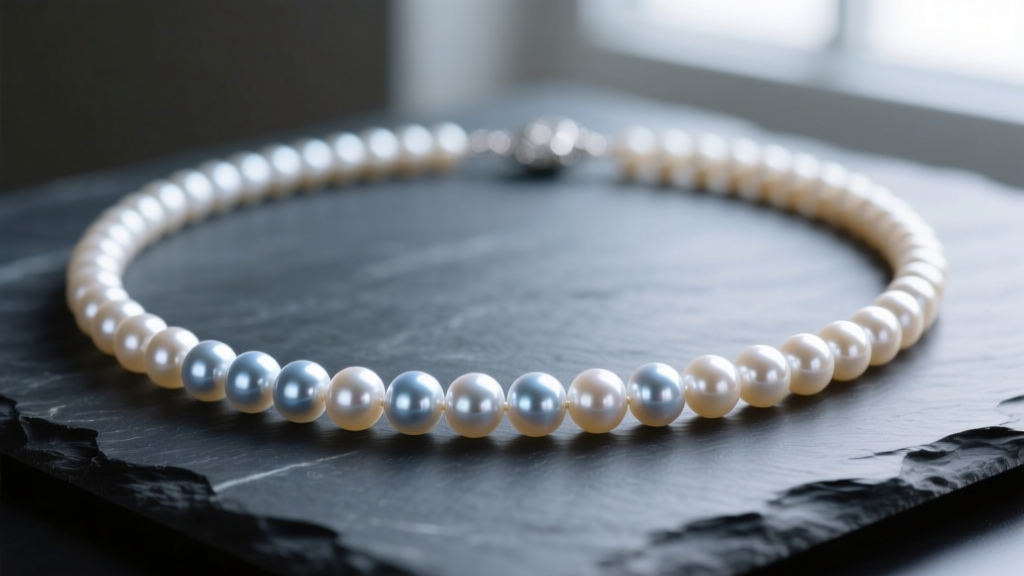
The Anatomy of a 16-Inch Pearl Strand
When jewelry enthusiasts search for a 16 pearl necklace, they are almost universally referring to the classic 16-inch "princess" length strand, rather than a necklace featuring massive 16-millimeter pearls (which are exclusive to high-end South Sea varieties and command entirely different luxury budgets). The 16-inch length is the undisputed workhorse of pearl jewelry, designed to rest perfectly on the collarbone and complement everything from V-neck blouses to crewneck sweaters.
But what exactly goes into manufacturing this specific length, and how does it impact your budget? A standard 16-inch strand equates to roughly 406 millimeters. If a jeweler uses 7.0mm pearls with traditional 0.5mm silk knots between each bead, the strand requires exactly 54 pearls plus the clasp assembly. This mathematical reality means that even a fractional increase in pearl diameter—say, moving from 7.0mm to 7.5mm—drastically reduces the number of pearls needed but exponentially increases the cost per pearl due to the scarcity of larger, perfectly matched saltwater oysters.
2026 Pricing Matrix: What Should You Actually Pay?
The pearl market has seen significant shifts over the last few years, driven by improved freshwater cultivation techniques and fluctuating saltwater harvest yields. Below is a realistic 2026 pricing matrix for a 16-inch strand, categorized by pearl type and commercial grade.
| Pearl Type & Grade | Size Range | Estimated Retail Price (2026) | Value Proposition |
|---|---|---|---|
| Commercial Freshwater (AA) | 6.0 - 7.0mm | $80 - $180 | Entry-level; solid nacre but lower luster and visible blemishes. |
| Gem-Grade Freshwater (AAA) | 7.0 - 8.0mm | $300 - $650 | Exceptional value; near-flawless surfaces with high metallic luster. |
| AA+ Akoya (Saltwater) | 6.5 - 7.0mm | $700 - $1,400 | Classic mirror luster; slight surface imperfections visible under magnification. |
| AAA Hanadama Akoya | 7.5 - 8.0mm | $1,800 - $3,800 | Investment tier; certified perfection with thick nacre and flawless matching. |
Freshwater vs. Akoya: The Value Tipping Point
The most critical budget decision you will make is choosing between freshwater and Akoya saltwater pearls. Historically, Akoya pearls were the only option for perfectly round, high-luster strands. However, modern tissue-nucleated freshwater pearls from Zhejiang province, as well as bead-nucleated "Edison" pearls, have completely disrupted the market.
From a pure material value perspective, freshwater pearls are actually superior. They are composed of 100% solid nacre, making them highly resistant to chipping and peeling over decades of wear. Akoya pearls, conversely, are bead-nucleated. A round mother-of-pearl bead is inserted into the oyster, and the oyster secretes nacre over it. If an Akoya pearl is harvested too early, the nacre layer might be a mere 0.2mm thick, leading to premature peeling. When evaluating a premium Akoya strand, always request documentation proving a nacre thickness of at least 0.4mm to 0.6mm, as outlined by the GIA Pearl Quality Factors.
Grading Metrics That Dictate Market Value
Unlike diamonds, pearls do not have a single, universally standardized grading system enforced by a central authority. However, reputable jewelers rely on the Gemological Institute of America's (GIA) seven pearl value factors to assess pricing. Understanding these metrics will prevent you from overpaying for inflated "boutique" grades.
Luster: The Ultimate Price Multiplier
Luster is the measure of light reflecting from the pearl's surface and underlying nacre layers. It is the single most important factor in determining a strand's value. A high-luster pearl will reflect a sharp, distinct image of the light source, almost like a convex mirror. Low-luster pearls appear chalky, milky, or dull. In the 2026 market, a 16-inch Akoya strand with "Excellent" luster will command up to 400% more than an identically sized strand with "Fair" luster, regardless of surface cleanliness.
Surface Blemishes and Matching
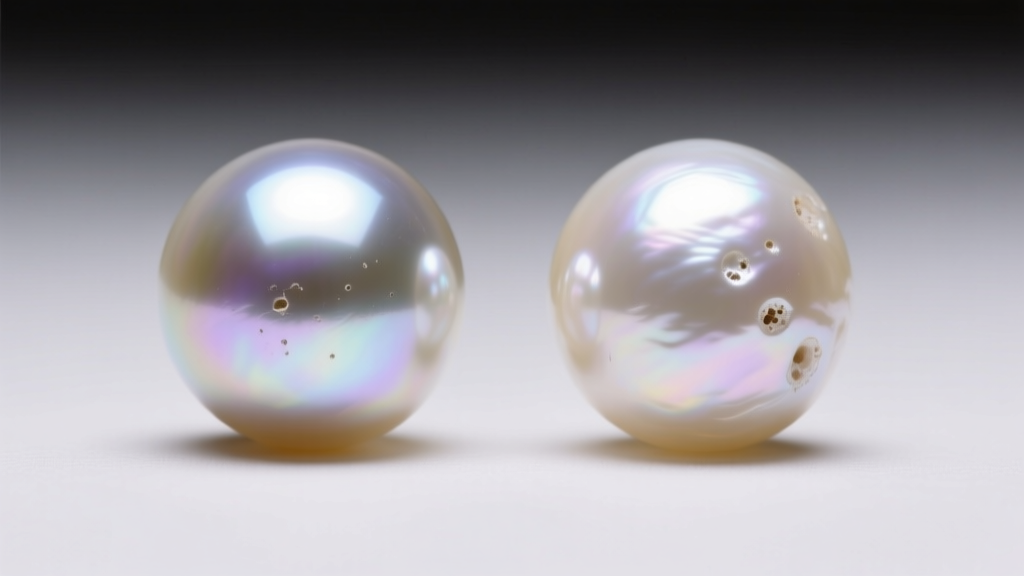
Pearls are organic gems, and finding a 54-pearl strand where every single sphere is completely devoid of blemishes is nearly impossible. Value is dictated by matching. A strand is graded as a whole. If 50 pearls are flawless, but 4 pearls near the clasp have heavy pitting or ring marks, the entire necklace is downgraded. When inspecting a 16 pearl necklace in person, lay it flat on a dark velvet pad and roll it slowly under a single directional light source. Look for consistency in the reflection band across the entire strand, not just individual pearls.
Hidden Costs: Stringing, Knotting, and Clasps
A common trap for budget-conscious buyers is ignoring the structural integrity of the necklace's assembly. The stringing materials and clasp hardware account for 10% to 15% of a high-quality necklace's total retail cost.
- Thread Material: Premium strands are strung on 100% silk thread (typically Size E or F, depending on the drill hole diameter). Silk offers a superior, supple drape that allows the 16-inch strand to hug the collarbone naturally. Cheaper alternatives use nylon or polyester, which are more durable but stiff, causing the necklace to stick out awkwardly from the neck.
- Hand-Knotting: Every single pearl must be separated by a hand-tied knot. This prevents catastrophic loss if the strand snaps and minimizes pearl-on-pearl friction, which can degrade the nacre over time. Ensure the knots are tight and uniform, with no visible gaps between the silk and the pearl drill holes.
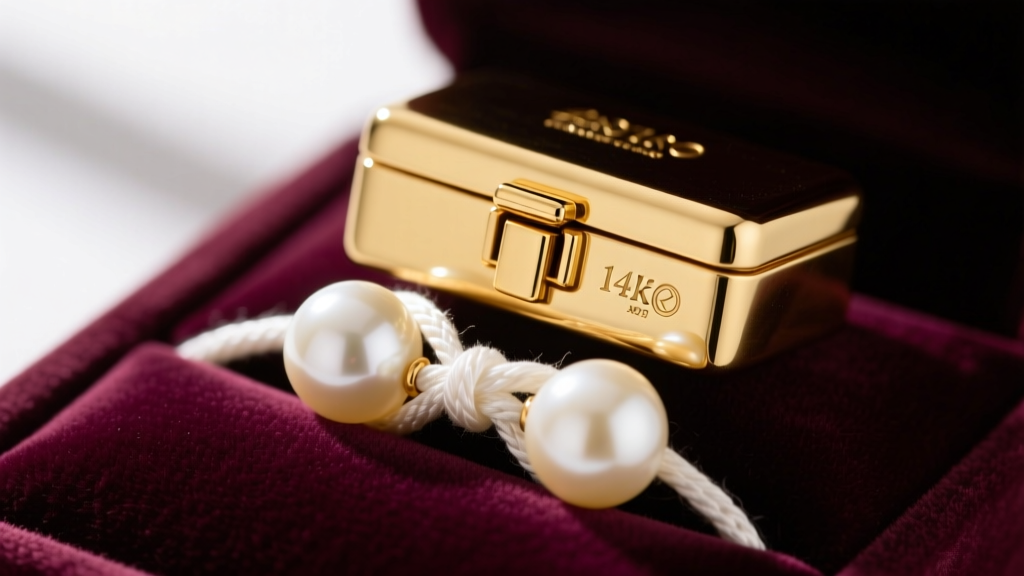
- French Wire (Gimp): The silk thread should never directly touch the metal clasp loop, as the metal will eventually saw through the silk. High-end necklaces use a tiny coiled metal wire called French wire or "gimp" to protect the silk at the termination points.
- Clasp Metallurgy: The clasp should be crafted from solid 14k or 18k gold, or platinum. A secure box clasp with a secondary safety catch (a figure-eight wire that snaps over the clasp tongue) is mandatory for any strand valued over $500.
Inspection Checklist for the Savvy Buyer
Before finalizing your purchase, run through this rapid E-E-A-T (Expertise, Experience, Authoritativeness, Trustworthiness) checklist to verify the seller's claims and the necklace's true market value:
- The Tooth Test (With Caution): Gently rub a pearl against the biting edge of your front tooth. Real nacre feels slightly gritty or sandy, like fine sandpaper. Glass or plastic imitations feel perfectly smooth. (Note: Do this gently to avoid damaging delicate luster).
- Drill Hole Inspection: Use a jeweler's loupe (10x magnification) to examine the drill holes. You should see a sharp demarcation line between the outer nacre and the inner nucleus (in Akoya pearls). If the hole appears chipped, or if you see a dark line indicating a thin nacre layer peeling away from the bead, walk away.
- Temperature Check: Real pearls feel distinctly cold to the touch when first picked up and take several seconds to warm to your skin temperature. Imitations feel room temperature immediately.
- Certification Verification: If the seller claims the strand is "Hanadama" (the highest Japanese grade for Akoya), it must be accompanied by an original certificate from the Pearl Science Laboratory (PSL) of Japan. In-house "certificates" printed by the retailer hold zero secondary market value.
Final Verdict: Maximizing Your Budget
Assessing the budget and value of a 16 pearl necklace requires looking past the marketing jargon and focusing on verifiable metrics: nacre thickness, luster sharpness, and structural assembly. If your budget is under $400, you will find vastly superior longevity and beauty in a top-tier AAA freshwater strand rather than a low-grade, thin-nacred Akoya alternative. However, if you are allocating $1,500 or more, insist on certified Hanadama Akoya pearls with documented nacre thickness to ensure your investment retains its brilliant mirror luster for generations. For further reading on organic gem identification, consult the GIA Pearl Buying Guide to deepen your understanding of global market standards.


