Mako Shark Tooth Necklace Trends: 2026 Style & Sourcing Guide
Discover 2026 mako shark tooth necklace trends, ethical sourcing guides, fossil vs. modern teeth, and expert styling tips for coastal looks.

The 2026 Resurgence: From Surf Staple to Runway Edge
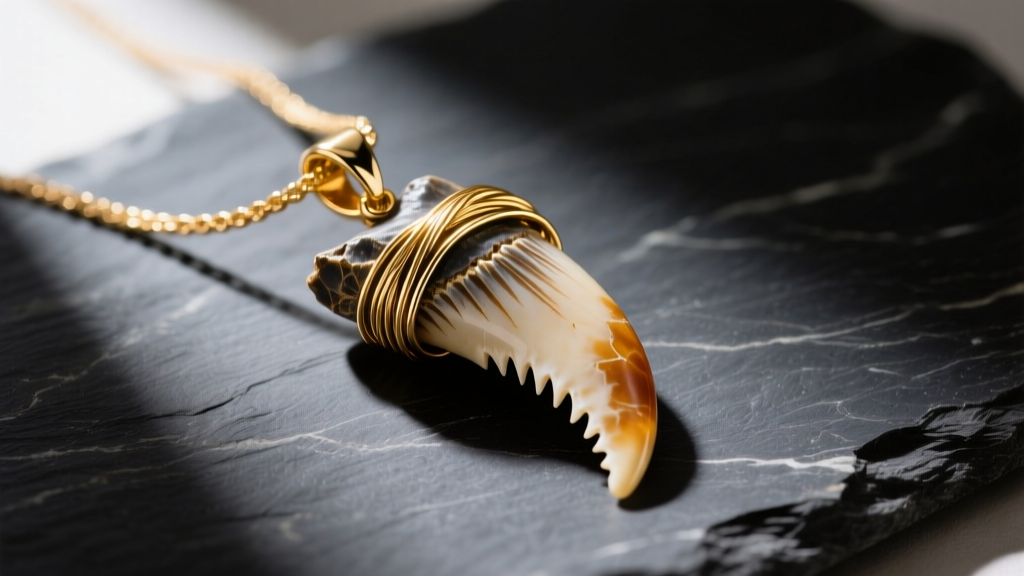
Once relegated to the realm of surf-shop souvenirs and casual beachwear, the mako shark tooth necklace has undergone a radical aesthetic elevation. In 2026, this striking pendant has become a cornerstone of the 'avant-garde coastal' and 'dark academia maritime' trends. Designers are moving away from crude, glue-bound settings, instead embracing intricate wire-wrapping, high-karat vermeil, and ethically sourced fossilized specimens. The modern mako tooth pendant is no longer just a talisman of the ocean; it is a calculated style statement that bridges organic rawness with refined metallurgy.
This shift is driven by a growing consumer demand for narrative-driven jewelry. Wearers want pieces that carry geological history and ecological mindfulness. Consequently, the market has bifurcated into two distinct camps: hyper-modern, ethically harvested bycatch teeth, and ancient, fossilized specimens that offer a zero-impact alternative with stunning color variations.
Why the Shortfin Mako? Anatomy of the Tooth
To understand the appeal, one must understand the anatomy. The Shortfin mako (Isurus oxyrinchus) possesses teeth that are distinctly different from the broader, serrated teeth of the Great White. Mako teeth are narrow, highly symmetrical, and feature a smooth, glass-like enameloid that tapers to a razor-sharp point. They lack lateral serrations entirely, giving them a sleek, aerodynamic silhouette that translates beautifully into minimalist jewelry design.
A typical jewelry-grade mako tooth ranges from 1.25 to 2.5 inches in length. The root is distinctly V-shaped or narrowly U-shaped, which presents a unique challenge and opportunity for jewelers. Unlike flat-backed teeth, the deep, hollow root of a mako tooth requires specialized setting techniques—most notably, custom wire-wrapping or bezel cups that cradle the root without obscuring its natural geometry.
Ethical Sourcing: Fossilized vs. Modern Bycatch
The most critical conversation surrounding shark tooth jewelry in 2026 is ecological impact. Shortfin mako populations have faced severe pressure from overfishing and bycatch. According to conservation data tracked by NOAA Fisheries, the species has faced vulnerable and endangered classifications in various global regions, leading to strict international trade regulations.
Because of the CITES Appendix II listing for modern Shortfin makos, the international commercial trade of modern, non-fossilized parts is heavily restricted and requires stringent permitting. As a result, the high-end jewelry market has pivoted overwhelmingly toward fossilized teeth, which are entirely exempt from CITES regulations and offer a sustainable, cruelty-free alternative.
| Feature | Fossilized Mako Tooth (Miocene/Pliocene) | Modern Mako Tooth (Bycatch) |
|---|---|---|
| Age | 5 to 15 Million Years Old | Contemporary |
| Enameloid Color | Deep blues, greys, blacks, or warm browns | Stark white to creamy ivory |
| Root Condition | Mineralized, heavy, dark, porous | Chalky, white, lightweight |
| Primary Sources | Moroccan phosphate mines, US Southeast | Regulated commercial fisheries |
| Eco-Impact | Zero impact on living populations | Requires strict CITES compliance |
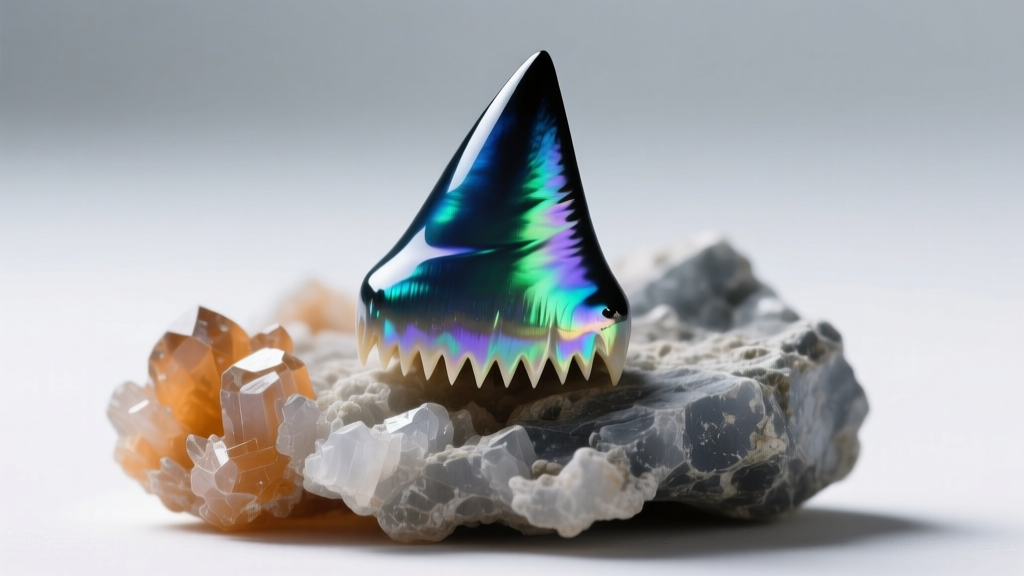
The Florida Museum of Natural History notes that fossilized shark teeth undergo a process called permineralization, where groundwater rich in minerals replaces the organic material. Iron and manganese deposits are what give fossilized mako teeth their highly coveted dark blue, grey, and black hues, making each piece entirely unique.
Material Pairings & Hardware Grades
The hardware used to suspend a mako tooth dictates its longevity, especially when exposed to the elements. In 2026, the standard for premium coastal jewelry has risen significantly.
- Wire Wrapping (20g to 22g): Dead-soft 14k gold-filled or 925 sterling silver wire (20-gauge for structural integrity, 22-gauge for intricate weaving) is the preferred method. It secures the V-shaped root without the use of toxic epoxies or glue, which degrade in saltwater.
- Chains vs. Cords: For a rugged, surf-adjacent look, 1.5mm to 2mm waxed cotton or hemp cord is ideal due to its rot resistance. For elevated styling, 18-inch to 20-inch oxidized silver rolo chains or 18k gold vermeil paperclip chains provide a striking contrast to the organic tooth.
- Titanium Hardware: For avid surfers who never take their jewelry off, Grade 23 Titanium (Ti-6Al-4V) bails and chains are the ultimate upgrade. This aerospace-grade alloy is entirely impervious to saltwater corrosion and will not tarnish or react with skin oils.
Styling Framework: Necklines & Layering
Styling a mako shark tooth necklace requires balancing its inherent boldness with the right sartorial canvas. The sharp, elongated geometry of the tooth acts as a natural visual arrow, making it highly effective for elongating the neck and drawing the eye downward.
The golden rule of 2026 coastal styling: let the organic texture of the fossil dictate the metal. Pair dark blue/grey Moroccan fossils with oxidized sterling silver, and reserve warm brown or caramel-toned fossils for 18k gold vermeil to enhance their natural warmth.
The Coastal Minimalist
For a refined, everyday look, select a single 2-inch fossilized tooth wrapped in minimalist gold wire, suspended on a 20-inch black waxed cotton cord. This length ensures the tooth rests precisely at the sternum, perfectly framing the open collar of a linen button-down shirt or a deep V-neck knit. This approach leans into the 'quiet luxury' trend, where the rarity of the fossil speaks louder than flashy metalwork.
The Avant-Garde Layer
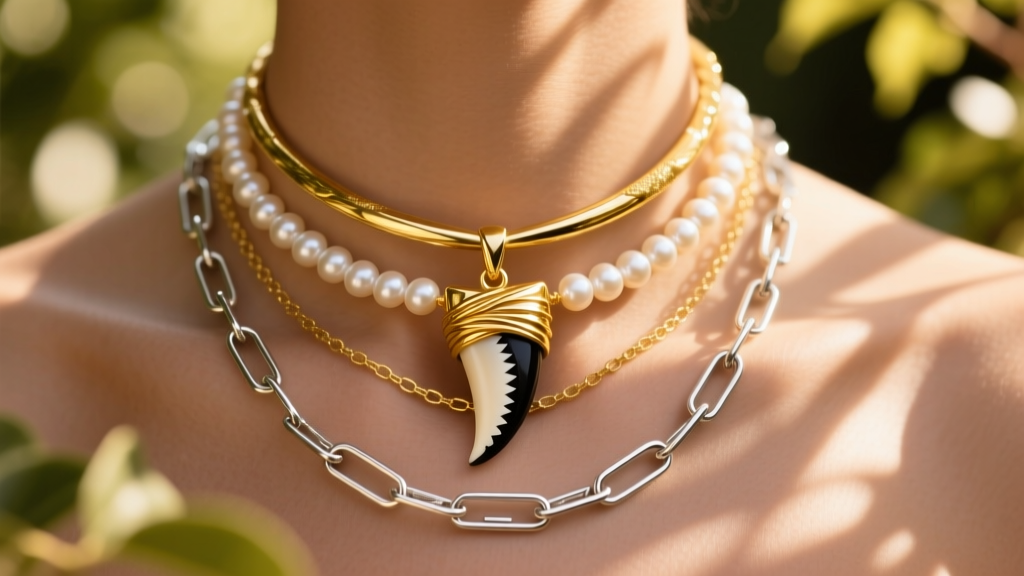
For a more fashion-forward, editorial aesthetic, utilize the mako tooth as the anchor piece in a mixed-metal stack. Pair an 18-inch gold-wrapped mako pendant with a 14-inch freshwater pearl choker and a 22-inch silver satellite chain. The juxtaposition of the predatory, sharp mako tooth against the soft, spherical pearls creates a dynamic visual tension that is highly favored in contemporary streetwear and high-fashion editorial shoots.
Pricing Tiers & Authentication Red Flags
As the popularity of fossilized jewelry surges, so does the market for treated or misrepresented specimens. Understanding pricing tiers and authentication markers is essential for the informed collector.
Market Pricing (2026 Estimates)
- Entry-Level ($25 - $60): Small (1-inch), unpolished fossil teeth with basic wire wrapping or simple glue-on bails. Often sourced from high-volume commercial mines.
- Mid-Tier ($75 - $180): Medium to large (1.5 to 2.25-inch) specimens with vibrant coloration, polished enameloid, and custom, glue-free 14k gold-filled or sterling silver wire wrapping.
- Collector/High-End ($200 - $500+): Exceptional, museum-grade specimens (2.5+ inches) featuring rare color morphs (e.g., deep teal or transitional enamel), set in solid 14k/18k gold with intricate, artisanal wire-weaving or custom-forged bezels.
Authentication Red Flags
Beware of 'painted' or 'sealed' teeth. Some mass-market vendors coat low-quality, chalky fossils in polyurethane or paint the roots to hide imperfections. A genuine fossilized mako tooth should feel dense and heavy for its size, and the enameloid should possess a natural, glass-like luster without feeling plasticky to the touch. Furthermore, if a modern-looking, stark white tooth is sold without CITES documentation, it is likely either bleached or illegally sourced, and should be avoided by eco-conscious consumers.
Final Verdict
The mako shark tooth necklace has successfully transcended its casual origins to become a sophisticated, culturally resonant accessory. By prioritizing ethically sourced, fossilized specimens and demanding high-quality, glue-free metallurgy, collectors and style enthusiasts can wear a piece of prehistoric ocean history that aligns with modern ecological values and elevated aesthetic standards.


