Finding the Perfect Heart Necklace Picture Locket: A Buyer's Guide
Discover how to choose a custom heart necklace picture locket. Compare metal grades, hinge types, and photo insertion methods for lasting heirlooms.

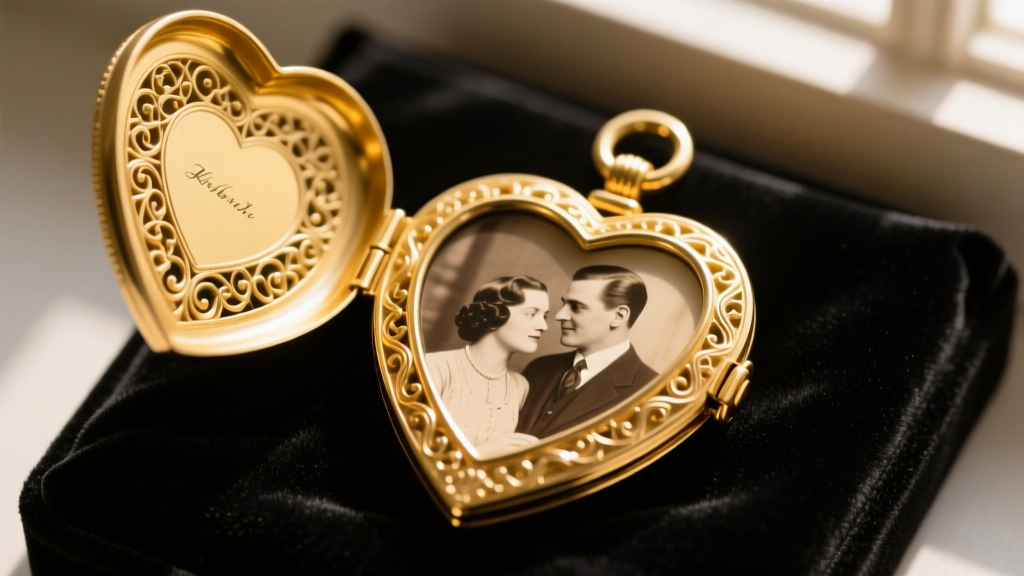
A heart-shaped locket is more than just an accessory; it is an intimate vault for your most cherished memories. However, finding the perfect heart necklace picture locket requires navigating a minefield of cheap manufacturing, fragile hinges, and poor-quality metal alloys that tarnish within months. As we move through 2026, the market is flooded with mass-produced, hollow-stamped lockets that fail under daily wear. Whether you are looking for a traditional paper-insert locket or a modern laser-engraved pendant, understanding the structural and material nuances is critical. This comprehensive buyer’s guide breaks down exactly what to look for to ensure your sentimental jewelry becomes a true multi-generational heirloom.
The Anatomy of a High-Quality Heart Locket
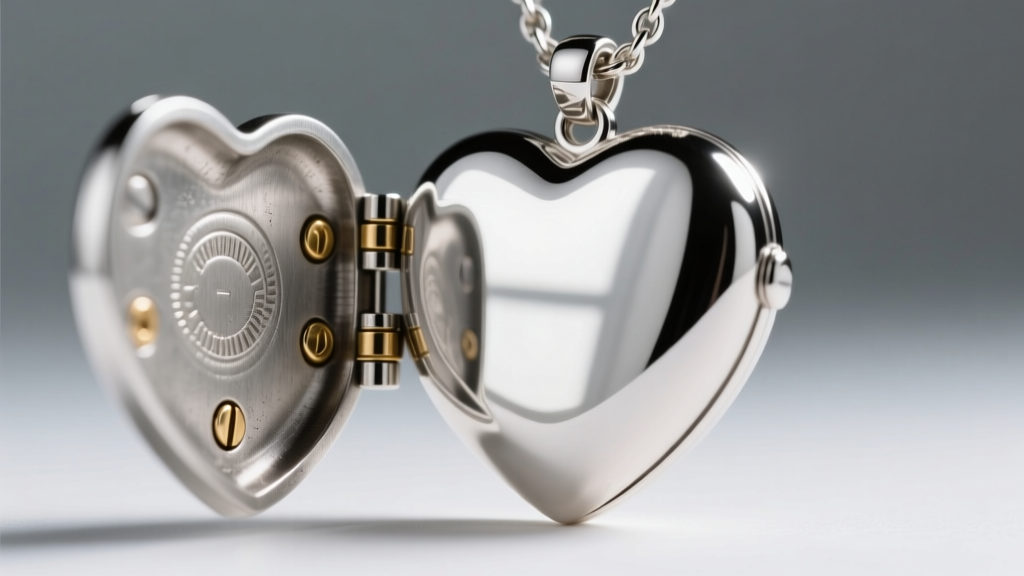
The most common failure point in any locket is not the chain or the clasp, but the hinge and the catch. When evaluating a heart necklace picture pendant, you must inspect the mechanical hardware.
Hinge Construction: Friction vs. Piano
Mass-market lockets typically use a friction hinge. This consists of a single brass or steel pin pushed through two hollow metal knuckles. Over time, the torque of opening and closing the locket causes the pin to work loose, or the single knuckle bends, resulting in a locket that hangs crookedly or snaps open unexpectedly.
For a piece you intend to wear daily, insist on a piano hinge (also known as a continuous hinge). This features multiple interlocking knuckles with a thick, continuous pin running through the entire length. According to manufacturing standards outlined by Rio Grande Jewelry Supply, piano hinges distribute mechanical stress evenly across the spine of the locket, virtually eliminating hinge failure even on heavy 14k gold pieces.
The Catch and Seam
Opposite the hinge is the catch. Avoid lockets that rely purely on a slight friction bend of the metal to stay closed. High-end lockets feature a micro-snap mechanism or a precisely machined lip that produces a distinct, satisfying "click" when closed. Furthermore, examine the seam where the two halves meet. A quality locket will have a recessed inner lip (a rabbet joint) that prevents dust and moisture from entering the picture chamber.
Metal Grades and Thickness: What to Buy
The metal you choose dictates not only the color and prestige of the necklace but also its structural integrity and tarnish resistance. The Gemological Institute of America (GIA) notes that alloy mixtures drastically affect the hardness of jewelry, which is vital for the large, flat surfaces of a heart locket that are prone to denting.
| Metal Grade | Purity / Alloy | Thickness (Ideal) | Tarnish Resistance | Best Application |
|---|---|---|---|---|
| Sterling Silver (925) | 92.5% Silver, 7.5% Copper | 1.0mm - 1.2mm | Low (Requires polishing) | Budget-friendly heirlooms, vintage aesthetics |
| 10k Gold | 41.7% Gold | 0.8mm - 1.0mm | High | Highly durable, everyday wear on a budget |
| 14k Gold | 58.5% Gold | 0.9mm - 1.2mm | Very High | The gold standard for heirloom lockets |
| 18k Gold | 75.0% Gold | 1.2mm+ (Heavy) | Excellent | Luxury pieces, but prone to surface scratching |
| Platinum (950) | 95.0% Platinum | 0.8mm - 1.0mm | Impervious | Ultra-premium, heavy weight, hypoallergenic |
Expert Tip: Avoid "gold vermeil" or "gold plated" lockets for picture inserts. The friction of opening and closing the locket, combined with the oils from your fingers, will wear the plating off the edges and hinges within a year, exposing the base brass or copper underneath.
Picture Insertion Methods: Traditional vs. Laser Engraved
When customizing your heart necklace picture locket, you have two distinct paths: the traditional paper insert or modern laser photo engraving. Each requires specific preparation and offers different longevity.
Traditional Paper Inserts
If you buy a hollow locket designed for paper inserts, do not use standard printer paper. Standard paper (20lb bond) is highly acidic and will yellow, degrade, and stick to the inner metal walls over time due to condensation and skin oils.
- Paper Weight: Use 80lb to 100lb acid-free, archival cardstock.
- Cutting: Use a precision X-Acto knife and a metal template rather than scissors to ensure the heart shape perfectly matches the inner recess.
- Adhesive: Never use superglue or standard craft glue, which off-gas and ruin the photo. Use a tiny dab of archival PVA (polyvinyl acetate) glue or double-sided photo mounting squares to secure the image to the backing plate.
Laser Photo Engraving
For a permanent, waterproof solution, many buyers now opt to have the image directly laser-engraved onto the solid metal face or the inner backing plate of the heart pendant. This requires a fiber laser (typically operating at a 1064 nm wavelength), which is specifically calibrated for bare metals.
To get a crisp heart necklace picture via laser, the image must be converted into a 1-bit bitmap using halftone dithering (such as Stucki or Floyd-Steinberg algorithms) at a minimum of 300 to 500 DPI. This translates the grayscale gradients of your photograph into microscopic dots of varying densities, allowing the metal to reflect light in a way that creates a photorealistic image. CO2 lasers, which are cheaper and often used by mall kiosks, cannot engrave bare gold or silver effectively and will result in a muddy, scorched image.
Sizing, Proportions, and Chain Pairing
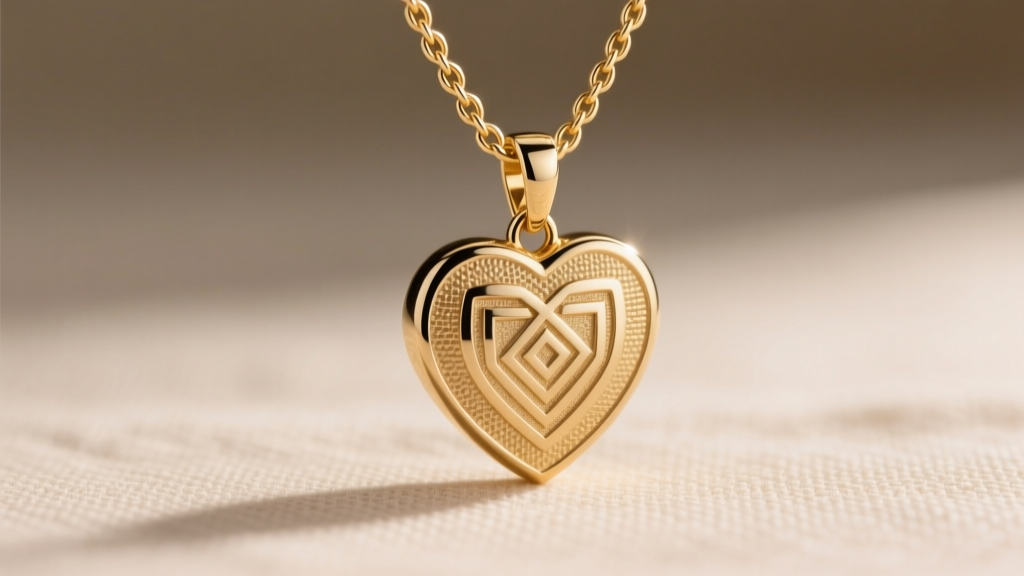
A beautiful locket can be ruined by a flimsy, mismatched chain. Heart lockets, particularly those made of solid 14k gold or platinum, carry significant weight. A delicate 0.7mm cable chain will stretch, kink, and eventually snap under the pendulum motion of a heavy locket.
Chain Gauge and Style
For a standard heart locket measuring 20mm to 25mm across, weigh the pendant. If it exceeds 4 grams, you must upgrade your chain.
- Minimum Gauge: 1.2mm to 1.5mm thickness.
- Best Chain Styles: Wheat chains, rope chains, and box chains offer superior tensile strength and resist kinking. Avoid snake chains, as the tight interlocking scales easily trap hair and snap when bent.
- The Bail: Ensure the chain can pass through the locket's bail. High-end lockets often feature a "hidden bail" soldered to the back for a seamless look, but these can have narrow openings. Always check the inner diameter of the bail against your chosen chain's clasp size.
Maintenance and Long-Term Care
To preserve both the metal and the picture inside your locket, adopt a strict maintenance routine. Never wear a traditional paper-insert locket in the shower or pool; trapped moisture will cause the paper to warp and the metal to oxidize from the inside out. Clean the exterior of gold and platinum lockets using a few drops of mild dish soap, warm water, and a baby-soft toothbrush. Avoid ultrasonic cleaners if your locket features a friction hinge, as the high-frequency vibrations can shake the hinge pin loose. For the Federal Trade Commission Jewelry Guides compliant stamping and hallmarking, always check the inside back plate for the "14k" or "925" stamp and the manufacturer's trademark to guarantee you are purchasing authentic, solid metals.
By prioritizing piano hinges, solid metal grades, and proper archival or laser insertion techniques, your custom heart locket will remain a flawless, wearable tribute for decades to come.


