How Much Is the Gold Necklace? A 2026 Troubleshooting Guide
Discover how much your gold necklace is really worth in 2026. Learn to troubleshoot fake stamps, calculate melt value, and avoid appraisal scams.

The Core Dilemma: Retail Replacement vs. Intrinsic Melt Value
When you ask, 'how much is the gold necklace,' you are actually asking two entirely different questions. The first is the retail replacement value, which is what an insurance company will pay to replace the piece with a brand-new equivalent from a jewelry store. The second is the intrinsic melt value, which is the raw commodity worth of the gold alloy if it were to be melted down and refined. In 2026, with gold spot prices hovering near historic highs of $2,450 per troy ounce, the gap between these two numbers has never been wider. A vintage 18-karat Italian rope chain might cost $4,500 to replace at a boutique, but its raw melt value to a precious metals refinery might only be $1,800. Understanding this discrepancy is the first step in troubleshooting your necklace's true market position and avoiding lowball offers from uninformed buyers.
Step 1: Decoding Hallmarks and Spotting Counterfeit Stamps
The most common roadblock in valuing a gold necklace is misinterpreting the hallmark. Legitimate stamps indicate the karat purity of the alloy. However, counterfeiters and misleading manufacturers frequently use stamps that look authentic to the untrained eye but actually denote gold plating or electroplating.
The 'HGE', 'GF', and 'EP' Traps
If your necklace is stamped with '18K HGE' (Heavy Gold Electroplate), '14K GF' (Gold Filled), or 'EP' (Electroplated), you do not own a solid gold necklace. According to the Federal Trade Commission guidelines on gold jewelry, these terms legally describe a base metal (usually brass or copper) coated with a microscopic layer of gold. While these pieces may hold sentimental value or costume jewelry appeal, their intrinsic melt value is effectively zero. A gold refinery will reject them outright because the cost of chemical extraction exceeds the value of the recovered gold dust.
Step 2: The Weight Test (Solid vs. Hollow/Electroformed)
If your necklace passes the hallmark test, the next troubleshooting phase is determining its structural integrity. In the late 1990s and 2000s, 'electroformed' or hollow 14K gold chains flooded the market. These chains are manufactured by electroplating gold over a wax or resin core, which is later melted or dissolved away. The result is a massive, thick-looking chain that weighs a fraction of what a solid equivalent would weigh.
Why does this matter for valuation? Pawn shops and scrap buyers use hydrostatic scales (water displacement tests) to measure specific gravity. Solid 14K gold has a specific gravity of roughly 13.0. A hollow chain will register a drastically lower number, immediately flagging it to the buyer. Furthermore, hollow chains are notoriously difficult to repair; if a hollow link crushes or snaps, jewelers often refuse to solder it, severely depressing its secondary retail market value.
Step 3: Calculating the Melt Value (2026 Formulas)
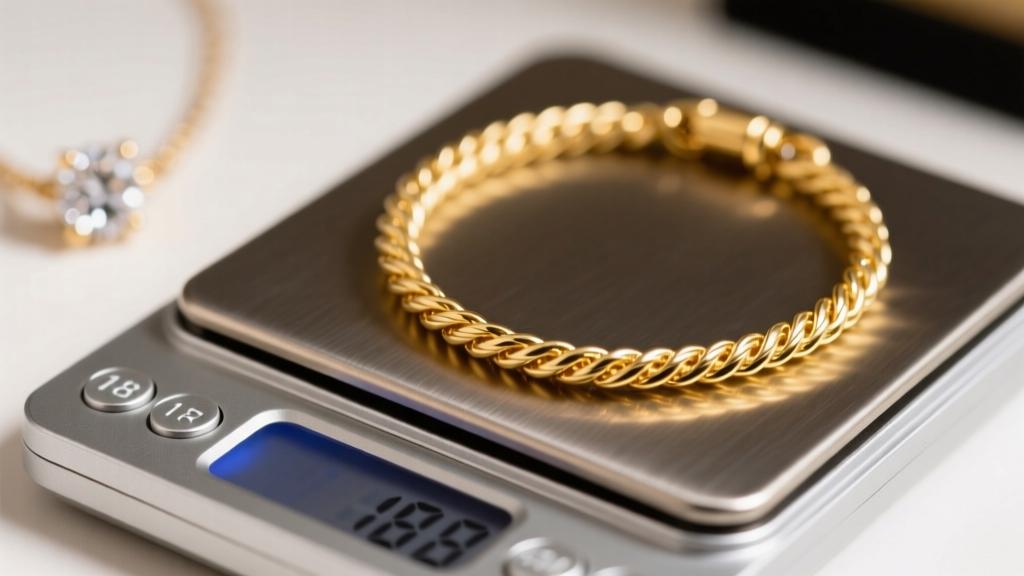
To answer 'how much is the gold necklace' from a scrap perspective, you must calculate the pure gold content. You will need a precise digital jewelry scale (measuring to 0.01 grams) and the current daily spot price from a reliable source like Kitco.
The Formula:
(Total Gram Weight ÷ 31.103) × Purity Percentage × Current Spot Price = Pure Melt Value.
Let us troubleshoot a real-world scenario: You have a 25-gram 14K solid gold Cuban link chain. The 2026 spot price is $2,450 per troy ounce.
- 25 grams ÷ 31.103 = 0.803 troy ounces (total weight).
- 0.803 × 0.585 (14K purity) = 0.469 troy ounces of pure 24K gold.
- 0.469 × $2,450 = $1,149.05 (Maximum Melt Value).
Keep in mind that a buyer must make a profit. A reputable precious metals buyer will typically offer 85% to 92% of this melt value, while a pawn shop may only offer 60% to 70%.
Karat Purity and Troubleshooting Matrix
| Karat | Common Stamp | Purity | Melt Multiplier | Common Troubleshooting Issue |
|---|---|---|---|---|
| 10K | 417 / 10K | 41.7% | 0.417 | Prone to tarnish; some high-end European buyers refuse it. |
| 14K | 585 / 14K | 58.5% | 0.585 | Most common; heavily counterfeited with '14K HGE' stamps. |
| 18K | 750 / 18K | 75.0% | 0.750 | Softer alloy; spring-ring clasps frequently fail under weight. |
| 22K | 916 / 22K | 91.6% | 0.916 | Rare in Western chains; mostly solid Indian or Middle Eastern pieces. |

Troubleshooting Common Appraisal Roadblocks
Even when you have verified the stamp and calculated the weight, you may encounter physical anomalies that alter the final payout. Professional appraisers and refiners look for these specific failure points before making a final offer.
The Solder Joint Problem
Gold chains are assembled using solder. To ensure the solder melts before the chain links do, manufacturers use a lower-karat solder alloy (often 8K or 10K, even on an 18K chain). If a buyer tests your necklace with an electronic gold tester or acid scratch test directly on the clasp or a link joint, the machine will read the lower-karat solder, resulting in a falsely low valuation. Pro Tip: Always insist that the buyer tests the middle of a thick link, far away from any solder joints or clasps, to get an accurate reading of the chain's primary alloy.
Gemstone Removal and Deductions
If your gold necklace features a pendant with diamonds, cubic zirconia, or semi-precious stones, the buyer will deduct weight for the stones. Removing micro-pave diamonds from a gold setting is labor-intensive. Many scrap buyers will simply estimate the stone weight and subtract it, but if the stones are glued in or set in a way that risks damaging the gold during extraction, they may charge a 'processing fee' that eats into your final payout.
When to Seek a Certified Appraiser Over a Pawn Shop
If your necklace is a signed piece from a heritage house (e.g., Cartier, Van Cleef & Arpels, or Buccellati), or if it is an antique Art Deco piece, calculating melt value is a massive financial mistake. The craftsmanship, brand provenance, and historical significance dictate the price, not the raw commodities.
'Never melt a signed piece. The moment a heritage clasp or maker's mark is destroyed in the crucible, you lose 80% of the asset's secondary market value. Always seek a GIA-certology graduate gemologist for brand-signed or antique gold jewelry.' — 2026 Estate Jewelry Valuation Standards.
For these pieces, you need a certified appraiser who understands the secondary luxury market, auction house reserves, and brand authentication. You can find verified professionals through the Gemological Institute of America (GIA) alumni network.
Advanced Verification: XRF Spectrometry
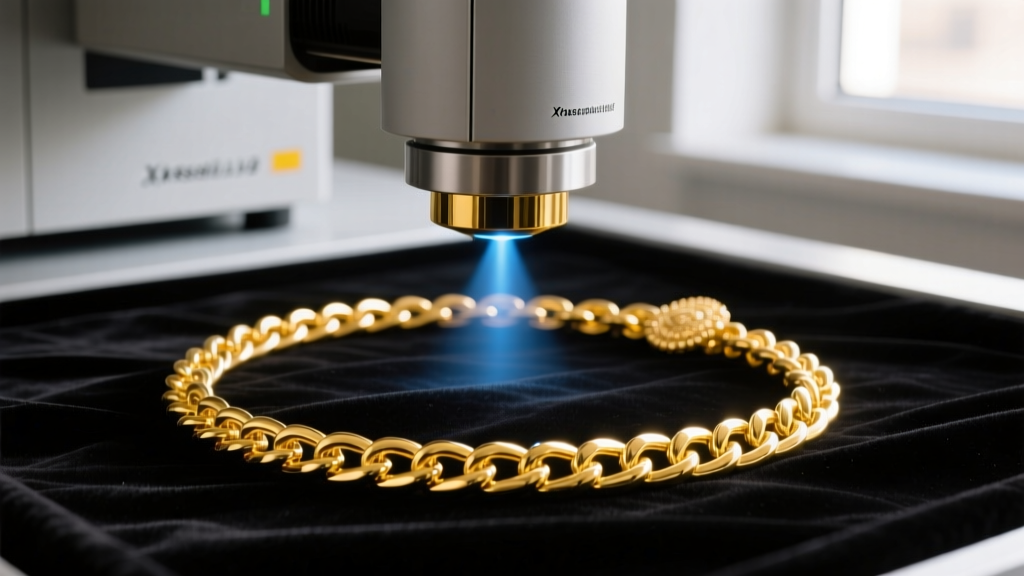
For high-value or heavy chains (such as 50-gram 22K bismarck chains), acid testing is outdated and potentially damaging. In 2026, any reputable high-end buyer or appraiser will use an X-Ray Fluorescence (XRF) spectrometer. This non-destructive machine fires X-rays into the metal and reads the exact elemental emission spectrum, telling the appraiser not just the gold content, but the exact percentages of copper, silver, and zinc in the alloy. If a buyer is offering you thousands of dollars for a heavy chain and relies solely on a $20 bottle of nitric acid and a scratch stone, consider it a red flag and seek a more technologically equipped establishment.
Final Verdict: Maximizing Your Return
Figuring out how much is the gold necklace requires a methodical approach. Start by verifying the hallmark with a 10x triplet loupe, ensuring it is not a plated decoy. Next, weigh the piece on a calibrated scale and run the melt formula using the day's live spot price. Check for hollow links, avoid testing on solder joints, and recognize when a piece holds historical or brand value that supersedes its raw metal content. By troubleshooting these common pitfalls, you transition from a vulnerable seller to an informed negotiator, ensuring you capture the true 2026 market value of your gold jewelry.


