How to Style and Authenticate a Traditional Maasai Necklace
Learn how to style, layer, and care for an authentic Maasai necklace. Discover color meanings, authentication tips, and modern wardrobe integration.

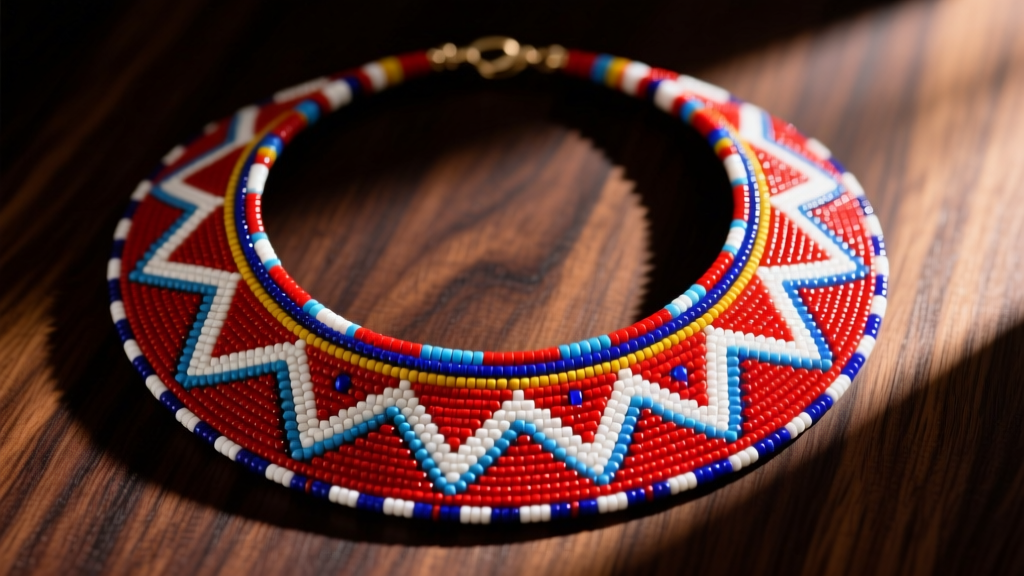
The Maasai necklace is far more than a striking fashion accessory; it is a profound expression of East African heritage, social status, and artistic mastery. Originating from the Maasai people of Kenya and Tanzania, these intricate beaded collars and pendants have captivated the global fashion landscape. However, as their popularity has surged, so has the market for mass-produced, culturally disconnected imitations. For the discerning jewelry collector or style enthusiast, knowing how to authenticate, style, and care for a genuine Maasai necklace is essential. This comprehensive guide will walk you through the exact steps to identify authentic artisan work, decode the rich color symbolism, and seamlessly integrate these bold pieces into a contemporary 2026 wardrobe.
Understanding the Cultural Weight of Maasai Beadwork
Before attempting to style or purchase a Maasai necklace, one must understand its origins. Traditionally, beadwork is crafted exclusively by Maasai women. The intricate patterns and colors are not random; they communicate specific information about the wearer's age, marital status, social standing, and even the number of children they have. The most iconic piece is the Enkarewa, a broad, stiff collar that rests flat against the collarbones, and the Nborro, a long, multi-strand pendant necklace. According to the National Museum of African Art, the transition from using natural materials like clay, wood, and bone to glass beads occurred in the late 19th century via trade routes, fundamentally evolving the craft into the vibrant art form we recognize today.
Step 1: Authenticating Your Maasai Necklace
The market is flooded with factory-made replicas that lack the structural integrity and cultural soul of genuine pieces. Here is a step-by-step framework to authenticate a true Maasai necklace:
Analyze the Wirework and Tension
Authentic Maasai collars are not strung on flimsy nylon thread or glued to fabric. They are constructed using a complex wire-bending technique. Artisans typically use 28-gauge or 26-gauge galvanized steel wire, looping and weaving it tightly to create a flexible yet structured mesh. If the necklace feels overly rigid like plastic, or if you can see glue seeping between the beads, it is a mass-produced fake. A genuine piece will have a slight, organic flexibility and a substantial, heavy drape due to the steel wire core.
Inspect the Beads and Backing
Traditional artisans primarily use size 11/0 or 10/0 Czech glass seed beads. These glass beads have a distinct, high-friction click when rubbed together and possess a luminous depth that plastic cannot replicate. Furthermore, the backing of an authentic collar is usually finished with genuine cowhide leather, typically around 1.5mm thick, which is stitched or tightly bound to the wire edges to protect the wearer's skin. Fakes often use synthetic felt or thin faux suede.
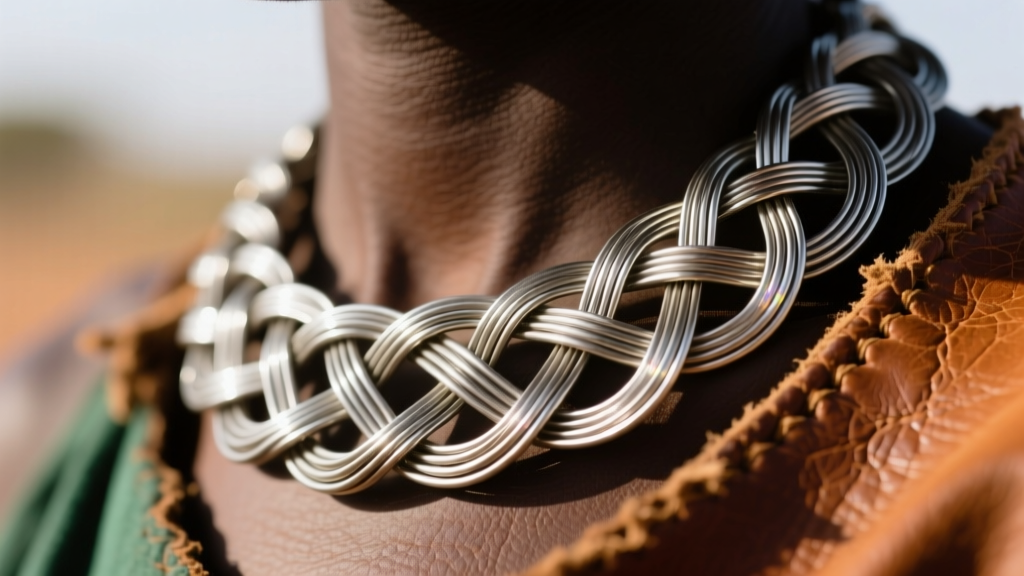
Step 2: Decoding the Color Symbolism
Every color in a Maasai necklace holds deep semantic value. When selecting a piece, understanding these meanings adds a layer of personal connection to the jewelry. Below is a breakdown of the primary colors used in traditional Maasai beadwork:
| Color | Symbolism & Meaning | Common Context |
|---|---|---|
| Red | Bravery, strength, and blood | Worn by warriors; represents the protection of the community and cattle. |
| White | Peace, purity, and health | Represents cow's milk, a staple of the Maasai diet; worn during ceremonies. |
| Blue | Energy, vitality, and the sky | Symbolizes the rain and the sky, which sustain the cattle and the land. |
| Green | Health, land, and nourishment | Represents the lush pastures that feed the herds after the rains. |
| Orange | Hospitality and friendship | Linked to the gourds used to serve milk to guests and travelers. |
| Black | Unity and the people | Represents the dark skin of the Maasai people and the solidarity of the tribe. |
Step 3: Styling and Layering for Modern Wardrobes
The bold, maximalist nature of a Maasai collar necklace requires strategic styling to prevent it from overwhelming your outfit. The goal is to let the beadwork act as the focal point while bridging traditional craftsmanship with modern silhouettes.
The Minimalist Canvas Approach
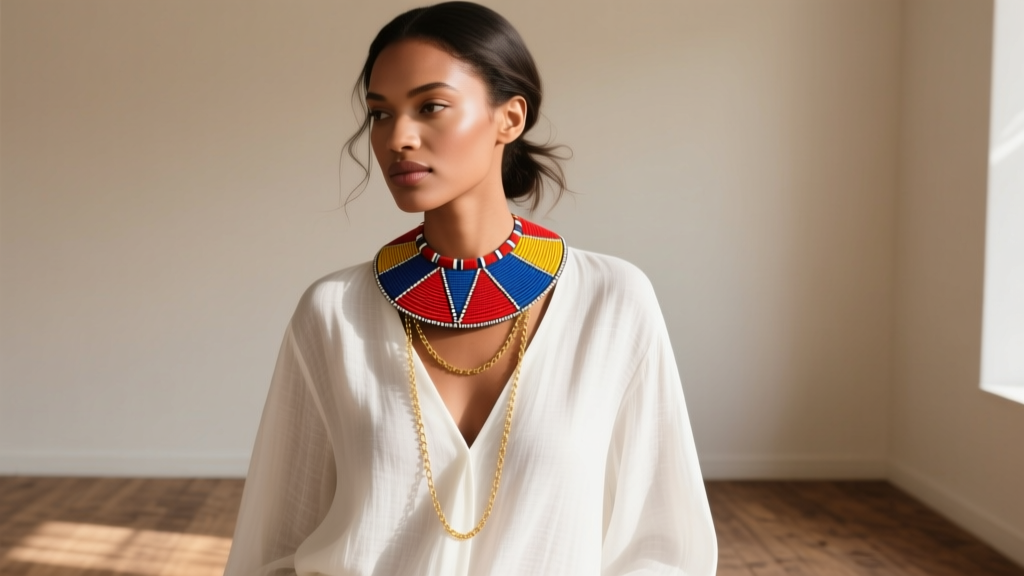
The most effective way to style a wide Maasai collar is to pair it with a minimalist, solid-colored garment with a clean neckline. A crisp white linen button-down, a sleek black silk slip dress, or a tailored navy V-neck sweater provides the perfect negative space. Avoid busy prints, ruffles, or high collars, which will visually clash with the intricate geometric patterns of the beadwork.
Mixed-Metal Layering
To integrate a Maasai necklace into a contemporary jewelry stack, introduce delicate metallic elements. Layering a traditional beaded collar with two or three ultra-fine 14k or 18k gold chain necklaces (ranging from 18 to 24 inches) creates a stunning contrast between matte glass beads and reflective precious metals. This technique grounds the ethnic origins of the piece within a modern, cosmopolitan aesthetic.
Proportional Balancing
Because a Maasai collar is visually heavy, balance your overall silhouette by keeping other jewelry minimal. Opt for small, understated stud earrings rather than large hoops or chandeliers. If you are wearing a long Nborro pendant style, ensure your top has a higher neckline, like a crew neck or turtleneck, to give the long strands a solid background to cascade against.
Step 4: Proper Care and Maintenance
Authentic Maasai beadwork is highly durable, but the combination of steel wire, glass beads, and leather requires specific maintenance to ensure longevity.
- Cleaning the Beads: Never submerge a Maasai collar in water or use ultrasonic jewelry cleaners. The moisture can become trapped in the wire mesh, leading to rust that will stain the glass beads and degrade the wire's tension. Instead, use a dry, soft microfiber cloth to gently buff the glass beads and remove skin oils.
- Leather Conditioning: The cowhide backing can dry out and crack over time, especially in arid climates. Every six months, apply a minuscule amount of natural leather conditioner to a cotton swab and carefully rub it into the leather edges, avoiding the glass beads.
- Storage Protocols: Never hang a wide Maasai collar on a standard jewelry hook. The gravitational pull over time will warp the wire mesh and distort the geometric patterns. Always store the necklace completely flat in a drawer or a wide, shallow jewelry box, preferably separated from metal jewelry that could scratch the glass.
Sourcing Ethically and Responsibly
As the demand for global artisan jewelry grows, ethical sourcing is paramount. Purchasing directly from fair-trade organizations ensures that the Maasai women who craft these pieces are paid living wages and retain agency over their cultural designs. Organizations like Fair Trade Federation members and specialized ethical brands such as Sidai Designs work directly with Maasai communities in Tanzania, preserving traditional techniques while providing sustainable economic empowerment. When buying, always ask the retailer for transparency regarding their supply chain and artisan partnerships. By investing in an authentic, ethically sourced Maasai necklace, you are not just acquiring a breathtaking piece of wearable art; you are actively participating in the preservation of a rich, enduring cultural legacy.


