Silver Spiral Necklace Buying Guide: What to Look For
Discover how to choose the perfect silver spiral necklace. Learn about sterling silver grades, spiral motifs, chain types, and pricing in our expert guide.

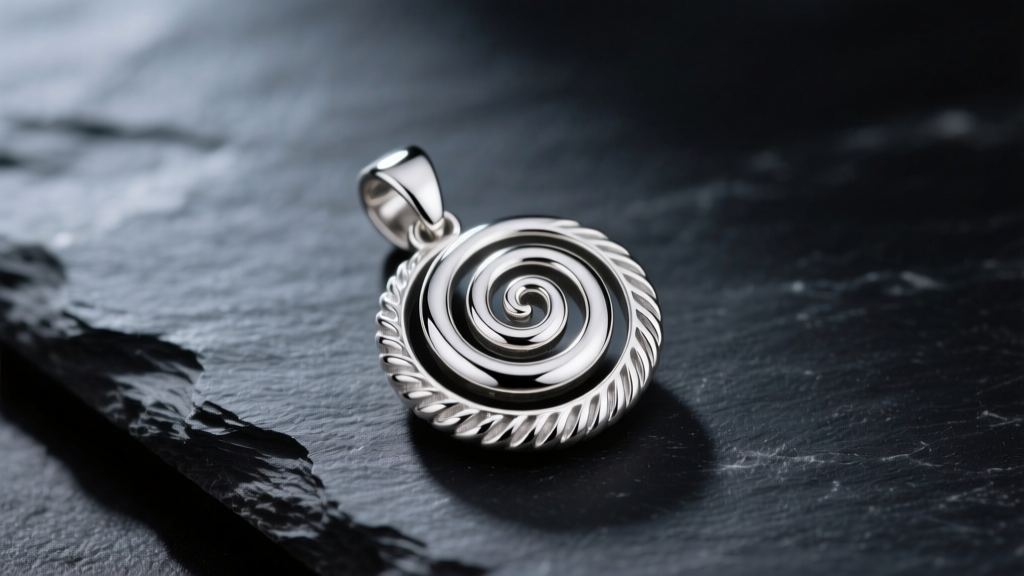
The Enduring Appeal of the Silver Spiral Necklace
The spiral is one of the oldest and most universally recognized symbols in human history, representing growth, evolution, and cosmic energy. In jewelry design, a silver spiral necklace bridges the gap between ancient symbolism and modern minimalism. Whether you are drawn to the mathematical perfection of a Fibonacci curve or the organic flow of a hand-forged coil, selecting the right piece requires an understanding of metallurgy, structural integrity, and chain mechanics. This comprehensive buying guide will help you navigate the market, ensuring you invest in a silver spiral necklace that is both aesthetically striking and built to last a lifetime.
Decoding Silver Grades: What You Are Actually Buying
When shopping for a silver spiral necklace, the hallmark stamped on the bail or jump ring tells you everything about the metal's purity and durability. Pure silver is too soft for everyday jewelry, so it must be alloyed with other metals. According to the Gemological Institute of America (GIA), understanding these alloys is critical for predicting how your necklace will age, tarnish, and withstand tension.
| Silver Grade | Hallmark | Composition | Best For | Tarnish Resistance |
|---|---|---|---|---|
| Sterling Silver | 925 | 92.5% Silver, 7.5% Copper | Everyday wear, intricate cast designs | Moderate (Requires polishing) |
| Argentium Silver | 935 or 960 | Silver, Copper, Germanium | Hypoallergenic needs, low-maintenance wear | Exceptional (Highly resistant) |
| Fine Silver | 999 | 99.9% Pure Silver | Delicate wire-wrapped spirals, bezels | High (But too soft for heavy pendants) |
For a durable silver spiral pendant, 925 Sterling Silver is the industry standard. However, if you live in a humid climate or dislike polishing your jewelry, seek out Argentium Silver. The addition of germanium creates a transparent barrier that prevents firescale and drastically slows down the oxidation process that causes black tarnish.
Spiral Design Variations and Craftsmanship
Not all spirals are created equal. The geometry of the curve dictates both the aesthetic and the structural integrity of the pendant. When evaluating craftsmanship, look for smooth transitions between the metal layers and a securely soldered bail.
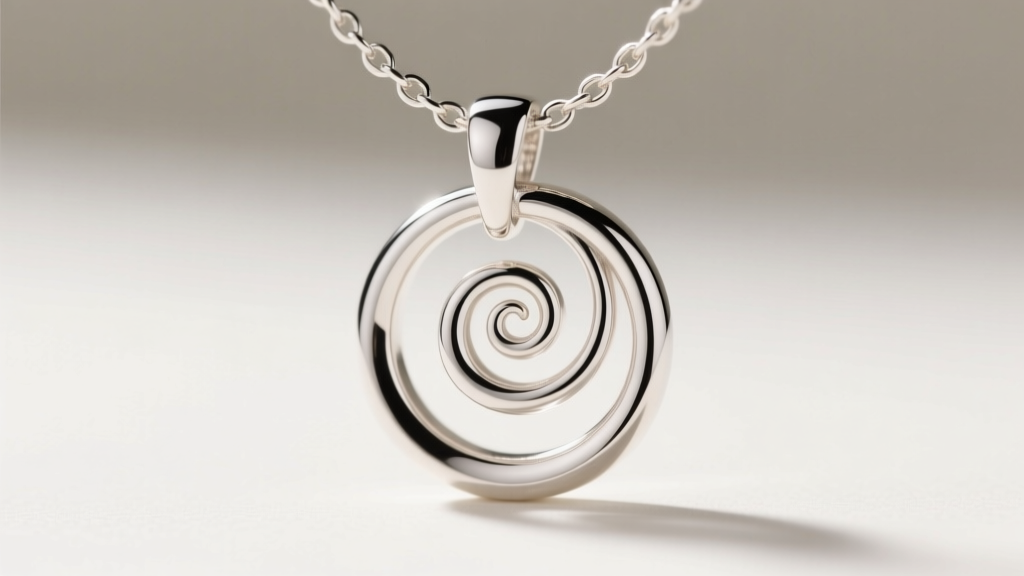
The Fibonacci (Golden Ratio) Spiral
Based on the mathematical sequence found in nature (like nautilus shells and galaxies), the Fibonacci spiral expands outward at a specific, proportional rate. High-end jewelers often use CAD (Computer-Aided Design) to mill these pendants from solid silver blocks, ensuring the curves are mathematically flawless. Look for a graduated thickness in the wire; the center should be slightly thicker to anchor the bail, tapering elegantly toward the outer edge.
The Double Helix and DNA Motifs
These 3D spirals require advanced silversmithing techniques, often involving two intertwining wires. The critical flaw to watch out for in mass-produced double helix pendants is weak soldering at the top and bottom vertices. If the joints are merely glued or poorly fused, the pendant will easily snap under the weight of the chain. Always inspect the connection points under a macro lens or ask the jeweler for high-resolution close-ups.
The Tension Coil or Spring Pendant
A coil design mimics a compressed spring. While visually striking, these are prone to catching on clothing and stretching out of shape. If you choose a tension coil, ensure it is crafted from work-hardened sterling silver rather than annealed (soft) silver, which will permanently deform if pulled.
Pairing the Pendant: Chain Types and Gauge Sizes
A common mistake buyers make is pairing a heavy silver spiral pendant with an inadequate chain. The tensile strength of the chain must support the pendant's weight without warping the jump ring or snapping the links. According to Jewelers of America, matching the chain gauge to the pendant weight is essential for longevity.
- 18-Gauge (1.02mm) Box or Wheat Chain: Ideal for medium to heavy spiral pendants (8 to 15 grams). Box chains offer excellent structural rigidity and resist kinking, making them the safest choice for top-heavy geometric spirals.
- 20-Gauge (0.81mm) Cable or Rope Chain: Perfect for lightweight, delicate Fibonacci spirals (3 to 7 grams). Rope chains add a beautiful twisted texture that complements the spiral motif, but they can be difficult to repair if snagged.
- 22-Gauge (0.64mm) Snake Chain: Strictly for micro-spirals under 3 grams. Snake chains provide a sleek, modern, liquid-metal look, but they are notoriously fragile and will permanently crease if bent or slept in.
Pro-Tip: Always check the jump ring (the small loop connecting the pendant to the chain). It should be soldered closed. If you see a visible slit where the wire ends meet, the ring will eventually pull apart under the pendulum motion of daily wear.
2026 Pricing Expectations for Silver Spiral Necklaces
Understanding the market value prevents you from overpaying for mass-produced items disguised as artisan work. Here is what you should expect to pay for a quality silver spiral necklace in the current market:
- Mass-Market / Fast Fashion ($15 - $35): Usually cast from lower-grade alloys with a thin silver plating over brass. The spiral edges may feel sharp, and the jump rings are rarely soldered. Avoid these for daily wear.
- Artisan Sterling Silver ($45 - $120): Hand-forged or high-quality CAD-cast 925 sterling silver. You will find unique finishes (like oxidized recesses to highlight the spiral grooves) and properly finished bails.
- Fine & Designer Argentium ($150 - $350+): Crafted from premium Argentium silver or recycled eco-silver. These pieces feature flawless mathematical proportions, seamless soldering, and often come with lifetime anti-tarnish guarantees from the maker.
Tarnish Prevention and Long-Term Maintenance
Silver sulfide (tarnish) is the enemy of intricate spiral designs, as the black oxidation quickly builds up in the tight, hard-to-reach inner grooves of the spiral. To maintain the brilliance of your necklace, store it in an airtight anti-tarnish bag with a silica gel packet when not in use.
"Never use liquid silver dips on textured or oxidized spiral pendants. These harsh chemicals will strip the intentional patina from the recessed areas and can leave a milky, irreversible residue on the metal's surface."
Instead, use a specialized silver polishing cloth for the high points of the spiral, and a soft-bristled toothbrush with mild dish soap to gently clean the inner grooves.

Final Checklist Before Checkout
Before you finalize your purchase, run through this quick expert checklist to ensure you are getting a high-quality piece:
- Hallmark Verification: Is the '925' or '935' stamp clearly visible on the bail or jump ring?
- Jump Ring Integrity: Is the connection ring soldered completely shut?
- Edge Finishing: Run your finger along the spiral. Are the edges smooth and tumbled, or sharp and prone to scratching your skin?
- Chain Compatibility: Is the chain gauge thick enough (18g-20g) to support the specific weight of the pendant?
- Return Policy: Does the seller offer a return window in case the spiral's scale looks disproportionate when worn on your specific neckline?
By prioritizing structural integrity and metal purity over fleeting trends, your silver spiral necklace will remain a meaningful, durable staple in your jewelry collection for decades to come.


