How to Style a Labradorite and Pearl Necklace: A Step-by-Step Guide
Learn how to style, layer, and care for a labradorite and pearl necklace. Step-by-step guide on neckline pairing, material grades, and maintenance.

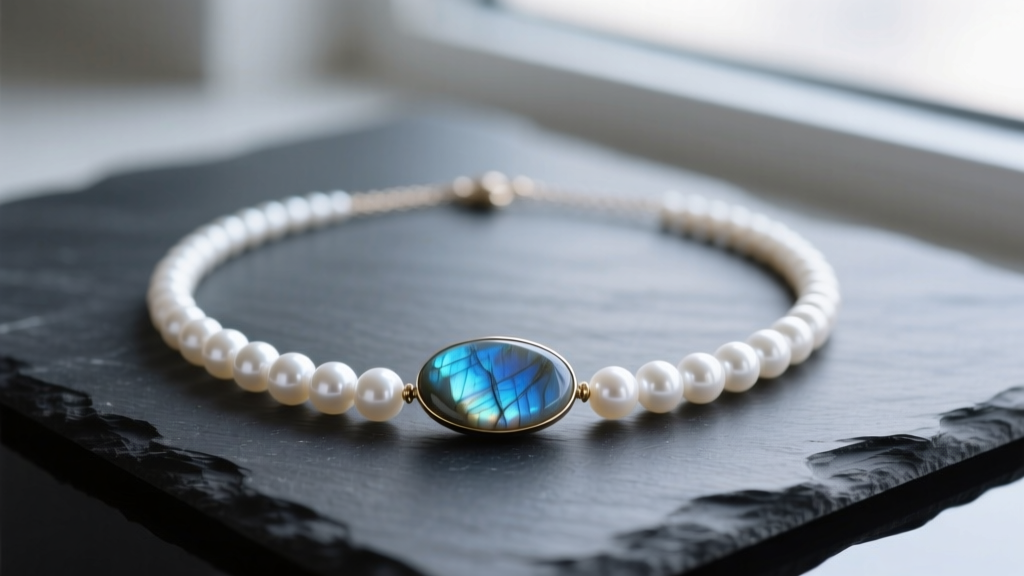
The Art of Mixing Moody Gemstones with Organic Luster
The juxtaposition of a labradorite and pearl necklace represents one of the most captivating trends in mixed-media jewelry design. Labradorite, a plagioclase feldspar mineral famous for its mesmerizing "labradorescence" (a schiller effect of peacock blue, emerald green, and gold), offers a moody, earthy foundation. When paired with the soft, iridescent luster of pearls, the result is a piece of jewelry that balances raw geological power with refined organic elegance. As we move through 2026, jewelers and stylists are increasingly moving away from single-gemstone monotony, favoring these high-contrast, textural combinations.
However, styling and maintaining a necklace that combines a 6.5 Mohs hardness gemstone with a delicate 2.5-4.5 Mohs organic gem requires specific knowledge. This step-by-step guide will walk you through selecting the right grades, matching lengths to necklines, mastering the art of layering, and implementing crucial care protocols to ensure your jewelry survives the test of time.
Step 1: Selecting Stone Grades and Stringing Materials
Not all labradorite and pearl necklaces are created equal. The durability and visual impact of your piece depend heavily on the material grades and the internal stringing architecture. Because labradorite beads often have slightly sharp edges around the drill holes, they can easily fray traditional silk thread over time, leading to catastrophic strand failure.
The Hybrid Stringing Method
For a high-quality labradorite and pearl necklace, look for pieces strung on 49-strand micro-fused stainless steel beading wire (such as Soft Flex 0.019" diameter) coated in nylon. To protect the delicate nacre of the pearls from being abraded by the steel wire, master jewelers use 14k gold-filled French wire or silicone micro-tubing as a buffer between the stone and the metal.
| Material Component | Ideal Grade / Specification | Why It Matters |
|---|---|---|
| Labradorite | AAA Grade with Full-Face Flash | Ensures the blue/green schiller is visible from a direct, front-facing angle rather than just the edges. |
| Pearls | AAA Freshwater or Hanadama Akoya | Guarantees thick nacre (over 0.8mm) and high luster, preventing the pearls from looking dull next to the vibrant labradorite. |
| Spacers | 14k Gold-Filled or Solid 14k | Prevents oxidation and blackening that occurs with sterling silver or base metals when exposed to skin oils. |
For deeper insights into the mineralogical properties of this feldspar variant, the Mindat Mineralogy Database provides comprehensive data on its cleavage planes and optical phenomena.
Step 2: Matching Necklace Lengths to Necklines
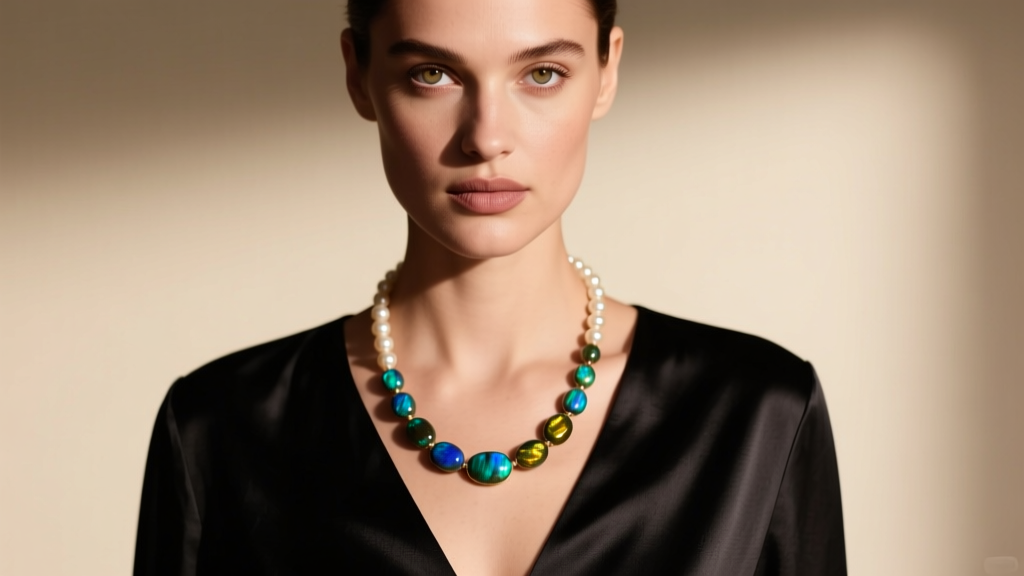
The visual weight of labradorite requires careful consideration of necklace length. A labradorite and pearl necklace typically features larger focal beads (8mm to 12mm), which can look overwhelming if the length is incorrect for your outfit's neckline.
- The 16-Inch Choker/Collar: Best suited for boat necks, off-the-shoulder tops, or scoop necks. This length forces the labradorite beads to sit high on the collarbone, allowing the blue flash to catch ambient light directly. Avoid wearing this length with V-necks, as it cuts the visual line of the neck awkwardly.
- The 18-Inch Princess Length: The most versatile option. It rests perfectly on the clavicle and pairs flawlessly with V-neck blouses, button-down shirts, and wrap dresses. The downward angle of a V-neck mimics the drape of the princess length, elongating the neck while showcasing the central pearl and labradorite cluster.
- The 24-Inch Opera Length: Ideal for high-neck garments like turtlenecks, mock necks, and winter knitwear. The dark, moody tones of labradorite provide a striking contrast against cream, camel, or black cashmere sweaters, while the pearls add a necessary touch of brightness near the face.
Step 3: Layering Techniques for Mixed Gemstone Jewelry
Layering a labradorite and pearl necklace requires an understanding of visual hierarchy and physical weight distribution. Because labradorite is significantly heavier than pearls, improper layering can cause the necklaces to tangle or pull uncomfortably on the nape of your neck.
The 2-Inch Spacing Rule
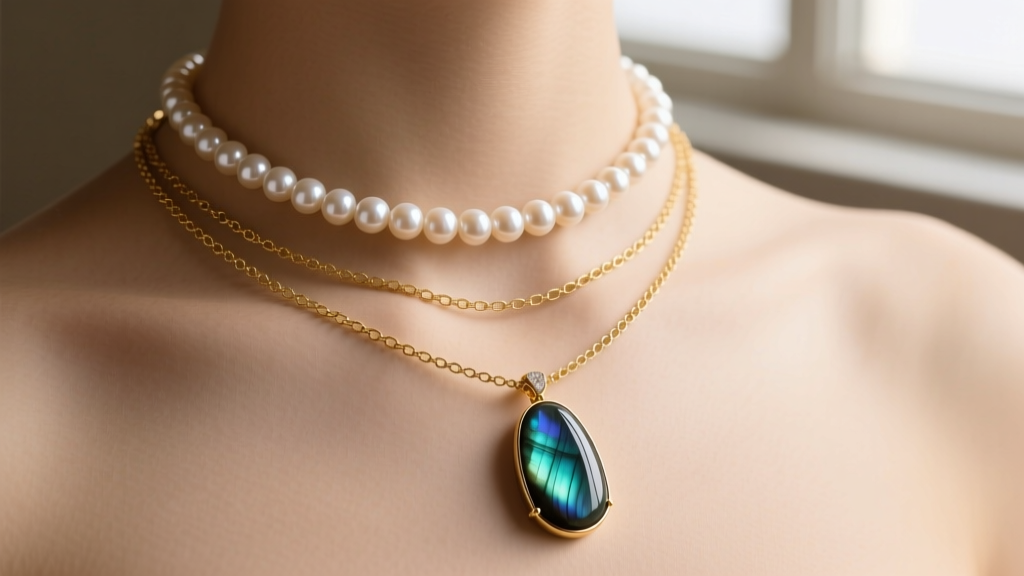
When layering, ensure there is a minimum of 2 inches of length difference between each necklace. If your labradorite and pearl necklace is 18 inches, pair it with a 16-inch delicate gold chain (featuring a single small diamond or gold bead) and a 20-inch or 22-inch solid gold rope chain. This prevents the heavy gemstone beads from grinding against the pearls of adjacent necklaces, which can scratch the pearl's nacre.
"When mixing organic gems like pearls with harder silicates like labradorite, always place the softer, lighter pearls on the shortest, innermost layer. This protects them from the pendulum-like swinging of heavier stone beads on longer layers." — Master Gemologist Appraiser Guidelines
Step 4: Caring for Labradorite and Pearls (Crucial Maintenance)
The most common mistake jewelry owners make is treating a mixed-material necklace as a single entity during cleaning. According to the Gemological Institute of America (GIA), pearls are organic gems composed of calcium carbonate, making them highly susceptible to acids, harsh chemicals, and even the natural acids in human sweat. Labradorite, while harder, possesses two directions of perfect cleavage, meaning a sharp knock against a marble countertop can cause internal fracturing.
The "Last On, First Off" Protocol
Always put your labradorite and pearl necklace on after applying perfume, hairspray, and lotions. The alcohol and volatile organic compounds (VOCs) in cosmetics can strip the pearl's orient (its subtle rainbow overtone) and leave a cloudy film on the labradorite that dulls its flash.
Safe Cleaning Steps
- Never use ultrasonic cleaners: The high-frequency vibrations will shatter the labradorite along its cleavage planes and strip the nacre off the pearls.
- Wipe after wear: Use a clean, damp microfiber cloth to gently wipe down the pearls and labradorite beads after taking the necklace off. This removes acidic skin oils.
- Hydrate the pearls: Pearls need a slight amount of moisture to prevent cracking. Store the necklace in a soft cotton pouch (never a sealed plastic bag, which dries out the organic material) and wear it regularly to allow natural skin oils to maintain the nacre's luster.
For more detailed gemological care instructions, refer to the GIA's comprehensive guide on Labradorite and its specific vulnerabilities to thermal shock and mechanical stress.
Final Thoughts on Styling Dichotomies
Mastering the styling of a labradorite and pearl necklace is about embracing the tension between the earthy and the ethereal. By paying close attention to stringing mechanics, respecting the Mohs hardness scale during layering, and adhering to strict, gem-specific cleaning protocols, you can ensure that this striking mixed-media piece remains a cornerstone of your jewelry wardrobe for decades to come.


