Decoding Necklace Spanish Terms: A Buyer's Troubleshooting Guide
Troubleshoot language barriers when buying or repairing jewelry. Decode necklace Spanish terminology, hallmarks, and sizing for safe transactions.

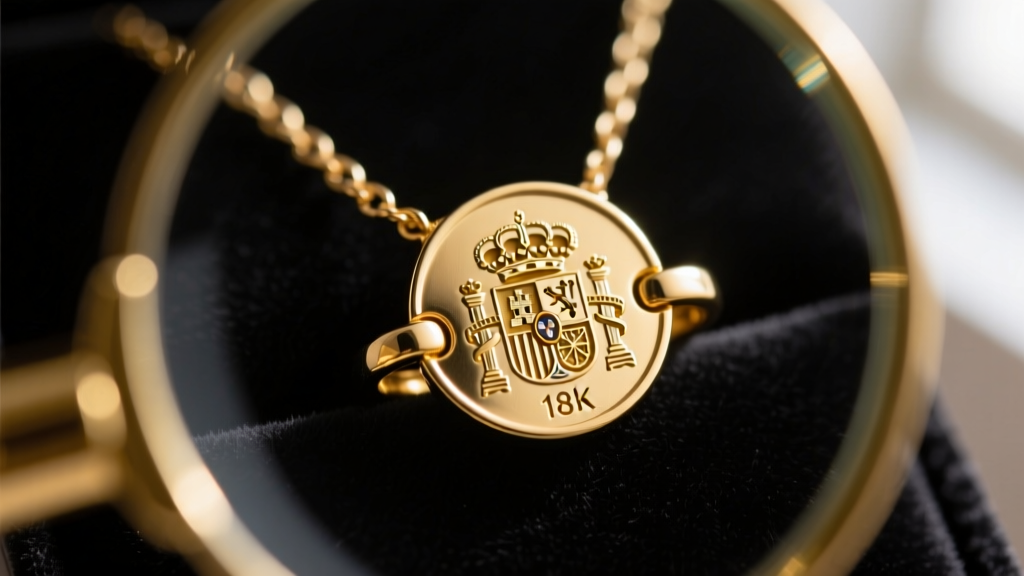
The Cross-Border Jewelry Dilemma
Whether you are hunting for vintage treasures at the El Rastro flea market in Madrid, negotiating with a silversmith in Taxco, Mexico, or simply browsing online estate sales from Latin American vendors, the language barrier can turn a thrilling find into a costly mistake. The global jewelry market is vast, and when you encounter a listing for a 'collar de oro 18k con broche de langosta', you need to know exactly what you are buying. Misunderstanding necklace Spanish terminology can lead to purchasing the wrong chain length, misidentifying metal purity, or struggling to communicate basic repair needs to a local bench jeweler.
This troubleshooting guide is designed for serious collectors, cross-border shoppers, and jewelry enthusiasts who need to decode Spanish jewelry terminology, verify international hallmarks, and communicate effectively with Spanish-speaking artisans. We will bypass generic translation apps and dive deep into the specific, industry-standard vocabulary used by jewelers across Spain and Latin America.
The Core Necklace Spanish Vocabulary Matrix
Direct translations often fail in jewelry contexts. For instance, while 'necklace' translates broadly to collar, a Spanish-speaking jeweler uses highly specific terms depending on the length, structure, and components of the piece. Use this matrix to troubleshoot listings and verify exactly what is being sold.
| English Term | Necklace Spanish Term | Troubleshooting Context & Specifics |
|---|---|---|
| Necklace (General) | Collar | The umbrella term. Always ask for the largo (length) to confirm it isn't a choker. |
| Choker | Gargantilla | Specifically denotes a short necklace (35-40 cm / 14-16 inches). If a listing says gargantilla, expect a tight fit. |
| Chain | Cadena | Refers strictly to the metal links. A cadena sola means no pendant is included. |
| Pendant / Charm | Dije / Colgante | Colgante is the main pendant; dije usually refers to smaller, dangling charms on a bracelet or chain. |
| Clasp | Broche / Cierre | Cierre is more common in Latin America; broche is widely used in Spain. |
| Link | Eslabón | Crucial for repair. A broken link is an eslabón roto. |
Troubleshooting Metal Purity: Quilates, Kilates, and Hallmarks
One of the most frequent errors English-speaking buyers make in Spanish-speaking markets is confusing gold purity with weight, or misinterpreting regional assay marks. In Spanish, gold purity is measured in quilates (often abbreviated as k or kt), but you must be vigilant against the intentional or accidental misspelling kilates, which sometimes signals a scam or gold-plated (baño de oro) item being passed off as solid.
According to the Spanish Ley de Metales Preciosos (Precious Metals Law), all jewelry sold in Spain must bear a maker's mark (punzón de fabricante) and an official assay mark (contraste). When inspecting a vintage Spanish necklace, look for the following numerical stamps:
- 750: 18-karat gold (The standard for high-end Spanish jewelry).
- 585: 14-karat gold (More common in modern or export-focused pieces).
- 925: Sterling silver (Plata de ley).
- 900 or 800: Coin silver or lower-grade silver, frequently found in antique Latin American pieces.
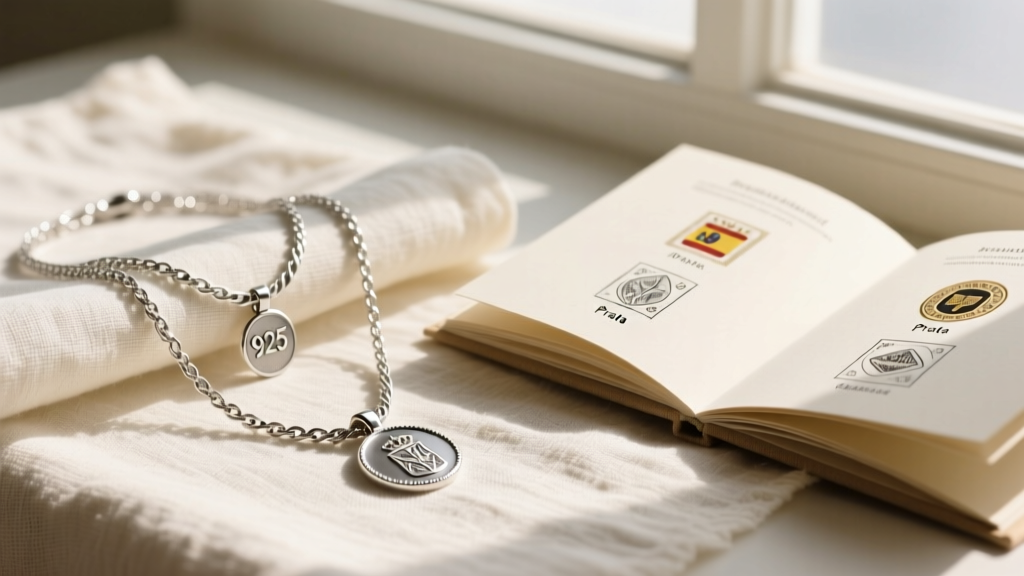
Decoding the Spanish Assay Marks
Unlike the UK's pictorial hallmarks (leopards, anchors), Spain historically utilized geometric shapes and regional symbols to denote the assay office. For example, a star or a specific eagle stamp can indicate the region of origin. If you are buying antique pieces, consult authoritative resources like the Lang Antiques Hallmark Guide to cross-reference these obscure regional punches. Modern Spanish gold will typically feature a simple geometric frame (like a rectangle or oval) containing the 750 stamp and the maker's initials.
Mexican Silver & The Taxco Eagle
If your necklace Spanish search leads you to Mexican silver, particularly from the renowned silversmithing hub of Taxco, you will encounter the famous Eagle Assay Mark. Introduced in the mid-20th century, the Mexican government stamped an eagle on silver pieces to guarantee a minimum of .925 purity. The number inside or next to the eagle identifies the specific maker or workshop. For instance, an Eagle mark with the number '28' is highly sought after, as it belongs to the legendary William Spratling. Always verify these marks using resources from The Silver Institute to ensure you aren't buying modern tourist-trade replicas.
Sizing Discrepancies: Centímetros vs. Pulgadas
Sizing is where cross-border transactions frequently go wrong. The US and UK primarily use inches for necklace lengths, while Spain and Latin America exclusively use centimeters. A listing that reads '45 cm' might look small to an American buyer unfamiliar with the metric system, but it is actually the standard 18-inch princess length.
Troubleshooting Tip: Never guess the conversion. If a vendor lists a collar largo (long necklace) at 80 cm, that translates to roughly 31.5 inches, which will sit well below the sternum. Always carry a soft metric measuring tape when shopping in physical markets in Madrid, Bogota, or Mexico City.
The Metric Conversion Cheat Sheet
- 35-40 cm (14-16 in): Gargantilla (Choker)
- 45 cm (18 in): Collar estándar (Princess / Standard)
- 50-55 cm (20-22 in): Collar largo (Matinee)
- 70-90 cm (28-36 in): Cadena de ópera (Opera length)
Clasp & Chain Link Troubleshooting
When evaluating the condition of a secondhand necklace, the clasp (cierre) and the chain links (eslabones) are the primary failure points. Understanding the Spanish names for these components allows you to ask the right questions about wear and tear.
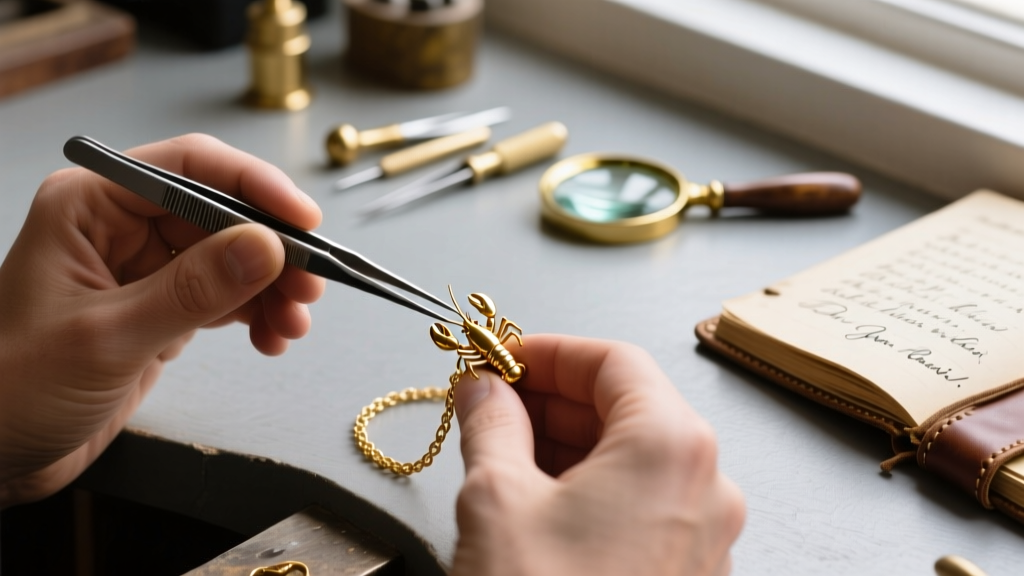
- Cierre de langosta: Lobster clasp. The most secure and common modern clasp. Check the tiny spring mechanism inside; if it's sluggish, it needs cleaning or replacement.
- Cierre de resorte: Spring ring clasp. Common on lighter, vintage chains. These are prone to failing because the internal tension spring wears out over decades.
- Cierre de cajón / Cierre de seguridad: Box clasp with a safety latch. Frequently found on heavy Spanish gold chains or tennis necklaces. Ensure the secondary safety wire (alambre de seguridad) is not bent.
- Cadena de serpiente: Snake chain. Beautiful but notorious for kinking. If a vendor sells a cadena de serpiente, inspect it under a loupe for sharp bends that cannot be repaired.
Expert Communication Guide for Repairs
If you break a chain while traveling or decide to restore a vintage piece you bought abroad, you will need to communicate with a local bench jeweler (joyero or orfebre). Relying on translation apps for technical jewelry repair often results in ruined finishes or improper soldering.
Essential Repair Phrases
Memorize or save these specific phrases to ensure your necklace is handled correctly:
- 'Necesito soldar un eslabón roto.' (I need to solder a broken link.) - Specify if you want laser soldering (soldadura láser) for delicate chains to avoid heat damage to nearby gemstones.
- 'Quiero cambiar el cierre por uno de langosta.' (I want to change the clasp to a lobster clasp.)
- '¿Puede darle un baño de rodio?' (Can you give it a rhodium plating?) - Essential for restoring the bright white finish of a vintage oro blanco (white gold) necklace.
- 'Solo pulido suave, por favor. No quiero perder el acabado mate.' (Soft polish only, please. I don't want to lose the matte finish.) - Crucial for antique pieces where aggressive polishing destroys the historical patina.
Final Verification Steps
Buying necklaces across linguistic and cultural borders requires a methodical approach. Always carry a 10x jeweler's loupe to inspect the punzones (hallmarks) yourself, rather than taking the vendor's word for it. Verify that the weight of the piece matches the density of the claimed metal, and ensure that any dijes (pendants) are securely soldered to their bails. By mastering this specialized necklace Spanish vocabulary, you transform from a vulnerable tourist into an informed, authoritative collector capable of navigating any market from Barcelona to Buenos Aires with confidence.


