How to Clean & Style a Sterling Silver Sand Dollar Necklace
Learn how to safely clean, maintain, and style your sterling silver sand dollar necklace without damaging its intricate texture.

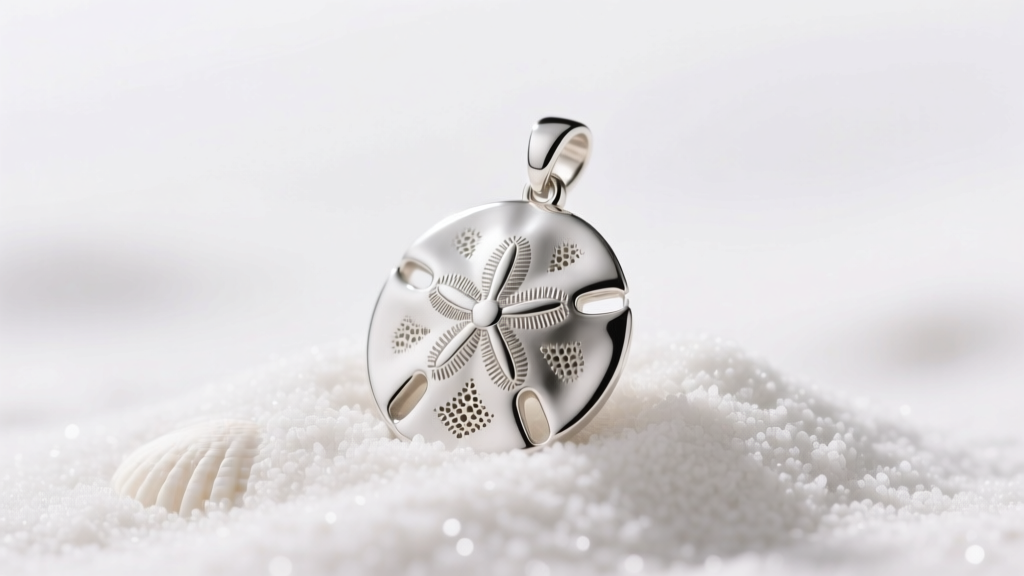
The Anatomy of a Sand Dollar Pendant: Why It Needs Special Care
A sterling silver sand dollar necklace is a timeless staple of coastal jewelry, but its intricate design is precisely what makes it so vulnerable to tarnish and grime. To properly care for this piece, you must first understand its metallurgy and structure. Genuine 925 sterling silver is an alloy composed of 92.5% pure silver and 7.5% copper. While pure silver is highly resistant to corrosion, the copper added for structural integrity reacts with sulfur and moisture in the air to form silver sulfide—the dark, dull layer we recognize as tarnish.
Unlike a smooth silver dome or a simple bar pendant, a sand dollar casting features deep, complex textures mimicking the natural madreporite patterns and petaloid slots of a real echinoderm. These microscopic crevices act as traps for sebum (skin oils), lotions, saltwater residue, and airborne sulfur. Furthermore, many high-quality sand dollar pendants are intentionally oxidized by the jeweler. This means a dark patina is artificially applied and then polished off the high points, leaving the recesses dark to create a 3D, high-contrast effect. Standard silver cleaning methods will strip this intentional oxidation, leaving your pendant looking flat and lifeless.
Step-by-Step Cleaning Guide for Textured 925 Silver
When your sand dollar pendant begins to look dull or develops unwanted yellowish-brown sulfur spots, it is time for a deep clean. The goal is to remove environmental grime without erasing the jeweler's intentional antiquing.
What You Will Need
- Distilled Water: Tap water contains chlorine and trace minerals that can cause micro-pitting in silver over time.
- Phosphate-Free Dish Soap: A mild, pH-neutral degreaser (like original Dawn) to break down skin oils.
- Soft Horsehair Brush: Do not use a standard toothbrush. Nylon bristles are often too stiff and can leave micro-scratches on high-polish silver edges. Horsehair is exceptionally soft and reaches into deep pores safely.
- Microfiber Lint-Free Cloth: For final drying and buffing.
- Wooden Toothpick: For stubborn debris trapped in the deepest slots.
The 4-Step Cleaning Process
- Prepare the Bath: Mix one cup of lukewarm distilled water with three drops of phosphate-free dish soap in a glass bowl. Avoid metal bowls, which can cause galvanic reactions if the silver touches the sides while wet.
- Targeted Agitation: Dip the soft horsehair brush into the solution and gently tap it against the side of the bowl to remove excess water. Lightly brush the surface of the sand dollar pendant using small, circular motions. Focus on the raised 'petals' and the outer rim, allowing the suds to lift oils from the crevices.
- Debris Extraction: If you notice compacted lotion or sand trapped in the narrow slots of the sand dollar, gently use the tip of a wooden toothpick to dislodge it. Never use metal needles or pins, as they will instantly scratch the 925 silver.
- Rinse and Dry: Rinse the pendant briefly under a gentle stream of distilled water. Immediately pat it dry with a microfiber cloth, then use a hair dryer on the 'cool' setting to blast remaining moisture out of the deep textured pores. Air-drying leaves water spots that are difficult to remove.
Critical Mistakes to Avoid (The 'Do Not Do' List)
Many well-meaning jewelry owners ruin their textured silver pieces by using aggressive, mass-market cleaning shortcuts. According to conservation guidelines from the Smithsonian Institution, improper chemical treatments can cause irreversible damage to silver alloys.
Warning: Never use liquid 'silver dip' solutions on textured or oxidized jewelry. These products rely on thiourea and strong acids to instantly strip tarnish, but they will also strip the intentional dark patina from your sand dollar's crevices, ruining its dimensional contrast.
Additionally, avoid ultrasonic cleaners. While excellent for smooth diamond rings, ultrasonic waves create microscopic cavitation bubbles that implode with intense localized heat and pressure. Because cast silver sand dollars often contain invisible micro-porosity from the manufacturing process, ultrasonic vibrations can cause the delicate outer rim or thin webbing of the pendant to fracture or snap entirely.
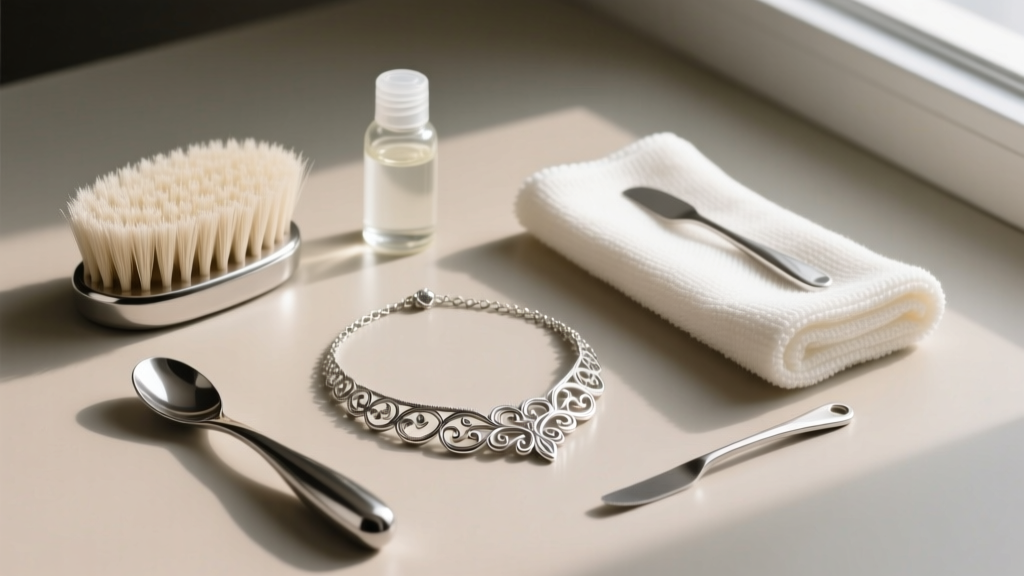
Chain Selection: Matching Gauges and Styles
A sand dollar pendant typically measures between 15mm and 25mm in diameter and weighs anywhere from 3 to 8 grams. Pairing it with the wrong chain is a common failure point; a chain that is too thin will kink and eventually snap under the pendulum motion of the heavy charm, while a chain that is too thick will overpower the delicate coastal aesthetic.
| Chain Style | Recommended Gauge | Weight Tolerance | Best For |
|---|---|---|---|
| Rolo Chain | 1.2mm - 1.5mm | Up to 15g | Everyday wear; provides excellent structural support while maintaining a classic, slightly textured look that complements the sand dollar. |
| Cable Chain | 1.0mm - 1.2mm | Up to 8g | Minimalist styling; ideal for smaller, lightweight sand dollar charms (under 15mm). |
| Box Chain | 1.2mm - 1.7mm | Up to 20g | Modern, geometric contrast; highly resistant to kinking, making it perfect for heavier, solid-cast sand dollar pendants. |
| Rope Chain | 1.5mm - 2.0mm | Up to 25g | Statement layering; the twisted links reflect light beautifully but can catch on fine knitwear. |
For a standard 20mm sand dollar pendant weighing roughly 5 grams, a 1.2mm rolo chain at an 18-inch length is the optimal choice. The round links of the rolo chain mirror the organic curves of the sand dollar, creating a cohesive design language, while the 1.2mm gauge provides a safety margin against tensile stress.
Styling Your Sand Dollar Necklace: Coastal to Cocktail
The versatility of the sterling silver sand dollar necklace lies in its ability to transition from casual beachwear to elevated evening attire, provided you adjust your layering and neckline pairings.
Daytime Beachwear & Casual Linen
For daytime, lean into the nautical origins of the piece. Pair an 18-inch or 20-inch sand dollar necklace with a relaxed, unbuttoned linen shirt or a wide-neck boatneck tee. The silver provides a cool-toned contrast against sun-kissed skin and earth-toned fabrics like oatmeal, sage green, and navy. To add depth without clutter, layer the sand dollar with a simple 24-inch oxidized silver bead chain, allowing the longer chain to frame the pendant rather than compete with it.
Elevated Evening Layering
Transforming this coastal motif for a dinner date or evening event requires strategic juxtaposition. The key is to mix textures and introduce pearls or gemstones to elevate the silver.
- The 14-Inch Anchor: Start with a 14-inch freshwater pearl choker (4mm-5mm potato pearls). The organic luster of the pearls bridges the gap between the marine theme and high-end jewelry.
- The 18-Inch Focal Point: Your sterling silver sand dollar pendant on a 1.2mm rolo chain sits perfectly in the hollow of the collarbone.
- The 22-Inch Cascader: Finish with a 22-inch delicate silver lariat or a chain featuring small, bezel-set moonstones. Moonstone's adularescence (that ethereal blue glow) mimics the look of sea glass or moonlight on water, tying the entire coastal narrative together elegantly.

When wearing a deep V-neck silk blouse, this three-tier layering technique draws the eye vertically, elongating the neck and torso while ensuring the sand dollar remains the undisputed focal point of the arrangement.
Long-Term Storage and Anti-Tarnish Protocols
Because the deep textures of a sand dollar pendant are so prone to trapping sulfur-rich air, proper storage is non-negotiable. The Gemological Institute of America (GIA) emphasizes that controlling the storage environment is the most effective way to prevent silver sulfide formation.
Never toss your necklace into an open jewelry box or hang it on an open vanity rack, especially in humid environments like coastal bathrooms. Instead, store the necklace in an airtight polyethylene ziplock bag. Before sealing the bag, drop in a 3M Anti-Tarnish Strip. These strips contain chemically treated particles that absorb airborne sulfur and hydrogen sulfide before they can reach your silver. Replace the strips every six months.
For added protection, include a small packet of silica gel desiccant in the bag to control moisture levels. Keep the bag in a dark, cool drawer away from direct sunlight and heat sources, which can accelerate the oxidation process. By following these meticulous cleaning, styling, and storage protocols, your sterling silver sand dollar necklace will retain its intricate, dimensional beauty for decades, remaining a versatile anchor in your jewelry wardrobe.


