The 925 Necklace Chain Trend Guide: 2026 Layering Styles
Explore 2026 trends for the 925 necklace chain. Master chain styles, gauge sizing, asymmetrical layering, and tarnish prevention techniques.

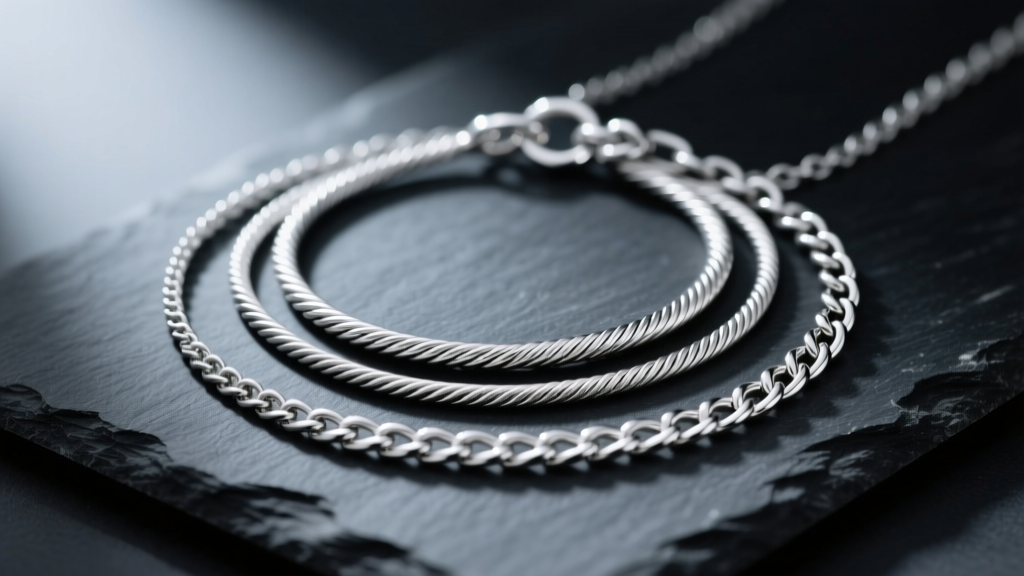
The Metallurgy of 925: Why Sterling Silver Dominates 2026
The 925 necklace chain has transcended its traditional role as a simple pendant carrier to become the foundational anchor of modern jewelry styling. But to understand its dominance in 2026's 'Textured Minimalism' trend, we must first look at the metallurgy. The '925' hallmark indicates an alloy composed of 92.5% pure silver and 7.5% secondary metals, typically copper. Pure silver (999) is too malleable for durable chain links; it would stretch and warp under the weight of a clasp. The copper addition provides essential tensile strength, allowing for the precise laser-soldering required in micro-gauge chains.
However, this 7.5% copper content is also the catalyst for silver sulfide tarnish when exposed to atmospheric sulfur. In 2026, we are seeing a massive shift toward Argentium silver alternatives within the 925 category, where a portion of the copper is replaced with germanium. This creates a transparent germanium oxide layer that drastically slows tarnishing, making it the preferred choice for high-end, low-maintenance layering stacks.
Chain Link Anatomy: Gauge, Weight, and Drape
Selecting the right 925 necklace chain requires understanding the relationship between gauge (thickness), weight, and drape. A chain's drape dictates how it lays against the clavicle and sternum. Heavier chains with rigid links will sit further out from the body, while micro-gauge fluid chains will drape closely to the skin's contours.
| Chain Style | Ideal Gauge Range | Drape Profile | Avg. Price (18-inch) |
|---|---|---|---|
| Cable | 0.8mm - 1.5mm | Fluid, Delicate, Skin-hugging | $25 - $45 |
| Curb | 3.0mm - 6.0mm | Structured, Heavy, Prominent | $60 - $140 |
| Figaro | 2.5mm - 4.0mm | Patterned, Rhythmic, Moderate | $50 - $95 |
| Rope | 1.5mm - 3.0mm | Textured, Twisted, Reflective | $45 - $85 |
| Box | 0.9mm - 2.0mm | Geometric, Smooth, Structured | $35 - $70 |
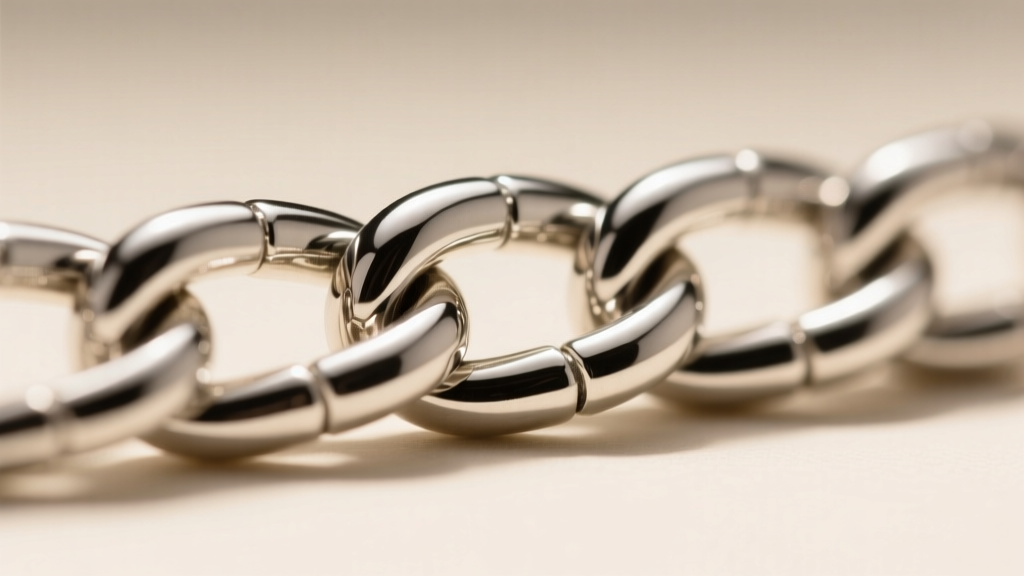
The Clasp Variable: Lobster vs. Spring Ring
When investing in a 925 necklace chain, the clasp is the most common failure point. Spring ring clasps, while standard on sub-1.0mm cable chains, suffer from internal spring fatigue and are notoriously difficult to operate when layering. For any chain above 1.5mm, a solid cast lobster clasp is mandatory. In 2026, custom-designed T-bar toggles and magnetic neodymium clasps are trending for their ease of use in complex, multi-chain stacks.
2026 Trend Report: Textured Minimalism & Asymmetrical Layering
The era of wearing three identical chains at varying lengths is over. The prevailing 2026 aesthetic is 'Textured Minimalism,' which relies on contrasting link geometries and surface finishes to create depth without relying on heavy gemstones or oversized pendants.
The 3-Chain Asymmetrical Stack
To execute the modern asymmetrical stack, you must vary both the chain style and the finish. Here is a blueprint for a curated, high-fashion layering stack:
- The Anchor (14-inch): A 1.2mm 925 box chain with a matte or brushed finish. This sits high on the collarbone and provides a muted, geometric base.
- The Core (18-inch): A 3.0mm high-polish Figaro chain. The rhythmic pattern of the Figaro catches the light and contrasts sharply with the matte box chain above it.
- The Plunge (24-inch): A 2.5mm oxidized rope chain. The darkened crevices of the oxidized rope provide a vintage, grounded terminus to the stack, drawing the eye downward.
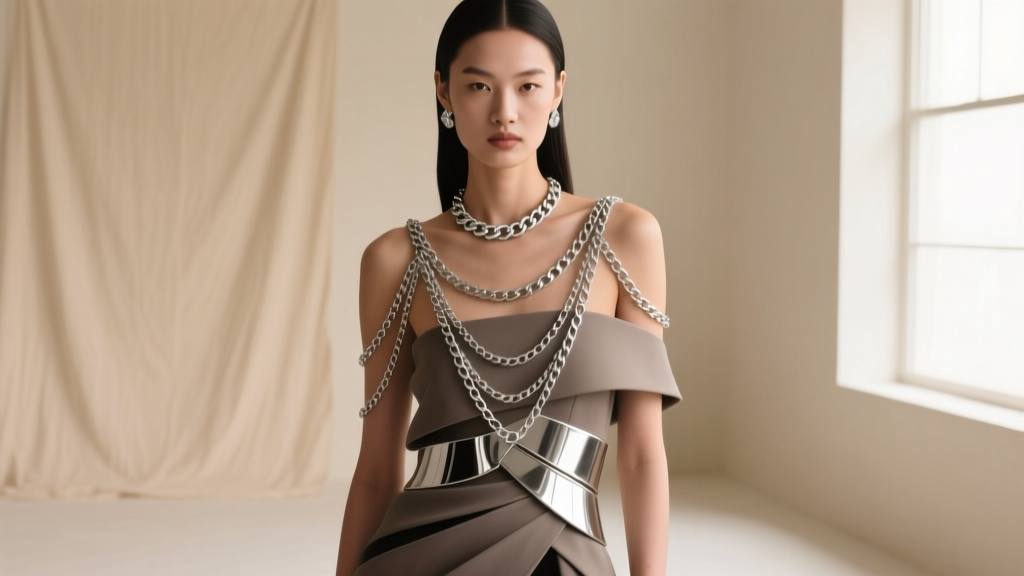
Mixing Metals: The 925 and 14k Gold Vermeil Intersection
While purists may object, mixing raw 925 sterling silver with 14k gold vermeil chains is a dominant street-style trend this year. The key to pulling this off without looking haphazard is to keep the chain styles identical across metals. For example, pairing a 2mm 925 silver curb chain with a 2mm 14k gold vermeil curb chain at different lengths creates an intentional, curated contrast rather than a messy collision of styles.
Tarnish Mitigation: Rhodium Plating vs. Raw Patina
Understanding surface treatments is critical for maintaining your 925 necklace chain. According to Jewelers of America, rhodium plating is the industry standard for preventing tarnish on commercial sterling silver. Rhodium, a platinum-group metal, is electroplated onto the silver at a thickness typically ranging from 0.1 to 0.5 microns.
'While rhodium provides a brilliant, white-gold-like shine and complete tarnish resistance, it is a sacrificial layer. High-friction areas, particularly the links connecting to the lobster clasp and the back of the neck, will wear through the 0.25-micron plating within 12 to 18 months of daily wear, exposing the raw copper alloy beneath.'
The Raw Patina Alternative: Many independent jewelers in 2026 are opting to skip rhodium plating entirely, offering raw, high-polish 925 chains. Raw silver requires more maintenance—regular polishing with a treated microfiber cloth and storage in anti-tarnish sulfur-absorbing bags—but it allows the owner to maintain the chain indefinitely without dealing with the patchy, flaking failure mode of worn-off rhodium.
Sourcing Authentic 925: Avoiding the Plating Trap
With the surge in e-commerce jewelry, distinguishing between solid 925 sterling silver and silver-plated brass or copper is a vital consumer skill. A genuine 925 necklace chain will bear a hallmark—usually '925', '.925', or 'Ster'—stamped on the small metal tag near the clasp or directly on the clasp itself.
However, stamps can be easily forged. For definitive verification, utilize the diamagnetic property of silver. Pure silver and sterling silver are diamagnetic, meaning they are slightly repelled by magnets. If your chain is attracted to a neodymium magnet, it contains a ferromagnetic core (like iron or steel) and is definitively not solid 925. For a comprehensive guide on precious metal verification and hallmarking standards, consult the Gemological Institute of America (GIA) precious metals resource database. Investing in authentic, well-constructed 925 chains ensures your layering stacks remain timeless, durable, and inherently valuable.


