Infinity Heart Sterling Silver Necklace: Technical & Metallurgy Guide
Explore the metallurgy, casting techniques, and chain mechanics behind the infinity heart sterling silver necklace in this expert technical guide.

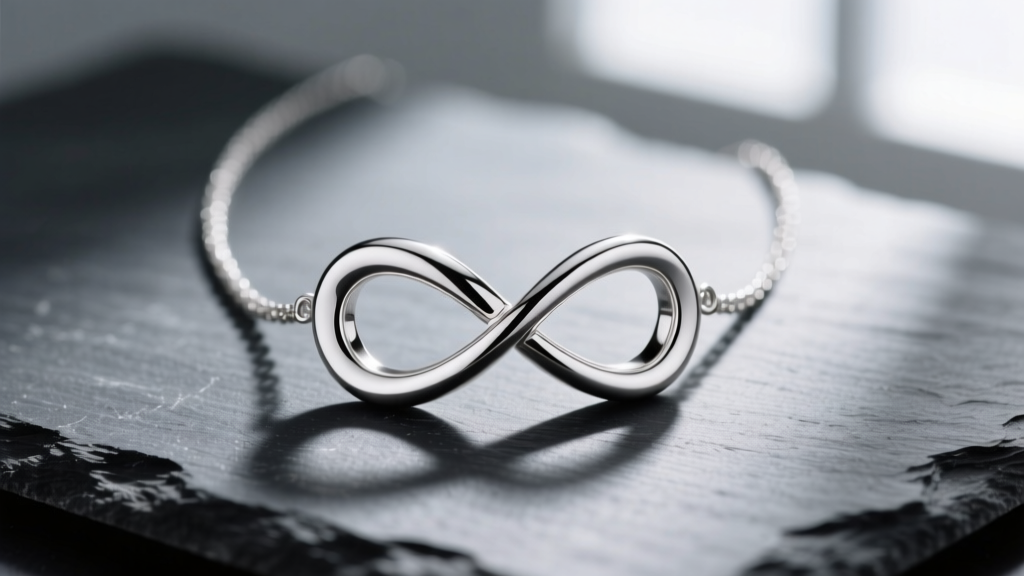
The infinity heart sterling silver necklace is a ubiquitous staple in modern jewelry, symbolizing eternal love and connection. However, beneath the romantic aesthetic lies a complex intersection of metallurgy, precision casting, and mechanical engineering. While consumers often focus solely on the visual appeal of the intertwined loops, jewelry professionals and informed buyers must evaluate the structural integrity, alloy composition, and manufacturing techniques that dictate the piece's longevity. This expert deep dive dissects the technical specifications, failure modes, and material science behind the infinity heart sterling silver necklace.
The Metallurgy of 925 Sterling Silver in Pendant Casting
By Federal Trade Commission standards, sterling silver must contain a minimum of 92.5% pure silver, with the remaining 7.5% typically composed of copper. This copper addition is non-negotiable for an infinity heart sterling silver necklace; pure silver (999 fine) is far too malleable and would easily deform under the tension of daily wear, ruining the precise geometry of the interlocking infinity loops.
However, the 7.5% copper content introduces significant metallurgical challenges during the manufacturing process:
- Firescale Formation: When heated during casting or soldering, copper reacts with oxygen to form cupric oxide (firescale), which can appear as a dark purple or grey blemish beneath the polished surface.
- Galvanic Tarnishing: Copper is highly reactive to sulfur compounds in the air and human sweat, leading to the formation of silver sulfide (tarnish) on the pendant's surface.
The Argentium Alternative
To combat these issues, high-end manufacturers increasingly utilize Argentium silver (typically 935 or 960 purity). By replacing a portion of the copper with germanium, Argentium forms a transparent, self-healing germanium dioxide layer on the surface. This drastically slows tarnishing and eliminates firescale during the soldering of the pendant's bail, ensuring a cleaner finish for the intricate infinity heart design.
Lost-Wax Casting vs. Stamping: Forming the Interlocking Motif
The structural complexity of an infinity heart—specifically the overlapping, interlocking loops—dictates the manufacturing method. While simple, flat heart pendants can be die-stamped from silver sheet metal, a true three-dimensional interlocking infinity heart sterling silver necklace requires investment casting (lost-wax casting).
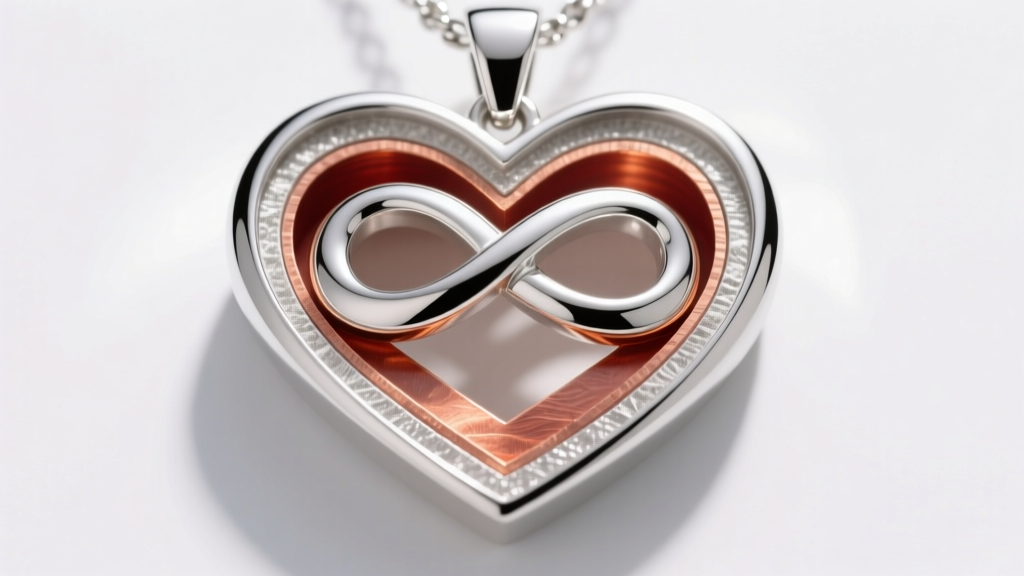
In this process, a 3D-printed resin or hand-carved wax model is encased in a plaster-like investment material. The mold is heated in a kiln to melt out the wax, leaving a negative cavity. Molten sterling silver, heated to approximately 1,640°F (893°C), is then forced into the cavity via centrifugal or vacuum casting.
Porosity and Shrinkage Rates
Sterling silver exhibits a volumetric shrinkage rate of roughly 1.25% to 1.5% as it cools. In the tight, overlapping curves of an infinity heart, uneven cooling can lead to micro-porosity—tiny internal voids that weaken the metal. Expert casters utilize precise "spruing" (the channels through which the metal flows) to ensure the thickest parts of the infinity loops cool last, preventing sink marks and structural voids. A pendant with high porosity will feel slightly lighter than its theoretical density and is prone to cracking if subjected to impact.
Chain Mechanics: Tensile Strength and Failure Modes
An infinity heart pendant typically weighs between 3.5 and 6.5 grams. While this seems light, the dynamic forces applied to the chain during wear (snagging on clothing, sudden movements) require specific tensile strengths. The choice of chain style drastically alters the mechanical reliability of the necklace.
| Chain Style | Average Width | Tensile Strength (Approx.) | Primary Failure Mode |
|---|---|---|---|
| Cable Chain | 1.0mm - 1.2mm | 8 - 12 lbs | Link elongation and eventual snapping at the weld. |
| Box Chain | 1.0mm - 1.2mm | 5 - 8 lbs | Severe kinking; links fold inward and cannot be easily repaired. |
| Rope Chain | 1.2mm - 1.5mm | 15 - 20 lbs | Unraveling if a single twisted link fractures. |
| Wheat (Spiga) Chain | 1.0mm - 1.2mm | 12 - 16 lbs | Friction wear at the interlocking woven joints. |
For an infinity heart sterling silver necklace, a Wheat or Rope chain is mechanically superior. Box chains, while popular for their modern, geometric look that mirrors the infinity symbol, are notorious for irreversible kinking. According to jewelry fabrication data from Rio Grande, box chains lack the lateral flexibility required to absorb sudden tensile shocks without permanently deforming the square links.
Rhodium Plating and Tarnish Resistance Technologies
To prevent the copper-induced tarnishing mentioned earlier, most commercial infinity heart sterling silver necklaces are electroplated with rhodium, a platinum-group metal. However, not all plating is created equal, and understanding the thickness metrics is crucial for evaluating quality.
- Flash Plating (1 - 5 micro-inches): Often found in fast-fashion jewelry. This ultra-thin layer wears off within weeks of friction against the skin, exposing the reactive sterling silver beneath.
- Standard Plating (10 - 20 micro-inches): The industry standard for mid-tier jewelry. Provides 1 to 2 years of tarnish resistance under normal wear conditions.
- Heavy Plating (30 - 50+ micro-inches): Reserved for luxury pieces. Often layered over a palladium or nickel barrier to prevent the silver and rhodium from diffusing into one another over time.
Note on E-Coating: Many modern manufacturers now apply an electrophoretic lacquer (e-coating) over the rhodium. This clear, nano-thin polymer layer acts as a physical barrier against sulfur and moisture, extending the pristine finish of the infinity heart pendant significantly without altering its optical reflectivity.
Soldering and Bail Construction: The Weakest Link
The bail—the loop that connects the infinity heart pendant to the chain—is a critical stress point. In lower-quality manufacturing, the bail is cast as part of the pendant but left with a thin, weak cross-section. In superior engineering, the bail is a separate, die-struck component that is soldered onto the pendant.
Because sterling silver is highly thermally conductive, soldering a bail to the delicate upper curve of the infinity heart requires a laser welder or highly controlled torch work to prevent melting the adjacent filigree. The solder used must be a "hard" or "medium" silver solder (melting point around 1,300°F - 1,450°F) to ensure the joint does not fail if the piece requires future resizing or repair. Furthermore, the interior of the bail should be polished or lined with a hardened insert to prevent the chain from acting as a microscopic saw, gradually cutting through the silver bail via friction over years of wear.
Expert Buying Framework: What to Inspect Before Purchase
When evaluating an infinity heart sterling silver necklace for retail or personal acquisition, bypass the marketing copy and inspect the physical engineering. Use this checklist to verify structural integrity:
- Check the Hallmark: Look for ".925" or "Sterling" stamped in an inconspicuous area, often on the back of the heart or the clasp end-ring. Verify it against GIA guidelines for precious metal marking.
- The Bail Clearance Test: Ensure the interior diameter of the bail is at least 1.5 times the width of the chain. If it is too tight, the chain will bind, causing premature wear on both the chain links and the bail.
- Inspect the Interlocking Joint: Look closely at where the infinity loop passes through the heart. There should be no visible seams, glue, or excessive porosity (tiny black pits). The metal should flow continuously.
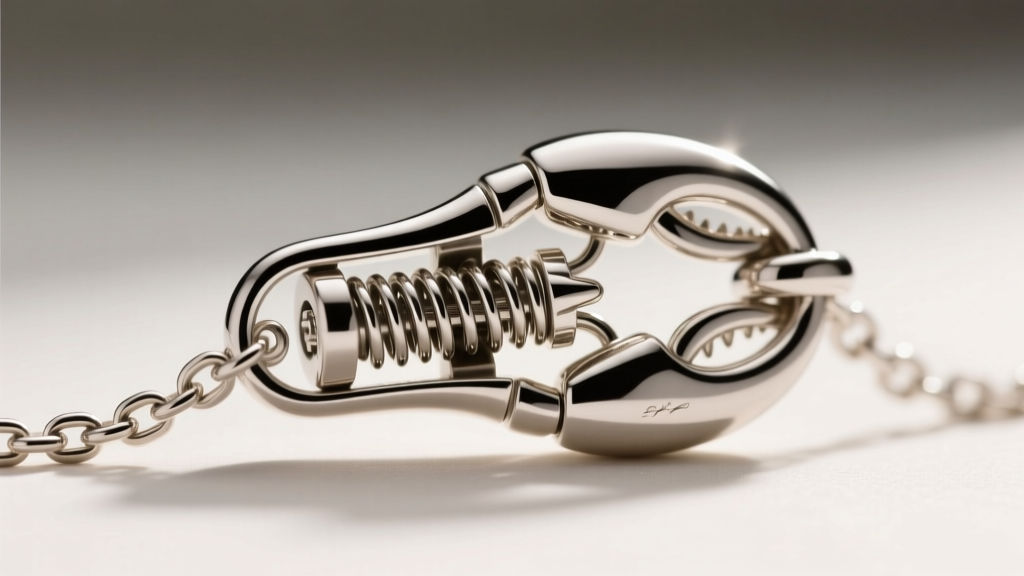
- Clasp Spring Tension: Test the lobster or spring-ring clasp. The internal spring should offer firm, consistent resistance. A mushy clasp indicates a fatigued or corroded internal spring, which will inevitably fail and drop the pendant.
By understanding the metallurgical properties, casting nuances, and mechanical realities of the infinity heart sterling silver necklace, buyers and collectors can distinguish between fragile, mass-produced trinkets and enduring, expertly engineered pieces of jewelry.


