How to Wear Statement Necklaces: 2026 Trend Rules
Master how to wear statement necklaces in 2026. Expert styling rules for necklines, proportions, and mixed-metal trends to elevate your bold jewelry.


The 2026 Shift: Architectural Intent Over Chaotic Maximalism
When analyzing how to wear statement necklaces in the current fashion landscape, the first rule is understanding the evolution of the piece itself. The mid-2010s era of chaotic maximalism—characterized by heavy, encrusted bib necklaces and overwhelming logo-dumping—has been entirely replaced. According to trend forecasts from Vogue, the 2026 iteration of the statement necklace relies on architectural intent, sculptural metals, and deliberate negative space.
Design houses like Schiaparelli and Bottega Veneta have heavily influenced this shift, moving away from delicate, barely-there chains in favor of bold, surreal hardware and molten metal textures that look as though they were poured directly onto the collarbone. Today's statement pieces are defined by their structural geometry rather than sheer volume. We are seeing a massive surge in 12-gauge and 14-gauge brass and silver wire formed into asymmetrical collars and open-front torque necklaces. The goal is to create a focal point that frames the face and alters the wearer's posture without suffocating the neckline. This shift requires a completely new approach to styling, proportion, and material selection.
The Neckline Matrix: Pairing Proportions Perfectly
The most common failure when styling bold jewelry is ignoring the underlying garment's architecture. A statement piece must interact with the fabric, not fight it. Below is a definitive matrix for pairing necklines with the correct necklace length and style, ensuring optimal visual balance.
| Neckline Type | Ideal Length | Recommended Style | Styling Rule |
|---|---|---|---|
| Deep V-Neck | 18 to 22 inches (Matinee) | Y-Chain or Lariat Pendant | Follow the V-shape; let the drop rest 1 inch above the fabric vertex. |
| Crew Neck | 14 to 16 inches (Choker) | Sculptural Torque or Wide Collar | Sit flush against the collarbone; avoid long pendants that tangle. |
| Strapless / Sweetheart | 12 to 14 inches (Collar) | Multi-strand or Asymmetrical | Fill the negative space on the chest; keep the piece high to elongate. |
| Turtleneck | 24 to 30 inches (Opera) | Heavy Chain Link or Geometric | Break up the solid fabric block; use mixed metals to add contrast. |
Material Grades and Hardware Realities
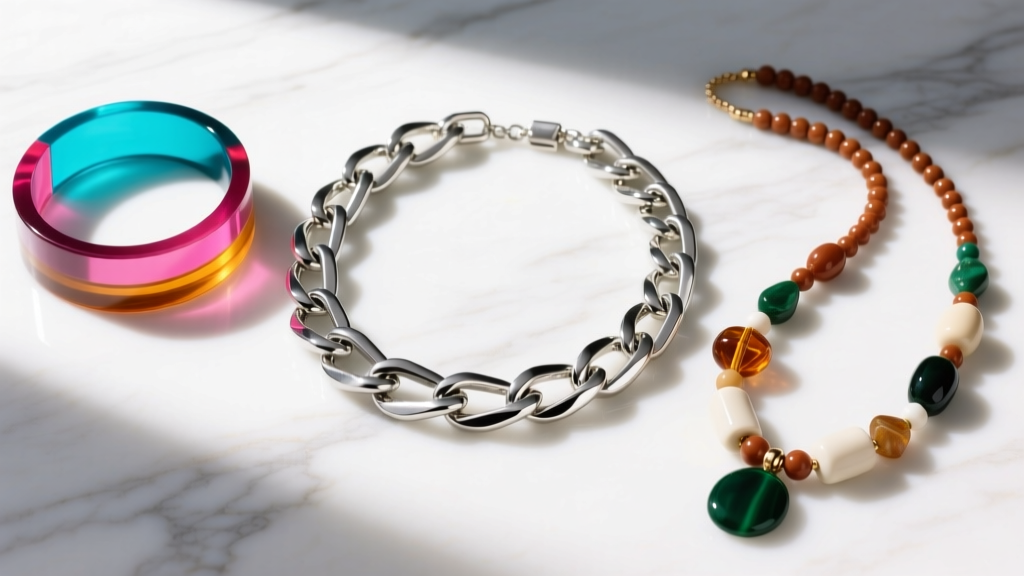
Understanding how to wear statement necklaces also means understanding their physical construction. A true statement piece often exceeds 100 grams in weight. At this mass, hardware integrity is non-negotiable. If you are investing in fine or demi-fine jewelry, you must verify the material grades and clasp mechanisms before purchasing.
The Weight and Clasp Equation
Standard lobster clasps are rated for lightweight chains. For a 120-gram sculptural brass collar, a standard 10mm lobster clasp will eventually fail, leading to loss. You must look for pieces equipped with a reinforced toggle clasp or a magnetic neodymium clasp housed in a 14k gold vermeil or sterling silver barrel. According to the Jewelers of America, proper clasp-to-chain ratio is critical; the jump ring connecting the clasp should be no thinner than 16-gauge to prevent warping under the pendant's kinetic movement.
Vermeil vs. Gold Plated
For mixed-metal statement pieces, the base metal dictates the longevity of the wear. Avoid standard gold-plated brass, which typically features a mere 0.5-micron flash that will oxidize and turn the skin green within weeks of heavy wear. Instead, seek out 14k gold vermeil. As documented by the GIA Gem Encyclopedia, vermeil requires a sterling silver base with a minimum of 2.5 microns of gold plating, ensuring the piece can withstand the friction of daily wear without degrading.
Troubleshooting Common Statement Necklace Fails
Even with perfect proportions, bold jewelry presents unique physical challenges. Here is how to troubleshoot the most common issues encountered by stylists and collectors.
- The 'Flip' Problem: Lightweight pendants on heavy chains often flip backward, hiding the focal gemstone or design. The Fix: Add a small, discreet counterweight (like a 4mm sterling silver bead) to the back of the chain, directly behind the neck, to anchor the front drop.
- Skin Irritation from Base Metals: Large surface-area collars made of raw brass or copper can cause contact dermatitis due to sweat acidity. The Fix: Coat the inner band of the necklace with a micro-thin layer of clear, jewelry-safe urethane spray, or opt exclusively for hypoallergenic titanium or 316L surgical steel base metals.
- Chain Tangling in Knitwear: Wearing delicate statement chains over mohair or chunky knits results in severe snagging. The Fix: Reserve high-gauge, polished link chains (like a 6mm Cuban or Figaro) for knitwear, as their smooth, soldered links glide over fibers without catching.
- Clasp Slippage: Heavy pendants pull the chain taut, causing the clasp to migrate to the front of the neck. The Fix: Use a silicone necklace stay or a tiny drop of museum wax on the clasp jump ring to create friction against the skin and keep the hardware anchored at the nape.
The Mixed-Metal Mandate for 2026
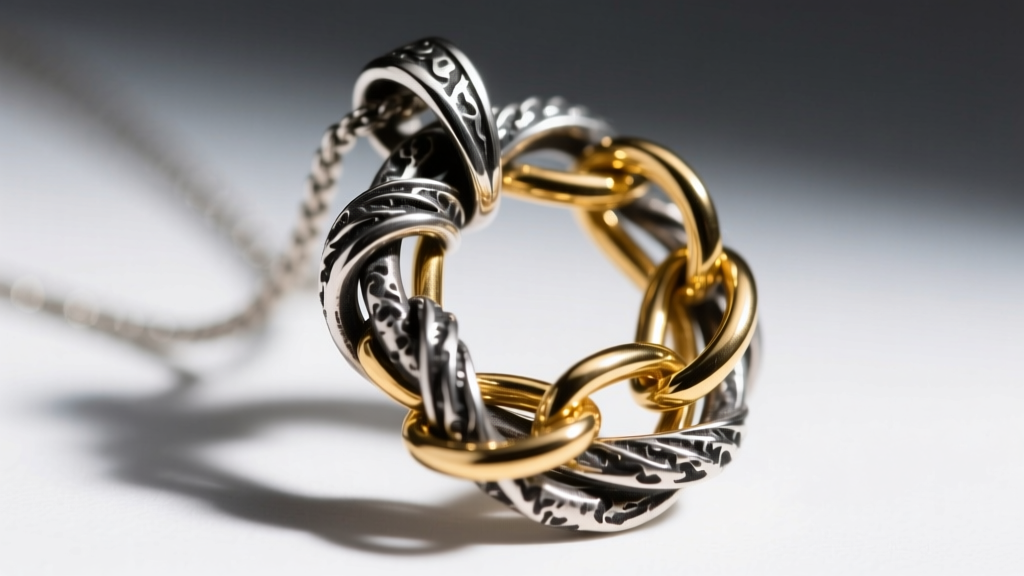
The final frontier in mastering how to wear statement necklaces is embracing the mixed-metal mandate. The outdated rule of strictly matching your gold earrings to your gold necklace has been entirely dismantled. The current trend champions oxidized sterling silver intertwined with warm 14k yellow gold accents. This bimetallic approach adds depth and prevents the piece from looking like a flat, costume accessory.
'A statement necklace should not look like it was pulled from a prop box; it should look like it was forged in a modern sculpture studio. Mixing cool oxidized silver with warm gold accents grounds the piece in reality and gives it an heirloom quality.'
Maintenance: Preserving Sculptural Finishes
Because modern statement necklaces rely heavily on texture—such as hammered brass, brushed silver, or oxidized crevices—improper cleaning can ruin the architectural intent. Never use ultrasonic cleaners on mixed-metal pieces with oxidized finishes, as the high-frequency vibrations and harsh chemical baths will strip the deliberate darkening from the recesses, leaving the piece looking flat and mass-produced.
Instead, use a soft-bristled horsehair brush and a mild, phosphate-free dish soap to gently lift skin oils and environmental dust from the textured surfaces. For polished high-points on a 14k gold vermeil piece, use a dedicated, untreated microfiber polishing cloth. Avoid any cloths pre-treated with jeweler's rouge or harsh abrasives, as these will micro-scratch the vermeil layer and expose the sterling silver base beneath.
Storing Heavy Gauge Pieces
Gravity is the enemy of structured necklaces. Hanging a 150-gram sculptural collar on a standard jewelry hook will eventually warp the wire and distort the asymmetrical balance. Always store heavy statement pieces flat in a lined, acid-free archival box. If the piece features an open-front torque design, stuff the hollow center with acid-free tissue paper to maintain its exact curvature and prevent the metal from experiencing fatigue stress over time.
By prioritizing architectural silhouettes, respecting the neckline matrix, and demanding high-grade hardware, you can confidently integrate bold, statement-making jewelry into your everyday rotation without sacrificing comfort or sophistication.


