Initial Choker Necklace Materials: The Ultimate Durability Guide
Compare the best metals for your initial choker necklace. We analyze durability, tarnish resistance, and skin safety for sterling silver, gold, and titanium.

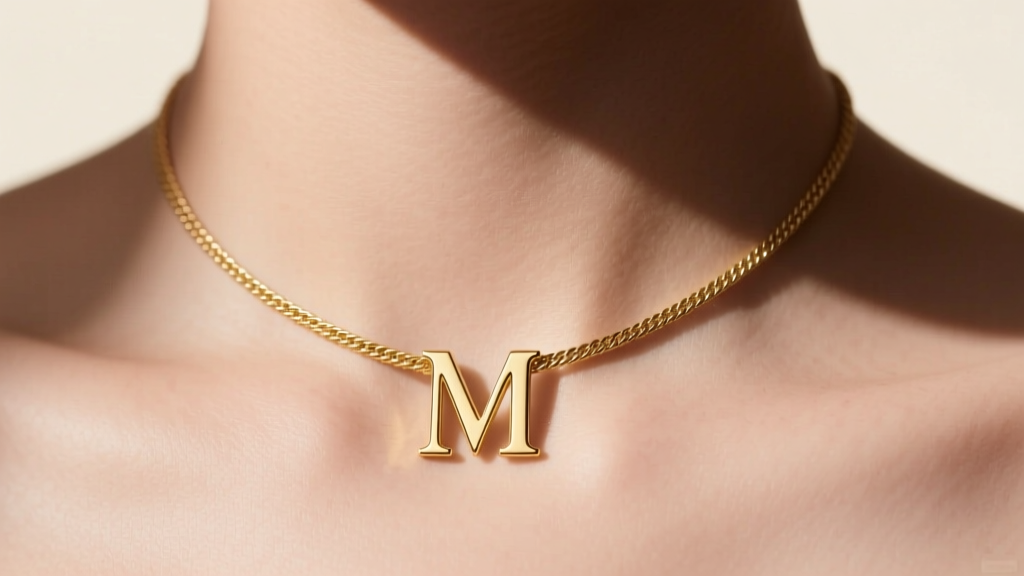
The Anatomy of an Initial Choker Necklace
The initial choker necklace has transcended fleeting trends to become a staple of personalized, everyday jewelry. Sitting snugly at the base of the throat (typically 14 to 16 inches in length), a choker endures unique environmental stressors compared to longer pendants. It is in constant contact with the skin, exposed to perfumes, sweat, and the friction of collars. When selecting a piece defined by a single, meaningful letter, the structural integrity and metallurgical properties of the chain and pendant are paramount. In this comprehensive guide, we dissect the materials used in modern initial chokers, evaluating their tensile strength, tarnish resistance, and biocompatibility to help you make an informed investment.
Precious Metals: Solid Gold and Sterling Silver
When discussing fine jewelry, precious metals remain the gold standard for longevity and intrinsic value. However, not all precious metals behave identically when forged into the tight, high-friction environment of a choker.
Solid 14k vs. 18k Gold
Gold purity is measured in karats, with 24k being pure gold. Pure gold is far too malleable for a choker chain; a 1.5mm 24k gold cable chain would stretch and snap under minimal tension. Therefore, alloying is essential. According to the Gemological Institute of America (GIA), 18k gold contains 75% pure gold and 25% alloy metals, offering a rich, buttery yellow hue but remaining relatively soft. For an initial choker necklace that you intend to wear daily, 14k gold (58.5% pure gold) is vastly superior. The higher concentration of alloy metals like copper, zinc, and silver increases the tensile strength and scratch resistance of the chain, ensuring the delicate links supporting your initial pendant do not warp over time.
Sterling Silver (925) and the Rhodium Factor
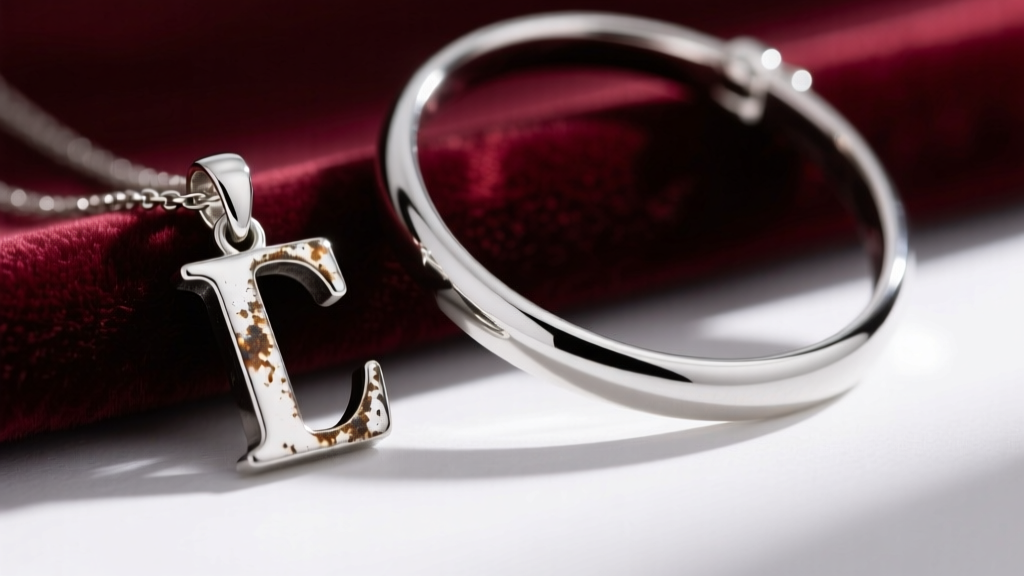
Sterling silver is an alloy consisting of 92.5% pure silver and 7.5% copper. That copper addition provides necessary hardness but introduces a significant vulnerability: oxidation. When exposed to sulfur compounds in the air and the natural acids in human sweat, the copper reacts, causing the silver to tarnish and turn black. To combat this, high-end silversmiths apply a microscopic flash plating of rhodium—a rare, highly reflective platinum group metal. Rhodium not only provides a brilliant, white-gold-like finish but acts as an impermeable barrier against tarnish. However, on a choker, the constant friction against the neck will eventually wear away this rhodium layer, requiring re-plating every few years to maintain the piece's pristine appearance.
The Vermeil and Plated Illusion
The market is saturated with budget-friendly initial chokers labeled as 'gold plated' or 'gold vermeil.' Understanding the strict legal and metallurgical distinctions between these terms is critical for managing your expectations regarding lifespan.
- Gold Plated: This involves electroplating a microscopic layer of gold (often less than 0.5 microns) over a base metal like brass or copper. The gold layer on a plated choker will typically wear through within months of daily wear, exposing the base metal which can cause severe contact dermatitis and turn the skin green.
- Gold Vermeil: Vermeil (pronounced ver-may) is a regulated term. To be legally classified as vermeil, the piece must have a sterling silver base and be plated with at least 10k gold to a minimum thickness of 2.5 microns. While vastly superior to standard plating, the friction of a choker resting against the collarbone will still eventually wear through the 2.5-micron layer, especially at the clasp and the jump ring connecting the initial pendant.
If you choose vermeil for its affordability, reserve it for occasional wear rather than daily use to preserve the gold layer.
Hypoallergenic Heroes: Titanium and Surgical Steel
For individuals with metal sensitivities, the skin environment of the neck is particularly reactive. The American Academy of Dermatology notes that nickel is the most common culprit for allergic contact dermatitis. If your skin turns red, itchy, or blistered beneath your jewelry, you must eliminate nickel from your choker's metallurgy.
ASTM F136 Titanium
Titanium is the undisputed king of biocompatibility. Specifically, Grade 23 Titanium (ASTM F136, also known as Ti-6Al-4V ELI) is the exact alloy used for surgical implants. It is 100% nickel-free, incredibly lightweight, and boasts a tensile strength that dwarfs steel. In 2026, advancements in anodizing and PVD (Physical Vapor Deposition) allow titanium initial chokers to be finished in matte black, rose gold, or deep sapphire without using any reactive surface paints. A titanium choker will never tarnish, rust, or cause a skin reaction, making it the ultimate utilitarian choice for sensitive skin.
316L Surgical Stainless Steel
Surgical steel is highly durable and resistant to tarnish, but it is not entirely nickel-free. 316L stainless steel contains roughly 8% to 10.5% nickel. However, the nickel is tightly bound within the chromium-oxide passivation layer. For most people, this passivation layer prevents nickel leaching. But if you have a severe, clinically diagnosed nickel allergy, or if you frequently expose the choker to heavy sweat (chlorides) which can compromise the passivation layer, surgical steel may still trigger a reaction. It is a fantastic mid-tier option for those without severe sensitivities, offering excellent durability at a fraction of the cost of solid gold.
Material Comparison Matrix
To visualize the trade-offs between cost, longevity, and skin safety, refer to the comparative data table below.
| Material | Base Composition | Tarnish Risk | Nickel-Free? | Avg. Price Range |
|---|---|---|---|---|
| Solid 14k Gold | 58.5% Gold, 41.5% Alloy | None | Yes (Usually) | $250 - $600+ |
| Sterling Silver (925) | 92.5% Silver, 7.5% Copper | High (unless Rhodium plated) | Yes | $80 - $150 |
| Gold Vermeil | Sterling Silver + 2.5μ Gold | Moderate (as gold wears off) | Yes | $100 - $200 |
| ASTM F136 Titanium | Ti-6Al-4V ELI | None | Yes | $60 - $120 |
| 316L Surgical Steel | Iron, Chromium, 8-10% Nickel | Very Low | No | $25 - $60 |
Chain Gauge, Clasps, and Structural Integrity
The material of your initial choker necklace is only half the equation; the structural geometry dictates its actual lifespan. Chokers are prone to snagging on hair, scarves, and clothing. If a chain is too thin, a simple snag can result in a catastrophic snap.
For a delicate initial pendant (typically weighing between 1.5 and 3 grams), the chain gauge should ideally fall between 1.2mm and 1.8mm. A 1.0mm cable chain is too fragile for the high-friction choker zone, while anything over 2.5mm will visually overpower a minimalist initial letter. Curb chains and box chains offer superior structural integrity compared to standard cable chains because their interlocking, flattened links distribute tension more evenly across the necklace.
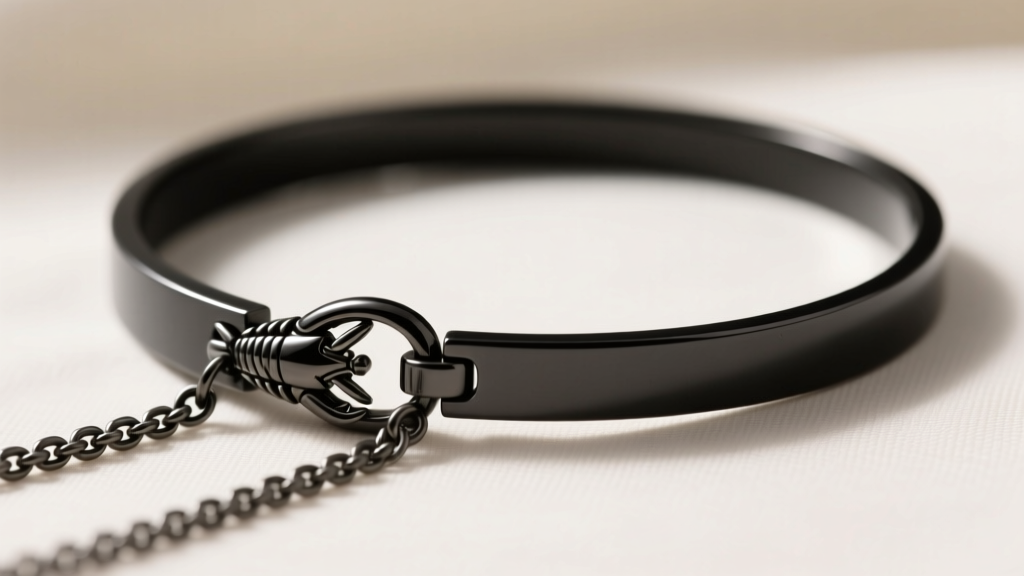
Furthermore, pay close attention to the clasp and jump rings. A standard spring-ring clasp is notoriously difficult to fasten at the nape of the neck and features a tiny internal spring that frequently fails. Always opt for a lobster clasp, which utilizes a more robust, heavy-duty spring mechanism. Ensure the jump ring connecting the initial pendant to the chain is soldered shut or features a secure split-ring design to prevent the letter from slipping off during wear.
Material-Specific Care Protocols
Proper maintenance varies wildly depending on the metallurgy of your choker. Applying a universal cleaning method can permanently damage certain finishes.
- Solid Gold & Titanium: These are virtually indestructible in a home environment. Clean them by soaking in a bowl of warm water with a few drops of mild dish soap. Gently scrub the initial pendant and chain links with a soft-bristled baby toothbrush to remove sebum and lotion buildup, then pat dry with a microfiber cloth.
- Sterling Silver: Avoid harsh chemical dips, which can strip rhodium plating and damage the copper alloy. Use a dedicated silver polishing cloth that contains micro-abrasives and anti-tarnish agents. Polish gently in a back-and-forth motion, never in circles, to avoid highlighting micro-scratches.
- Vermeil & Plated: Never use polishing cloths or abrasive brushes on vermeil, as you will strip the 2.5-micron gold layer right off the sterling base. Simply wipe the choker down with a damp, soft cotton cloth after wearing to remove acidic sweat, and store it in an airtight anti-tarnish pouch.
By matching the material properties to your lifestyle, skin chemistry, and maintenance willingness, your initial choker necklace will remain a pristine, deeply personal artifact for years to come.


