A Beginner's Guide to Buying an Antique Gold Cross Necklace
Learn how to authenticate, price, and style an antique gold cross necklace. Our beginner guide covers hallmarks, gold purity, and chain pairings.

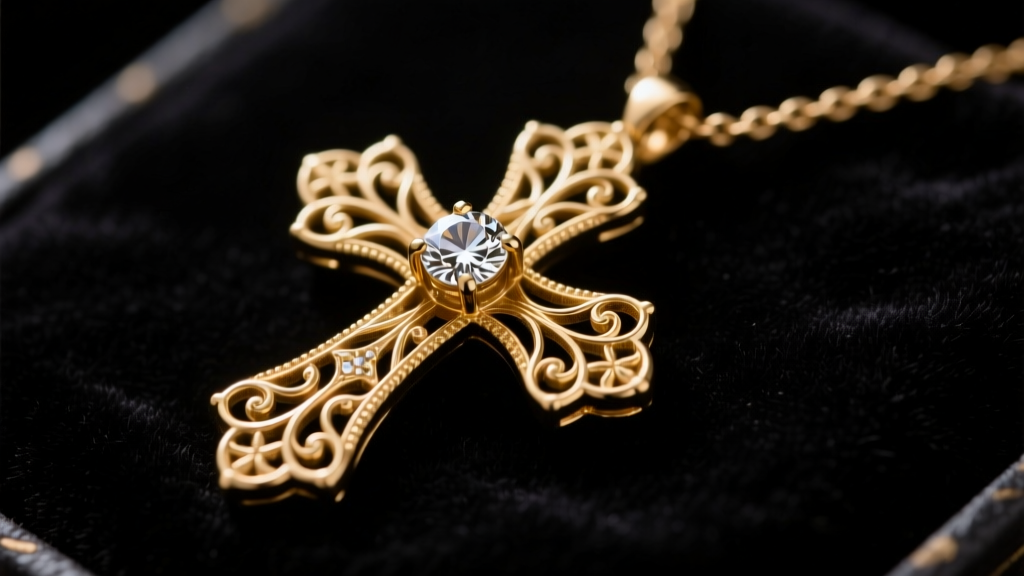
What Actually Makes a Cross Necklace "Antique"?
When shopping for an antique gold cross necklace, the terminology can be notoriously misleading. In the estate jewelry industry, the word "antique" is not merely a marketing buzzword for something that looks old; it is a strict chronological classification. As we navigate the vintage and estate jewelry market in 2026, understanding these distinctions is your first line of defense against overpaying for modern reproductions.
- Antique: A piece that is at least 100 years old. Today, this means the necklace or pendant must have been crafted in 1926 or earlier (encompassing the Victorian, Edwardian, and early Art Deco eras).
- Vintage: A piece that is between 20 and 99 years old (e.g., mid-century or 1980s estate jewelry).
- Estate: Simply means the piece is previously owned. An estate cross could be five years old or five hundred years old.
True antique crosses carry a weight, a specific type of craftsmanship, and a historical context that modern cast reproductions simply cannot replicate. However, because gold has been melted down and recast for centuries, authenticating an antique gold cross necklace requires looking beyond the surface and examining the structural and metallurgical clues left behind by the original jeweler.
Decoding Gold Purity and Antique Hallmarks
One of the most common beginner mistakes is expecting an antique piece to bear a modern "14K" or "18K" stamp. Historically, hallmarking laws varied wildly by country, and many genuine antique crosses were never stamped at all, or were stamped with symbols rather than numbers. According to the Victoria and Albert Museum, British hallmarking is one of the most reliable systems in the world, but it uses unique historical markers that modern buyers often misinterpret.
The Mystery of 15k Gold
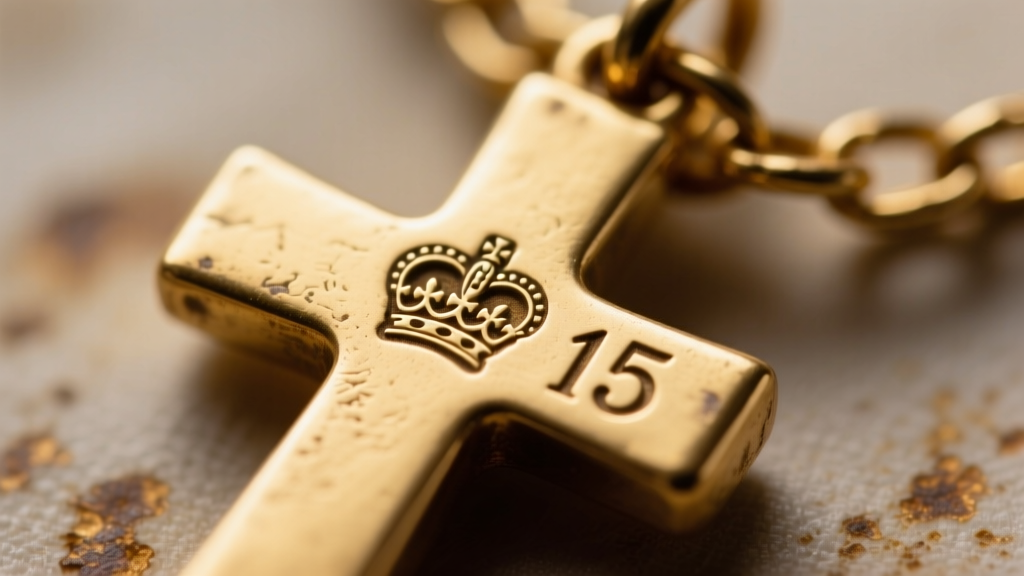
If you are examining a British antique gold cross necklace, you will frequently encounter "15k" or "15.625" gold. This specific alloy (62.5% pure gold) was a legal standard in the United Kingdom exclusively between 1854 and 1931. If a seller claims a cross is a Victorian antique (1837–1901) but it is stamped 14k (an American standard not widely adopted in the UK until later), you should be highly skeptical. The 15k standard was eventually replaced by 14k in 1932 to align with international export markets.
| Gold Purity | Common Era / Origin | Typical Hallmark / Stamp | Color Profile |
|---|---|---|---|
| 9k (37.5%) | Victorian / Edwardian UK | Crown, '9', or '375' | Pale, slightly brassy yellow |
| 15k (62.5%) | 1854–1931 UK | Crown, '15', or '625' | Warm, rich antique yellow |
| 18k (75%) | French / Global Antique | French Eagle Head | Deep, buttery yellow |
| 14k (58.5%) | Early 20th C. American | '14K' or maker's mark | Standard warm yellow |
Identifying Eras Through Cross Design
The aesthetic of the cross pendant itself is a massive clue to its age. Jewelry historians and experts at Lang Antiques note that religious and mourning jewelry evolved distinctly through the late 19th and early 20th centuries.
Victorian Crosses (1837–1901)
Victorian antique gold cross necklaces are heavily tied to the era's mourning culture, especially after the death of Prince Albert in 1861. You will often see crosses crafted in yellow gold featuring black enamel inlay, seed pearls (which symbolized tears), or cabochon garnets. Many Victorian crosses are "mourning crosses" and may feature a small glass locket compartment on the reverse to hold a woven lock of hair. Pro Tip: Check the back of the cross. If it is completely flat and machine-stamped, it is likely a later reproduction. Hand-finished Victorian crosses will show slight file marks or a softly rounded reverse.
Edwardian and Art Deco Crosses (1901–1920s)
As the 20th century began, the heavy, somber mourning jewelry gave way to lighter, more intricate designs. Edwardian crosses often feature platinum-topped gold (a layer of platinum fused over a yellow gold base to allow for fine, white-metal filigree work without sacrificing the structural strength of gold). Early Art Deco crosses (1920–1926) introduce geometric lines, milgrain edging, and contrasting stones like onyx or carved jade set into yellow gold.
Pricing, Red Flags, and Failure Modes
How much should you expect to pay for a genuine antique gold cross necklace? In the current market, a simple, unadorned 9k or 15k yellow gold cross from the late 1800s typically ranges from $350 to $600. Highly ornate pieces featuring old mine cut diamonds, pristine black enamel, or seed pearl halos can easily command $1,500 to $3,500+.
Authentication Red Flags
Before purchasing, inspect the piece for these common signs of modern reproduction or heavy, undocumented alteration:
- Laser-Welded Jump Rings: The jump ring is the small loop connecting the pendant to the chain. Antique jump rings were hand-sawn and soldered with a visible, slightly uneven seam. A perfectly smooth, laser-welded ring indicates modern manufacturing or a recent repair.
- Bright, Uniform Yellow: Antique gold develops a subtle patina over a century of wear. If the gold is blindingly bright and uniform, it may have been heavily machine-polished (removing historical value) or it is a modern electroplated piece.
- "Antique Style" Wording: If a listing uses the phrase "antique style" or "antique finish," it is a modern reproduction. Genuine dealers use "antique" as a noun or strict adjective denoting age.
Common Failure Modes to Inspect
According to gemological conservation standards outlined by the Gemological Institute of America (GIA), antique jewelry requires careful structural assessment. The most common failure mode in antique pendants is bail thinning. The bail is the loop at the top of the cross where the chain threads through. A century of metal-on-metal friction can wear a hole completely through the bail. Always inspect the inside of the bail with a jeweler's loupe; if it is paper-thin, you will need to factor in the cost of having a jeweler solder a new gold tube inside the bail to prevent losing the pendant.
"Never put an antique enameled or foil-backed cross necklace into an ultrasonic cleaner. The high-frequency vibrations will shatter 130-year-old glass enamel and turn the water behind foil-backed garnets cloudy and gray."
Pairing Chains and Everyday Styling
It is incredibly rare to find an antique gold cross pendant that is still attached to its original 19th-century chain; most chains were melted down for scrap gold during various historical economic downturns. Therefore, you will likely need to source a complementary chain.

Matching the Clasp and Chain
To maintain the integrity of the antique look, avoid modern lobster clasps. Instead, look for chains featuring a bolt ring clasp (a circular clasp with a tiny slit and a spring-loaded bar, popular from the 1850s to the 1950s) or a dog-clip clasp for heavier chains. A 16-inch to 18-inch antique curb chain or a delicate rope chain in a matching gold karat (or slightly lower, to prevent the chain from wearing down the softer pendant bail) is ideal.
Layering Your Antique Cross
In 2026, layering remains a dominant styling technique, but antique pieces require a careful approach to prevent scratching. If you are layering your antique gold cross necklace, place it on the longest chain (e.g., 20 or 22 inches) so it hangs below modern, harder pieces. Pair it with a simple, modern 16-inch gold snake chain or a delicate pearl choker. The contrast between the intricate, hand-engraved texture of the antique cross and the sleek, modern chains creates a sophisticated, curated aesthetic that honors the history of the piece while keeping it relevant for everyday wear.
Summary Checklist for the First-Time Buyer
Before you finalize your purchase, run through this quick E-E-A-T checklist:
- Verify the Age: Does the design, hallmark (like 15k or an eagle head), and clasp style align with a pre-1926 creation date?
- Check the Bail: Is the top loop thick enough to withstand daily friction from a chain?
- Inspect the Enamel/Stones: Are there chips in the enamel? Is the foil behind closed-back garnets intact and dry?
- Assess the Patina: Does the gold show a soft, natural wear pattern consistent with a century of use, or does it look artificially distressed?
By understanding the metallurgy, historical design cues, and structural vulnerabilities of these pieces, you can confidently invest in an antique gold cross necklace that is not only a beautiful styling staple but a genuine, wearable artifact of history.


