Is Your Name Necklace Real? Cleaning & Care Masterclass
Learn how to verify authenticity and properly clean your custom jewelry. Expert maintenance tips for solid gold, silver, and vermeil pieces.

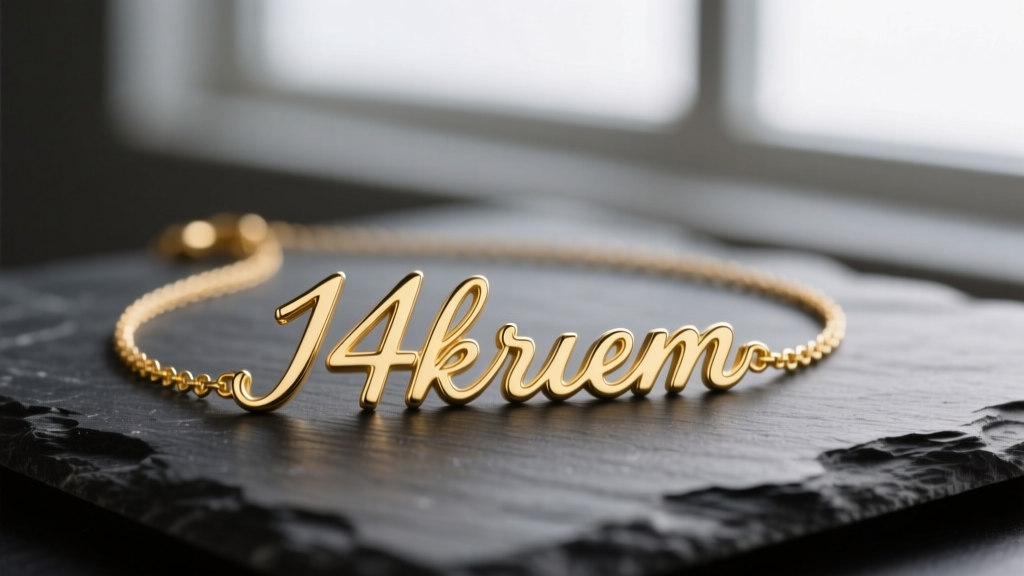
Custom name necklaces are deeply personal statement pieces, but their intricate laser-cut or die-struck lettering makes them uniquely prone to trapping oils, lotions, and environmental pollutants. When buyers search for a 'name necklace real' gold or silver, they are often looking for heirloom quality. However, owning a genuine solid gold or sterling silver piece is only half the battle; maintaining its structural integrity and luster requires a specialized approach. In this comprehensive guide, we break down the exact material science, cleaning protocols, and structural maintenance required to keep your custom nameplate pristine for decades.
The 'Real' Test: Verifying Your Name Necklace Material
Before applying any cleaning solution, you must definitively identify your metal. The cleaning protocol for solid 14k gold will severely damage a gold-plated brass alternative. Look for hallmarks stamped near the lobster clasp or on the jump ring connecting the chain to the nameplate. Genuine pieces will feature stamps like '14K', '18K', '585', '750' for gold, or '925' for sterling silver. If your nameplate lacks a stamp, or features 'GP' (Gold Plated) or 'GEP' (Gold Electroplated), you are dealing with a base metal core that requires a much gentler, non-abrasive cleaning approach.
Material-Specific Cleaning Protocols
The crevices of cursive fonts and the tight loops of block lettering act as magnets for sebum and cosmetic buildup. Here is how to tackle the cleaning process based on your specific metal grade.
14k & 18k Solid Gold Nameplates
Solid gold is highly resilient but can easily lose its mirror finish if subjected to harsh chemicals. According to the Gemological Institute of America (GIA), the safest and most effective method for cleaning solid gold is a mild surfactant bath. Mix a few drops of phosphate-free dish soap (like Dawn) into a bowl of lukewarm water. Let the necklace soak for 15 to 20 minutes. Use a baby toothbrush with ultra-soft bristles to gently agitate the connections where the chain meets the nameplate—this is where dead skin cells accumulate and cause the jump rings to degrade. Rinse with distilled water to prevent hard water spots and pat dry with a lint-free microfiber cloth.
925 Sterling Silver & Oxidation Management
Sterling silver contains 7.5% copper, which reacts with sulfur compounds in the air to create silver sulfide (tarnish). The deep grooves of a custom script font will show tarnish long before the flat surfaces. 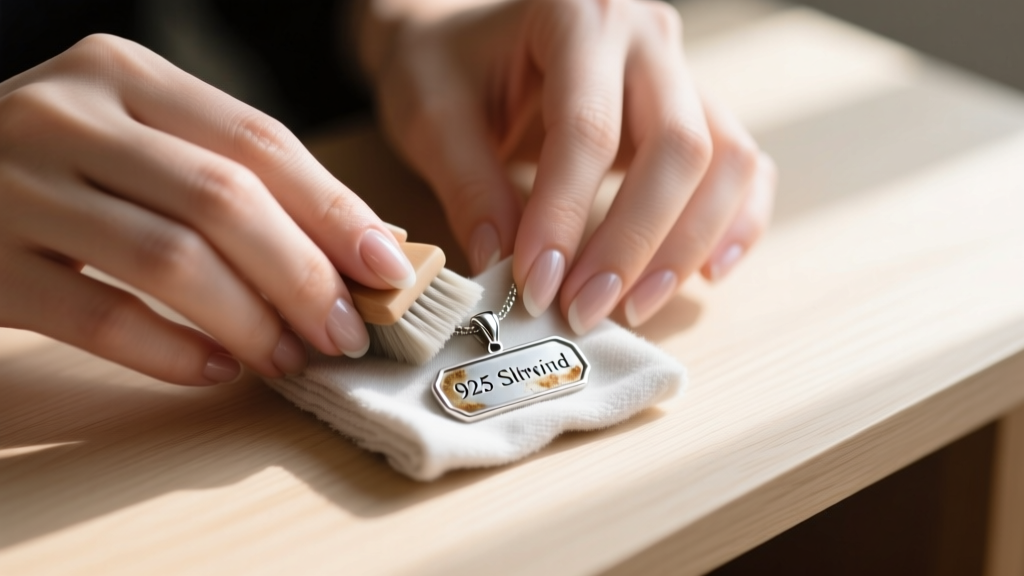 To remove oxidation, use an impregnated jeweler's cloth (such as a Sunshine cloth). Rub the cloth along the grain of the metal, paying special attention to the interior loops of letters like 'e', 'a', and 'o'. Never use liquid chemical dips (like Tarn-X) on sterling silver name necklaces. These dips rely on thiourea, which strips the metal's natural patina, leaves a microscopic porous surface that tarnishes faster in the future, and can weaken the soldered joints of delicate script lettering.
Gold Vermeil & Plated Alternatives
Gold vermeil consists of a thick layer of gold (minimum 2.5 microns) bonded to a sterling silver base. Standard gold-plated items have a microscopic flash coating over brass or copper. For both, avoid soaking in water and never use abrasive polishing cloths, as you will strip the gold layer away, exposing the base metal underneath. Simply wipe the necklace down with a slightly damp microfiber cloth after wear to remove acidic sweat, and dry immediately.
The Ultrasonic Debate: Safe or Destructive?
Ultrasonic cleaners use high-frequency sound waves (typically 40kHz to 45kHz) to create microscopic cavitation bubbles that blast dirt from crevices. While the Jewelers of America notes that ultrasonics are excellent for solid gold and platinum, they pose severe risks for certain name necklace configurations.
| Material / Feature | Ultrasonic Safe? | Risk Factors |
|---|---|---|
| Solid 14k/18k Gold (No Stones) | Yes | None; excellent for box chain links. |
| 925 Sterling Silver | Yes | May loosen oxidized detailing if intentional. |
| Gold Vermeil / Plated | No | Cavitation will peel the gold layer off. |
| Nameplates with Birthstones | No | Soft stones (opal, pearl, emerald) will shatter. |
Daily Wear & Structural Maintenance
Because nameplates carry more weight than standard pendants, they place disproportionate stress on the chain and clasps. Understanding the mechanical failure points of your necklace is critical for long-term wear.
Clasp and Jump Ring Integrity
The jump ring connecting the heavy nameplate to the chain is the most common point of failure. Over time, the friction of the chain rubbing against the jump ring acts like a microscopic saw, eventually wearing through the metal. Inspect this connection every six months. If the jump ring is visibly thinned, take it to a jeweler to be replaced with a heavier-gauge, soldered jump ring. Additionally, lobster clasps can lose their spring tension. If the lever feels loose or fails to snap shut completely, the internal spring is compromised and the clasp must be replaced to prevent loss.
Preventing Chain Kinks and Snaps
Name necklaces are frequently paired with box chains or delicate cable chains. Box chains are notorious for kinking if folded or slept in. Once a box chain kinks, the structural integrity of the interlocking links is permanently compromised, leading to snapping. 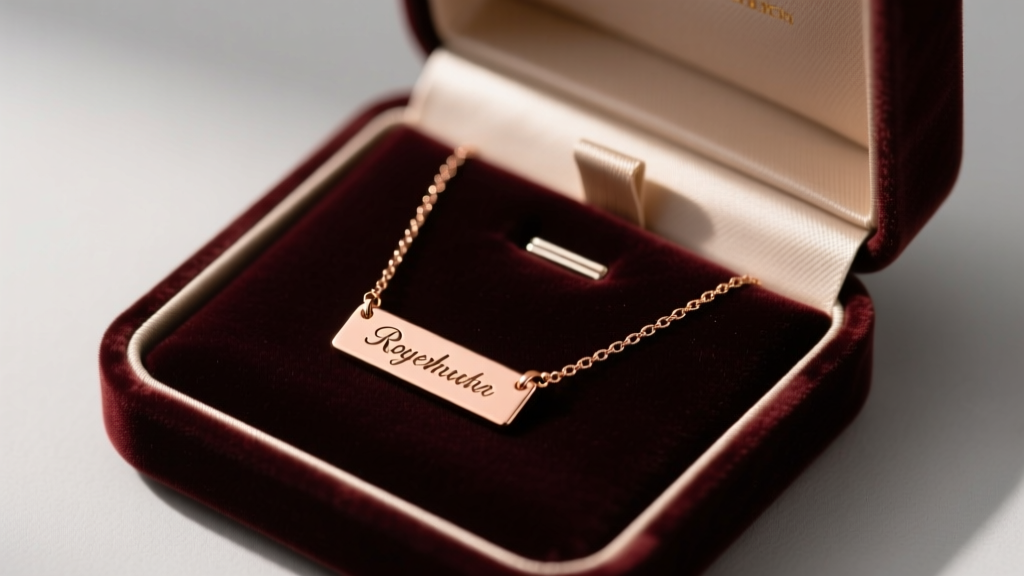 Always unclasp your necklace before removing it, and never pull a tangled chain forcefully. Use two sewing needles to gently pick apart kinks on a flat, well-lit surface.
Storage Solutions for Custom Lettering
How you store your name necklace is just as important as how you clean it. Improper storage leads to severe tangling, chain kinking, and accelerated tarnishing. Follow these strict storage guidelines:
- Lay Flat or Hang Vertically: Never toss a name necklace into a drawer. Lay it completely flat in a velvet-lined tray, or hang it from a dedicated jewelry stand to allow gravity to keep the chain straight.
- Use Anti-Tarnish Strips: For sterling silver pieces, place a 3M anti-tarnish strip in the storage compartment. These strips absorb airborne sulfur compounds and can prevent oxidation for up to 12 months. Suppliers like Rio Grande highly recommend this over silica gel packets, which only control moisture, not sulfur.
- Isolate from Harder Metals: Store your name necklace separately. If a diamond tennis bracelet or a harder tungsten ring rubs against your gold nameplate in a shared jewelry box, it will leave permanent micro-scratches across the custom lettering.
Conclusion
A genuine custom name necklace is an investment in personal identity and fine craftsmanship. By verifying your metal purity, utilizing material-specific cleaning agents, avoiding destructive ultrasonic waves on plated or gemstone-accented pieces, and practicing rigorous structural maintenance, you ensure that your nameplate remains a brilliant, unbroken legacy piece for generations to come.


