Native American Silver Bead Necklace: Styling & Trend Analysis
Explore trends for the Native American silver bead necklace. Master liquid silver styling, authenticity hallmarks, and expert layering.

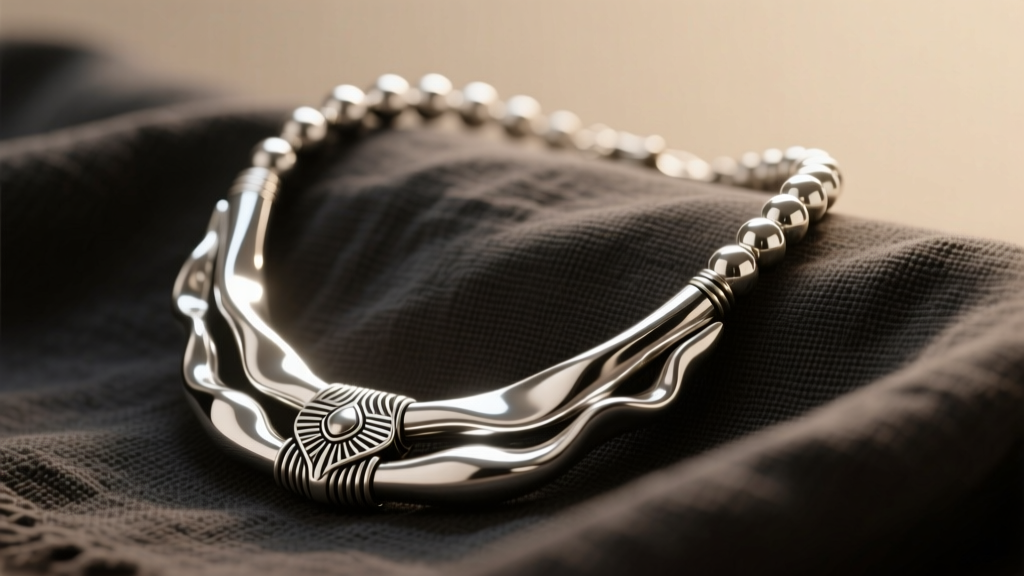
The Evolution of a Heritage Icon in Modern Fashion
The Native American silver bead necklace has transcended its origins as a staple of Southwestern regional dress to become a cornerstone of global artisanal fashion. As we navigate the 2026 style landscape, the demand for heritage craftsmanship has surged, driven by a collective shift toward 'quiet luxury' and sustainable, investment-grade accessories. No longer confined to turquoise-heavy squash blossoms or traditional ceremonial wear, the minimalist elegance of handcrafted silver beads is being reimagined by contemporary stylists and everyday collectors alike.
Today's trend analysis reveals a fascinating pivot: collectors are moving away from mass-produced, imported 'Southwestern-style' jewelry, seeking instead the authentic, hallmarked work of Navajo, Zuni, and Hopi silversmiths. Understanding the metallurgy, history, and styling potential of these pieces is essential for anyone looking to integrate this iconic accessory into a modern wardrobe.
Decoding the Craft: Liquid Silver vs. Sandcast vs. Stamped
To truly appreciate a Native American silver bead necklace, one must understand the distinct bench-made techniques utilized by Indigenous artisans. The term 'bead' encompasses vastly different manufacturing processes, each yielding unique weights, drapes, and price points.
| Bead Type | Manufacturing Process | Drape & Weight | Average Price Range |
|---|---|---|---|
| Liquid Silver | Seamless or soldered silver tubing cut into uniform 2mm-10mm lengths. | Fluid, fabric-like drape; lightweight to medium. | $150 - $800+ |
| Sandcast | Molten silver poured into hand-carved tufa stone molds, then shaped. | Heavy, rigid, highly textured with intentional oxidation. | $300 - $2,500+ |
| Stamped Round | Solid or hollow sterling spheres hand-stamped with repoussé patterns. | Structured, substantial; creates a bold, geometric profile. | $250 - $1,200 |
| Heishi (Silver) | Thin, flat discs of silver ground and polished to uniform smoothness. | Snakeskin-like flexibility; sits flush against the skin. | $100 - $400 |
Historically, many vintage pieces (pre-1930s) were crafted from 'coin silver,' which has a .900 purity level, achieved by melting down US silver coins. Modern artisans predominantly use .925 sterling silver, which offers greater durability while maintaining the brilliant luster expected of fine jewelry. According to the Gemological Institute of America (GIA), the addition of copper in sterling silver is what allows artisans to achieve the deep, crisp stamp work seen in contemporary Navajo designs.
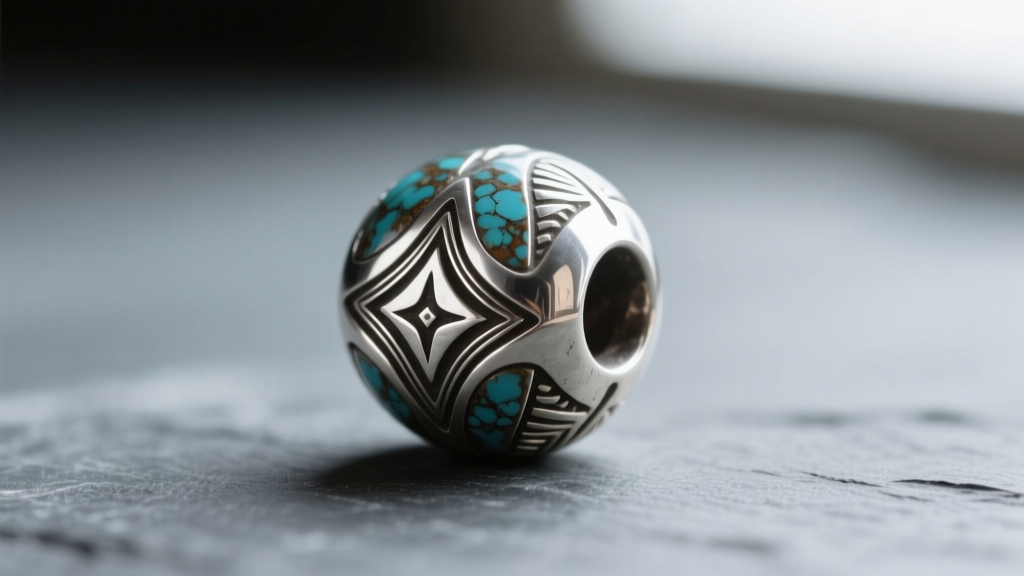
Authenticity and Hallmarks: Navigating the Market
The market is unfortunately saturated with overseas imitations deceptively marketed as Indigenous art. When investing in a genuine Native American silver bead necklace, authentication is paramount. The Indian Arts and Crafts Board (IACB), a division of the U.S. Department of the Interior, enforces the Indian Arts and Crafts Act of 1990. This federal truth-in-advertising law strictly prohibits the misrepresentation of Native American-made goods.
'Always look for the artist's hallmark. While early vintage pieces may lack stamps, contemporary master silversmiths almost universally mark their work with initials, clan symbols, or specific shop stamps. A 'Made in USA' tag is not proof of Native American origin; only the artist's hallmark and verifiable provenance guarantee authenticity.' — Guidelines from the Smithsonian National Museum of the American Indian.
When purchasing, request documentation of the artist's tribal affiliation. Reputable galleries will provide a certificate of authenticity detailing the silversmith's name, tribe (e.g., Diné/Navajo, A:shiwi/Zuni), and the specific materials used.
2026 Trend Forecast: Mixed Metals and Asymmetric Layering
The most prominent styling trend for 2026 is the deliberate mixing of metals and textures. The rigid rule of wearing only silver or only gold has been entirely dismantled. A Native American silver bead necklace provides the perfect matte or oxidized contrast to high-polish gold chains.
The Expert Layering Formula
- The Base (15-16 inches): A delicate 14k or 18k gold cable or rope chain. This sits at the collarbone and catches the light.
- The Core (20-22 inches): A 3mm or 4mm Native American liquid silver bead necklace. The fluid drape of the silver tubes creates a metallic 'V' shape that frames the base layer without tangling.
- The Statement (28-30 inches): A heavy, single-strand sandcast silver bead necklace or a traditional Naja pendant on a silver chain. This anchors the look and draws the eye downward, elongating the torso.
This asymmetric, multi-length approach prevents the necklaces from clustering together, allowing the unique patina of the handcrafted silver beads to stand out against the warmth of the gold.
Neckline Pairing Guide for Silver Beads
The structural integrity of silver beads requires strategic pairing with clothing necklines to avoid visual clutter or physical snagging.
- The V-Neck & Plunge: Ideal for multi-strand liquid silver (24+ inches). The beads mimic the geometry of the neckline, creating a cascading metallic effect that is highly flattering.
- The Crew Neck & Turtleneck: Best paired with heavy, single-strand stamped round beads or sandcast beads (18-20 inches). The rigid structure of the beads rests cleanly on top of the fabric, acting almost as a metallic collar.
- The Scoop Neck: Perfect for Zuni-style silver and stone heishi necklaces. The flexibility of the heishi allows it to curve perfectly along the rounded edge of the scoop without buckling.
- The Button-Down Shirt: Leave the top three buttons undone and layer a 16-inch silver choker with a 22-inch liquid silver strand. The contrast between the crisp cotton/silk and the fluid, bohemian silver is a hallmark of modern 'desert minimalist' styling.
Preservation and Care Guidelines
Silver naturally reacts with sulfur in the air to form silver sulfide, commonly known as tarnish. For a Native American silver bead necklace, especially sandcast or heavily stamped pieces, this tarnish is often intentional. Artisans use oxidation to darken the recessed areas of their stamp work, creating contrast and depth.
Never use liquid silver dips or ultrasonic cleaners on these pieces. These harsh chemical processes will strip the intentional patina, leaving the beads looking flat, artificially white, and ruined. Instead, use a high-quality treated polishing cloth (like a Sunshine cloth) and gently buff only the raised, high-polish areas of the beads. Store your necklaces unclasped and laid flat in an anti-tarnish flannel bag to prevent the beads from kinking or scratching one another.


