Restoring a Vintage Virgin Mary Necklace: Care & Cleaning Guide
Learn expert techniques to clean, polish, and preserve your vintage Virgin Mary necklace without damaging delicate enamel or antique silver patina.

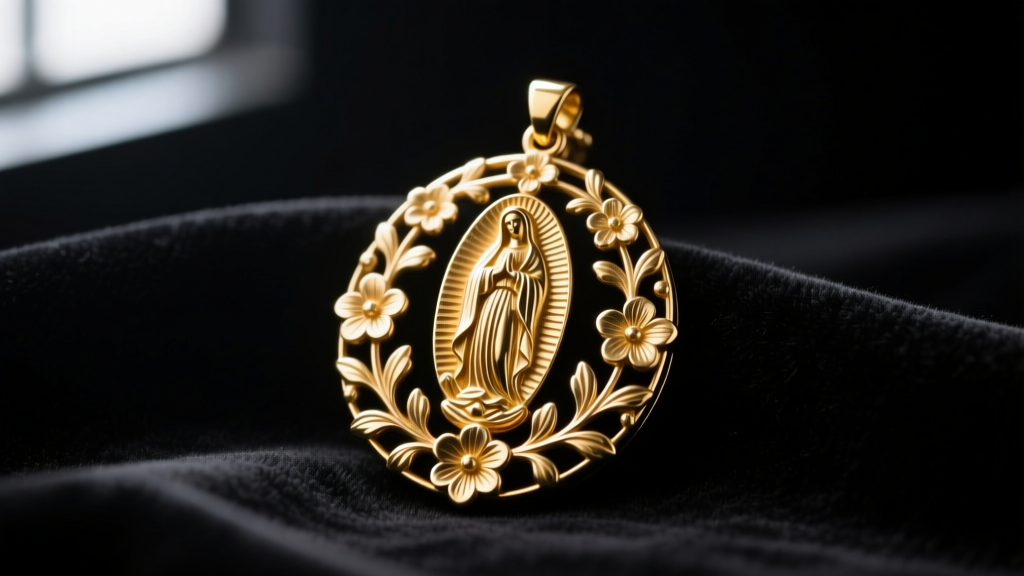
Owning a vintage Virgin Mary necklace is akin to holding a piece of wearable history. Whether it is an 1890s French repousse Miraculous Medal, a mid-century Italian gold-filled pendant, or an Art Deco piece featuring delicate cold enamel, these devotional artifacts require specialized care. Unlike modern, mass-produced jewelry, antique religious medals often feature intricate high-relief carvings, micro-mosaics, or fragile foil-backed stones that can be permanently ruined by standard commercial cleaning methods.
In this comprehensive guide, we will explore the metallurgy and material science behind antique religious jewelry, providing you with a conservator-approved framework to clean, maintain, and store your vintage pieces safely.
Identifying Your Necklace's Materials and Risks
Before applying any cleaning solution, you must accurately identify the materials. A vintage Virgin Mary pendant might look like solid gold but could actually be gold-filled, rolled gold plate, or vermeil. Misidentifying the base metal can lead to catastrophic stripping of the outer layer.
| Material | Common Era | Primary Cleaning Risks | Conservator-Approved Method |
|---|---|---|---|
| Sterling Silver (Oxidized) | 1880s - 1950s | Striking dark patina from recesses; micro-pitting from silver dips. | Mild soap wash; gentle hand-polishing of high points only. |
| Gold Vermeil / Filled | 1920s - 1960s | Stripping the gold layer via abrasives or ultrasonic vibrations. | Distilled water and phosphate-free surfactant; microfiber pat-down. |
| Champlevé / Guilloché Enamel | 1850s - 1930s | Thermal shock cracking; water seepage lifting the glass from metal. | Dry brushing only; avoid all liquid immersion. |
| Base Metal / Pewter | Early 1900s | Pitting, warping, and irreversible dulling from acidic cleaners. | Soft dry cloth; specialized non-abrasive pewter wax. |
The Safe Cleaning Protocol for Antique Silver and Gold
The internet is flooded with DIY jewelry cleaning hacks, but the popular "aluminum foil and baking soda" bath is incredibly dangerous for a vintage Virgin Mary necklace. This galvanic reaction forces silver sulfide (tarnish) to transfer from the silver to the aluminum. While it makes the metal bright, it completely strips the desirable French oxidation—the dark, contrasting grime in the deep crevices of a repousse medal that gives the piece its three-dimensional depth and antique value.
Furthermore, chemical "silver dips" (which typically contain thiourea) are highly acidic. They leave microscopic pits in the metal surface, which actually accelerates future tarnishing and creates a chalky, unnatural white finish.
The Conservator's Wash Technique
For solid sterling silver or solid gold medals without porous stones or enamel, follow this protocol:
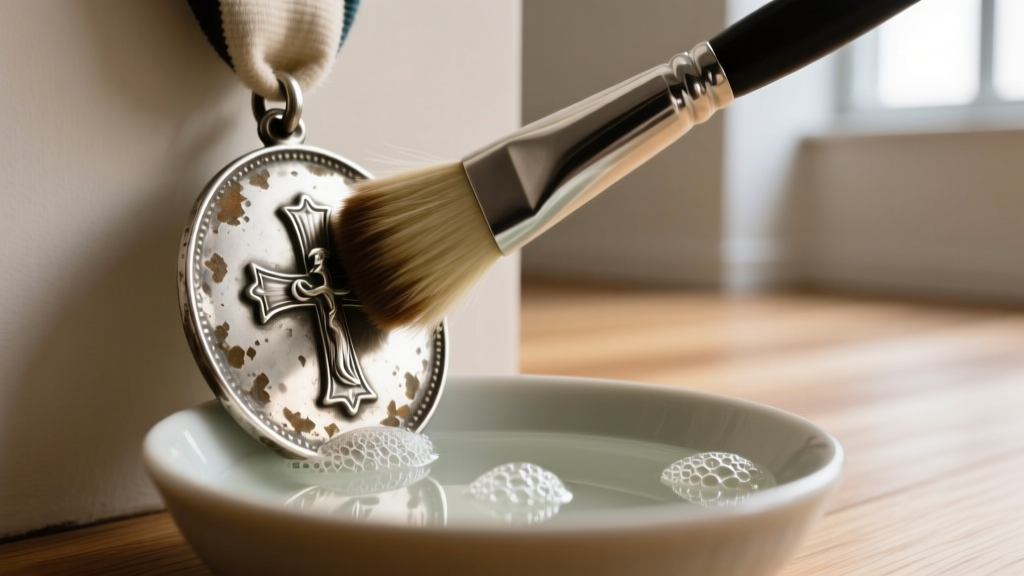
- Prepare the Solution: Mix a few drops of phosphate-free, lotion-free dish soap (like Dawn Original) into a bowl of lukewarm distilled water. Avoid tap water, as chlorine and fluoride can react with antique alloys.
- Agitate Gently: Submerge the pendant for no more than 3 to 5 minutes.
- Detailing: Use a soft goat-hair brush or a baby toothbrush with splayed bristles to gently sweep dirt from the high-relief areas. Never use stiff nylon brushes, which leave micro-scratches on soft, high-karat gold.
- Rinse and Dry: Rinse under a gentle stream of distilled water. Pat dry with a lint-free microfiber cloth, and use a hair dryer on the "cool" setting to blow moisture out of the jump ring and bail crevices.
Handling Delicate Details: Enamel and Micro-Mosaics
Many high-end European vintage Virgin Mary pendants feature exquisite enamel work or Vatican micro-mosaics. According to the Victoria and Albert Museum (V&A) Jewelry Conservation Guide, enamel is essentially fused glass. Over decades, it develops microscopic hairline fractures that are invisible to the naked eye.
If you submerge an enameled antique medal in water, moisture seeps into these fissures. As the metal expands and contracts with temperature changes, the trapped moisture forces the glass to pop out of its metal bezel (a failure mode known as "crazing" or "spalling").
Dry Cleaning Enamel and Mosaics
- For Dust and Skin Oils: Use a clean, dry, soft-bristled makeup brush to sweep away surface debris.
- For Stubborn Grime: Dampen a cotton swab with a minuscule amount of isopropyl alcohol (90% or higher, as it evaporates instantly without leaving water residue) and roll it gently over the glass or enamel. Never scrub the metal borders, as the alcohol can strip protective waxes.
- Avoid Ultrasonics: Never put enamel, micro-mosaics, or foil-backed rhinestones in an ultrasonic cleaner. The high-frequency vibrations will shatter the glass and shake loose the delicate adhesive backing.
Chain Maintenance and Clasp Troubleshooting
The chain accompanying a vintage pendant is often as fragile as the medal itself. Antique chains, such as delicate 0.8mm belcher or curb chains, were often hand-soldered. The solder points are structural weak spots that can snap if subjected to modern polishing cloths that contain harsh abrasives.
Clasp Lubrication and Care
Vintage spring-ring clasps frequently become stiff or fail to snap shut due to dried lubricants and microscopic debris inside the spring mechanism. Do not use WD-40 or synthetic oils, which will attract dust and gum up the tiny internal spring. Instead, use a needle-tip oiler to apply a micro-drop of pure, food-grade mineral oil into the clasp opening. Pump the lever a few times to distribute the oil, then wipe the exterior completely clean with a dry cloth.
For antique barrel clasps or push-in tongue-and-groove clasps, check the tension of the metal tongue. Over decades of wear, the metal fatigues and flattens. A professional jeweler can carefully lift the tongue with a pair of smooth-jawed pliers to restore the "click" tension without breaking the brittle antique metal.
Proper Storage to Prevent Tarnish and Scratching
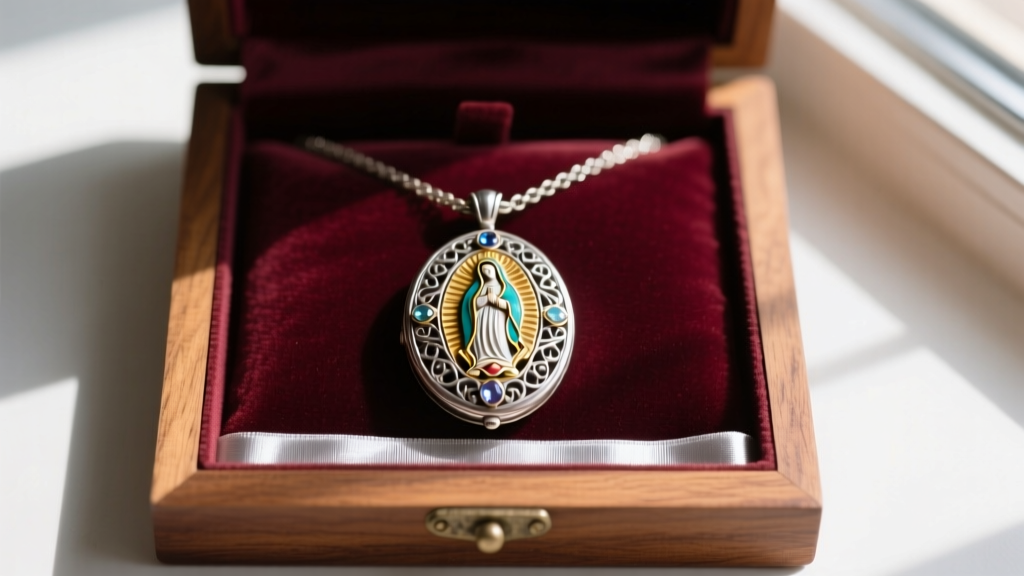
How you store your vintage Virgin Mary necklace is just as critical as how you clean it. Silver tarnishes when it reacts with sulfur compounds in the air, forming silver sulfide. To halt this chemical reaction, you must control the storage environment.
- Anti-Tarnish Textiles: Store the necklace in a pouch made of Pacific Silvercloth or treated anti-tarnish flannel. These fabrics are embedded with microscopic silver particles that act as a sacrificial anode, absorbing sulfur gases before they reach your necklace.
- Avoid PVC and Polyurethane: Never store antique jewelry in cheap plastic baggies or PVC-lined travel cases. These plastics off-gas chlorides and sulfur, which will cause rapid, aggressive tarnishing and can even induce "bronze disease" (a destructive green corrosion) on copper-heavy base metal alloys.
- Humidity Control: Keep the jewelry in a room with a relative humidity below 50%. If you live in a humid climate, store the necklace in an airtight acrylic box with a few silica gel desiccant packets, replacing the packets every six months.
When to Call a Professional Jeweler
While routine maintenance can be performed at home, certain restoration tasks require a master jeweler with experience in antique preservation. As noted by experts at Lang Antiques' Antique Jewelry University, improper repairs can drastically reduce the historical and monetary value of a piece.
Seek professional intervention if you notice:
- Worn Bail Loops: The loop connecting the pendant to the chain (the bail) often wears paper-thin from decades of friction against the jump ring. A jeweler can laser-weld a new, historically accurate bail without applying the high heat of a traditional torch, which could melt nearby solder joints or crack enamel.
- Chain Kinks and Stretches: If an antique cable chain has stretched or kinked, do not attempt to pull it straight with pliers. This will snap the brittle, aged solder joints. A jeweler must carefully reshape the links using specialized mandrels.
- Enamel Loss: If a piece of champlevé enamel has chipped out, a specialist can perform "cold enameling" using color-matched, UV-cured resins that mimic the original glass without requiring a kiln.
By treating your vintage Virgin Mary necklace not just as an accessory, but as an archival artifact, you ensure that its spiritual and artistic beauty remains intact for generations to come. Patience, gentle materials, and a respect for the original artisan's patina are your most valuable tools in antique jewelry care.


