Troubleshooting the Perfect Necklace for Mothers Day: 2026 Guide
Avoid common gifting mistakes. Learn how to troubleshoot fit, metal allergies, and clasp issues when choosing the perfect necklace for mothers day.

The Hidden Pitfalls of Mother's Day Jewelry Gifting
Choosing the perfect necklace for mothers day is rarely as simple as picking a shiny object from a display case. Every year, millions of well-intentioned gifts end up tucked away in jewelry boxes, unworn due to poor fit, skin irritation, or frustrating clasp mechanics. As we navigate the 2026 gifting season, the modern jewelry market is flooded with deceptive marketing terms like 'waterproof gold' and 'hypoallergenic alloys' that often mask inferior manufacturing. To ensure your gift is actually worn and cherished, you must approach the purchase as a problem-solving exercise. This guide will troubleshoot the most common points of failure in necklace gifting, from metallurgical reactions to ergonomic clasp design, ensuring you select a piece that perfectly aligns with her lifestyle, wardrobe, and physical needs.
Troubleshooting Necklace Length and Neckline Pairings
The most frequent reason a necklace goes unworn is improper length. A chain that fights with the wearer's favorite necklines will quickly be abandoned. According to standard sizing guidelines published by Jewelers of America, the average woman's neck circumference ranges from 13 to 15 inches, making a 16-inch chain sit tightly at the base of the throat, while an 18-inch chain rests comfortably on the collarbone. However, the ideal length is entirely dependent on her typical wardrobe. If she favors high-necked blouses or crew-neck sweaters, a standard 18-inch chain will bunch up awkwardly. Conversely, if she primarily wears V-necks or scoop necks, a longer matinee or opera-length chain will disrupt the visual geometry of her outfit.
| Chain Length | Industry Term | Best Neckline Pairings | Pendant Size Limit |
|---|---|---|---|
| 14 - 15 Inches | Choker | Off-shoulder, Boat neck, V-neck | Small (under 10mm) |
| 16 Inches | Collarbone | Scoop neck, Sweetheart, Open collar | Medium (10-15mm) |
| 18 Inches | Standard / Princess | Crew neck, Button-down, Everyday tees | Medium to Large (15-25mm) |
| 20 - 24 Inches | Matinee | High necklines, Business attire, Tunics | Large / Statement pieces |
| 28 - 36 Inches | Opera | Deep V, Evening wear, Layering base | Heavy focal pendants |
Pro-Tip: If you are entirely unsure of her preference, an 18-inch chain with a 2-inch extender is the safest troubleshooting mechanism, allowing her to adjust the drop to suit her daily outfit.
Material Sensitivities: Solving the 'Green Neck' and Allergy Problems
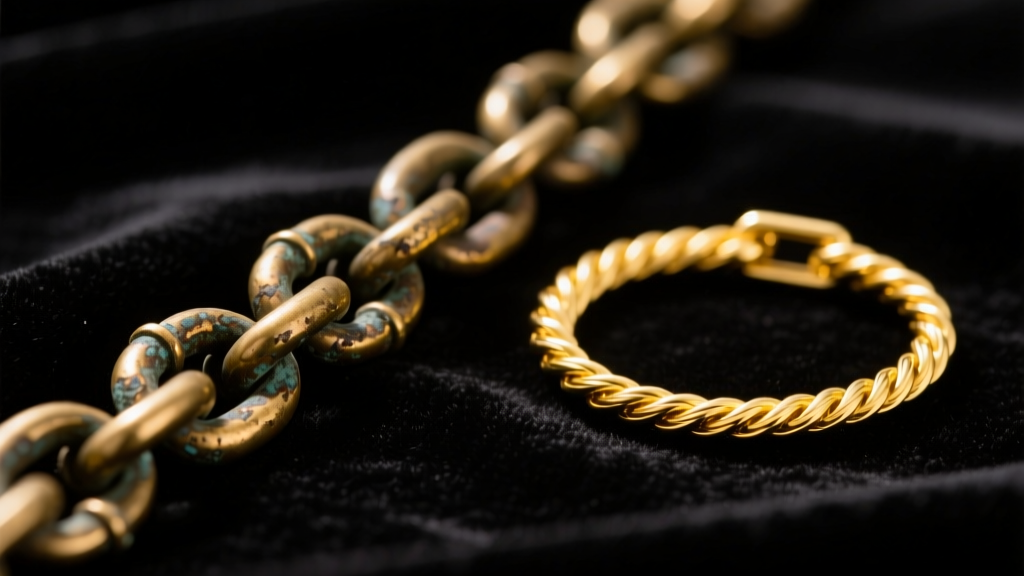
Nothing ruins a sentimental gift faster than contact dermatitis or a green ring around the neck. The 'green neck' phenomenon is not a sign of cheapness; it is a basic electrochemical reaction. When copper-heavy base metals (like brass or bronze) mix with the salts, acids, and lotions on human skin, they oxidize and create copper chloride, which stains the skin green. To troubleshoot this, you must understand the difference between plating, vermeil, and solid alloys.
Decoding the Metallurgy
- Solid 14k Gold (58.5% Pure): The industry standard for everyday durability. It is alloyed with silver, copper, and zinc. While highly resistant to tarnish, the copper content can still trigger reactions in individuals with highly acidic skin chemistry.
- Solid 18k Gold (75% Pure): Richer in color and significantly more hypoallergenic due to the lower percentage of alloyed base metals. It is softer than 14k, making it better for pendants than heavy, tension-bearing chains.
- Gold Vermeil (Pronounced Ver-may): By FTC guidelines, true vermeil must feature a sterling silver (925) base coated with a minimum of 2.5 microns of gold. This is an excellent mid-tier option, but the plating will eventually wear thin on high-friction areas (like the back of the neck) after 2 to 5 years of daily wear.
- Standard Gold Plated: Usually features a brass or zinc base with less than 0.5 microns of gold. Avoid this entirely for a lasting Mother's Day gift, as the base metal will be exposed within months.
For mothers with severe nickel allergies or contact dermatitis, the American Academy of Dermatology recommends avoiding white gold (which is often alloyed with nickel) and opting instead for platinum, palladium, or high-grade 316L surgical stainless steel, which traps nickel within its crystal lattice structure, preventing it from leaching into the skin.
Clasp Mechanics: Upgrading for Arthritis or Dexterity Issues
A frequently overlooked point of failure is the clasp. As women age, conditions like rheumatoid arthritis, osteoarthritis, or general reduced hand strength can make operating standard jewelry findings incredibly frustrating. If she struggles to button small shirts or open tight jars, a traditional spring-ring clasp will likely render your beautiful necklace unwearable.
The Clasp Hierarchy for Accessibility
- Spring Ring (Avoid): Requires precise pinching and lateral pulling. Highly problematic for limited dexterity.
- Lobster Claw (Acceptable): Features a larger lever that is easier to grasp, but still requires a baseline level of pinch strength and coordination.
- Box Clasp with Safety Figures (Excellent): Commonly used on heavier chains and tennis necklaces. The user simply pushes a V-shaped tongue into a box until it clicks. It requires gross motor skills rather than fine motor skills, making it highly accessible.
- Magnetic Neodymium Clasps (The Ultimate Solution): Upgrading the chain with a magnetic clasp featuring N52-grade neodymium magnets provides immense shear strength, allowing the necklace to snap together effortlessly. Crucial Troubleshooting Note: Ensure the magnetic clasp features a secondary locking mechanism or a deep groove to prevent it from sliding apart under the weight of a heavy pendant.
Many high-end jewelers will swap a standard clasp for an adaptive magnetic or box clasp upon request before gifting. Do not hesitate to ask for this modification at checkout.
The 2026 Pricing and Quality Matrix
Understanding what you should actually pay prevents you from overpaying for branded fashion jewelry or falling for 'too good to be true' scams. Below is the 2026 market baseline for a standard 18-inch cable chain with a modest solitaire pendant.
| Tier | Material Composition | Expected Price Range | Lifespan & Maintenance |
|---|---|---|---|
| Fashion | Brass/Zinc base, <1 micron flash plating | $30 - $80 | 6-12 months. High tarnish risk. Cannot be polished. |
| Demi-Fine | 925 Sterling Silver base, 2.5+ micron Vermeil | $90 - $250 | 2-5 years. Requires gentle cleaning. Can be re-plated. |
| Fine (14k) | Solid 14k Gold (58.5% purity) | $350 - $800 | Generational. Can be aggressively polished and repaired. |
| Luxury | Solid 18k Gold or Platinum | $900 - $2,500+ | Generational. Superior hypoallergenic properties. |
For a comprehensive understanding of gold purity standards and alloy compositions, refer to the educational resources provided by the Gemological Institute of America (GIA). Knowing these baselines ensures you are paying for actual intrinsic value rather than just a designer logo stamped on a brass tag.
Final Pre-Checkout Troubleshooting Checklist
Before you finalize your purchase, run the necklace through this rapid diagnostic checklist to guarantee a successful gift:
- The Wardrobe Test: Does the length (e.g., 18 inches) complement the necklines she wears 80% of the time?
- The Allergy Audit: Is the base metal clearly listed as solid gold, sterling silver, or platinum? (If the listing just says 'gold tone' or 'hypoallergenic alloy' without specifying the core metal, abandon the cart).
- The Dexterity Check: Can she comfortably operate the clasp, or do you need to request an adaptive magnetic/box clasp upgrade?
- The Pendant Proportion: Is the pendant size visually balanced with the chain gauge? (A heavy 20mm pendant will snap a delicate 0.8mm cable chain; ensure the chain gauge is at least 1.2mm for medium pendants).
- The Maintenance Reality: Are you gifting a piece that requires professional ultrasonic cleaning, or something she can easily maintain at home with a polishing cloth?
By shifting your mindset from simply 'buying jewelry' to 'engineering a wearable solution,' you elevate your gift from a temporary accessory to a permanent, comfortable fixture in her daily life. The right necklace for mothers day isn't just about the sparkle; it's about the seamless integration of metallurgy, ergonomics, and personal style.


