Best Material for an Initial Necklace for Moms: A Durability Guide
Discover the best metal for an initial necklace for moms. Compare 14k gold, sterling silver, and titanium for tarnish resistance and toddler durability.

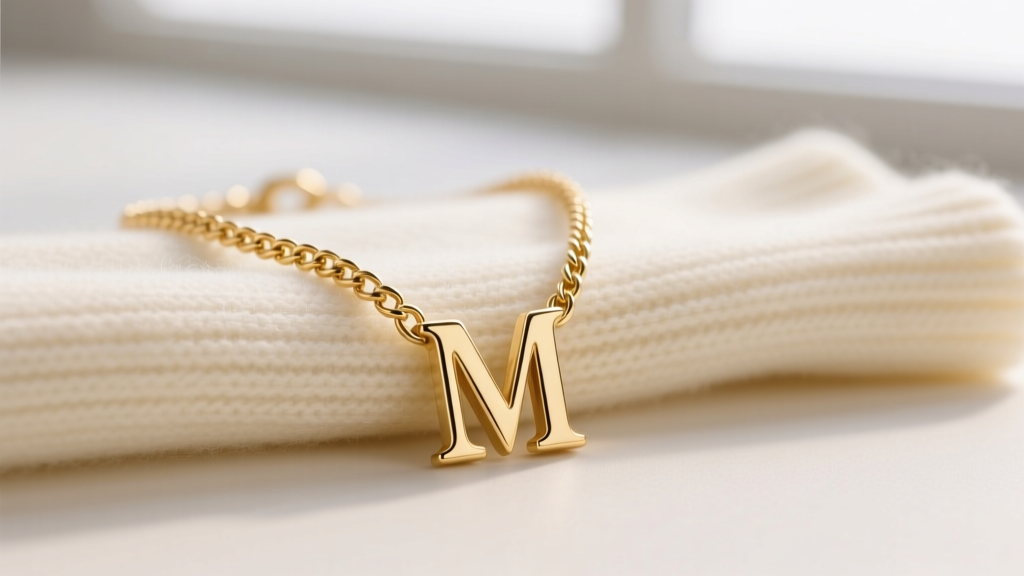
Motherhood is essentially a contact sport. Between applying baby lotions, washing dishes, and surviving the inevitable "toddler tug," everyday jewelry takes a massive beating. When selecting an initial necklace for moms, aesthetic appeal must be balanced with extreme metallurgical resilience. A delicate, poorly constructed chain or a reactive alloy will not survive the first month of active parenting.
As we evaluate jewelry standards in 2026, the focus has shifted heavily toward low-maintenance, hypoallergenic, and high-tensile materials. This comprehensive guide breaks down the exact material properties, alloy compositions, and chain mechanics you need to consider before purchasing an initial pendant necklace for a mother.
The "Mom Life" Stress Test: What Ruins Jewelry?
To understand why material choice matters, we must first identify the environmental and physical stressors a mother's necklace faces daily:
- Chemical Exposure: Baby wipes, diaper creams, and lactic acid from a nursing infant's skin can accelerate oxidation in reactive metals.
- Moisture Trapping: Bath time and sweat create a humid microclimate against the chest, accelerating tarnish in copper-alloyed metals.
- Tensile Stress: A curious 18-month-old grabbing a necklace can exert upwards of 15 pounds of sudden lateral force, easily snapping weak solder points.
Material Breakdown: Alloys and Properties
Not all metals are created equal. Here is a deep dive into the most common materials used for initial pendants and chains, analyzed through the lens of durability and skin safety.
14k Solid Gold: The Gold Standard for Longevity
Pure 24k gold is far too soft for daily wear, bending and warping under minimal pressure. 14k gold, however, consists of 58.5% pure gold alloyed with 41.5% strengthening metals like copper, silver, and zinc. According to the Gemological Institute of America (GIA), this specific alloy ratio provides a Vickers hardness (HV) of approximately 120-150, making it highly resistant to scratching and deformation. More importantly, 14k gold will not oxidize or tarnish when exposed to water, lotions, or sweat, making it the premier choice for an initial necklace for moms who refuse to take their jewelry off in the shower.
Sterling Silver (925): High Maintenance Beauty
Sterling silver is 92.5% pure silver and 7.5% copper. While beautiful, that 7.5% copper is a liability for busy mothers. Copper reacts with sulfur in the air and the natural salts in human sweat to form copper sulfate, resulting in rapid black tarnishing. While many jewelers apply a rhodium flash-plating to delay this, the plating typically wears off within 6 to 12 months of daily friction, leaving the mother with a high-maintenance piece that requires constant polishing.
Surgical Stainless Steel (316L): The Budget Trap
Often marketed as "hypoallergenic," 316L stainless steel is highly resistant to rust and boasts incredible tensile strength. However, it contains between 10% and 14% nickel. The American Academy of Dermatology (AAD) warns that prolonged skin contact with nickel-containing alloys is the leading cause of allergic contact dermatitis. For a mother whose skin barrier may already be compromised by stress and lack of sleep, 316L steel can trigger severe rashes along the neckline.
Implant-Grade Titanium (ASTM F136): The Ultimate Survivor
If the mother has severe metal sensitivities, Implant-Grade Titanium (specifically Ti 6Al-4V ELI) is the ultimate solution. It is 100% nickel-free, 45% lighter than steel, and completely impervious to chlorine, salt, and lactic acid. While it lacks the traditional luster of gold, its gunmetal-grey durability is unmatched.
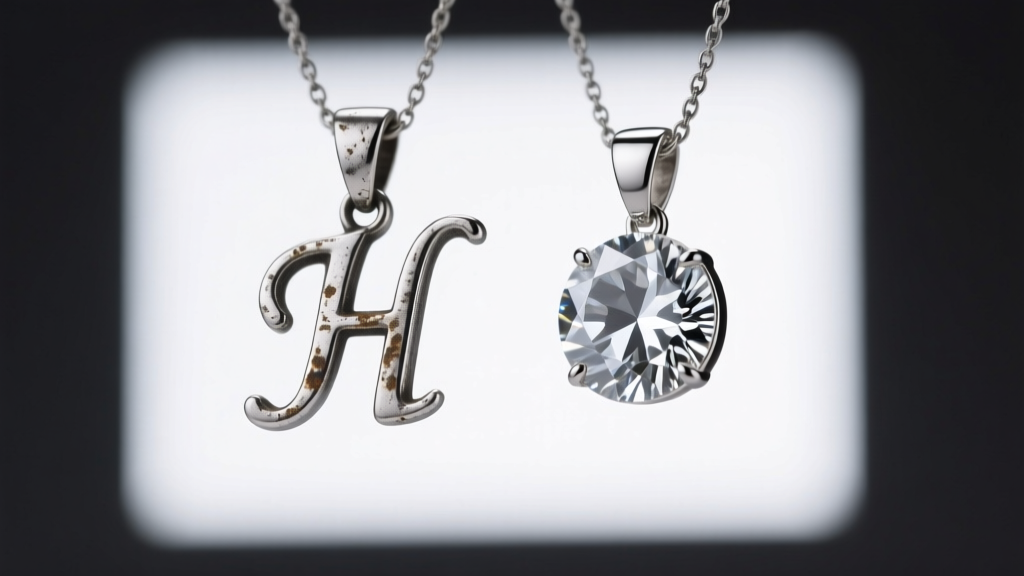
The Ultimate Material Comparison Chart
Use this data table to weigh the practical pros and cons of each metal before making your purchase.
| Metal Grade | Tarnish Risk | Tensile Strength | Nickel-Free? | Avg. Price Range |
|---|---|---|---|---|
| 14k Solid Gold | None | Moderate-High | Yes | $150 - $450+ |
| 925 Sterling Silver | High | Moderate | Yes | $40 - $120 |
| 316L Stainless Steel | Very Low | Very High | No (10-14%) | $20 - $60 |
| Grade 23 Titanium | None | Extremely High | Yes | $80 - $200 |
Chain Architecture: Surviving the Toddler Tug
The pendant material is only half the battle; the chain is the structural weak point. When a child pulls on an initial necklace for moms, the force is distributed across the chain links. Choosing the wrong chain style guarantees a break.
Why Box Chains Fail
Box chains are incredibly popular for initial pendants due to their modern, geometric look. However, they are a structural nightmare for mothers. The square links interlock at microscopic solder points. When subjected to sudden lateral tension (like a toddler yanking the pendant), these solder points snap instantly. Furthermore, box chains are notorious for kinking; once a box chain kinks, it loses structural integrity and will eventually fracture.
The Superiority of Wheat and Cable Chains
For a mother, a Wheat (Spiga) chain or a standard Cable chain is mandatory. Wheat chains feature woven, interlocking oval links that distribute tension evenly across multiple wires. If a toddler pulls a 1.2mm wheat chain, the force is absorbed by the woven matrix rather than a single fragile solder joint. Cable chains, featuring simple uniform oval links, also offer excellent tensile strength and are much easier for a jeweler to repair if a link does eventually warp.
Expert Sizing Tip: For an active mom, avoid ultra-fine 0.8mm chains. Opt for a 1.2mm to 1.5mm gauge. This thickness provides the necessary structural integrity to survive daily pulls without looking overly bulky or masculine against the collarbone.
Clasp Mechanics: Lobster vs. Spring Ring
Do not underestimate the clasp. Spring ring clasps are lightweight, hollow, and rely on a tiny internal spring that easily fails or gets stuck when exposed to lotion buildup. Always ensure the initial necklace features a solid-forged lobster clasp. Lobster clasps offer a wider, more secure grip on the jump ring and are significantly less likely to accidentally unhook when a child's fingers are exploring the back of the mother's neck.
Final Verdict: Sizing and Length Recommendations
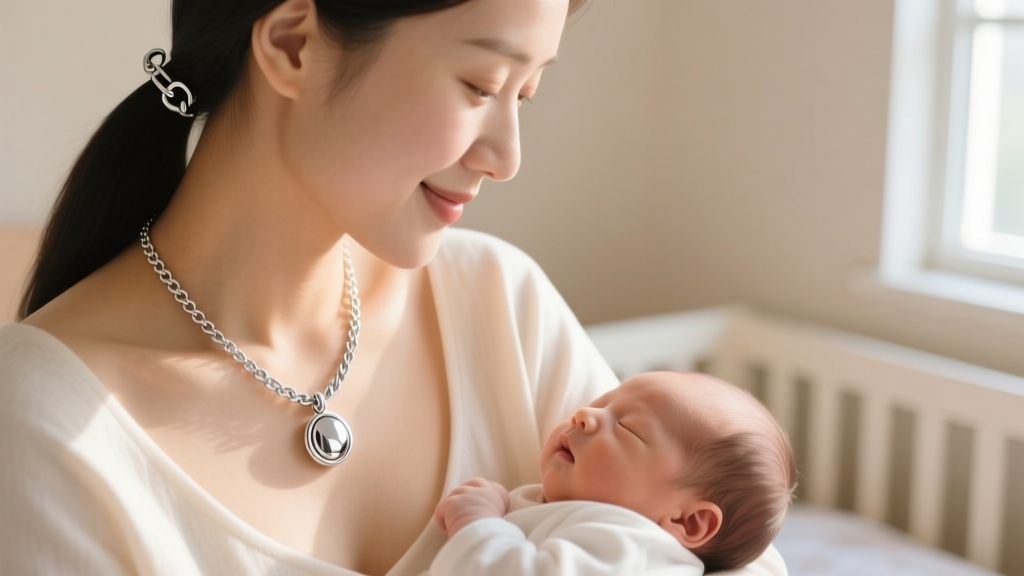
When purchasing an initial necklace for moms, length dictates both safety and style. A standard 16-inch choker length sits directly in the grab-zone of an infant being held against the chest. We highly recommend an 18-inch chain with a 2-inch extender. This places the initial pendant safely in the hollow of the collarbone, out of immediate reach of little hands, while still allowing the mother to adjust the length to accommodate different necklines, from nursing tanks to winter sweaters. Ultimately, if the budget allows, 14k solid gold on a 1.2mm wheat chain remains the undisputed champion for an initial necklace for moms. It offers the perfect synthesis of emotional value, metallurgical permanence, and zero-maintenance care, ensuring the piece survives the chaos of early motherhood to become a lasting family heirloom.


