The Anatomy of a Multi Layered Pearl Necklace: An Expert Guide
Master the mechanics of a multi layered pearl necklace. Explore pearl grading, strand spacing, clasp engineering, and tangling prevention techniques.

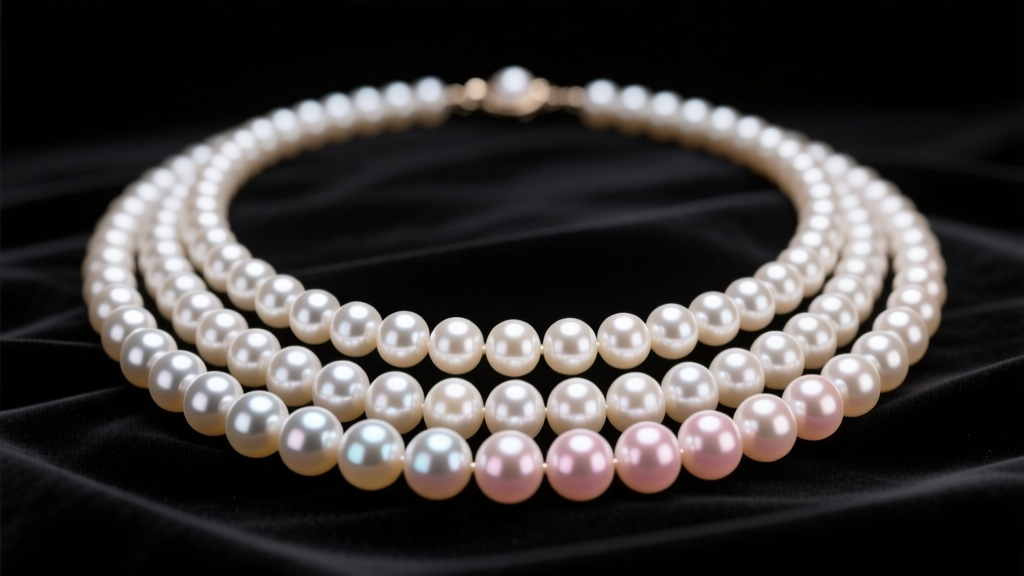
Constructing a high-quality multi layered pearl necklace requires navigating the physics of nacre friction, tensile strength limitations of organic stringing materials, and precise weight distribution across the cervical spine. Unlike single-strand designs, multi-layer pearl jewelry is an exercise in structural engineering. When three or more strands of organic gemstones are suspended from a single clasp point, the margin for mechanical failure and aesthetic tangling increases exponentially. In this expert deep dive, we deconstruct the technical specifications, grading hierarchies, and stringing mechanics that separate master-crafted multi-strand pearl necklaces from poorly assembled costume pieces.
The Engineering of Strand Spacing and Tangling Physics
The most common failure in layered pearl jewelry is persistent tangling, which leads to nacre-on-nacre friction and eventual micro-scratching. This occurs when the pendulum swing of the strands intersects. To prevent this, master stringers utilize the Gradient Spacing Rule. The distance between the center of the top strand (usually a 14-to-16-inch choker) and the subsequent layers must increase incrementally.
- Layer 1 to Layer 2 Delta: Minimum 1.5 to 2.0 inches.
- Layer 2 to Layer 3 Delta: Minimum 2.5 to 3.0 inches.
- Layer 3 to Layer 4 Delta: Minimum 3.5 to 4.0 inches.
This geometric progression accounts for the natural drape and swing arc of the necklace when the wearer moves. Furthermore, the drill holes of the pearls must be perfectly centered. An off-center drill hole (even by 0.2mm) causes the bead to sit at an angle, altering the strand's resting geometry and forcing it to cross over adjacent layers. According to the Gemological Institute of America (GIA), the precision of the drill hole and the symmetry of the pearl are critical quality factors that directly impact how a strand behaves in a multi-layer configuration.
Nacre Quality and Pearl Grading in Multi-Strand Designs
Not all pearls belong on the same layer. A technically sound multi layered pearl necklace distributes weight and visual density by assigning specific pearl varieties to distinct structural tiers. The nacre thickness and specific gravity of the bead dictate its optimal placement.
| Layer Position | Ideal Pearl Type | Nacre Thickness | Avg. Bead Weight | Structural Function |
|---|---|---|---|---|
| Top (Choker) | Akoya | 0.3mm - 0.5mm | 0.15g | High luster anchor, minimal swing arc |
| Middle (Princess) | Round Freshwater | 0.8mm - 2.0mm | 0.25g | Volume, orient, and mid-weight stability |
| Base (Matinee) | White South Sea | 2.0mm - 4.0mm | 0.45g+ | Heavy drape, prevents upward shifting |
Placing heavy South Sea pearls on the top layer while using lightweight Akoyas on the bottom creates an inverted center of gravity. This causes the top strand to sag and the bottom strand to ride up the neck, guaranteeing a tangled mess. By anchoring the heaviest pearls at the base of the necklace's parabolic curve, gravity naturally maintains the spacing between the layers.
Clasp Mechanics: The Hidden Failure Point
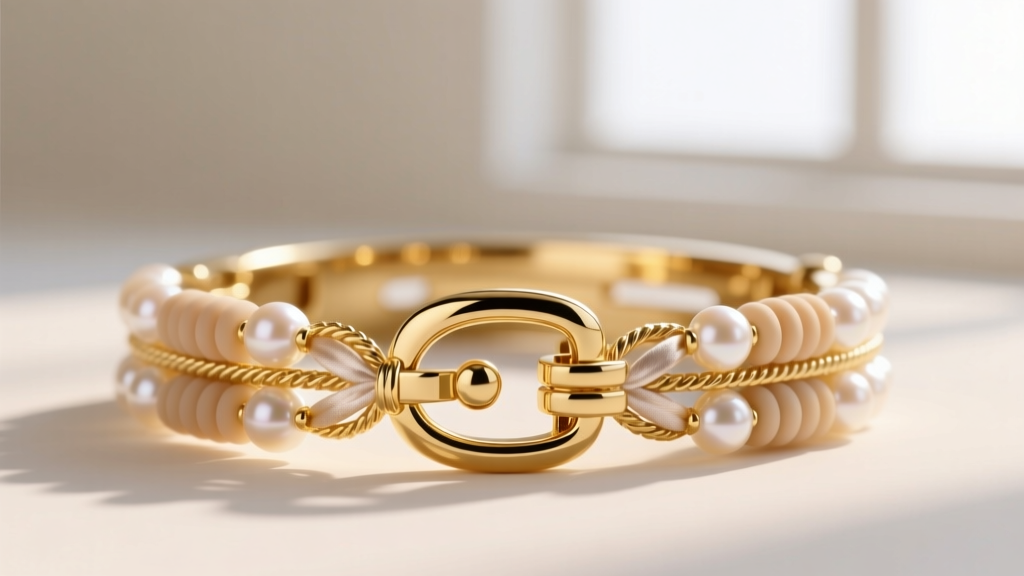
Standard spring-ring or lobster clasps are entirely inadequate for a multi layered pearl necklace. A three-strand necklace featuring 7mm Akoya pearls can easily weigh between 45 and 60 grams. The sheer tensile load on a single clasp jump-ring will eventually warp the metal and fatigue the silk thread.
Multi-Strand Tube and Slide Clasps
High-end multi-strand pieces utilize 18k gold or platinum multi-strand tube clasps. These clasps feature independent internal channels for each silk strand. The best iterations include internal silicone O-ring inserts that grip the silk knot or bead tip, distributing the tensile load across the silicone's friction surface rather than relying solely on the metal crimp.
Magnetic Clasps with Neodymium Cores
For necklaces exceeding 80 grams, magnetic clasps are often preferred for ease of use, but they must be engineered correctly. Cheap magnetic clasps use weak ferrite magnets that slip under the weight of the pearls. Expert jewelers use N52-grade neodymium magnets encased in a locking twist-housing. The twist mechanism provides a mechanical fail-safe; even if the magnetic field is compromised by nearby electronics or metal, the physical locking grooves keep the strands secured to the neck.
Stringing Materials and Knotting Techniques
The stringing material is the literal lifeline of a pearl necklace. While synthetic threads like PowerPro offer higher tensile strength, they lack the necessary drape and can saw through the relatively soft nacre (2.5 to 3.0 on the Mohs scale) over time. Therefore, 100% natural silk remains the industry standard.
- Size D (0.30mm): Used for small seed pearls (2mm - 4mm) on delicate top layers.
- Size F (0.35mm): The workhorse for standard 6mm - 7mm Akoya and Freshwater pearls.
- Size FF or G (0.40mm+): Required for heavy South Sea or Tahitian pearls to fill the 1.0mm drill hole and prevent internal abrasion.
French Wire (Gimp) Protection
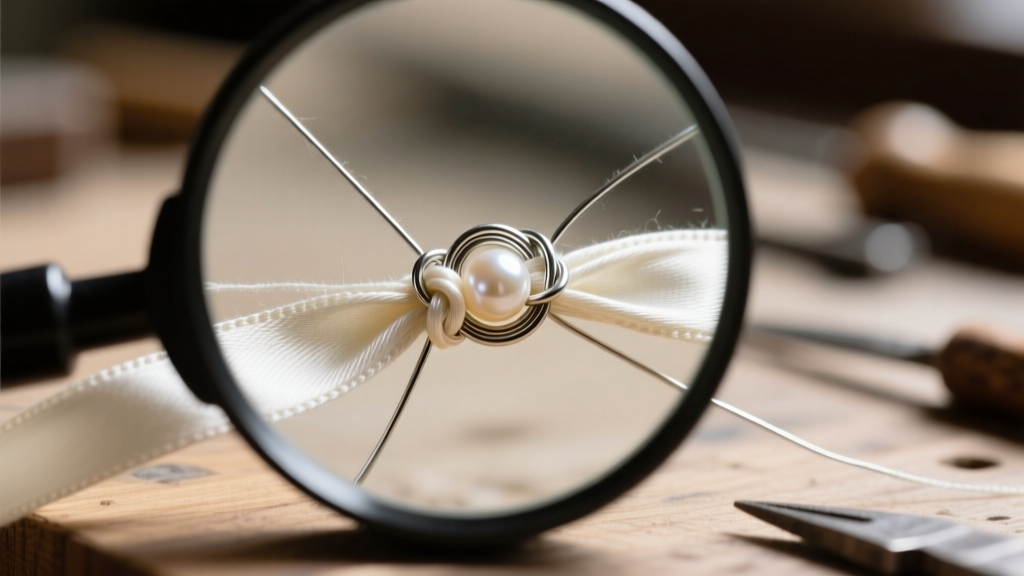
Where the silk thread meets the metal clasp, it is highly vulnerable to fraying. A master stringer will never tie silk directly to a metal jump-ring. Instead, a coil of French wire (also known as gimp) is threaded onto the silk. This microscopic metal coil acts as a protective sleeve, taking the abrasive friction of the metal clasp and preserving the structural integrity of the organic silk thread. The final knot is sealed with a micro-drop of jeweler's epoxy (such as G-S Hypo Cement) to prevent untying under dynamic load.
Weight Distribution and Neckline Ergonomics
A multi layered pearl necklace is a significant physical load. A lavish four-strand design featuring graduated Tahitian pearls can weigh upwards of 150 grams. This weight concentrates on the C4 to C6 vertebrae at the base of the neck. To mitigate cervical strain and prevent the necklace from pulling uncomfortably on delicate fabrics like silk blouses, the back of the necklace (the nape section) must be engineered differently than the front.
Expert stringers often use smaller, lighter pearls or smooth silk cords without knots in the rear 30% of the necklace. This reduces the overall gram weight, lowers the center of mass, and provides a smooth surface that glides against the skin and clothing without catching.
Maintenance and Ultrasonic Warnings
Maintaining a multi-strand pearl piece requires strict adherence to organic gemstone care protocols. The GIA Pearl Care Guidelines explicitly warn against the use of ultrasonic cleaners. The high-frequency cavitation bubbles generated by ultrasonic machines will literally shatter the nacre layers of treated or thin-skinned pearls, and will instantly destroy the silk stringing material.
"Never clean a multi-strand pearl necklace by submerging it in water or chemical solutions. The moisture will stretch the silk thread, causing the knots to loosen and the pearls to gap. Clean only with a damp, lint-free microfiber cloth and have the strands professionally restrung every 24 to 36 months if worn weekly."
Ultimately, a masterfully constructed multi layered pearl necklace is a triumph of micro-engineering. By respecting the physics of nacre friction, utilizing proper gradient spacing, and employing heavy-duty clasp mechanics, jewelers can create heirloom-quality pieces that drape flawlessly and endure for generations.


