The Initial Necklace Large Trend: Bold Styling for 2026
Discover how to style the initial necklace large trend in 2026. Expert guide on chain gauges, pendant dimensions, materials, and neckline pairings.

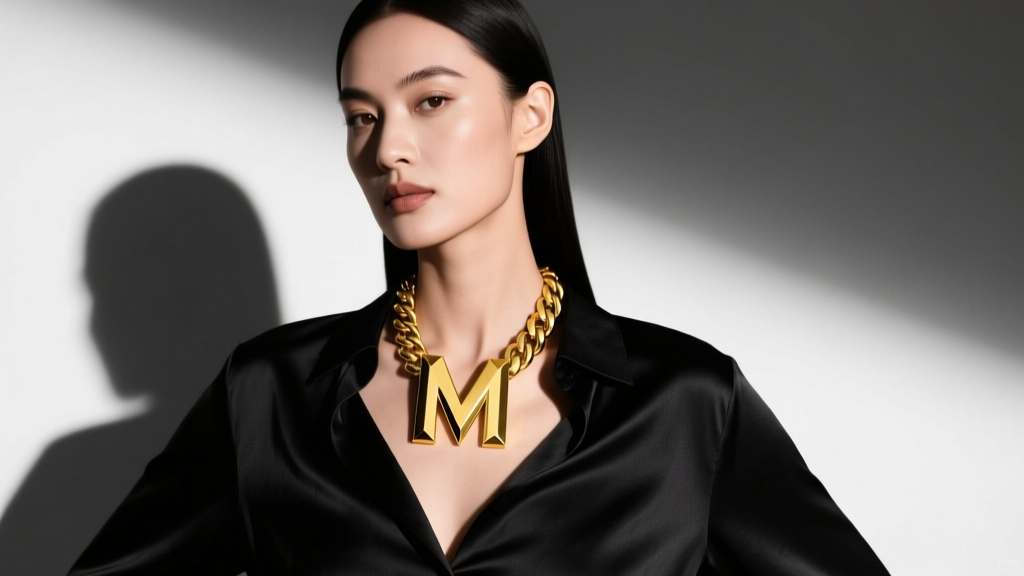
The jewelry landscape has undergone a radical transformation over the last few years. As search queries for the exact phrase initial necklace large spike across global fashion markets, it is abundantly clear that the era of the micro-pendant has ended. In 2026, personalization is no longer about subtle, hidden meanings; it is about bold, unapologetic identity markers. Statement initials are dominating editorial spreads, street style, and luxury brand runways, signaling a definitive pivot toward maximalism and heritage-driven aesthetics.
However, scaling up a pendant from a dainty 10mm charm to a commanding 50mm statement piece introduces complex structural and stylistic challenges. A large initial necklace is not simply a bigger version of a small one; it requires a fundamental rethinking of chain mechanics, metallurgical durability, and wardrobe integration. This comprehensive trend analysis breaks down the exact specifications, material grades, and styling frameworks you need to master the bold initial trend this year.
The Anatomy of a Statement: Defining Proportions and Weight
To qualify as a "large" initial necklace in the current market, the pendant must meet specific dimensional thresholds. While dainty initials typically measure between 8mm and 15mm in height, the 2026 trend dictates a minimum height of 30mm (1.18 inches), with the most sought-after luxury pieces ranging from 45mm to 65mm.
Thickness and Structural Integrity
Height is only one metric; depth is where quality reveals itself. A 50mm pendant crafted at a mere 0.8mm thickness will warp, dent, and bend under its own weight when subjected to the dynamic movement of daily wear. Premium large initial pendants feature a depth of 1.5mm to 3.0mm. This added volume provides the necessary rigidity to maintain the letter's structural geometry, particularly for letters with complex negative space like 'B', 'R', or 'A'.
The Gram Weight Factor
A solid 14k gold 50mm initial pendant with a 2mm depth will typically weigh between 8 to 14 grams. This weight is a critical factor that dictates the entire chain assembly. A pendant of this mass generates significant kinetic force when the wearer walks or moves, meaning the chain, clasp, and jump ring must be engineered to withstand dynamic load, not just static weight.
Chain Mechanics: Gauges, Bails, and Weight Distribution
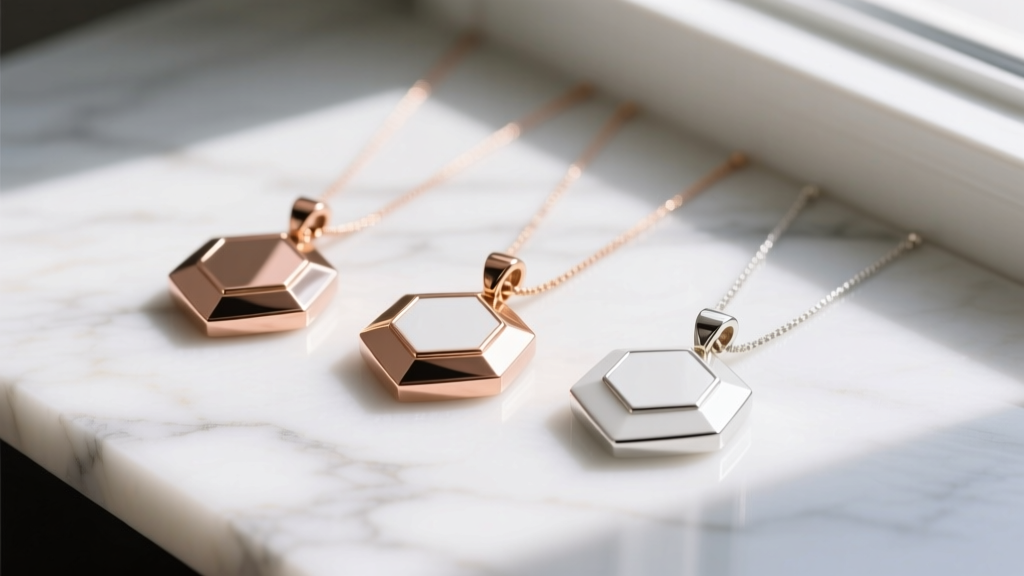
The most common failure point in large initial necklaces is not the pendant itself, but the hardware connecting it to the chain. According to industry standards outlined by the Gemological Institute of America (GIA), the hardness of the gold alloy directly impacts the durability of the bail and jump rings. 14k gold is significantly harder and more resistant to deformation than 18k or 24k gold, making it the superior choice for the structural hardware of heavy pendants.
The Jump Ring Inner Diameter (ID) Rule
Many consumers purchase a stunning 50mm initial pendant only to discover it cannot fit onto their favorite chain. The bottleneck is the jump ring or bail. A standard 4mm Cuban link chain requires a jump ring with an Inner Diameter (ID) of at least 5.5mm to 6.0mm to allow the chain to drape naturally without kinking. When commissioning or purchasing a large initial, always verify the bail's ID against your intended chain's width.
Chain Pairing Matrix
Matching the chain gauge to the pendant's height and weight is essential for both visual balance and physical security. Below is the definitive 2026 pairing matrix for large initial necklaces:
| Pendant Height | Approx. Weight (Solid 14k) | Recommended Chain Gauge | Ideal Chain Styles | Required Clasp Type |
|---|---|---|---|---|
| 30mm - 35mm | 5g - 7g | 2.5mm - 3.5mm | Paperclip, Curb, Figaro | Heavy Lobster (12mm+) |
| 40mm - 50mm | 8g - 12g | 4.0mm - 5.5mm | Cuban Link, Rope, Box | Box Clasp or Tongue |
| 55mm - 65mm+ | 13g - 20g+ | 6.0mm - 8.0mm | Chunky Cuban, Miami Link | Locking Box Clasp |
Pro Tip: Never use a standard 5mm spring ring clasp for a pendant exceeding 8 grams. The pendulum swing of a heavy initial will eventually pull the spring mechanism open, resulting in a lost piece.
Material Grades and the Enamel Resurgence
While high-polish yellow gold remains a staple, the 2026 trend forecast highlights a massive resurgence in mixed-material large initials. As noted by Vogue's jewelry trend analysts, consumers are seeking pieces that offer high contrast and vintage-inspired craftsmanship.
Cold Enamel vs. Guilloché
Large surface areas provide the perfect canvas for enamel work. However, not all enamel is created equal. Mass-market brands often use cold enamel (an epoxy resin), which can yellow, chip, or degrade when exposed to UV light and perfumes over a 2-3 year period. For a true heirloom-quality large initial necklace, seek out guilloché or vitreous (hot) enamel. Vitreous enamel is glass powder fused to metal at temperatures exceeding 1400°F, resulting in a scratch-resistant, brilliantly opaque finish that will never degrade.
Pavé and Gemstone Inlays
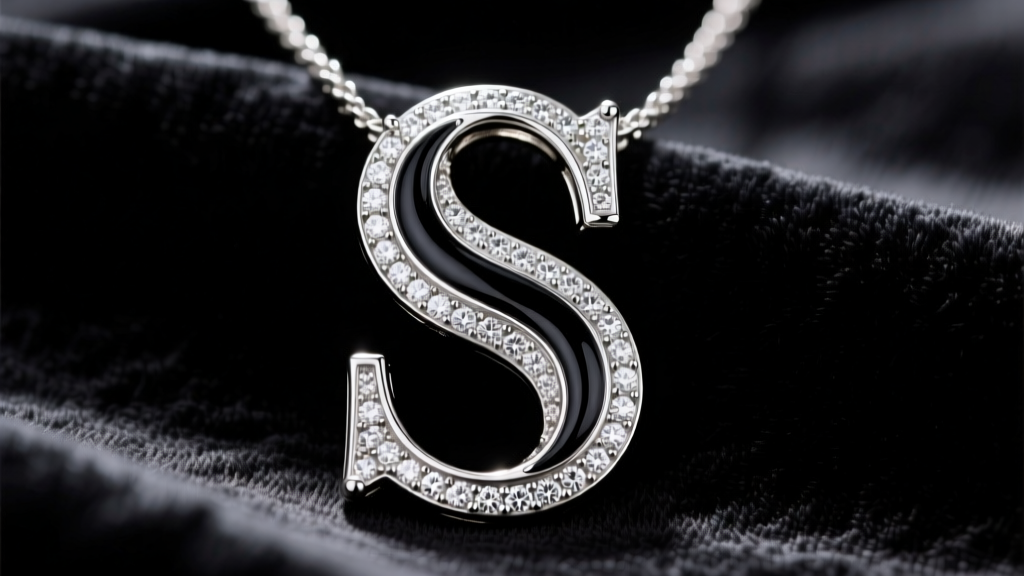
For evening wear and high-impact styling, diamond pavé initials are surging in popularity. When evaluating a large pavé initial, examine the setting technique. Micro-prong settings allow maximum light return and make the diamonds appear as a continuous sheet of ice. Conversely, bezel-set initials offer a more architectural, art-deco aesthetic that aligns perfectly with the structured tailoring trends of 2026. Black onyx and lapis lazuli inlays paired with 18k yellow gold borders are currently the most requested bespoke combinations among luxury jewelers.
Styling Frameworks: Necklines and Layering Rules
A large initial necklace commands attention, meaning its placement relative to your wardrobe is paramount. The goal is to let the piece breathe without looking costumey or overwhelming your frame.
The Blazer and Deep-V Framework
For tailored blazers, silk button-downs, and deep V-necks, opt for an 18-inch to 20-inch chain. This length ensures the bottom of the initial rests precisely at the sternum, filling the negative space of the neckline without getting lost in the fabric. A 45mm letter 'M' on a 4mm rope chain creates a striking, masculine-feminine contrast when layered over a crisp white t-shirt and an oversized blazer.
The Crewneck and Turtleneck Canvas
When wearing high necklines like crewneck sweaters or turtlenecks, the pendant must sit entirely on the fabric. This requires a longer 22-inch to 24-inch chain. In this scenario, contrast is your best tool. Pair a bright 18k yellow gold initial against a charcoal or navy sweater. Avoid wearing large gold initials over busy, multi-colored patterns, as the intricate details of the lettering will be visually swallowed by the print.
The Layering Paradox
Can you layer a large initial necklace? Yes, but the rules of layering change entirely at the 40mm mark. You cannot layer a 50mm initial with other pendants; it will result in a tangled, chaotic mess. Instead, layer the large initial with plain, textured chains of varying lengths. For example, pair a 20-inch 50mm initial on a Cuban link with a 24-inch plain box chain and a 16-inch herringbone choker. This creates a curated, tiered effect where the initial remains the undisputed focal point.
2026 Trend Forecast: What is Next for Bold Initials?
As we move deeper into 2026, the market is seeing a rise in "heritage fonts"—moving away from standard block or script letters toward Old English, Blackletter, and serif typography that mimics vintage university signet rings and historical crests. Furthermore, the integration of hidden details, such as a birthstone set flush into the back of the pendant or a custom engraving on the bail, is elevating the large initial from a mere fashion accessory to a deeply personal talisman.
Ultimately, the shift toward the large initial necklace is a rejection of fast-fashion minimalism. It is an investment in identity, requiring a discerning eye for metallurgical quality, structural engineering, and deliberate styling. By understanding the precise mechanics of gauge, weight, and proportion, you can confidently wear your identity on your chest, exactly as it was meant to be seen.


