Expert Care and Cleaning for an INRI Cross Necklace
Learn expert techniques to clean, polish, and maintain your INRI cross necklace. Discover safe methods for gold, silver, and intricate crucifix details.


The Unique Maintenance Challenges of INRI Crosses
An INRI cross necklace is far more than a profound statement of faith; it is an heirloom-quality piece of jewelry that demands meticulous, specialized care. The acronym INRI stands for Iesus Nazarenus, Rex Iudaeorum (Jesus of Nazareth, King of the Jews), and the physical representation of this titulus—the small scroll affixed to the top of the crucifix—creates unique topographical challenges for jewelry maintenance. Unlike standard geometric pendants, a crucifix features deep undercuts, intricate engraving on the corpus (the body of Christ), and narrow crevices around the INRI scroll that act as magnets for sebum, dead skin cells, cosmetic residues, and environmental pollutants.
When these organic compounds mix with ambient sulfur and moisture, they form a stubborn, abrasive grime that not only dulls the precious metal but can also accelerate localized corrosion. Furthermore, many vintage and artisanal INRI crosses utilize intentional oxidation (a darkened patina) to make the intricate details of the scroll and corpus pop against the polished high-points. Standard aggressive cleaning methods will strip this intentional patina, leaving the piece looking flat and washed out. To preserve both the spiritual significance and the metallurgical integrity of your pendant, you must adopt a targeted, material-specific cleaning protocol.
Material-Specific Cleaning Protocols
The approach to cleaning your INRI cross necklace must be dictated by its base metal and any secondary accents. According to the Gemological Institute of America (GIA), understanding the chemical vulnerabilities of your specific jewelry metals is the first step in preventing irreversible damage.
Sterling Silver and Oxidized Details
Sterling silver (92.5% silver, 7.5% copper) is highly susceptible to tarnish, which is actually a surface layer of silver sulfide (Ag2S) caused by exposure to hydrogen sulfide in the air. If your INRI cross features intentional oxidation in the recesses of the scroll, you must avoid liquid silver dips and commercial tarnish removers. These chemicals contain thiourea, which will instantly strip the dark patina from the crevices. Instead, use a precipitated calcium carbonate paste applied only to the raised, polished areas with a cotton swab, leaving the darkened recesses untouched.
Solid Gold (14k/18k) and Gold Vermeil
Solid gold does not tarnish, but the alloyed metals (like copper and zinc in 14k gold) can react to harsh chemicals, causing surface discoloration. Gold vermeil (a thick layer of gold over sterling silver) requires even more caution; aggressive brushing can wear through the gold layer, exposing the silver beneath. For solid gold, a mild phosphate-free dish soap and a soft brush are sufficient. For vermeil, limit mechanical agitation and rely on gentle chemical lifting via soaking.
Mixed Media and Gemstone Accents
Many artisanal INRI crosses incorporate gemstones like lapis lazuli, turquoise, or mother-of-pearl. These are porous and water-sensitive. Submerging a cross with these materials can cause the stones to absorb water, leading to cracking or color leaching. Always spot-clean around gemstone bezels using a barely damp microfiber cloth rather than full submersion.
Step-by-Step Deep Cleaning Framework
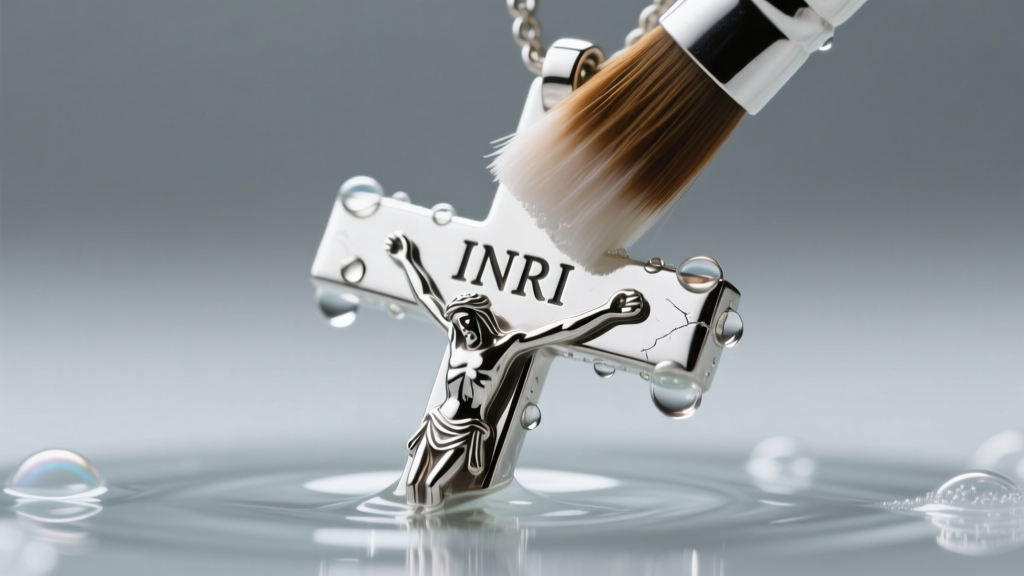
For solid metal INRI crosses without porous gemstones, follow this professional-grade deep cleaning framework to safely remove buildup from the intricate scroll and corpus.
- Preparation: Always detach the pendant from the chain. Cleaning them together risks scratching the pendant with the chain links and prevents thorough cleaning of the bail (the loop connecting the pendant to the chain).
- The Soak Solution: Mix three drops of sodium-free, phosphate-free liquid dish soap into 200ml of distilled water. Tap water contains chlorine and calcium deposits that can leave microscopic spots on high-polish gold. Heat the water to exactly 30°C (86°F)—warm enough to dissolve skin oils, but not hot enough to damage metal finishes or loosen adhesive settings.
- Agitation: Submerge the cross for 15 minutes. Use a baby toothbrush (which features ultra-soft 0.10mm bristles) or a specialized soft brass jewelry brush. Gently sweep the bristles into the undercuts of the INRI scroll and the folds of the corpus. Never use stiff nylon brushes, which can leave micro-scratches on high-karat gold.
- The Rinse: Rinse thoroughly under a gentle stream of distilled water to ensure no soap residue remains in the deep crevices.
- Drying: Do not rub the piece with a towel, as lint will catch on the intricate details. Instead, use a can of compressed air (held upright to prevent propellant spray) or a hairdryer on the 'cool' setting to blow water out of the deepest recesses.
What to Avoid: Common Mistakes That Ruin Crucifixes
Well-intentioned but misguided cleaning attempts cause thousands of dollars in damage to religious jewelry every year. The American Gem Society frequently warns against using household abrasives on fine jewelry.
| Cleaning Agent | Safe For | Unsafe For | Metallurgical Impact |
|---|---|---|---|
| Baking Soda Paste | None | All Gold & Silver | Hardness of 2.5 on Mohs scale causes micro-scratches on polished gold and silver. |
| Ultrasonic Cleaner (40kHz) | Solid gold/diamond only | Oxidized silver, enamel, glued stones | Cavitation bubbles strip intentional patina and shatter porous stones. |
| Toothpaste | None | All Precious Metals | Contains hydrated silica, a harsh abrasive that permanently dulls high-polish finishes. |
| Ammonia-based Cleaners | Unset diamonds | Pearls, Turquoise, Lapis | Strips the nacre from pearls and causes porous stones to become brittle and chalky. |
| Commercial Silver Dip | Solid silver chains | Oxidized/Patina Crucifixes | Contains thiourea; instantly removes dark contrast in the INRI scroll crevices. |
Bail Friction and Chain Maintenance
When maintaining an INRI cross necklace, the pendant is only half the equation. The bail—the metal loop at the top of the cross that threads onto the chain—is a critical point of mechanical failure. Because crucifixes are often heavier than standard pendants, the constant swinging and friction against the chain cause the interior of the bail to wear down over time.
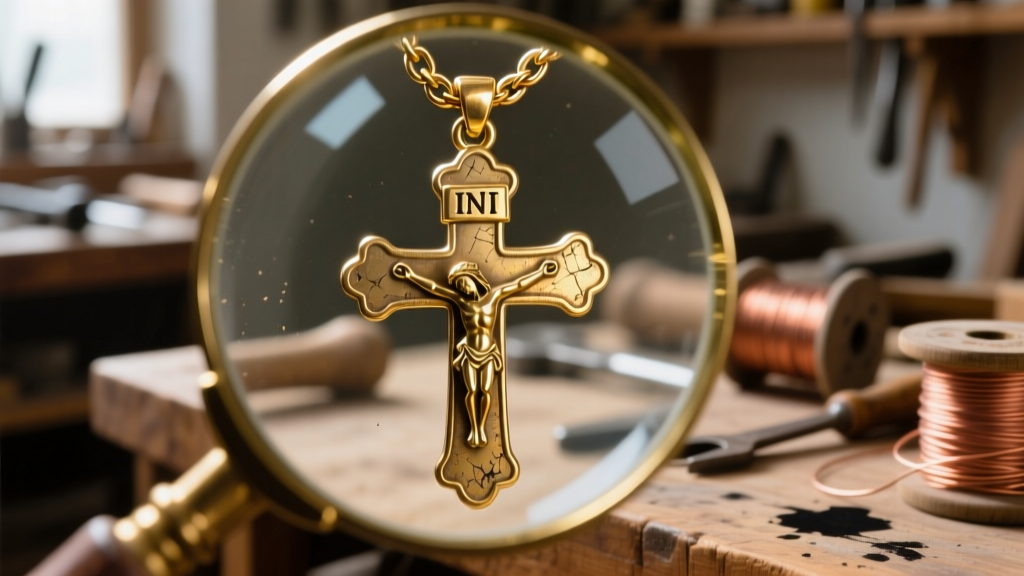
During your monthly cleaning routine, inspect the bail with a 10x jeweler's loupe. Look for thinning metal on the lower interior curve. If the bail is worn more than halfway through, it must be replaced by a professional jeweler to prevent the sudden loss of your heirloom pendant. Additionally, clean the chain separately using the same distilled water and mild soap soak, ensuring you pull the chain taut to expose the interior of the links where sweat and dead skin accumulate.
Long-Term Storage and Preservation
How you store your INRI cross necklace when it is not being worn dictates how often it will need deep cleaning. Precious metals, particularly silver, react to sulfur compounds in the air. To prevent tarnish, store the pendant in an airtight polyethylene zip-lock bag. Avoid PVC (polyvinyl chloride) plastics, which off-gas chemicals that can cause irreversible surface pitting on silver and copper alloys.
Place a 3M anti-tarnish strip inside the bag. These strips contain zinc carbonate, which acts as a sacrificial metal, absorbing ambient sulfur before it can react with your silver cross. For an added layer of protection, wrap the pendant in a Pacific Silvercloth—a specialized flannel embedded with microscopic silver particles that intercept and neutralize tarnishing gases. Never store your cross loosely in a jewelry box where it can swing against other pieces; the intricate points of the cross can easily scratch softer gemstones or become bent if caught on a heavier chain.
When to Seek Professional Jewelry Restoration
While routine cleaning can be managed at home, certain conditions require the intervention of a master jeweler. If you notice any looseness in the corpus (especially the arms, which are prone to catching on clothing), do not attempt to push them back into place yourself, as this can snap the delicate metal or break the solder joints. Furthermore, if your INRI cross features champlevé or cloisonné enamel work—a technique common in vintage European crucifixes—any cracking or dulling of the enamel requires professional re-polishing and potential re-firing. By combining meticulous at-home care with timely professional inspections, your INRI cross necklace will retain its profound detail and brilliant luster for generations to come.


