Interlock Necklace Buying Guide: Metals, Sizing & Quality Tips
Discover what to look for when buying an interlock necklace. Our expert guide covers metal grades, link thickness, clasp types, and pricing tiers.

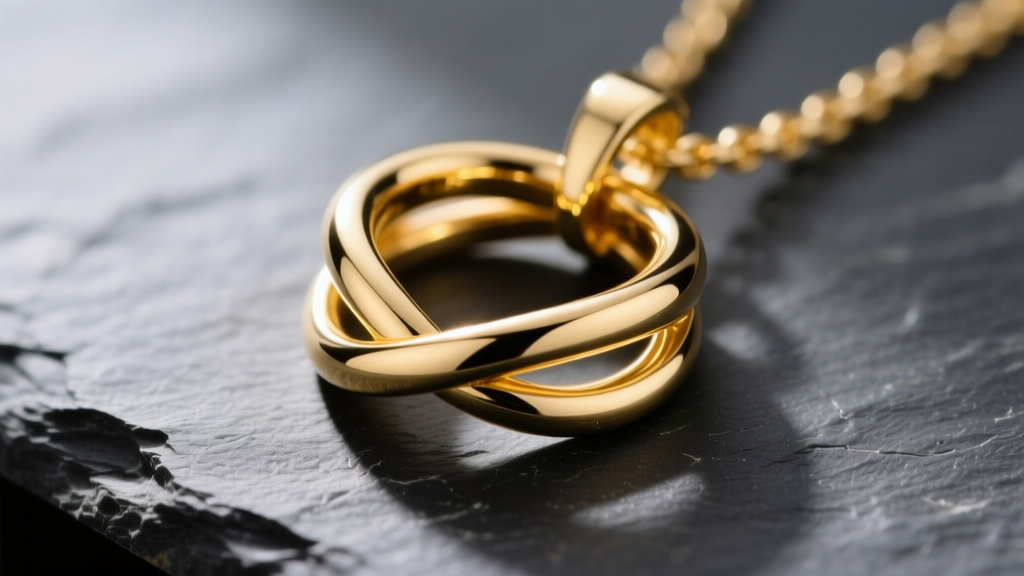
The interlock necklace has transcended fleeting jewelry trends to become a permanent staple in both fine jewelry and everyday wear. Whether featuring two interlocking circles symbolizing an unbreakable bond, or a geometric chain of interlocking links, this design requires precise engineering to function flawlessly. Unlike standard pendants, an interlocking design introduces kinetic movement and friction points that can compromise structural integrity if manufactured poorly. As of 2026, advancements in laser-welding and 3D CAD casting have vastly improved the market, but buyers must still know how to differentiate between a masterfully crafted piece and a fragile, mass-produced imitation. This comprehensive buying guide breaks down the exact metallurgical specs, gauge requirements, and structural details you need to evaluate before purchasing.
The Anatomy of an Interlock Necklace
When jewelers refer to an interlock necklace, they are typically describing one of two distinct styles:
- The Interlocking Pendant: Two or more solid rings looped through one another, suspended from a chain. These are highly symbolic, often purchased for anniversaries, mother-daughter gifts, or couples.
- The Interlocking Chain: A chain style (such as a Cuban, Curb, or Mariner link) where individual metal links weave and lock into one another to create a continuous, flexible mesh.
While both styles share the "interlock" nomenclature, the pendant style presents unique engineering challenges. The rings must be thick enough to resist bending under the weight of the chain, yet smooth enough to glide against each other without causing abrasive metal loss over time. According to the Jewelers of America, friction wear is the leading cause of degradation in multi-ring pendants, making the choice of metal alloy and surface polish absolutely critical.
Metal Grades & Material Durability
The kinetic friction of interlocking rings means that softer metals will wear down, warp, or scratch prematurely. Understanding the Vickers hardness (HV) scale of precious metals is essential when evaluating your options. The Gemological Institute of America (GIA) notes that alloy composition drastically alters a metal's durability.
| Metal Grade | Purity | Avg. Hardness (HV) | Best For | Durability Notes |
|---|---|---|---|---|
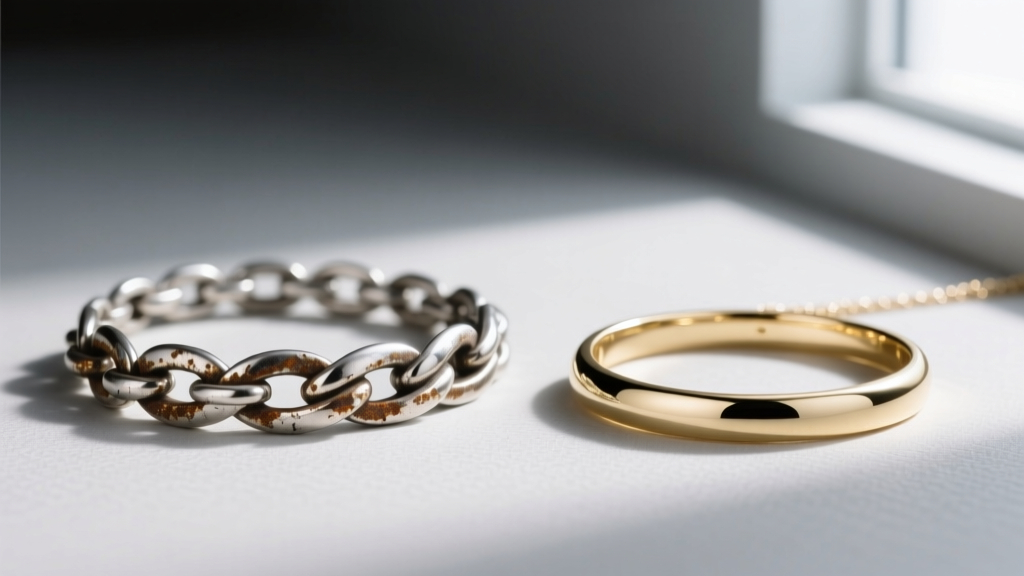
| 925 Sterling Silver | 92.5% Ag | 60 - 75 | Budget-friendly, occasional wear | Prone to friction scratches and tarnish; requires rhodium plating for longevity. |
| 10k Solid Gold | 41.7% Au | 135 - 150 | Everyday wear, high friction | Extremely hard and durable, but lacks the rich color saturation of higher karats. |
| 14k Solid Gold | 58.5% Au | 120 - 140 | The industry standard for fine jewelry | Ideal balance of structural rigidity, rich color, and resistance to warping. |
| 18k Solid Gold | 75.0% Au | 110 - 125 | Luxury pieces, heirloom gifts | Softer than 14k; requires thicker wire gauges to prevent the rings from pulling apart. |
| Platinum (950) | 95.0% Pt | 130 - 150 | Heavy, premium interlocking chains | Highly durable, develops a patina rather than losing metal mass to friction. |
Link Proportions: Gauge, Diameter, and Soldering
The most common point of failure in an interlock necklace is the structural collapse of the rings. To prevent this, you must evaluate the wire gauge (thickness) and the closure mechanism.
Wire Gauge and Thickness
For interlocking pendants, the wire thickness should never be less than 1.2mm. Rings cast at 0.8mm or thinner may look delicate and elegant on the showroom display, but the lateral torque applied when the necklace is worn will cause thin rings to warp into ovals. For interlocking chains (like a 5mm Cuban link), ensure the individual links are cast with a minimum wire thickness of 1.5mm to prevent the links from stretching and gaping over time.
Soldered vs. Unsoldered Jump Rings
If you are buying an interlocking chain, or a pendant attached via a jump ring to the chain, inspect the closure points. The Federal Trade Commission (FTC) Jewelry Guides mandate strict quality standards for precious metal assemblies. A high-quality piece will feature soldered or laser-welded jump rings. Unsoldered rings rely on tension to stay closed; when an interlocking design catches on clothing, an unsoldered ring will easily pull open, resulting in a lost pendant. Always look for a visible, smooth weld seam at the closure point of the connecting rings.
Expert Tip: The interlocking rings of the pendant itself obviously cannot be soldered to one another, or they would not move. However, the individual seams where each ring was closed during manufacturing must be seamlessly welded. Run your fingernail over the seam; it should feel completely flush.
Clasp Mechanisms for Interlocking Designs
The clasp must be proportionate to the weight and kinetic movement of the interlock necklace. A heavy interlocking chain will easily snap a delicate spring ring clasp.
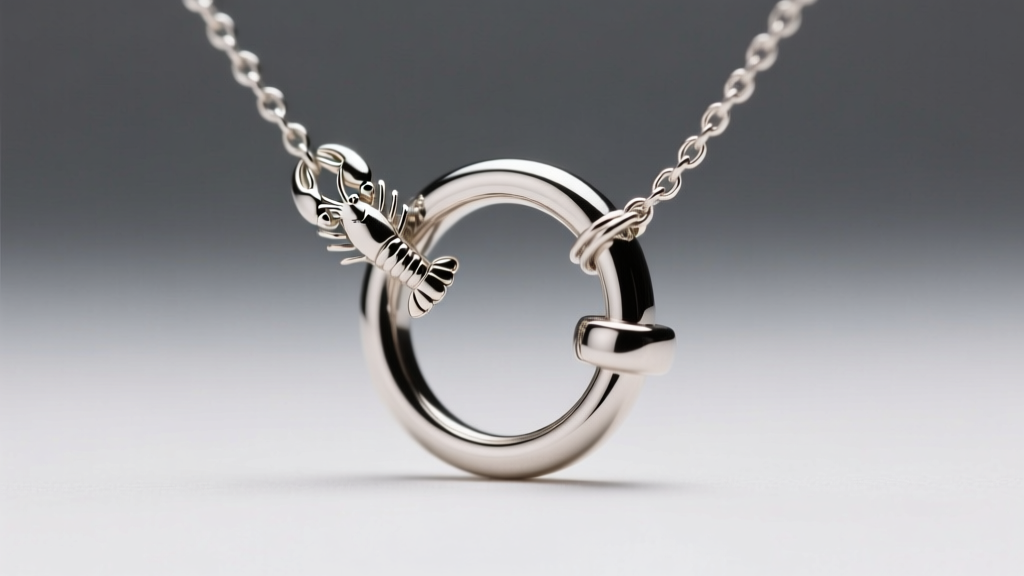
- Lobster Claw Clasp: The standard for lightweight to medium-weight interlocking pendants (under 15 grams). Ensure the lobster claw has a sturdy internal spring and is attached via a soldered jump ring.
- Box Clasp with Safety Catch: Mandatory for heavy interlocking chains (over 30 grams). The box mechanism locks the tongue into a secure housing, while the safety catch (a small wire loop) provides a secondary fail-safe if the primary clasp is accidentally depressed.
- Magnetic Clasps: Avoid these for interlocking designs. The kinetic swinging of interlocking rings creates momentum that can easily pull apart weak magnetic seals, dropping the necklace.
Pricing Tiers: What Should You Actually Pay?
Understanding the 2026 market pricing for an interlock necklace helps you avoid overpaying for mass-cast items or underpaying for suspiciously cheap "solid gold" claims.
- Entry-Level ($60 - $180): Typically 925 sterling silver or gold vermeil. Expect thinner gauges (0.9mm - 1.0mm) and unsoldered chain jump rings. Suitable for fashion jewelry, but expect a 2-to-3-year lifespan before friction wear thins the rings.
- Mid-Tier Fine Jewelry ($350 - $900): Solid 10k or 14k gold. Wire gauges will be a robust 1.2mm to 1.5mm. Chains will feature laser-welded jump rings, and the interlocking rings will have a high-polish, tumble-finished surface to reduce friction.
- Luxury & Custom ($1,500 - $5,000+): 18k gold or Platinum. Often features diamond pavé accents on one of the interlocking rings. Because 18k gold is softer, luxury jewelers compensate by increasing the wire gauge to 2.0mm+ and utilizing custom-forged, hand-polished links.
Expert Troubleshooting: Preventing Tangles & Snags
The most frequent complaint regarding interlocking pendants is the "chain catch" phenomenon. This occurs when the raw chain threads directly through the top interlocking ring. As the pendant moves, the chain links can slip between the two interlocking rings, causing the pendant to pinch the chain, tangle, and scratch the gold.
The Solution: When shopping, look for an interlock necklace that utilizes a fixed, soldered bail on the top ring, rather than a free-floating chain thread. A fixed bail ensures the chain remains entirely separated from the kinetic movement of the interlocking rings below it. If you already own a free-floating design, consider having a local jeweler solder a small, fixed gold loop (bail) to the top ring to permanently resolve the tangling issue.
Final Verdict on Choosing Your Piece
An interlock necklace is a beautiful representation of connection, but its longevity relies entirely on structural engineering. Prioritize 14k solid gold for the best balance of friction resistance and color, insist on a minimum wire gauge of 1.2mm, and verify that all connecting jump rings are securely soldered. By focusing on these mechanical details rather than just the aesthetic design, you will secure a piece that remains as unbroken as the bond it represents.


