Hook On Necklace Buying Guide: Clasps and Enhancers
Discover everything about the hook on necklace mechanism. Our buying guide covers S-hook clasps, enhancer bails, wire gauges, and metals.

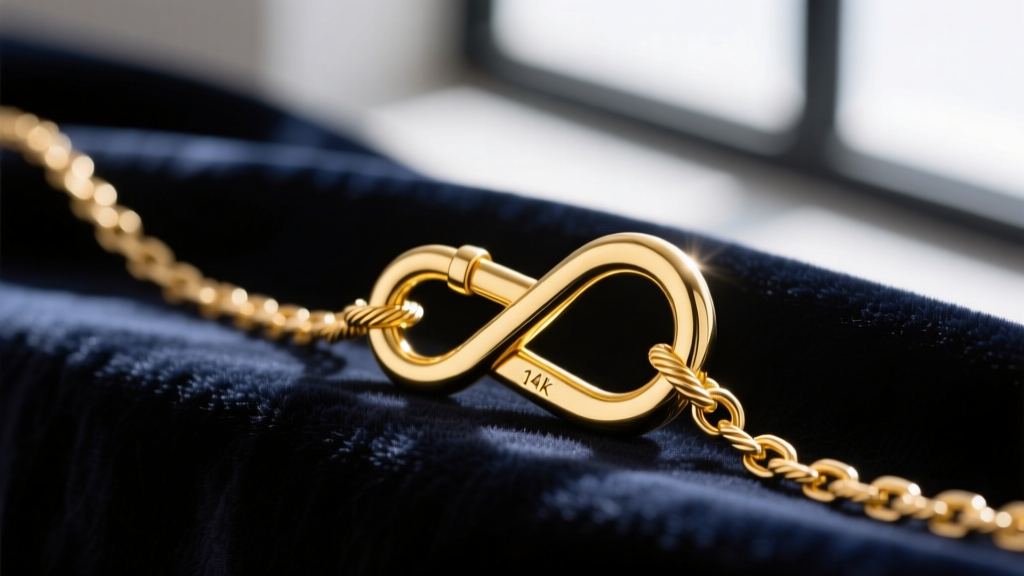
Decoding the Hook On Necklace: Clasps vs. Enhancers
When jewelry enthusiasts and collectors search for a hook on necklace, they are typically referring to one of two distinct mechanical designs: the hook-style clasp (such as the S-hook or fishhook) used to secure the chain around the neck, or the hook-on enhancer bail that allows interchangeable pendants to slide onto a continuous chain. Understanding the structural differences, metallurgical requirements, and security profiles of both mechanisms is critical before making a purchase. Unlike spring-ring or lobster clasps that rely on internal steel springs, hook mechanisms depend entirely on the tensile strength and work-hardening properties of the precious metal itself.
According to fabrication standards outlined by Rio Grande's Metal Working Guide, the longevity of a hook-based closure relies heavily on the wire gauge and the specific alloy's 'memory.' A poorly engineered hook on necklace will either stretch out of shape within weeks or snap under the stress of repeated bending. This guide breaks down exactly what to look for when evaluating these elegant, minimalist jewelry components.
The Mechanics of Hook Clasps
S-Hooks and Fishhook Clasps
The S-hook is one of the oldest and most elegant clasp designs in jewelry history. It consists of a wire formed into a double curve, resembling the letter 'S'. One side features a closed loop that permanently attaches to the chain, while the other side features an open, slightly tapered hook that catches onto a corresponding jump ring on the opposite end of the necklace. The security of an S-hook relies entirely on the 'return bend'—the angle at which the tip of the hook curves back inward. For optimal security, the return bend should be angled between 15 and 20 degrees. If the angle is too wide, the clasp will slip off during wear; if it is too tight, the wearer will struggle to attach it, eventually causing metal fatigue.
The fishhook clasp operates on a similar principle but incorporates a small, secondary loop or 'eye' at the tip of the hook that snaps over a metal post or bar. This design is frequently seen in high-end pearl strands and heavy gemstone bead necklaces, as it provides a secondary mechanical lock that prevents accidental unhooking if the necklace is tugged.
Hook-On Enhancers: The Interchangeable Pendant System
The second interpretation of a hook on necklace involves the enhancer bail. An enhancer is a specialized pendant finding equipped with a hinged hook mechanism. Instead of threading a chain through a tiny, static bail hole, the wearer opens the hook, places it over the center of the necklace chain, and snaps it shut. This allows you to swap heavy pendants between different chains without having to unclasp the necklace from your neck.
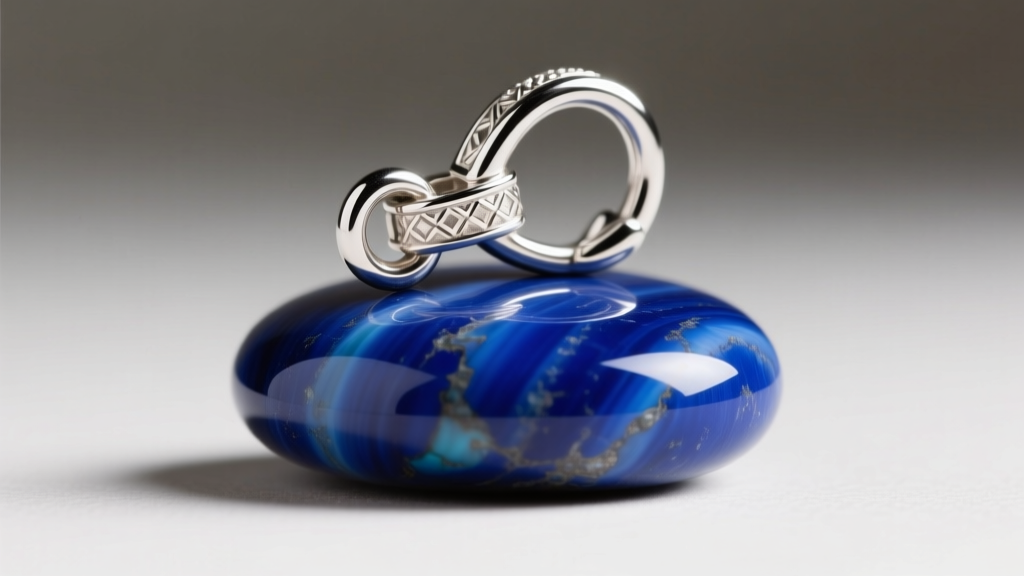
When buying a hook-on enhancer, pay close attention to the locking mechanism. Standard friction-fit hooks rely on a small metal nub that clicks into a groove. However, premium enhancers utilize a hidden silicone O-ring or a threaded screw-lock to ensure the hook remains closed. If you plan to wear your enhancer on a slippery chain, such as a polished box chain or a snake chain, a mechanical lock is non-negotiable to prevent the pendant from sliding off and getting lost.
Material Science: Wire Gauges and Tension Retention
The most common point of failure in any hook on necklace is metal fatigue. Because hooks lack internal steel springs (unlike lobster clasps), the precious metal itself must act as the spring. This requires a careful balance of Vickers Hardness (HV) and wire thickness. According to GIA Jewelry Making Resources, higher karat golds are notoriously poor at retaining spring tension due to their softness.
| Metal Alloy | Vickers Hardness (HV) | Recommended Wire Gauge | Tension Memory & Best Use |
|---|---|---|---|
| 24k Yellow Gold | ~25-30 HV | Not Recommended | Too soft; will permanently deform on first use. |
| 18k Yellow Gold | ~120-130 HV | 14-Gauge or 12-Gauge | Requires thicker wire to maintain spring tension; best for heavy, static S-hooks. |
| 14k Yellow Gold | ~150-170 HV | 16-Gauge or 18-Gauge | Excellent spring memory; the industry standard for durable, fine wire S-hooks. |
| Sterling Silver (925) | ~60-70 HV (Annealed) | 14-Gauge | Prone to work-hardening and snapping if bent repeatedly; requires periodic professional annealing. |
| Platinum (950) | ~120-135 HV | 16-Gauge | Superior durability and tensile strength; will not snap, but difficult for jewelers to reshape. |
As the table illustrates, if you are purchasing a delicate 18k or 24k gold hook on necklace, you must ensure the wire gauge is substantially thicker (12g to 14g) to compensate for the metal's inherent softness. Conversely, 14k gold and platinum can be drawn into finer, more elegant 16g or 18g wires while still maintaining the structural integrity required to keep the hook securely closed.
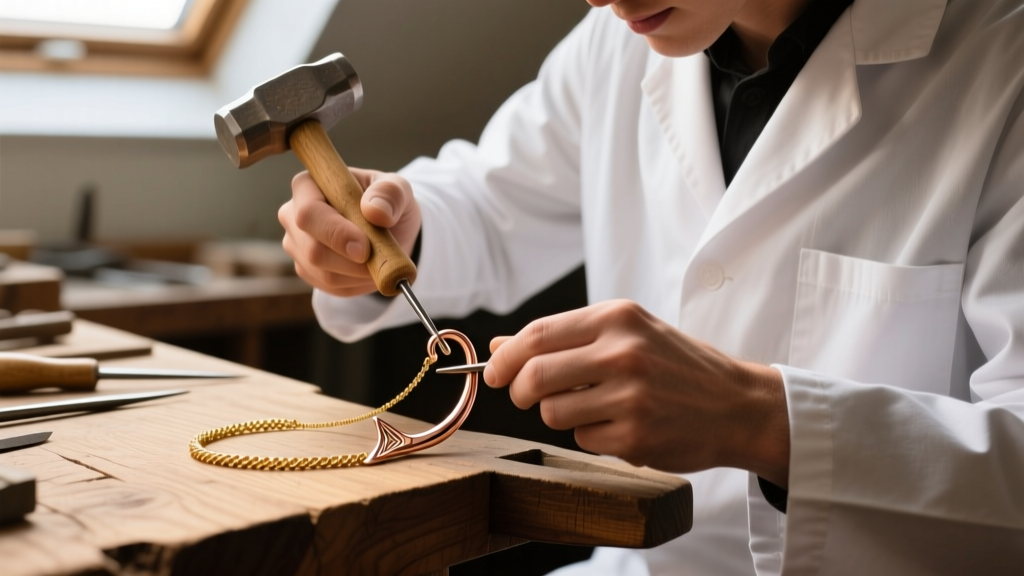
Three Common Failure Modes (And How to Prevent Them)
Even well-crafted hook on necklaces can fail if subjected to improper wear or environmental stressors. Here are the three most frequent issues reported by bench jewelers, along with actionable prevention strategies:
- The Knitwear Snag: Open S-hooks are notorious for catching on loose knits, scarves, and hair. Prevention: Opt for a 'tension-closed' S-hook where the tip rests flush against the inner curve of the wire, leaving zero gap for fabrics to catch. Alternatively, choose a fishhook design where the tip is fully enclosed by the secondary eyelet.
- Work-Hardening and Snap-Fractures: Sterling silver and lower-karat golds become brittle when repeatedly bent back and forth (work-hardening). Over time, the microscopic crystalline structure of the metal fractures. Prevention: Never forcefully pry a hook open with your fingernails. Use two fingers to gently squeeze the sides of the S-hook to widen the gap, rather than pulling the tip outward. Have a jeweler anneal (heat-treat) silver hooks every few years to restore their malleability.
- Enhancer Bail Slippage: Hook-on pendants can slide off the chain if the chain's profile is too narrow or too slick. Prevention: Pair hook-on enhancers with textured chains like wheat, rope, or herringbone. The microscopic ridges in these chain styles create friction that keeps the enhancer centered on the collarbone.
Pricing Tiers and Sourcing in the Current Market
When budgeting for a high-quality hook on necklace, pricing varies wildly based on the complexity of the hook mechanism and the metal weight. Because hook clasps require skilled hand-fabrication or precision casting to achieve the correct spring tension, they often command a slight premium over mass-produced stampings.
- Entry-Level ($40 - $120): Typically features sterling silver or gold vermeil S-hooks. At this price point, expect 18-gauge to 20-gauge wire. These are suitable for lightweight chains (under 10 grams) but should not be trusted with heavy pendants.
- Mid-Tier ($250 - $800): Solid 14k gold and platinum findings. This tier includes precision-machined fishhook clasps with secondary security loops, as well as mechanical screw-lock enhancer bails. Wire gauges will be a robust 14g to 16g.
- High-End & Artisan ($1,200+): Hand-forged 18k or 22k gold hooks by master bench jewelers. These pieces often feature integrated gemstone accents on the clasp itself, turning the functional hook into a decorative focal point at the nape of the neck.
Expert Verdict: Is a Hook On Necklace Right for You?
A hook on necklace is the ultimate choice for minimalists and vintage jewelry lovers who despise the bulky, utilitarian look of modern lobster clasps. However, you must match the metal alloy to your lifestyle. If you are active and frequently put on or take off your jewelry, invest in 14k gold or platinum to ensure the hook retains its spring tension for decades.
Ultimately, whether you are selecting an S-hook clasp for a delicate gold chain or a hinged enhancer bail for a heavy gemstone pendant, prioritizing the correct wire gauge and locking mechanism will ensure your necklace remains both secure and beautiful for a lifetime of wear.


