The Iris & Lily Necklace Trend: 2026 Botanical Jewelry Guide
Discover the 2026 iris & lily necklace trend. Explore Art Nouveau botanical motifs, mixed-metal styling, and how to layer these floral pendants.

The Resurgence of Botanical Duality in 2026
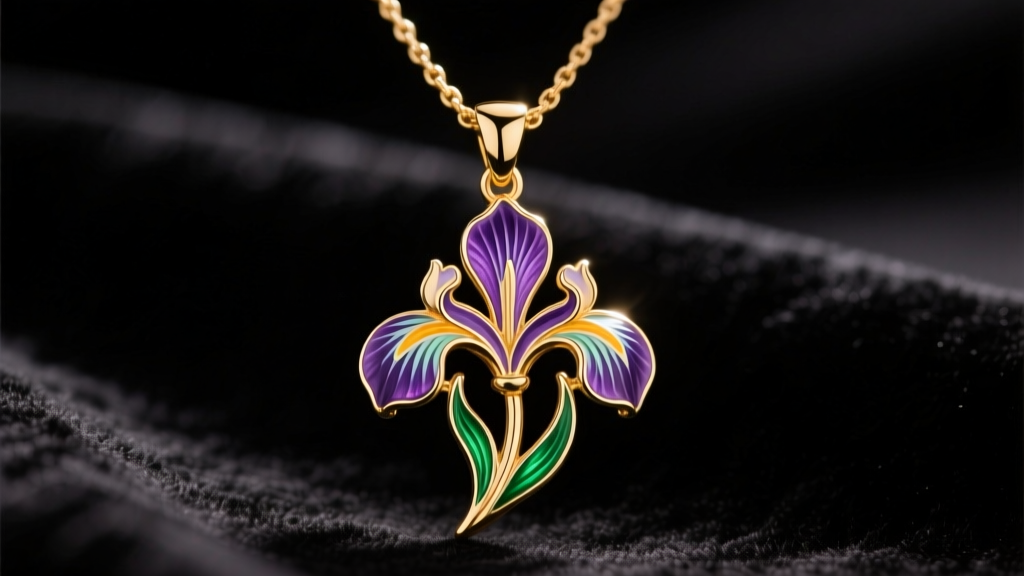
The jewelry landscape of 2026 is defined by a return to narrative-driven, highly detailed craftsmanship, moving away from the ultra-minimalism of the early 2020s. At the forefront of this shift is the iris & lily necklace, a design motif that pairs the structural complexity of the iris with the sleek, bold lines of the lily. This botanical duality is not merely an aesthetic choice; it is a nod to the rich history of Art Nouveau jewelry, where nature was interpreted through a lens of romanticism and meticulous engineering.
Historically, the iris has symbolized wisdom and royalty, often associated with the intricate ruffled petals and deep, regal hues of the fleur-de-lis. The lily, conversely, represents purity and renewal, characterized by its sweeping stamen and smooth, trumpet-like bloom. When combined in a single pendant or a layered necklace set, these two flowers create a visual tension that captivates the eye. According to the archives of the Victoria and Albert Museum, early masters like René Lalique frequently utilized contrasting botanical forms to showcase their mastery over asymmetric design and mixed media. Today, contemporary jewelers are reviving this philosophy, adapting the iris & lily necklace for modern wardrobes through advanced metallurgy and precision gem-setting.
Anatomy of the Modern Floral Pendant
To truly appreciate the iris & lily necklace trend, one must examine the specific material grades and artisanal techniques that separate high-end botanical jewelry from mass-produced floral trinkets. The most sought-after pieces in 2026 rely heavily on specialized enamel work and strategic gemstone accents to bring the botanical motifs to life.
Enamel Techniques: Plique-à-Jour vs. Basse-Taille
The translucent quality of flower petals is best captured through traditional enameling. The plique-à-jour technique, which translates to 'letting in daylight,' involves applying translucent enamel into a metal framework without a backing, creating a stained-glass effect. This is frequently used for the delicate, ruffled edges of the iris petals. In contrast, basse-taille enamel is applied over a low-relief carved metal base, allowing the gold or silver texture to shimmer through the glass. This method is often reserved for the broad, sweeping leaves of the lily, giving them a lifelike, three-dimensional depth.
Gemstone Accents and Optical Properties
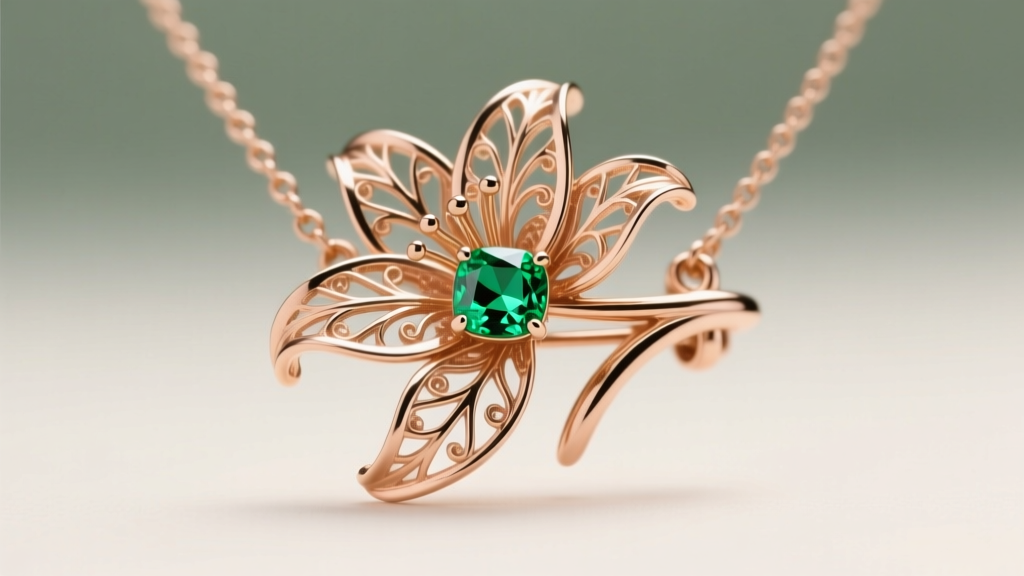
Designers are increasingly turning to specific gemstones to enhance the natural coloration of the flowers without relying solely on enamel. For the iris, iolite has become the stone of choice. As noted by the Gemological Institute of America (GIA), iolite exhibits strong pleochroism, meaning it displays different colors—typically deep violet-blue and pale yellow—when viewed from different angles. This mimics the iridescent, shifting hues found in real iris petals. For the lily's foliage, tsavorite garnet is preferred. Its high refractive index and vivid, saturated green provide a striking contrast to the softer purples and blues of the iris, anchoring the pendant with a vibrant, organic energy.
Styling Framework: Necklines and Drop Lengths
The intricate nature of an iris & lily necklace demands careful consideration of neckline pairing. Because these pendants often feature asymmetric designs and varying drop lengths, matching them with the right garment is crucial for maintaining visual balance. Below is a practical decision framework for styling these botanical pieces in 2026.
| Neckline Style | Ideal Chain Length | Pendant Placement & Effect |
|---|---|---|
| Crew Neck | 16 - 18 inches | Sits above the collar; frames the face and highlights the enamel work against a solid fabric backdrop. |
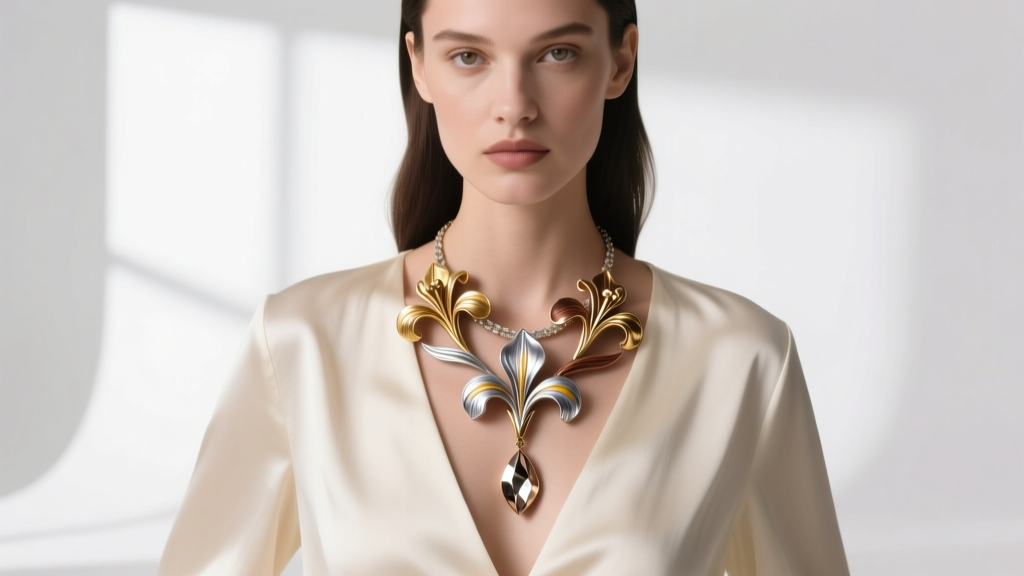
| V-Neck | 20 - 24 inches | Follows the garment's plunge; creates an elongating Y-silhouette that draws the eye downward. |
| Scoop Neck | 18 - 20 inches | Rests in the negative space; balances the curved neckline perfectly without competing for attention. |
| Off-Shoulder | 14 - 16 inches (Choker) | Draws the eye upward to the collarbone; maximizes skin contrast and emphasizes the pendant's width. |
Layering the Iris & Lily Necklace with Minimalist Chains
While the iris & lily necklace is a statement piece on its own, the 2026 trend cycle heavily favors layered styling. The key to layering an ornate botanical pendant is to pair it with chains that provide a structural contrast rather than competing for visual dominance. A 1.2mm wheat chain offers an Art Deco, geometric texture that contrasts beautifully with the flowing, organic lines of the floral pendant. Alternatively, a 0.9mm cable chain in a contrasting metal—such as pairing an 18k yellow gold pendant with a white gold or platinum chain—creates a mixed-metal aesthetic that feels modern and intentional.
When layering, always maintain a minimum two-inch difference in chain lengths to prevent the clasps and jump rings from tangling, which can cause premature wear on the delicate enamel and gemstone settings.
Market Analysis: Pricing and Provenance
The market for botanical jewelry has stratified significantly, driven by the specialized labor required for high-quality enamel and gem-setting. According to industry reports from National Jeweler, consumers are increasingly willing to invest in artisanal craftsmanship over mass-market castings. Here is a breakdown of what to expect across different pricing tiers for an iris & lily necklace:
- Mass-Market / Casted ($150 - $400): Typically produced via rubber mold casting in 10k or 14k gold. Floral details are often soft or muddy, and color is achieved through cold enamel (epoxy resin) rather than fired glass. Suitable for everyday, low-stakes wear.
- Boutique / Hand-Finished ($500 - $1,200): Features hand-carved wax models cast in 14k or 18k gold. Details are crisp, and pieces often include small, commercially graded gemstone accents. Enamel work is usually opaque and fired, offering better durability.
- Haute Joaillerie / Artisan Enamel ($2,500 - $8,000+): The pinnacle of the trend. These pieces feature master-level plique-à-jour and basse-taille enameling, precision-set pleochroic iolite, and vivid tsavorite garnets. The metalwork is often hand-fabricated rather than cast, ensuring structural integrity and a unique, one-of-a-kind finish.
Care and Maintenance for Floral Relief Jewelry
The intricate crevices of an iris & lily necklace, combined with delicate enamel and porous gemstones, require a specialized cleaning regimen. Never use ultrasonic cleaners or steam cleaners on botanical jewelry featuring enamel or fracture-filled stones; the high-frequency vibrations and sudden temperature changes can cause the glass enamel to shatter or the stones to fracture. Instead, prepare a solution of lukewarm water and a few drops of pH-neutral dish soap. Use a soft sable-hair brush to gently agitate the dirt from the floral relief crevices. Rinse under a gentle stream of distilled water to prevent hard water spots, and pat dry with a lint-free microfiber cloth. Store the necklace flat in a velvet-lined box to prevent the chains from pressing into the enamel and causing micro-abrasions over time.
Final Verdict on the Botanical Revival
The iris & lily necklace is more than a fleeting seasonal trend; it is a celebration of jewelry as a wearable art form. By blending the historical romance of Art Nouveau with modern gemological precision and mixed-metal styling, this botanical motif offers a sophisticated, deeply personal accessory for 2026. Whether you opt for a high-carat artisan piece with translucent enamel or a minimalist 14k gold casting for daily layering, the juxtaposition of the regal iris and the elegant lily ensures a timeless, captivating presence at the neckline.


