The Irony in the Necklace: Troubleshooting Contrast Styling
Master the irony in the necklace trend. Learn to troubleshoot mixed-metal corrosion, weight imbalances, and styling clashes in contrast jewelry.

Defining the Irony in the Necklace
In contemporary jewelry design, the phrase 'irony in the necklace' extends far beyond the literary tragedy of Guy de Maupassant’s famous 19th-century short story. In 2026, stylistic irony refers to the deliberate, often provocative juxtaposition of conflicting elements within a single piece of neckwear. This includes pairing ultra-delicate, high-karat gold pendants with brutalist, heavy-gauge industrial chains, mixing noble metals with reactive base alloys, or combining flawless natural diamonds with raw, unpolished hardware. While this aesthetic creates striking visual tension, it introduces severe mechanical and chemical vulnerabilities. Troubleshooting these 'ironic' pairings requires a deep understanding of metallurgy, structural engineering, and aesthetic balance to prevent catastrophic jewelry failure.
Mechanical Failures: The Weight Paradox
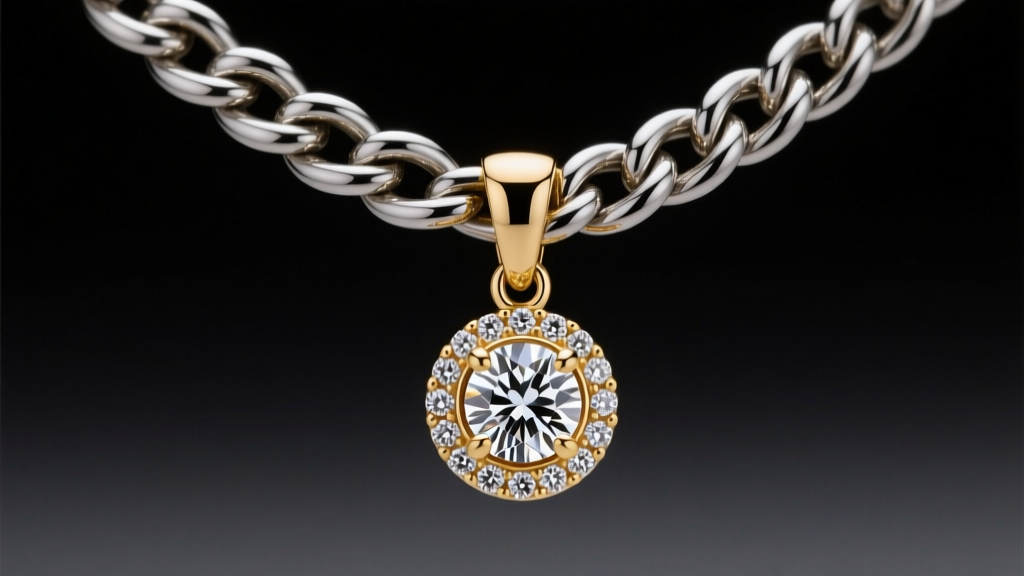
The most common physical manifestation of the irony in the necklace trend is the severe mismatch in weight and hardness between the chain and the pendant. A frequent styling choice involves suspending a lightweight, intricate 14k or 18k gold pendant (often weighing under 3 grams) on a massive 316L stainless steel or titanium Cuban link chain (weighing 40 to 80 grams). The irony here is structural: the softer, more expensive metal is subjected to relentless friction and kinetic stress by the harder, heavier, and less expensive chain.
Troubleshooting Bail Wear and Chain Snap
When a 22-gauge (0.64mm) 18k gold bail rubs against a 10-gauge (2.59mm) stainless steel link, the steel acts as a file. Over a period of three to six months of daily wear, the gold bail will experience severe abrasive wear, eventually snapping and resulting in the loss of the pendant. To troubleshoot this without sacrificing the ironic aesthetic, you must introduce a sacrificial buffer or upgrade the bail material.
- The Titanium Bail Swap: Replace the soft gold bail with a Grade 5 Titanium (Ti-6Al-4V) bail. Titanium boasts a Mohs hardness of 6.0 and exceptional tensile strength, allowing it to withstand the friction of heavy steel chains while remaining lightweight.
- The Hardened Jump Ring: If the pendant design prohibits a bail swap, use a work-hardened stainless steel or platinum jump ring (minimum 18-gauge / 1.02mm) to connect the pendant to the chain. This ensures the softer chain links wear down the jump ring rather than the pendant's integral loop.
The Bail-to-Chain Compatibility Matrix
Use the following matrix to ensure your ironic pairings do not result in mechanical failure. The gap between the chain link wire and the inner diameter of the bail must allow for fluid movement to prevent stress fractures.
| Chain Material & Gauge | Recommended Bail Material | Minimum Bail Wire Thickness | Failure Mode if Ignored |
|---|---|---|---|
| 316L Steel, 12g (2.05mm) | Platinum or Grade 5 Titanium | 1.20mm (16g) | Abrasive shearing of gold bails |
| 925 Silver, 16g (1.29mm) | 14k or 18k Gold, White or Yellow | 0.80mm (20g) | Galvanic pitting and bending |
| Wrought Iron, 10g (2.59mm) | Hardened Steel with Rhodium Plating | 1.50mm (14g) | Rust transfer and rapid friction wear |
Chemical Irony: Galvanic Corrosion in Mixed Metals
The second major troubleshooting hurdle in contrast styling is chemical. The irony of mixing a pristine 925 sterling silver pendant with a raw carbon steel or wrought iron chain is that human sweat acts as a saline electrolyte, triggering rapid galvanic corrosion. According to metallurgical principles documented by Ganoksin, when two dissimilar metals with different electrode potentials come into contact in the presence of an electrolyte, the less noble metal (the anode) will corrode at an accelerated rate to protect the more noble metal (the cathode).
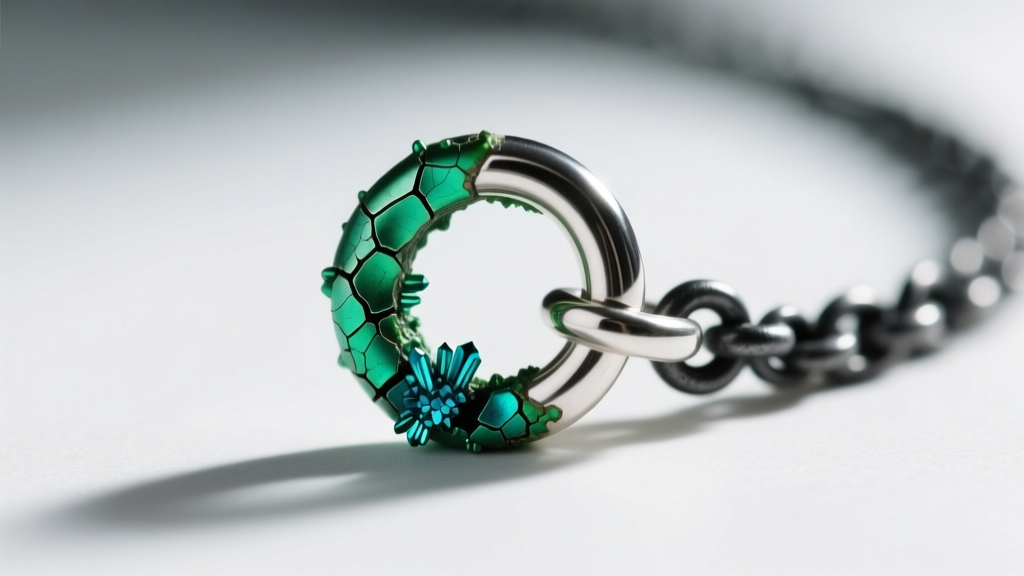
In a necklace where a sterling silver pendant hangs from an iron-based chain, the iron will rapidly oxidize, leaving a trail of black and green tarnish on the wearer's skin and permanently pitting the connection points. Furthermore, the Gemological Institute of America (GIA) notes that the breakdown of these base metals frequently releases nickel and cobalt ions, triggering severe contact dermatitis in sensitive wearers.
Corrosion Mitigation Strategies
To maintain the visual irony of mixed metals without the chemical fallout, implement the following physical barriers:
- Electrophoretic Coating: Apply a nano-ceramic or electrophoretic e-coating to the base-metal chain. This invisible, skin-safe polymer barrier prevents the electrolyte (sweat) from bridging the gap between the two metals.
- The PTFE Buffer: Thread a microscopic PTFE (Teflon) tube over the jump ring connecting the two disparate metals. This completely eliminates metal-to-metal contact while remaining virtually invisible to the naked eye.
- Rhodium Flashing: Flash the connection points of both the chain and the pendant with a thick layer of rhodium. As a noble metal, rhodium will not participate in the galvanic cell, effectively neutralizing the corrosion risk.
Aesthetic Troubleshooting: Avoiding the 'Costume' Trap
Beyond physical and chemical failures, the irony in the necklace often fails on a purely visual level. When contrasting elements are not balanced correctly, the piece loses its high-fashion tension and devolves into looking like a random assortment of costume jewelry. The goal of ironic styling is deliberate dissonance, not accidental messiness.
The 70/20/10 Contrast Rule
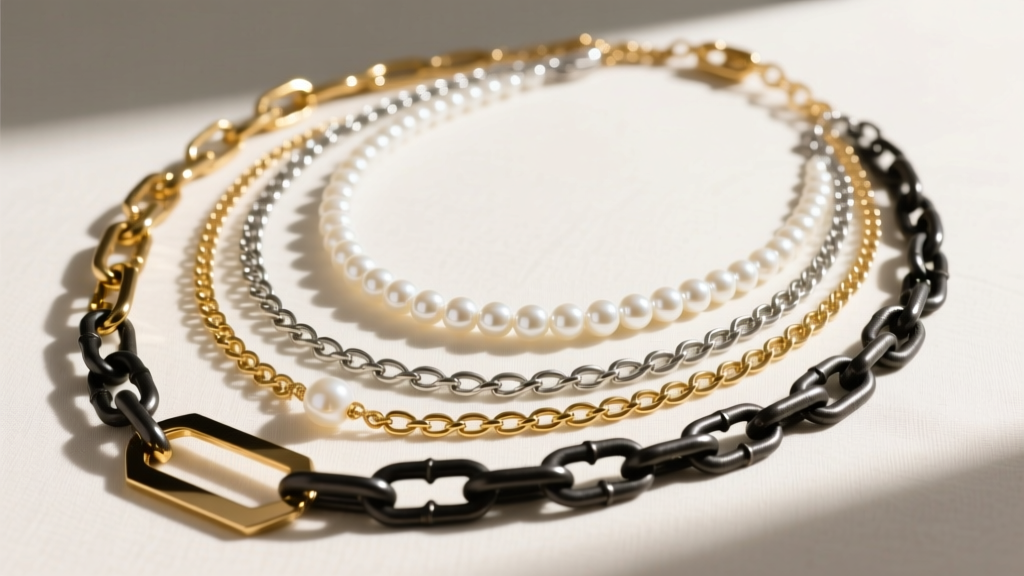
To troubleshoot a visually chaotic layered necklace look, apply the 70/20/10 rule of material distribution. This framework ensures the irony reads as intentional design rather than a styling error.
- 70% Anchor Material: The dominant visual weight should come from one primary material or texture (e.g., a heavy, oxidized silver chain). This grounds the piece and provides a canvas for the irony.
- 20% Contrast Element: This is the core of the irony—a material that directly opposes the anchor (e.g., a cluster of luminous, flawless white freshwater pearls or a bright 18k yellow gold geometric pendant).
- 10% Bridging Hardware: Use a third, neutral element to bridge the gap between the anchor and the contrast. Matte black titanium clasps, darkened steel jump rings, or woven leather cords serve as visual palate cleansers that make the juxtaposition of the 70% and 20% elements feel cohesive.
Maintenance Protocols for Ironic Pairings
Cleaning contrast jewelry requires abandoning standard ultrasonic cleaners and harsh chemical dips. Ultrasonic waves can shake loose the delicate micro-pave stones often found in 'delicate' pendants, while chemical silver dips will strip the intentional oxidation or patina off a brutalist iron or steel chain. Instead, adopt a localized, dry-cleaning protocol. Use a soft-bristled horsehair brush to remove sebum and dust from the chain links, and a specialized, non-abrasive polishing cloth (impregnated with mild jeweler's rouge) exclusively for the noble metal pendant. By treating the components as separate entities that happen to share a neckline, you preserve the very tension and irony that makes the styling so compelling in the first place.


