Jackson Dart Necklace: A Beginner's Guide to Edgy Pendants
Discover the Jackson dart necklace. This beginner's guide covers materials, chain pairings, sizing, and how to style this edgy geometric pendant.


What Exactly is a Jackson Dart Necklace?
The Jackson dart necklace has carved out a distinct niche in contemporary menswear and minimalist streetwear jewelry. Unlike traditional teardrop, bar, or coin pendants, the Jackson dart features an elongated, aerodynamic silhouette that mimics the profile of a stylized dart or arrowhead. Characterized by a wider, flat base that tapers down into a sharp, weighted point, this pendant design offers a sharp, directional aesthetic that immediately draws the eye downward.
As we navigate the jewelry landscape of 2026, the shift towards hyper-durable, low-maintenance, and gender-neutral streetwear accessories has made the dart motif more popular than ever. It bridges the gap between aggressive punk-rock arrowheads and sleek, high-end architectural minimalism. For beginners looking to upgrade from basic chains to statement pendants, the Jackson dart provides a versatile, edgy entry point that works with almost any casual wardrobe.
Anatomy and Dimensions: Getting the Right Proportions
Choosing the right size is critical. A dart that is too small will look like a mere charm, while one that is too large can overwhelm your neckline and feel cumbersome. The anatomy of a well-crafted Jackson dart includes a tapered body, a weighted tip (to prevent the pendant from flipping upside down while walking), and a precisely milled bail (the loop connecting the pendant to the chain).
| Size Category | Length | Base Width | Weight | Best Chain Length |
|---|---|---|---|---|
| Subtle / Small | 28mm - 32mm | 6mm - 8mm | 4g - 6g | 18 to 20 inches |
| Standard / Medium | 38mm - 42mm | 9mm - 12mm | 8g - 12g | 20 to 22 inches |
| Statement / Large | 48mm - 55mm | 14mm - 18mm | 15g - 22g | 22 to 24 inches |
For most beginners, the Standard / Medium category is the sweet spot. It provides enough visual weight to stand out against a t-shirt without feeling like you are wearing a piece of armor.

Material Breakdown: Steel vs. Titanium vs. Silver
The material of your Jackson dart dictates not only its price but also its longevity, weight, and skin compatibility. According to the Federal Trade Commission's Jewelry Guides, reputable jewelers must accurately stamp and disclose the purity and type of metals used. Here is what you need to know about the big three materials used for dart pendants.
316L Surgical Stainless Steel
This is the workhorse of modern streetwear jewelry. 316L steel is highly resistant to tarnish, corrosion, and scratching. It has a satisfying, heavy weight to it, which helps the dart hang perfectly straight. Many steel darts are treated with a PVD (Physical Vapor Deposition) matte black coating. PVD is vastly superior to traditional electroplating; it bonds at a molecular level and will not flake off or turn your skin green. Expect to pay between $45 and $90 for a high-quality steel dart.
Grade 5 Titanium (Ti-6Al-4V)
If you want a lightweight, ultra-durable, and 100% hypoallergenic option, Grade 5 Titanium is the premium choice. It is the same aerospace-grade alloy used in medical implants and high-end watch cases. A titanium Jackson dart will weigh about 45% less than its steel counterpart, making it ideal for all-day wear. Because titanium is notoriously difficult to cast and machine, these pendants usually feature sharper, more precise geometric lines. Prices typically range from $120 to $250.
.925 Sterling Silver
For a more luxurious, traditional approach, sterling silver offers a brilliant, reflective polish that steel and titanium cannot match. However, silver is softer and will scratch more easily. It also requires regular polishing to prevent oxidation and tarnishing. If you choose silver, look for darts that have been rhodium-plated to provide a protective, anti-tarnish barrier. Silver darts generally cost between $80 and $180.
Chain Pairings: Finding the Perfect Foundation
A common beginner mistake is pairing a heavy, elongated dart pendant with a flimsy chain. The Jackson dart requires a chain that can support its weight and pass smoothly through its bail without kinking.
- Box Chains (2.0mm - 3.0mm): The absolute best pairing for a dart necklace. The square, interlocking links provide excellent structural integrity and a modern, industrial look that complements the sharp lines of the dart.
- Wheat Chains (1.5mm - 2.5mm): Woven and incredibly strong, wheat chains offer a slightly more textured, organic contrast to the geometric pendant. They drape beautifully and resist tangling.
- Avoid Snake Chains: While they look sleek, snake chains are prone to permanent kinking when subjected to the localized, swinging weight of a heavy dart pendant.
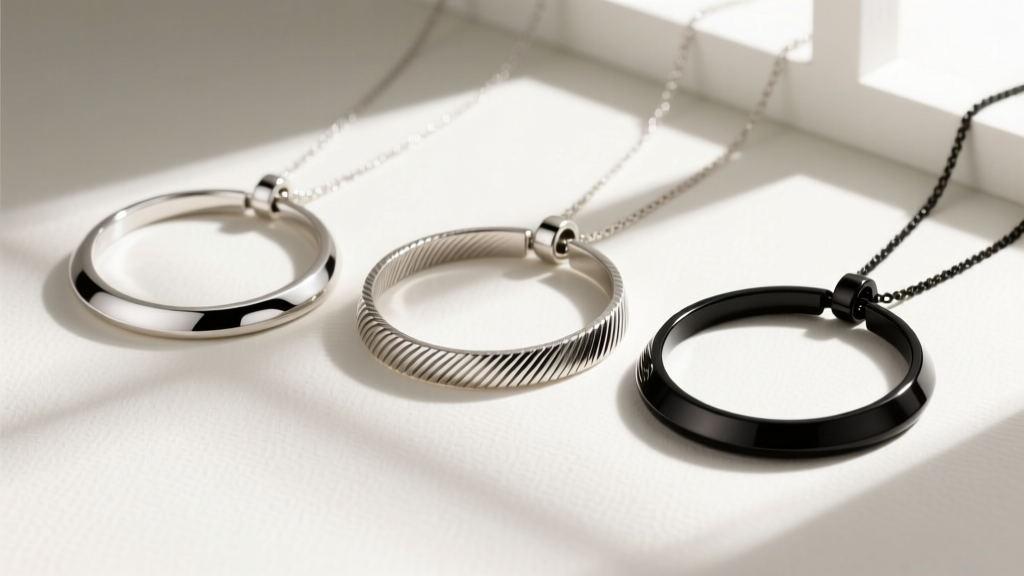
Styling the Dart: Necklines and Layering Techniques
The directional nature of the Jackson dart makes it a powerful tool for manipulating visual proportions. Because the sharp point draws the eye downward, it creates an illusion of a longer, leaner neck and torso.
Best Necklines: The dart shines brightest against simple, unpatterned backgrounds. A plain white or black crewneck t-shirt acts as a blank canvas. It also pairs exceptionally well with open-collared button-downs, where the pendant rests directly against the skin in the V of the collar. Avoid busy, graphic tees or loud flannel patterns, as they will compete with the sharp geometry of the pendant.
Layering: If you want to layer, use the Jackson dart as your anchor piece on a 22-inch chain. Pair it with a shorter, 18-inch minimalist chain featuring a tiny, subtle bead or a thin herringbone chain. Keep the secondary chain at least 3 inches shorter than the dart's chain to prevent tangling and ensure both pieces are distinctly visible.
Troubleshooting: The Pendant Flip Problem
The most common complaint with elongated pendants is that they tend to flip upside down or slide off-center. This happens when the center of gravity is poorly distributed or the bail is too loose on the chain. To fix this, ensure your dart features a counter-weighted tip. High-end manufacturers drill out a microscopic cavity near the base of the dart and fill it with a denser metal like tungsten, ensuring the heavy end always pulls the pendant straight down. Additionally, using a slightly thicker chain (like a 2.5mm box chain) creates more friction against the bail, keeping the dart perfectly centered on your chest.
Long-Term Care and Maintenance
Keeping your Jackson dart looking pristine requires minimal but specific care, depending on the metal. For PVD-coated steel and Grade 5 titanium, simply wipe the pendant down with a damp microfiber cloth after heavy sweating to remove salts and oils. Avoid harsh chemical cleaners, which can degrade the matte finish over time.
For sterling silver darts, maintenance is a bit more involved. The Gemological Institute of America (GIA) recommends cleaning silver with a few drops of mild dish soap and warm water, using a soft-bristled baby toothbrush to gently clean the crevices near the bail. Dry it thoroughly with a lint-free cloth and store it in an anti-tarnish pouch when not in use. By following these simple guidelines, your Jackson dart necklace will remain a sharp, defining element of your wardrobe for years to come.


