How to Buy a Real Jade Butterfly Necklace: Expert Guide
Discover how to choose an authentic jade butterfly necklace. Learn about Type A jadeite, carving quality, pricing tiers, and how to spot treated fakes.

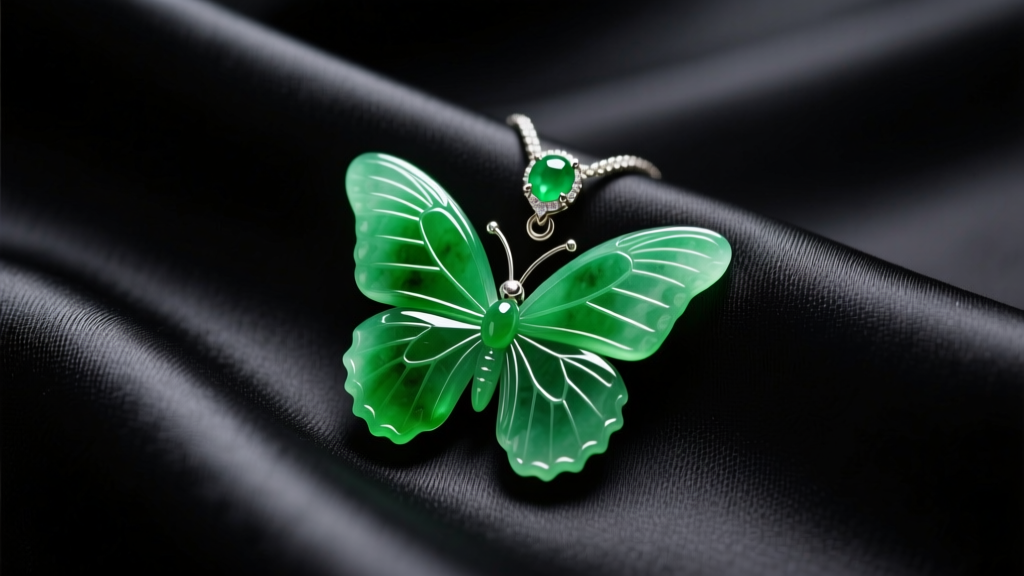
The Enduring Appeal of the Jade Butterfly Necklace
The jade butterfly necklace represents a profound intersection of cultural symbolism and gemological artistry. In Chinese tradition, the butterfly symbolizes immortality, joy, and the blossoming of love, while jade embodies purity, protection, and moral integrity. When combined, a jade butterfly pendant becomes more than just an accessory; it is a wearable talisman. As we navigate the gemological market in 2026, buyers are increasingly educated, moving away from opaque, low-grade tourist souvenirs and demanding untreated, master-carved stones with verifiable provenance. This guide will equip you with the exact technical knowledge required to evaluate, authenticate, and purchase a high-quality jade butterfly necklace.
Nephrite vs. Jadeite: Choosing Your Stone
The term 'jade' is an umbrella classification for two distinct metamorphic rocks: nephrite and jadeite. Understanding the difference is the first critical step in your buying journey.
Nephrite: The Waxy Classic
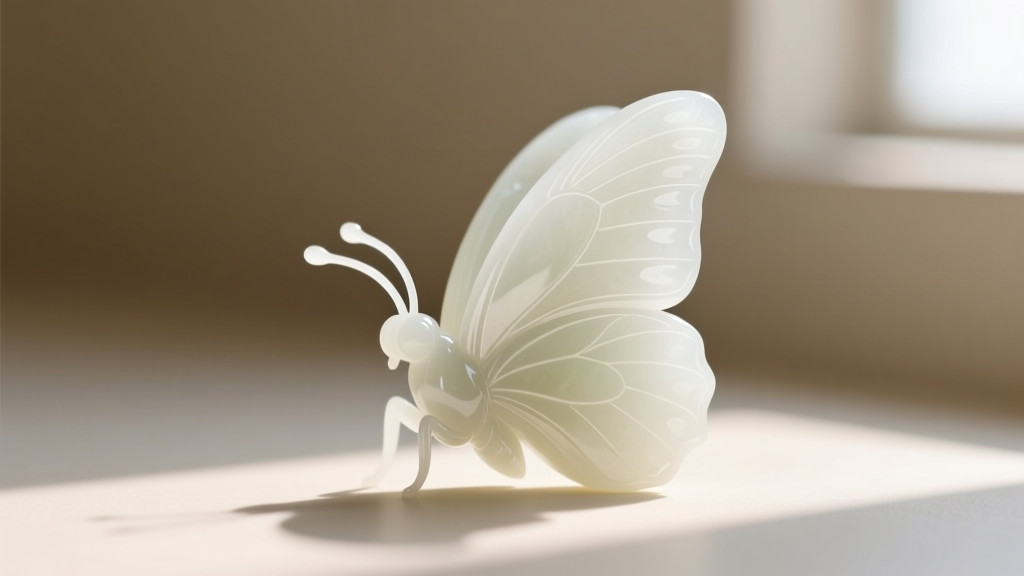
Nephrite, historically sourced from regions like Hetian in China, is composed of calcium and magnesium-rich amphibole minerals. It is incredibly tough due to its interlocking fibrous structure, making it ideal for intricate carvings. Nephrite butterflies typically exhibit a creamy, mutton-fat white, muted celadon green, or deep spinach green. The luster is waxy and soft, offering a subtle, understated elegance.
Jadeite: The Vitreous Powerhouse
Jadeite, primarily mined in Myanmar (Burma), is a sodium and aluminum-rich pyroxene. It is harder, denser, and capable of achieving a high, glass-like (vitreous) polish. Jadeite offers a vastly broader color palette, including the highly coveted 'Imperial Green,' lavender, and icy translucent whites. For a jade butterfly necklace, jadeite is generally the preferred choice for high-end jewelry due to its brilliance and light transmission.
The ABCs of Jadeite Grading: What You Must Know
If you are purchasing a jadeite butterfly pendant, you must understand the treatment grading system. The market is flooded with chemically altered stones, and failing to recognize these can lead to disastrous purchases.
- Type A (Untreated): This is 100% natural jadeite. It has only been cut, carved, and polished using traditional waxing. This is the only grade that holds intrinsic and investment value.
- Type B (Bleached and Polymer-Impregnated): Lower-quality jadeite is soaked in strong acids to remove brown or yellow impurities. This process destroys the stone's internal structure, which is then injected with polymer resins to stabilize it. Over time, Type B jade yellows and becomes brittle.
- Type C (Dyed): The stone is artificially colored using chemical dyes. The dye often concentrates in the microscopic fissures of the carving, which can be spotted under magnification. Type C jade fades rapidly when exposed to sunlight and heat.
According to the Gemological Institute of America (GIA), any treatment beyond simple waxing must be explicitly disclosed. Always demand a certificate from a reputable lab stating the stone is 'Type A' or 'Untreated Natural Jadeite.' The phrase 'Natural Jade' on a tag is insufficient, as Type B and C stones are technically natural material that has been heavily altered.
Evaluating the Carving: Anatomy of a Quality Butterfly
A butterfly is a complex subject that tests a lapidary's skill. Poor carvers use heavy texture and deep grooves to hide internal flaws or cracks in the rough stone. Master carvers, however, use minimal, precise lines to let the jade's natural beauty shine.
| Carving Element | Signs of Master Craftsmanship | Red Flags to Avoid |
|---|---|---|
| Wing Symmetry | Mirrored proportions; fluid, sweeping lines that follow the stone's grain. | Asymmetrical wings; jagged or hesitant edges indicating a slipped tool. |
| Antennae Details | Delicate, tapered, and highly polished. Often carved in slight relief. | Thick, blunt, or completely omitted to prevent breakage during polishing. |
| Surface Polish | Glass-like vitreous finish on jadeite; smooth, buttery finish on nephrite. | Dull patches, visible sanding marks, or a greasy feel indicating polymer fill. |
| Color Utilization | Clever use of natural color bands (e.g., green on the wingtips, white on the body). | Flat, uniform color that looks unnatural or dye-concentrated in fissures. |
Chain Pairings and Hardware Considerations
Jade is a dense, heavy material. A solid jade butterfly pendant can easily weigh between 8 and 20 grams, which will snap delicate jewelry chains. Selecting the right suspension method is crucial for both aesthetics and security.
Traditional Silk Cords
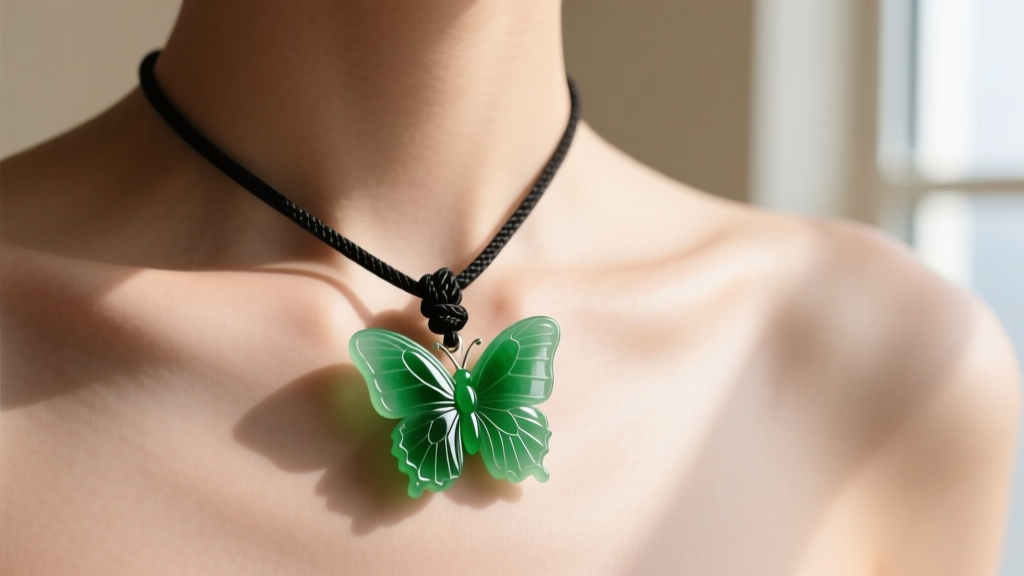
Hand-knotted silk or nylon cords remain the gold standard for jade pendants. They are adjustable, incredibly strong, and do not compete visually with the carving. Ensure the cord features a secure slip knot or a high-quality magnetic clasp. The bail hole drilled through the top of the butterfly should be smoothly polished inside; rough drill holes will eventually fray and cut the cord.
Metal Chains
If you prefer a metal chain, opt for structural integrity over delicacy. An 18k gold box chain or a sterling silver wheat chain (minimum 1.5mm thickness) provides the necessary tensile strength. Avoid thin cable chains or snake chains, which kink easily and cannot support the dynamic weight of a swinging jade pendant.
The Bail
Examine how the metal bail (the loop connecting the chain to the stone) is attached. Wire-wrapped bails or custom-fitted 18k gold caps that mechanically grip the stone are ideal. Never buy a jade pendant where the metal bail is simply glued into a drilled hole; thermal expansion and daily wear will inevitably cause the adhesive to fail, resulting in a lost stone.
'In the current market, traceability is just as important as the stone itself. A premium jade butterfly necklace should come with a provenance report detailing the mine origin and the specific lapidary artist, elevating the piece from mere jewelry to collectible art.' — Senior Gemologist Appraisal Notes, 2026.
Pricing Tiers: What to Expect in the Current Market
The valuation of a jade butterfly necklace is highly subjective and dependent on the interplay of color, translucency, texture, and carving quality. Below is a realistic pricing framework for Type A stones in today's market.
| Market Tier | Material & Quality | Visual Characteristics | Estimated Price Range |
|---|---|---|---|
| Entry Level | Nephrite or Opaque Jadeite | Heavy, opaque, basic machine-assisted carving, muted colors. | $50 - $200 |
| Commercial Mid | Type A Commercial Jadeite | Semi-translucent, decent color distribution, good hand-finishing. | $300 - $1,200 |
| Fine Jewelry | Type A Fine Jadeite | Highly translucent (glutinous texture), vivid color, master carving. | $1,500 - $8,000 |
| Collector Grade | Imperial Jadeite | Glass-like clarity, flawless imperial green, museum-quality artistry. | $15,000 - $100,000+ |
How to Spot Fakes and Treated Jade
While definitive authentication requires a gemological lab, you can perform preliminary inspections to weed out obvious fakes and treated stones. The International Gem Society (IGS) recommends several non-destructive testing methods for buyers.
The Magnification Test
Use a 10x jeweler's loupe to inspect the surface of the butterfly's wings. Type A jade will show a smooth, continuous polish with natural microscopic inclusions. Type B jade will exhibit a 'spiderweb' or pitted surface texture caused by acid etching. Type C jade will reveal dye concentrated in the microscopic cracks and fissures of the carving.
The UV Light Test
Shine a long-wave ultraviolet (UV) flashlight on the pendant in a dark room. Natural, untreated Type A jade is generally inert and will not fluoresce. If the polymer resins used in Type B jade are present, the stone will often emit a chalky, bluish-white fluorescence.
Beware of Imitators
Not all green stones are jade. Dyed green quartzite, aventurine, and even molded glass are frequently sold as jade to tourists. Glass will contain tiny spherical air bubbles visible under magnification and will feel significantly lighter and warmer to the touch than real jade, which has high thermal inertia and feels distinctly cool against the skin.
Final Verdict: Making Your Purchase
Buying a jade butterfly necklace is an exercise in patience and discernment. Prioritize Type A certification above all else, as a treated stone holds no long-term value regardless of how beautiful it appears in the display case. Focus on the artistry of the carving, ensuring the butterfly's anatomy is balanced and the polish is flawless. By pairing your authentic jade pendant with a structurally sound cord or chain, you secure not just a beautiful piece of jewelry, but a lasting heirloom that carries centuries of cultural resonance into the modern era.


