Jade Stone Necklace Meaning & Buyer's Guide: Nephrite vs Jadeite
Discover the true jade stone necklace meaning and learn how to authenticate jadeite vs nephrite. A comprehensive buyer's guide to grades and pricing.

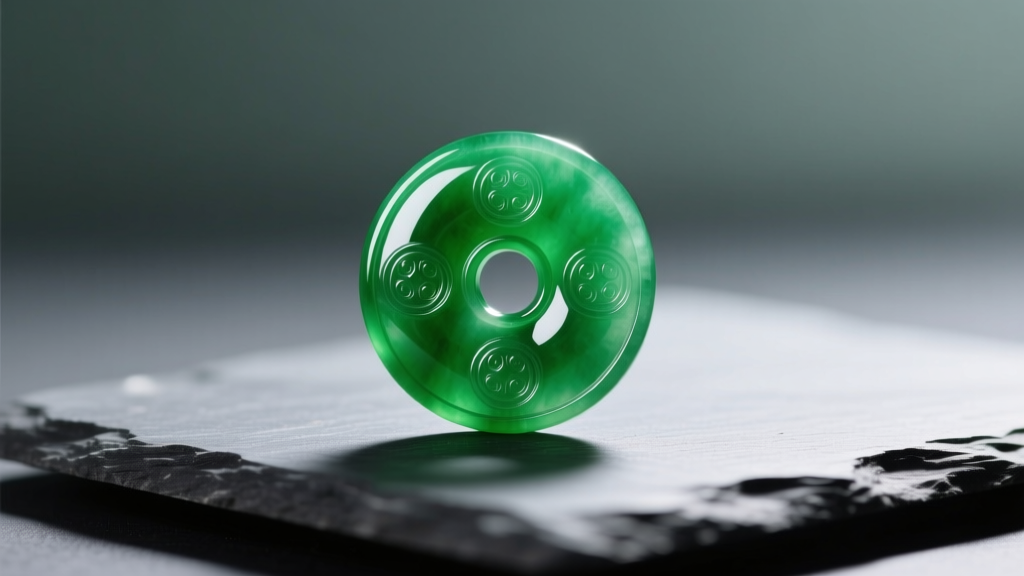
When shopping for fine gemstones, few carry the cultural weight, historical mystique, and market complexity of jade. While diamonds are judged by the rigid 4Cs, evaluating a jade necklace requires an entirely different framework of mineralogy, treatment awareness, and cultural literacy. For collectors and spiritual seekers alike, understanding the jade stone necklace meaning is only the first step; the true challenge lies in navigating a market saturated with polymer-impregnated fakes, dyed quartz, and misleading terminology.
This comprehensive buying guide bridges the gap between ancient symbolism and modern gemological science. We will break down the exact mineral differences between jadeite and nephrite, expose the controversial ABC treatment grading system, and provide actionable authentication protocols used by professional gemologists in 2026.
The Core Jade Stone Necklace Meaning: Beyond the Aesthetic
Long before it became a staple in luxury jewelry, jade was revered as the "Stone of Heaven." In Chinese culture, the jade stone necklace meaning is deeply intertwined with Confucian virtues. Confucius himself likened jade to the qualities of a Junzi (a noble person or gentleman), stating that its brilliance represents purity, its perfect compactness represents intelligence, and its angles—which do not cut despite being sharp—represent justice and fairness.
"Jade is esteemed not just for its beauty, but because it embodies the moral architecture of the universe. Wearing it is an act of aligning oneself with harmony, protection, and enduring wisdom." — Dr. Hui Lin, Gemological Historian.
From a metaphysical perspective, different colors of jade carry distinct energetic meanings. Imperial green jade is historically associated with wealth and status, while translucent "ice" jadeite symbolizes clarity of mind and spiritual purity. Lavender jade is often linked to emotional healing and inner peace, making it a highly sought-after choice for meditation pendants.
Jadeite vs. Nephrite: The Mineral Breakdown
The most critical mistake a novice buyer can make is assuming all jade is the same. Gemologically, "jade" is an umbrella term for two completely distinct silicate minerals: Jadeite and Nephrite. Understanding the difference is paramount, as it dictates the necklace's value, durability, and visual properties.
| Property | Jadeite (NaAlSi2O6) | Nephrite (Ca2(Mg,Fe)5Si8O22(OH)2) |
|---|---|---|
| Mohs Hardness | 6.5 - 7.0 | 6.0 - 6.5 |
| Toughness | Exceptional (interlocking granular structure) | Superior (interlocking fibrous structure) |
| Visual Appearance | Vitreous to glassy luster; high translucency | Greasy to waxy luster; generally opaque |
| Color Range | Emerald green, lavender, icy white, yellow, black | Muted spinach green, mutton fat white, dark black |
| Market Value | Extremely High (especially Imperial Green) | Moderate (unless antique or master-carved) |
According to the Gemological Institute of America (GIA), jadeite is the rarer and more valuable of the two, primarily sourced from Myanmar (Burma). Nephrite, while tougher and more historically significant in ancient Chinese and Maori carvings, is found globally and commands a lower price per carat in the modern commercial market.
The Crucial ABCs of Jade Treatments
Unlike diamonds, where treatments are heavily regulated and disclosed, the jade market is notorious for undisclosed enhancements. When evaluating a jade pendant, you must ask the seller for the treatment grade. The industry recognizes four distinct categories:
- Type A (Natural): Completely untreated jade, aside from traditional surface waxing to enhance polish. This is the only grade that holds investment value and maintains the true jade stone necklace meaning of natural purity.
- Type B (Bleached & Polymer-Impregnated): Low-quality jade is soaked in harsh acids to remove brown or yellow impurities. This destroys the stone's internal structure, which is then filled with a polymer resin. Type B jade will yellow and become brittle over time.
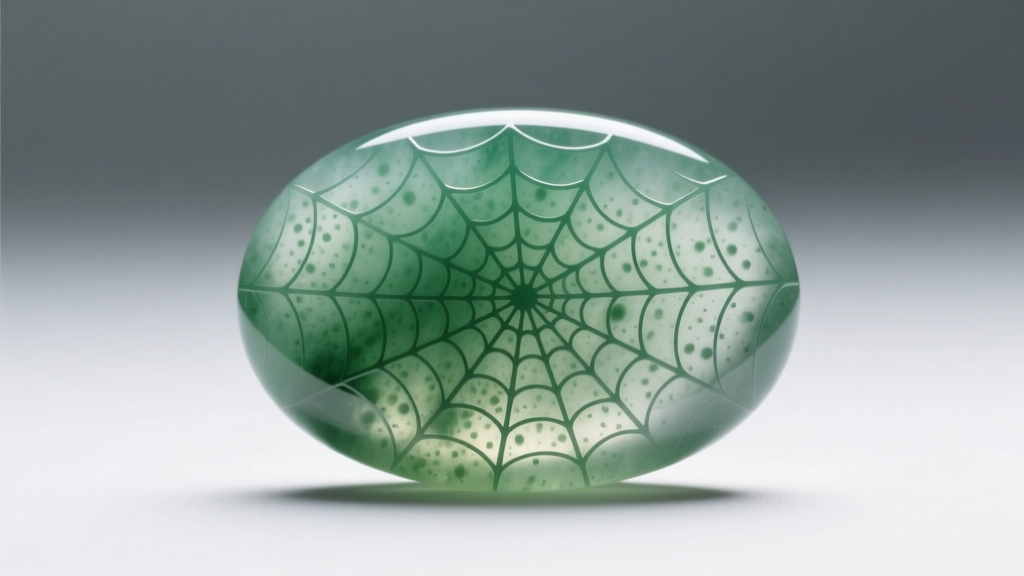
- Type C (Dyed): Jade that has been artificially colored. The dye concentrates in the microscopic fractures, creating unnatural "spiderweb" patterns under magnification. The color will fade with UV exposure.
- Type B+C: A combination of bleaching, polymer filling, and dyeing. This is the most common "fake" jade sold in tourist markets and online auction sites.
How to Authenticate a Jade Necklace in 2026
Relying solely on the "cold to the touch" test is an outdated myth; glass and quartz can also feel cold initially. To properly authenticate a jade necklace, gemologists rely on a combination of optical and physical tests. If you are buying a high-value piece, always demand a report from a reputable laboratory like GIA, Lotus Gemology, or SSEF.
1. Specific Gravity (SG) Testing
Jadeite and nephrite have different densities. Jadeite has a specific gravity of approximately 3.30 to 3.36, while nephrite ranges from 2.90 to 3.02. A simple hydrostatic weighing test can immediately separate jadeite from common simulants like serpentine (SG 2.50) or aventurine quartz (SG 2.65).
2. Spectroscopic Analysis
Under a handheld spectroscope, natural green jadeite exhibits a strong absorption line at 437 nm in the violet/blue region, caused by iron. This line is absent in dyed jade and most simulants. Furthermore, natural green jadeite transmits red light, which is why it looks vibrant under incandescent lighting.
3. UV Fluorescence
This is the most effective way to catch Type B polymer treatments. Under long-wave ultraviolet (UV) light, the polymer resins used to fill bleached jade will fluoresce with a chalky blue or greenish-white glow. Natural Type A jade is generally inert or shows very weak fluorescence.
Pricing Realities: What You Should Actually Pay
The pricing of jade is notoriously opaque, often driven by auction house hype rather than standardized wholesale charts. However, understanding the baseline market tiers will protect you from severe overpaying.
- Commercial Nephrite Pendants: $50 to $300. These are typically mass-produced, opaque, and feature simple machine carvings. Excellent for everyday wear but hold no resale value.
- Commercial Jadeite (Type A): $200 to $1,500. Features decent translucency but may have visible inclusions, cloudy patches, or less saturated colors. Often set in 14k or 18k gold.
- Fine Jadeite (Type A): $2,000 to $15,000. High translucency ("glutinous" or "icy" texture), vibrant and even color distribution, and master-level hand carving.
- Investment/Imperial Jadeite: $50,000 to well over $1,000,000. Flawless "Imperial Green" emerald-like color with glass-like transparency. These pieces are treated as alternative assets and traded at elite auction houses.
Buyer Beware: If you see a necklace featuring a perfectly translucent, vivid emerald-green jadeite pendant priced under $500, it is almost certainly Type B+C treated jade or dyed quartz. Nature does not produce flawless imperial jade at commercial prices.
Selecting the Right Setting and Chain
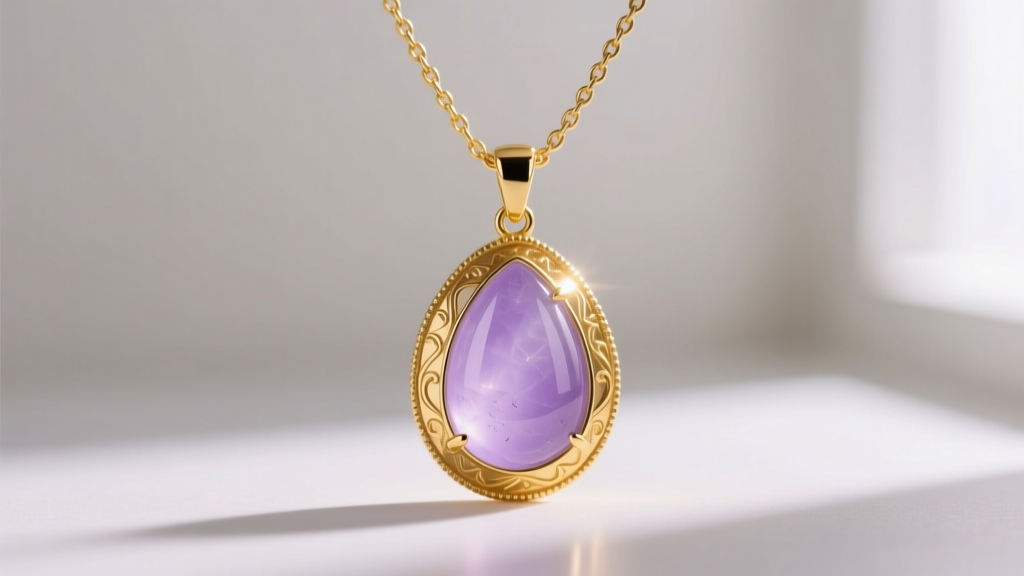
The physical properties of jade dictate how it should be set. While jade possesses incredible toughness (resistance to breaking and chipping due to its interlocking crystal structure), its hardness (resistance to scratching) is moderate. Therefore, the setting must protect the stone from abrasive contact with harder gems or diamonds.
Bezel vs. Prong Settings
For jade pendants and cabochons, a bezel setting is highly recommended. A bezel wraps a thin rim of metal entirely around the girdle of the stone, protecting its vulnerable edges from chipping if dropped. Prong settings, while allowing more light to enter the stone, leave the edges exposed and can create stress points that may fracture the jade over time.
Chain Selection and Hardware
Jade is a dense, heavy material. A substantial jadeite bi-disc or carved pendant can easily weigh 15 to 30 grams. Pairing a heavy pendant with a delicate, hollow chain will result in chain breakage or severe neck strain.
- For Heavy Pendants (15g+): Opt for a solid 2.5mm to 3.5mm wheat chain, rope chain, or box chain in 18k gold or platinum. Ensure the clasp is a sturdy lobster claw or a secure bolt ring, rather than a fragile spring ring.
- For Lighter, Icy Jadeite (under 10g): A 1.5mm to 2.0mm solid cable or curb chain is sufficient. These finer chains allow the translucency of the "ice" jade to take center stage without visual distraction.
- Corded Necklaces: Traditional silk or nylon cords with adjustable macramé knots are not only culturally authentic but also highly practical. They eliminate the risk of metal clasps failing and allow the wearer to adjust the pendant's drop length to suit different necklines.
Final Verdict: Wearing Your Intention
Ultimately, the true jade stone necklace meaning is realized when the wearer connects with a genuine, untreated stone. Jade is not merely a decorative accessory; it is a geological marvel and a cultural artifact that demands respect. By prioritizing Type A authenticity, understanding the mineralogical differences between jadeite and nephrite, and selecting a protective, proportionate setting, you ensure that your jade necklace will not only retain its financial value but also serve as a lasting talisman of harmony and protection for generations to come.


