Red Star Necklace Pricing 2026: Budget vs Fine Jewelry
Discover the true value of a red star necklace in 2026. We compare budget enamel, demi-fine garnet, and fine ruby options to help you shop smart.

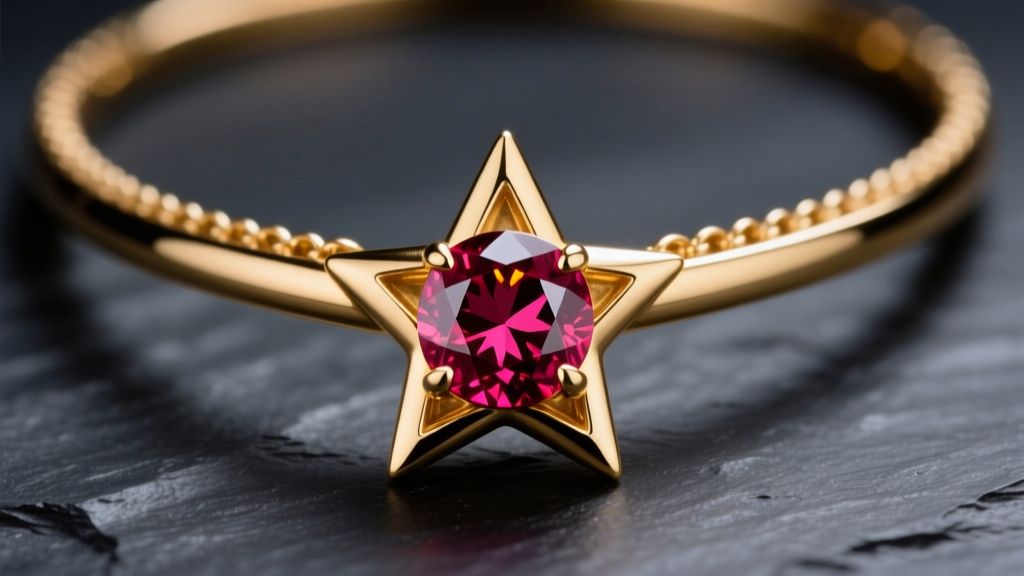
The celestial jewelry trend has firmly cemented itself in the modern accessory lexicon, but as we move through 2026, consumers are becoming increasingly savvy about what they are actually paying for. Among the most sought-after celestial motifs is the red star necklace. Whether crafted from vibrant cold enamel, deep crimson garnet, or precious ruby, this specific pendant style bridges the gap between playful fashion and serious fine jewelry. However, the market is flooded with wildly varying price points—from $15 fast-fashion trinkets to $3,000 bespoke fine jewelry pieces. How do you determine the true value of a red star necklace? This comprehensive budget and value assessment breaks down the materials, lapidary costs, and structural integrity you need to consider before making a purchase.
The Anatomy of a Red Star Necklace: What Are You Paying For?
When evaluating the price of any gemstone or enameled pendant, you must first understand the manufacturing complexities specific to its shape and color. A star is not a standard lapidary shape. Unlike a round brilliant or oval cut, which are optimized to retain as much of the rough crystal as possible, a five-pointed star features sharp, inward-pointing vertices.
The Lapidary Tax: Why Gemstone Stars Cost More
Cutting a star shape from a rough gemstone crystal requires a highly skilled lapidary and results in significant material wastage. While a standard round cut might retain 40% to 50% of the original rough, carving a precise star pendant can result in up to 75% rough wastage. This inherent material loss is the primary reason why a genuine gemstone red star necklace commands a higher baseline price than standard geometric pendants. You are paying for the artisan's labor and the discarded rough.
Defining the 'Red': Enamel vs. Garnet vs. Ruby
The color red in jewelry is achieved through vastly different mediums, each with its own value proposition:
- Cold Enamel & Guilloché: High-end demi-fine brands use vitreous or cold enamel over a sterling silver or gold base. The value here lies in the craftsmanship of the guilloché (engine-turned) background that gives the red depth.
- Rhodolite & Pyrope Garnet: The sweet spot for mid-tier budgets. Garnets offer a rich, purplish-red to deep crimson hue with excellent clarity and a Mohs hardness of 7 to 7.5, making them durable enough for daily wear.
- Natural & Lab-Created Ruby: Corundum (Mohs 9) is the premium tier. Natural rubies with 'pigeon-blood' saturation carry an immense rarity premium, while lab-created rubies offer identical chemical properties at a fraction of the cost.
2026 Market Pricing: The Value Matrix
To help you benchmark your budget, we have categorized the current market landscape for red star necklaces into three distinct tiers. This matrix reflects 2026 retail averages from established direct-to-consumer and legacy jewelry brands.
| Tier | Core Metal | 'Red' Material | Chain Type | Price Range | Expected Lifespan |
|---|---|---|---|---|---|
| Fashion / Costume | Brass or Alloy | Epoxy Resin or Acrylic | Flash-plated cable (0.1 microns) | $15 - $45 | 6 - 12 months |
| Demi-Fine | Sterling Silver or Vermeil | Cold Enamel or Rhodolite Garnet | Silver or Vermeil box chain (1.0mm) | $85 - $280 | 3 - 5+ years (with care) |
| Fine Jewelry | Solid 14k or 18k Gold | Natural or Lab-Created Ruby | Solid gold cable or rope (1.2mm+) | $650 - $3,500+ | Lifetime / Heirloom |
The Demi-Fine Sweet Spot: Garnet and Gold Vermeil
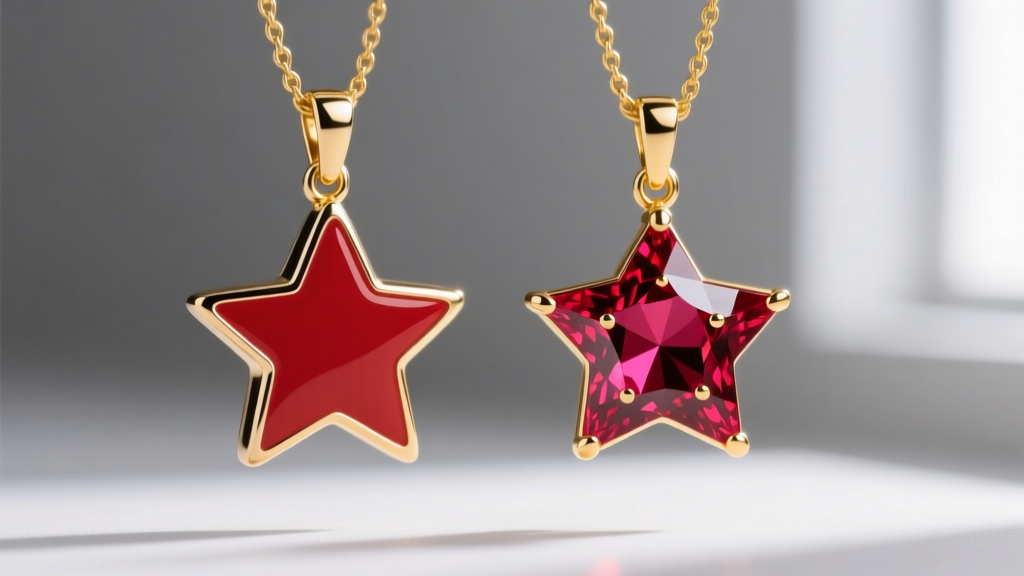
For the majority of buyers, the demi-fine category offers the highest value-to-cost ratio. A red star necklace featuring a rhodolite garnet set in heavy gold vermeil provides the luxurious aesthetic of fine jewelry without the four-figure price tag. Rhodolite garnet is particularly prized for its lack of visible inclusions and its vibrant, raspberry-red hue that catches the light beautifully in a faceted star setting.
Assessing the Vermeil Standard
If you are investing in a vermeil piece, you must verify the plating thickness. According to the FTC Jewelry Guidelines, gold vermeil must consist of a sterling silver base plated with a minimum of 2.5 microns of gold. Many fast-fashion brands deceptively market 'gold plated' jewelry that features a mere 0.1 to 0.5 microns of gold over a brass base. This ultra-thin flash plating will wear away within months of daily wear, exposing the base metal and potentially causing skin irritation. Always look for brands that explicitly state '2.5 microns' or 'heavy vermeil' in their specifications.
Fine Jewelry Investments: Natural vs. Lab Ruby Stars
If your budget allows for a fine jewelry investment, a ruby red star necklace is a phenomenal heirloom piece. Ruby, a variety of the mineral corundum, scores a 9 on the Mohs hardness scale, making it second only to diamond in durability. This is crucial for a star-shaped pendant, as the sharp points of the star are prone to chipping if the stone is too soft.
The 4Cs in Star-Cut Rubies
When evaluating a natural ruby, color is the paramount driver of value. The GIA Ruby Quality Factors dictate that the most valuable rubies exhibit a pure, vibrant red to slightly purplish-red color, often referred to in the trade as 'pigeon's blood.' However, because star-cut stones require so much rough wastage, finding a natural ruby large and clean enough to carve into a star is exceptionally rare. Consequently, natural ruby star pendants are often bezel-set to protect the fragile points and command massive premiums.
Alternatively, lab-created rubies offer a brilliant, inclusion-free alternative. Grown via the Verneuil (flame fusion) or Czochralski (pulling) methods, these stones possess the exact same chemical, physical, and optical properties as mined rubies. A lab-grown ruby red star necklace set in solid 14k gold typically retails between $600 and $1,200, offering exceptional longevity and vivid color saturation without the ethical concerns or astronomical costs associated with mined stones.
Chain Selection: A Hidden Factor in Value and Durability
A common mistake buyers make when purchasing a red star necklace is focusing entirely on the pendant while ignoring the chain. A pendant with sharp vertices requires a chain that will not tangle easily and can support the weight of the stone.
- Delicate Thread Chains (0.6mm - 0.8mm): Avoid these for gemstone stars. The sharp points of the star will easily catch on the microscopic links, snapping the chain.
- Box Chains (1.0mm - 1.5mm): Excellent for enamel stars. The flat, interlocking squares lay flat against the skin and resist kinking.
- Cable or Rope Chains (1.2mm+): The gold standard for heavy gemstone pendants. The rounded links provide structural integrity and allow the star pendant to hang perfectly centered on the collarbone.
Red Flags: How to Avoid Overpaying
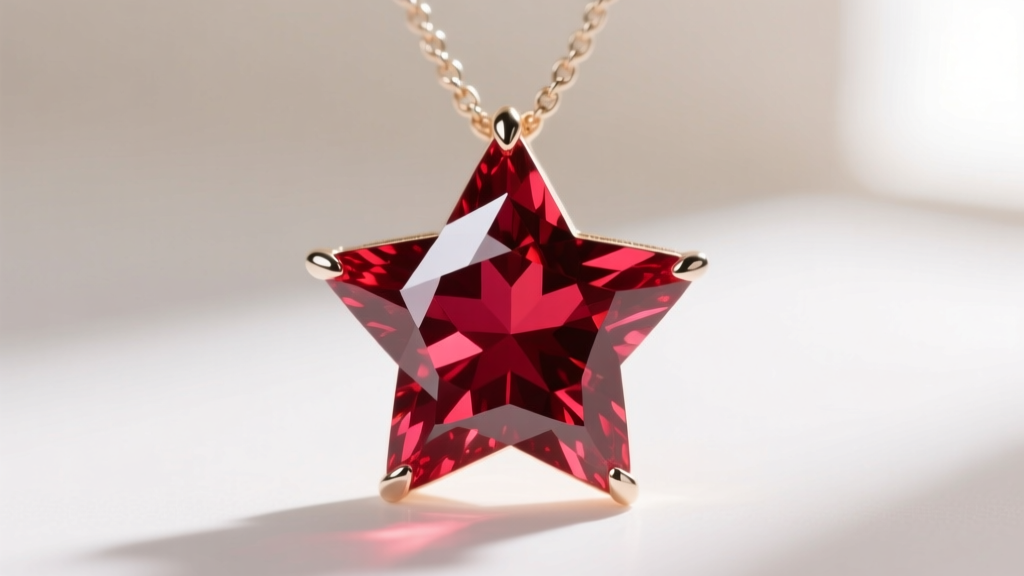
The celestial jewelry market is rife with misleading marketing. Protect your budget by watching out for these common industry tricks:
- The 'Simulated' Bait-and-Switch: If a listing says 'simulated ruby,' you are buying red glass or cubic zirconia. This is costume jewelry and should be priced under $30, regardless of how elaborate the star setting appears.
- Dyed Quartz and Spinel: Some unscrupulous sellers dye pale quartz or pale spinel to mimic the deep red of a ruby. Always ask for a gemological report or purchase from retailers who provide clear, unedited macro-photography of the stone's inclusions. Natural rubies will have 'silk' (rutile needles) or crystal inclusions; perfectly clean, cheap 'rubies' are almost certainly lab-grown or glass.
- Hollow Gold Construction: In the fine jewelry tier, some brands use 'electroformed' or hollow 14k gold to create massive star pendants that look heavy but are actually paper-thin. These dent easily and cannot be repaired by a jeweler. Always check the gram weight of the pendant; a solid 14k gold star pendant of average size (15mm) should weigh at least 2 to 3 grams.
Final Verdict: Where Should Your Budget Go?
The true value of a red star necklace depends entirely on your wearing habits and longevity expectations. If you view jewelry as a seasonal accessory to match specific outfits, a $35 brass and enamel piece from a reputable fashion brand is a perfectly valid choice. However, if you are seeking a signature piece to wear daily for the next decade, bypass the fashion tier entirely.
The smartest financial move in 2026 is the demi-fine sector: a rhodolite garnet or lab-created ruby set in heavy 2.5-micron gold vermeil or solid 10k/14k gold. This approach guarantees you receive genuine gemological beauty and structural durability, ensuring your celestial motif outshines fleeting trends and maintains its intrinsic value over time.


