The Ultimate Guide to Buying a Glass Cross Necklace
Discover how to choose the perfect glass cross necklace. Learn about glass types, durability, chain pairings, and craftsmanship in our expert guide.

Why Choose a Glass Cross Necklace?
A glass cross necklace bridges the gap between profound spiritual symbolism and wearable, contemporary art. Unlike mass-cast metallic pendants, glass offers an unparalleled depth of color, light refraction, and artisanal uniqueness. Whether you are drawn to the iridescent flash of dichroic glass, the rustic charm of fused stained glass, or the intricate internal landscapes of lampwork, selecting the right piece requires an understanding of material science and jewelry engineering. This comprehensive buying guide will equip you with the expert knowledge needed to evaluate craftsmanship, ensure structural durability, and pair your pendant with the appropriate hardware.
Understanding Glass Types for Cross Pendants
Not all glass is created equal. The method used to form the cross dictates its visual properties, weight, and fragility. When shopping for a glass cross necklace, you will primarily encounter three distinct categories:
1. Dichroic Glass
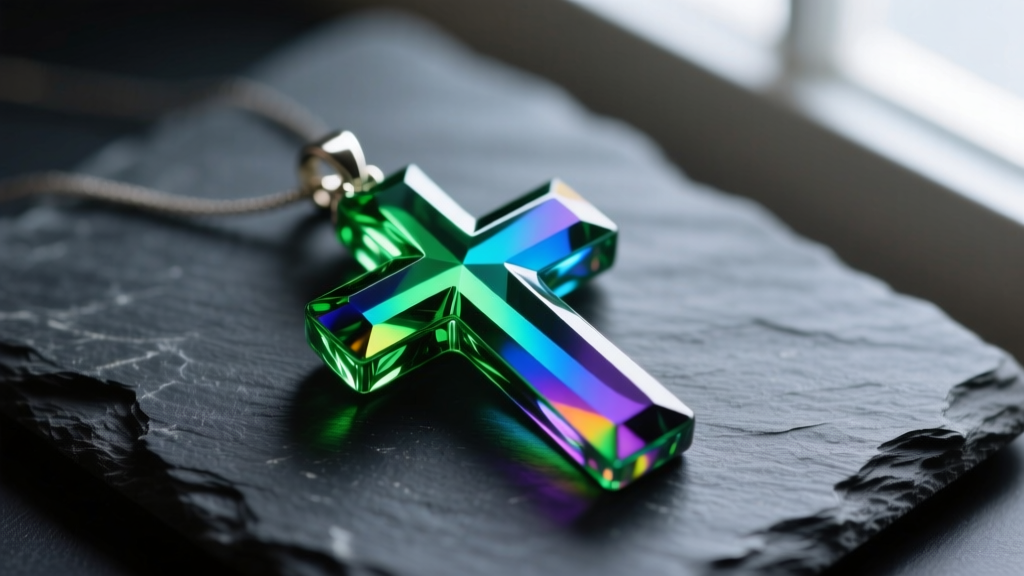
Originally developed by NASA for aerospace applications, dichroic glass is created through thin-film physics. Multiple micro-layers of quartz and metal oxides (such as titanium, chromium, and zirconium) are vaporized in a vacuum chamber and bonded to a glass substrate. The result is a cross pendant that reflects certain wavelengths of light while transmitting others, creating a striking, color-shifting effect depending on the angle of illumination. High-quality dichroic crosses should exhibit crisp color transitions without cloudy delamination between the layers.
2. Lampwork (Torch-Worked) Glass
Lampwork involves melting glass rods using a high-temperature torch and winding the molten glass around a steel mandrel to form shapes. Artisans often use borosilicate glass for its high thermal shock resistance or soda-lime glass for its vibrant color palette. When inspecting a lampwork glass cross necklace, look for intentional internal bubbles (which can add a galaxy-like aesthetic) versus unintentional surface pitting, which indicates poor temperature control during the shaping process.
3. Kiln-Fused and Stained Glass
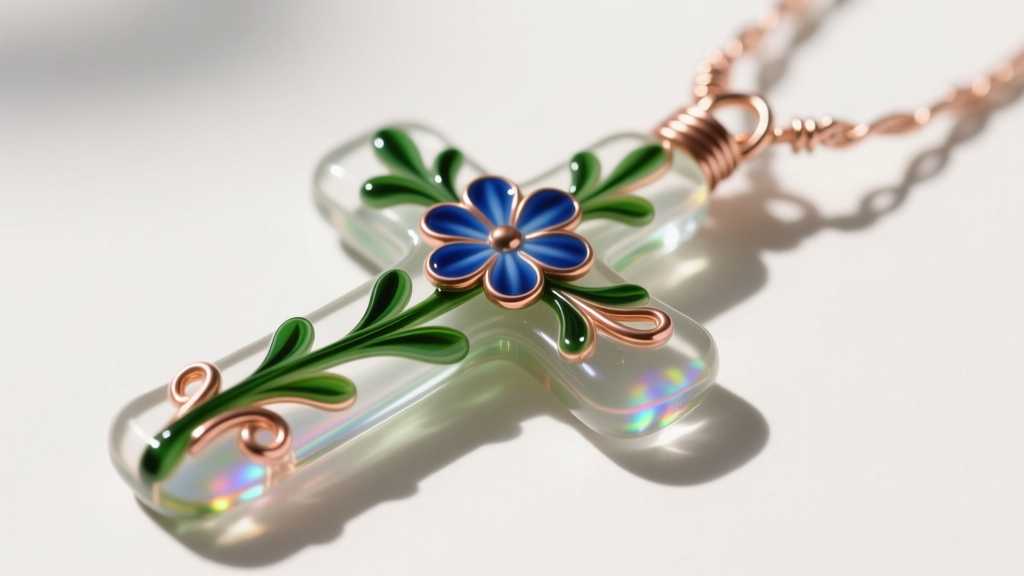
Fused glass crosses are cut from sheets of colored glass, stacked, and melted together in a kiln. This technique allows for bold, geometric designs and thick, sculptural pieces. Stained glass crosses, often featuring copper foil or lead came borders, offer a traditional, cathedral-like aesthetic. However, the metallic borders on stained glass pieces require special care to prevent oxidation from skin oils and lotions.
Evaluating Craftsmanship and Structural Durability
The most beautiful glass cross is useless if it shatters after a week of wear. Two critical factors determine the longevity of your necklace: the annealing process and the bail construction.
The Critical Role of Annealing
According to the Corning Museum of Glass, annealing is the controlled cooling process that relieves internal stresses within the glass. A cross pendant inherently features varying thicknesses—the intersection of the vertical and horizontal arms is significantly thicker than the tips. If the glass is cooled too quickly, these varying densities contract at different rates, locking in severe internal tension. Unannealed or poorly annealed glass can shatter spontaneously from the mere heat of your body or a light tap against a table. Always purchase from reputable artisans or certified studios that explicitly guarantee their kiln-forming and annealing schedules. You can sometimes identify stressed glass by viewing it through a polarized light filter, which will reveal dark stress lines in poorly treated pieces.
Bail Construction: Drilled vs. Glued
The bail is the loop that connects the glass cross to the chain. This is the most common point of failure in glass jewelry.
- Drilled Bails (Superior): The artisan drills a physical hole through the top arm of the cross while the glass is in a semi-molten state or uses a diamond-tipped core drill after cooling. A mechanical bail or wire-wrap is then inserted. This provides permanent structural integrity.
- Glued Bails (Inferior): Many mass-produced or amateur pieces rely on industrial epoxies (like E6000) to adhere a metal loop to the flat surface of the glass. Over time, exposure to UV light, temperature fluctuations, and the natural acidity of human skin oils will degrade the adhesive bond, leading to the inevitable loss of your pendant.
Chain Pairings and Hardware Weight Limits
Glass is a dense material, averaging about 2.5 grams per cubic centimeter. A solid, 2-inch fused glass cross can easily weigh between 15 and 30 grams. Pairing a heavy glass pendant with a delicate chain is a recipe for broken links and stretched metal. The Glass Art Society frequently highlights the importance of matching hardware to the specific gravity of the art piece.
| Glass Type & Size | Average Weight | Recommended Chain Style | Minimum Metal Gauge |
|---|---|---|---|
| Small Dichroic (under 1 inch) | 5 - 10g | Box Chain, Cable Chain | 1.2mm - 1.5mm |
| Medium Lampwork (1.5 inches) | 12 - 20g | Rolo Chain, Wheat Chain | 2.0mm - 3.0mm |
| Large Fused (2+ inches) | 25g+ | Snake Chain, Thick Curb | 3.5mm+ |
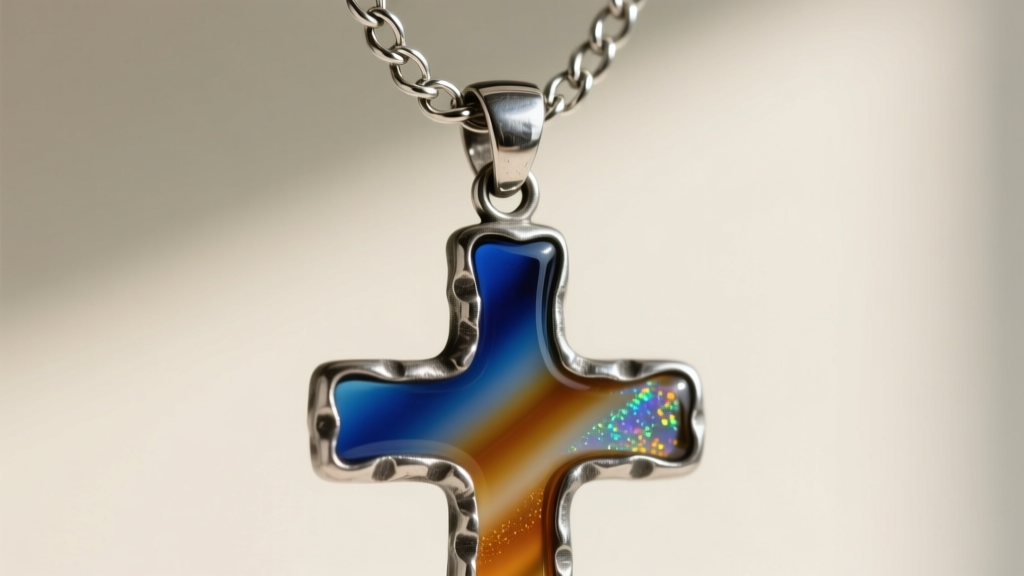
Always inspect the jump ring (the small loop connecting the bail to the chain). It must be soldered shut or feature a heavy-gauge split ring design. An open, unsoldered jump ring will easily pull apart under the pendulum-like swinging motion of a heavy glass cross.
Styling and Neckline Considerations
Because glass interacts dynamically with light, the way you style your necklace profoundly impacts its visual effect. Dichroic and clear fused glass pendants act as prisms; they perform best when resting against lighter-colored fabrics or bare skin, which allows ambient light to pass through and project colors. Dark, opaque lampwork crosses, on the other hand, provide a striking contrast when layered over crisp white collars or dark, monochromatic turtlenecks.
For layering, treat your glass cross as the focal anchor piece. Pair it with shorter, minimalist metallic chokers (such as a 14-inch sterling silver herringbone chain) and longer, 24-inch bead chains to create a cascading effect that draws the eye directly to the glass centerpiece.
Price Ranges and What to Expect
Understanding the market value of a glass cross necklace helps you identify genuine craftsmanship versus overpriced mass production.
- Mass-Produced Cast Glass ($15 - $35): Often made from poured resin or low-grade molded glass with glued bails. Suitable for fast fashion but lacks longevity and optical depth.
- Handmade Fused & Dichroic ($45 - $120): Crafted by independent artisans using high-quality kilns and proper annealing schedules. These pieces offer excellent durability, unique colorways, and secure mechanical bails.
- Master Lampwork & Authentic Murano ($150 - $500+): Museum-quality pieces featuring complex internal sculptures, 24k gold leaf inclusions, and master-level torch control. These are investment pieces that often come with certificates of authenticity and premium sterling silver or gold-filled chain pairings.
Final Verdict
Investing in a high-quality glass cross necklace is an investment in wearable art. By prioritizing properly annealed glass, insisting on drilled or wire-wrapped bails, and matching the pendant's weight to a structurally sound chain, you ensure that your piece remains a cherished, luminous staple in your jewelry collection for decades to come.


