Fingerprint Heart Necklace Buying Guide: What to Look For
Discover how to choose the perfect fingerprint heart necklace. Learn about engraving methods, metal grades, chain lengths, and pricing in our expert guide.

The Evolution of Biometric Jewelry
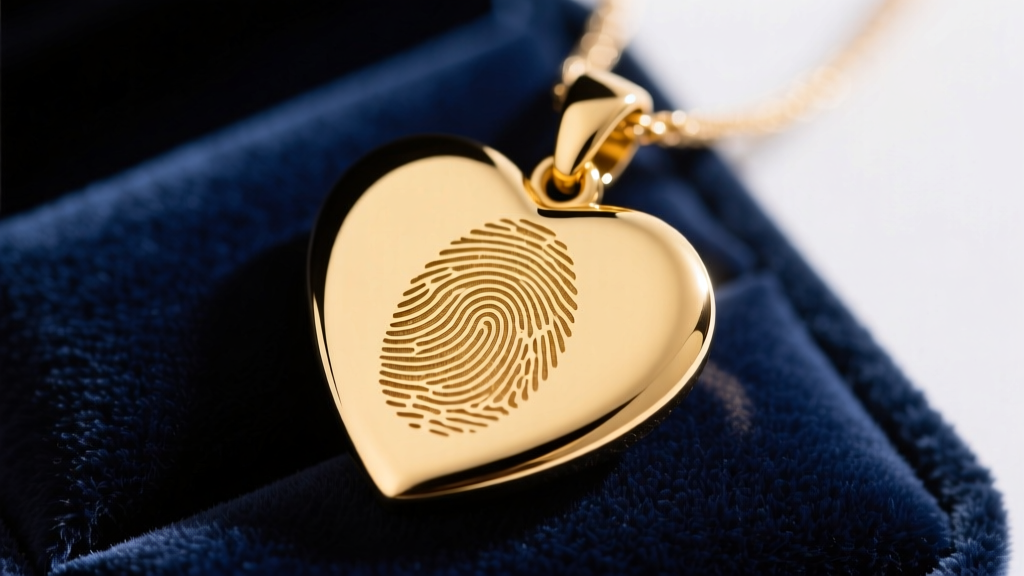
Personalization in fine jewelry has shifted dramatically over the last decade. While initial pendants and birthstone rings remain popular, the modern consumer demands deeper, more intimate connections to their accessories. The fingerprint heart necklace represents the pinnacle of this biometric jewelry trend. Unlike mass-produced geometric shapes, a fingerprint is a literal map of human identity, featuring unique ridge endings, bifurcations, and dots that guarantee no two pieces will ever be identical. However, translating the microscopic topography of a human fingertip onto a curved metallic heart pendant requires precise technology and metallurgical knowledge. This comprehensive buying guide will walk you through the technical specifications, material grades, and craftsmanship markers you must evaluate before investing in a custom fingerprint heart necklace in 2026.
Capturing the Print: Digital Scans vs. Traditional Ink
The foundation of a high-quality fingerprint necklace is the source image. The human fingerprint consists of friction ridge skin, and capturing the minutiae accurately is critical for the engraving process.
The Problem with Ink Pads
Traditional ink-and-paper methods are largely outdated for fine jewelry applications. Ink tends to pool in the valleys of the fingerprint ridges, causing a phenomenon known as "bridging." When the jeweler attempts to trace this blurred image, the resulting engraving looks like a smudged barcode rather than a distinct biological pattern. If a vendor insists on using a standard ink pad without digital enhancement, consider it a red flag.
The 2026 Standard: High-DPI Optical Scanning
Master engravers now require optical scans at a minimum of 600 DPI (dots per inch) or high-resolution macro photography. Digital capture isolates the exact contrast between the ridges and valleys, allowing CAD (Computer-Aided Design) software to map the topography into a 3D relief file. This ensures that the laser understands exactly where to ablate the metal and where to leave it polished.
Engraving Technology: Depth and Contrast
Not all engravings are created equal. The method used to etch the fingerprint into the heart pendant dictates its longevity, tactile feel, and visual contrast.
Diamond Drag Engraving (The Outdated Method)
Diamond drag engraving uses a physical diamond-tipped stylus to scratch the surface of the metal. While it produces a bright, shiny cut, it is entirely superficial. The depth rarely exceeds 0.02mm. Over years of wear, friction from clothing and skin oils will slowly erode the shallow ridges, causing the fingerprint to fade into an illegible blur.
Fiber Laser Ablation (The Expert Choice)
For precious metals, a 1064nm infrared fiber laser is the industry gold standard. Unlike CO2 lasers (which are meant for organics like wood or leather), fiber lasers interact directly with the molecular structure of gold, silver, and platinum. By adjusting the pulse frequency and wattage, a technician can achieve "deep engraving" or ablation, removing 0.05mm to 0.15mm of material. This creates a tactile, 3D ridge that you can feel with your fingernail. Because the material is physically removed rather than just scratched, the fingerprint will never wear away.
"A true biometric engraving should have topographical depth. If you run your fingernail lightly over the heart pendant and cannot feel the distinct ridges of the whorls and loops, the laser operator did not use enough passes to achieve permanent ablation."
— Master Laser Technician, Jewelers of America Symposium
Choosing the Right Metal: Durability and Contrast
The metal you choose affects not only the price but the visual contrast of the fingerprint. According to the Federal Trade Commission Jewelry Guides, understanding metal purity stamps is essential for buyers. Below is a comparison of the most common metals used for fingerprint pendants.
| Metal Grade | Mohs Hardness | Engraving Contrast | Tarnish Resistance | Avg. Price Range |
|---|---|---|---|---|
| .925 Sterling Silver | 2.5 - 3.0 | Medium (Requires Oxidation) | Low | $70 - $140 |
| 14k Solid Gold (Yellow/Rose) | 3.5 - 4.0 | High (Natural Shadowing) | Excellent | $280 - $450 |
| 18k Solid Gold | 2.5 - 3.0 | Very High (Deep Shadows) | Excellent | $450 - $750 |
| Platinum (950) | 4.0 - 4.5 | Exceptional (Matte vs Polish) | Excellent | $650 - $1,100 |
The Silver Oxidation Trick
If you opt for sterling silver, be aware that highly polished silver reflects light uniformly, making shallow laser marks difficult to see. Reputable jewelers will apply a chemical oxidizer (like liver of sulfur) into the laser-etched valleys, turning the fingerprint black while polishing the raised heart surface to a mirror finish. This creates a striking, high-contrast monochrome effect.
Gold Alloys and Laser Wavelengths
As noted by the Gemological Institute of America (GIA), gold alloys behave differently under heat. Rose gold, which contains a higher copper content, anneals beautifully under a fiber laser, creating a dark, rich contrast without the need for chemical oxidizers. Yellow gold requires careful power modulation to prevent the laser from melting the edges of the microscopic ridges.
Chain Selection: Gauge, Length, and Clasp Mechanics
A custom heart pendant is only as secure as the chain it hangs from. Fingerprint pendants, especially in solid 14k gold or platinum, carry significant weight relative to their size. Do not let a vendor pair a $400 custom pendant with a hollow, mass-produced chain.
Optimal Chain Specifications
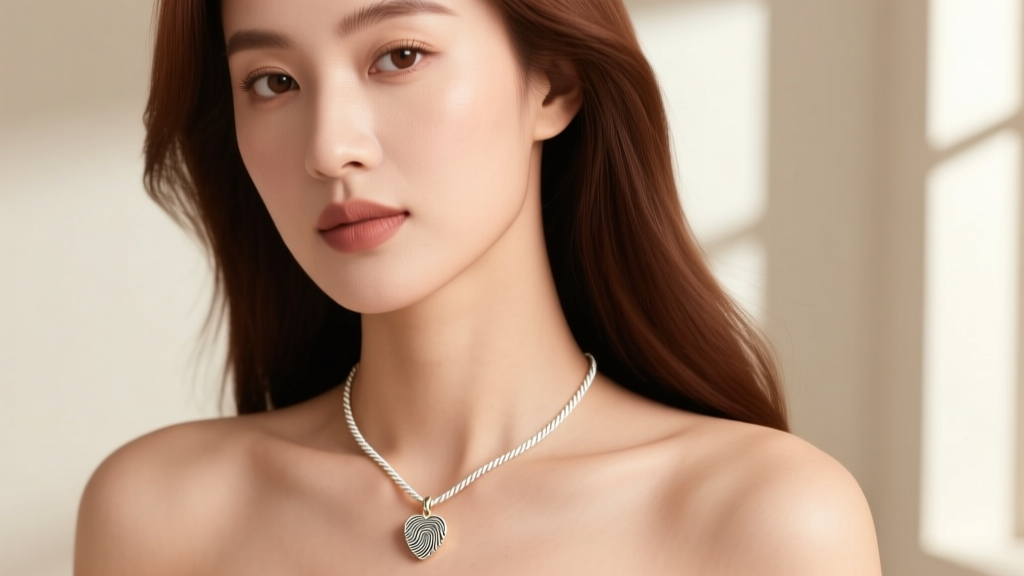
- Gauge (Thickness): Look for a solid chain between 1.2mm and 1.5mm. Anything thinner (like a 0.8mm thread chain) is prone to micro-kinking and snapping under the pendulum weight of a heart pendant.
- Chain Style: Solid cable chains or rounded box chains are ideal. They offer high tensile strength and do not pull chest hair or snag on delicate fabrics like hollow rope chains do.
- The Clasp: Demand a lobster claw clasp. Spring ring clasps have an internal tension spring that degrades over time and fails at a rate nearly four times higher than the lever-mechanism of a lobster clasp.
- Jump Rings: Ensure the jump ring connecting the pendant to the chain is soldered shut or features a secure locking mechanism. An open jump ring will eventually twist apart from daily friction.
Sizing the Heart Pendant: Proportions and Wearability
Heart pendants come in various dimensions, but when dealing with biometric data, size dictates legibility. If the heart is too small, the fingerprint ridges will be compressed, resulting in a muddy, unrecognizable pattern.
- The Subtle Minimalist (12mm x 12mm): Best for children's fingerprints or small, delicate female fingertips. Requires ultra-high-resolution scanning to maintain ridge separation.
- The Standard Classic (18mm x 18mm): The most versatile size. It provides enough surface area for an adult fingerprint to be engraved with deep, tactile 3D ridges while remaining elegant enough for daily office wear.
- The Statement Piece (25mm+): Ideal for combining two fingerprints (e.g., a mother and child, or partners) overlapping in the center of the heart.
Pendant Thickness: Ensure the metal blank is at least 1.5mm to 2.0mm thick. Deep laser ablation removes material; if the pendant is too thin (under 1mm), the intense heat of the laser can cause the metal to warp or cup, ruining the flat profile of the heart.
Red Flags: What to Avoid When Ordering
The custom jewelry market is flooded with dropshippers who outsource engraving to overseas factories using inferior technology. Protect your investment by watching out for these warning signs:
- "We can engrave any image you send": If a vendor does not ask for a high-DPI scan or a specialized putty mold, and instead says they will just "trace a photo of an ink print," walk away. The result will be a blurry mess.
- Hollow-Back Pendants: To save on gold costs, some manufacturers stamp hollow hearts. The thin sheet metal (often 0.4mm) cannot withstand deep laser ablation and will easily dent if pressed against a hard surface.
- Lack of Metal Stamping: By law, precious metals must be stamped with their purity (e.g., 14K, 925, PT950) alongside a maker's mark. If the heart pendant lacks these hallmarks on the bail or back, you cannot verify its authenticity.
Final Verdict and Care Instructions
A fingerprint heart necklace is a profound keepsake that bridges the gap between fine jewelry and intimate memory. To ensure the piece lasts a lifetime, prioritize deep fiber laser ablation over superficial diamond dragging, and opt for 14k gold or platinum to guarantee lasting contrast and structural integrity.
Care Tip: Because deep engravings create microscopic valleys, they can trap lotions, dead skin cells, and soap scum, which will dull the contrast over time. Clean your necklace bi-weekly using a soft-bristled baby toothbrush, warm water, and a drop of mild dish soap. Avoid ultrasonic cleaners if your pendant features oxidized silver, as the high-frequency vibrations can strip the intentional black patina from the fingerprint valleys. For more detailed maintenance protocols, refer to the care guidelines provided by Jewelers of America.
By understanding the metallurgy and laser technology behind the craft, you can confidently commission a fingerprint heart necklace that is as technically flawless as it is emotionally resonant.


